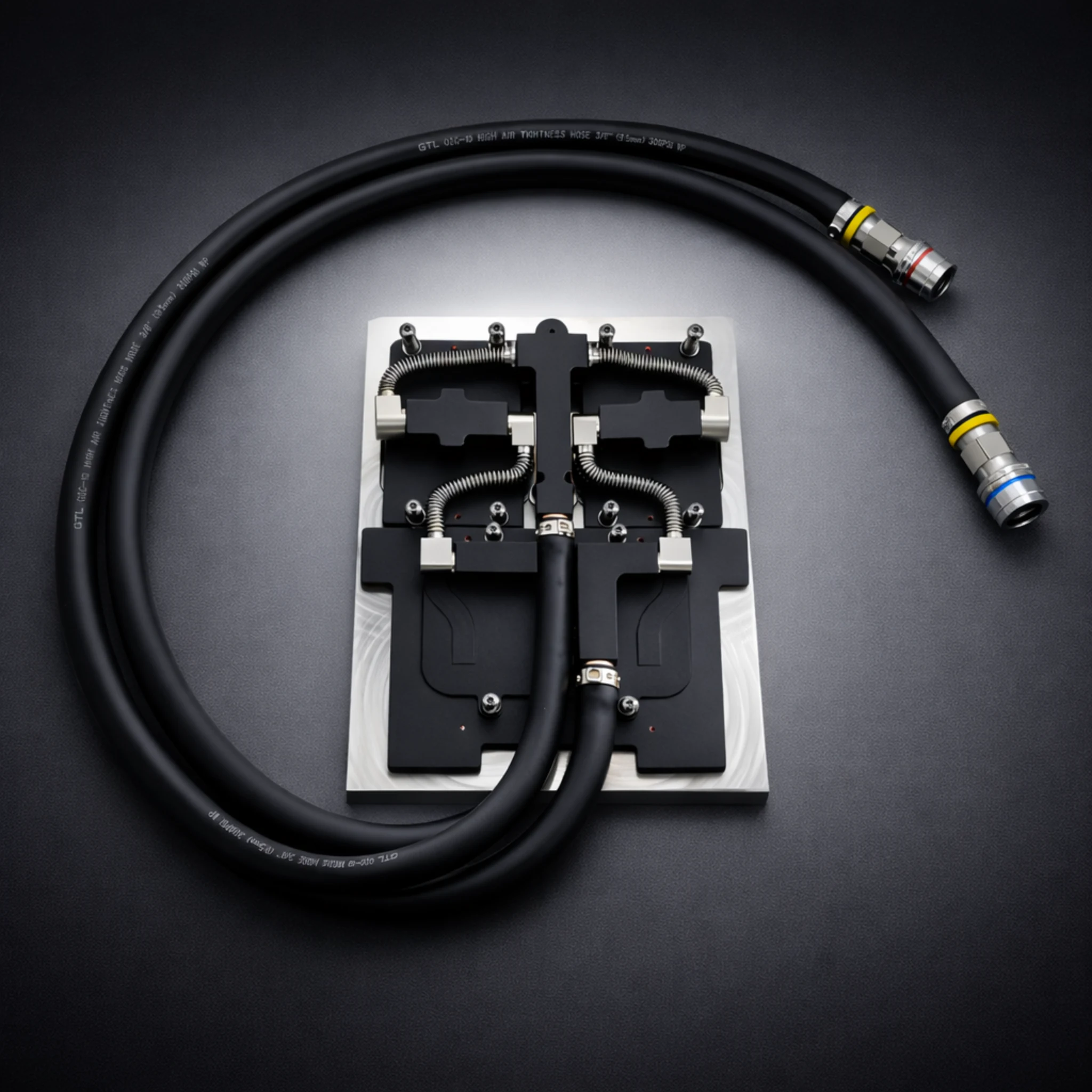
Vapor Chamber Phones is a high-performance thermal management solution engineered by ToneCooling for demanding applications.
In today’s digital age, smartphones have become tiny powerhouses that can handle intense tasks like gaming, video editing and multitasking. But as these devices get more powerful, they also generate a lot of heat. And heat is a challenge to performance and user experience.
So let’s dive into the science behind vapor chamber cooling, how it works in smartphones and why it’s becoming a must-have feature in today’s mobile devices. Whether you’re a techy, a manufacturer or a buyer looking to invest in the latest cooling tech, this guide has got you covered on vapor chambers and the future of smartphone performance.

What Is Vapor Chamber Phones?
A vapor chamber is a next gen thermal management device that uses phase-change cooling to cool compact devices like smartphones. It’s a flat sealed box filled with a working fluid (water) that goes through a continuous phase transition from liquid to vapor. This allows the vapor chamber to pull heat away from heat generating components like CPU and GPU so you can run stable and at peak performance even under heavy loads.
The vapor chamber uses the latent heat of vaporization. When the processor generates heat, the working fluid inside the chamber absorbs the heat and evaporates into vapor. The vapor travels to cooler areas in the chamber and releases the absorbed heat through condensation and returns to liquid state. A wicking structure (usually sintered copper or similar material) helps the liquid to return to the heat source through capillary action and creates a continuous heat dissipation cycle. This efficient mechanism ensures uniform temperature distribution in the chamber and eliminates hotspots that can cause thermal throttling.
Unlike thermal paste or heat pipes, vapor chambers provide more surface area for heat transfer in a much thinner profile, making it perfect for smartphones where space is a concern. With the advancement of material science and manufacturing technology, vapor chambers are now the go to choice for flagships to support the growing demands of modern mobile.
How Does a Vapor Chamber Work?
The working of a vapor chamber is based on a continuous cycle of evaporation, condensation and capillary return to dissipate heat.
Here’s how it works:
1. Heat Absorption (Evaporation Phase)
Heat from components like the processor is transferred to the vapor chamber. The liquid inside the chamber absorbs the heat and becomes vapor (a phase change). This evaporation process absorbs a lot of thermal energy and cools down the heat source.
2. Heat Distribution (Vapor Transport)
The vaporized liquid moves fast across the chamber and spreads the heat evenly over its surface. This uniform heat distribution eliminates hotspots which is a common issue in traditional cooling methods like heat pipes.
- Heat Dissipation (Condensation Phase)
As the vapor reaches the cooler part of the chamber, it condenses back into liquid and releases the absorbed heat. The heat is then transferred to the outer casing of the smartphone or adjacent thermal interfaces.
- Liquid Return (Capillary Action)
A wicking structure inside the chamber helps to return the condensed liquid back to the heat source through capillary action. This self-sustaining process ensures the chamber operates continuously without requiring external power.

Key Benefits of Installing Vapor Chambers On Phones?
With high-performance smartphones, the pressure is on manufacturers to solve the thermal problems of compact design and powerful processors. Vapor chambers are the solution for efficient heat management for optimal performance, user comfort and longevity.
1. Preventing Thermal Throttling
Thermal throttling is when a smartphone’s processor slows down to prevent overheating and performance drops during heavy tasks. Vapor chambers prevent this by dissipating heat efficiently so the processor and GPU can run at full speed.
- Sustained overheating can reduce a CPU’s performance by up to 50% due to thermal throttling.
- Samsung Galaxy S21 Ultra with vapor chamber had 30% less performance drops under gaming workloads compared to devices with heat pipes.
| Component | Performance Drop Without Vapor Chambers | Performance Drop With Vapor Chambers |
| CPU (Intensive Gaming) | 40-50% | 5-10% |
| GPU (4K Video Rendering) | 35-45% | 8-12% |
How Vapor Chambers Help:
- Vapor chambers use phase-change cooling to absorb heat from the processor so temperatures don’t exceed the thermal limit (usually 85-100°C for modern SoCs).
- By spreading heat evenly, vapor chambers prevent thermal hotspots that trigger throttling.
2. Enhanced User Comfort
Heat not only affects performance but also makes the phone uncomfortable to hold, especially during gaming, video calls or long browsing sessions. Vapor chambers make the device surface temperature lower.
- Smartphones without good vapor chamber cooling systems can reach surface temperatures of 45°C and above which is uncomfortable to users. Vapor chambers can reduce this to 38-40°C during heavy usage.
- The ASUS ROG Phone 5, a gaming phone, has a vapor chamber that keeps the backplate below 42°C even during 1-hour gaming at 120Hz.
| Activity | Surface Temperature Without Vapor Chamber | Surface Temperature With Vapor Chamber |
| 4K Video Recording (10 mins) | 46°C | 40°C |
| Gaming (120Hz for 1 hour) | 48°C | 42°C |
3. Prolonging Component Life
High temperatures shorten the life of critical smartphone components like the CPU, battery and display circuitry. Prolonged heat exposure can result in:
- Reduced battery capacity: Research shows batteries lose 20% of their capacity when exposed to temperatures above 45°C for extended periods.
- Component failure rates: A 10°C increase in operating temperature doubles the failure rate of semiconductor components..
How Vapor Chambers Help:
- By controlling internal temperatures, vapor chambers reduce thermal stress on components, longer life.
- Vivo T1 Series has up to 12°C lower CPU temperature. Less wear and tear.
4. Supporting Compact Designs
The push for thin and foldable phones has made traditional cooling solutions like heat pipes obsolete. Vapor chambers with their flat and lightweight design are the perfect alternative.
- Technical Feature: Vapor chambers are less than 0.4mm thick so can fit into slim devices and dissipate heat better.
- Applications in Foldables: Foldable phones like Samsung Galaxy Z Fold use vapor chambers to cool multiple internal components in a compact form factor.
| Cooling Technology | Thickness | Thermal Efficiency |
| Heat Pipes | 0.8-1.5mm | Moderate |
| Vapor Chambers | 0.3-0.4mm | High |
Xiaomi Mi 11 Ultra has a vapor chamber inside to cool the Snapdragon 888 without sacrificing looks or performance.
Partner With ToneCooling For Your Custom Vapor Chamber Cooling Solutions
ToneCooling is a custom vapor chamber heat sink manufacturer, high quality and reliable heat management solutions. Customizable to various shapes, sizes and configurations to fit your specific needs. With focus on thermal management, ToneCooling’s vapor chambers can be integrated into smartphonesto boost performance and lifespan.
Choose ToneCooling and get custom solutions, competitive price and good service, we are your partner in the industry.


For industry standards and best practices, refer to Electronics Cooling.
Frequently Asked Questions
Does ToneCooling offer OEM and ODM services?
Yes. ToneCooling provides full OEM and ODM services including custom design, prototyping, thermal simulation, and volume production. We serve customers in North America, Europe, and Asia-Pacific with engineering support and samples within 2–4 weeks.
How does a vapor chamber differ from a heat pipe?
A vapor chamber spreads heat in two dimensions across a flat surface, while a heat pipe transfers heat along a single axis. Vapor chambers are ideal for high heat flux applications like GPU cooling where uniform heat spreading is critical.
What is the maximum heat flux a vapor chamber can handle?
ToneCooling vapor chambers handle heat fluxes up to 100 W/cm² with effective thermal conductivity exceeding 10,000 W/m·K. Performance depends on wick structure, working fluid, and chamber geometry.
Get a Custom Thermal Solution from ToneCooling
ToneCooling is a professional liquid cooling solution provider specializing in custom cold plates, AIO coolers, and advanced thermal management systems. With ISO 9001:2015 certified manufacturing, we deliver prototype samples within 2–4 weeks. Contact ToneCooling today for a free consultation and quote — we respond within 24 business hours.
References: ASHRAE thermal standards, Wikipedia: Heat Sink Technology
Need a Custom Liquid Cold Plate?
ToneCooling engineers design thermal solutions for your specific requirements. Get an engineering RFQ review based on your uploaded requirements.
Vapor Chamber Smartphone Cooling is a critical component in modern thermal management. ToneCooling engineers this solution for AI servers, data centers, EV batteries, and power electronics requiring high-performance liquid cooling.
Vapor Chamber Smartphone Cooling: Key Specifications
When evaluating vapor chamber smartphone cooling, engineers consider thermal resistance, pressure drop, flow rate, and material compatibility. ToneCooling provides detailed specs for every vapor chamber smartphone cooling design, backed by CFD simulation and testing.
Why Choose ToneCooling for Vapor Chamber Smartphone Cooling
ToneCooling has manufactured over 50,000 vapor chamber smartphone cooling units for global OEM customers. Our vapor chamber smartphone cooling production features vacuum brazing furnaces below 10⁻⁴ mbar, FSW machines with ≤0.02mm flatness, and helium leak detection at 10⁻⁸ mbar·L/s. Every vapor chamber smartphone cooling undergoes 100% pressure testing at 25 bar.
Our engineering team provides free vapor chamber smartphone cooling design consultation, CFD simulation, and rapid prototyping in 7-14 days. Production vapor chamber smartphone cooling orders ship in 4-6 weeks under ISO 9001:2015 quality management.
Need a Custom Liquid Cold Plate?
ToneCooling engineers design thermal solutions for your requirements. Response within 24-48 hours.
Last Updated: 2026-04-08
DR Kevin, Thermal Engineer, ToneCooling