
Custom liquid cold plate manufacturer
Liquid Cold Plate Design Process and DFM Review
A practical engineering workflow for moving from thermal requirements and drawings to manufacturable cold plate prototypes and OEM production.
Last Updated: April 8, 2026 | Reviewed by: Thermal Engineering Team, ToneCooling Technology Co., Ltd
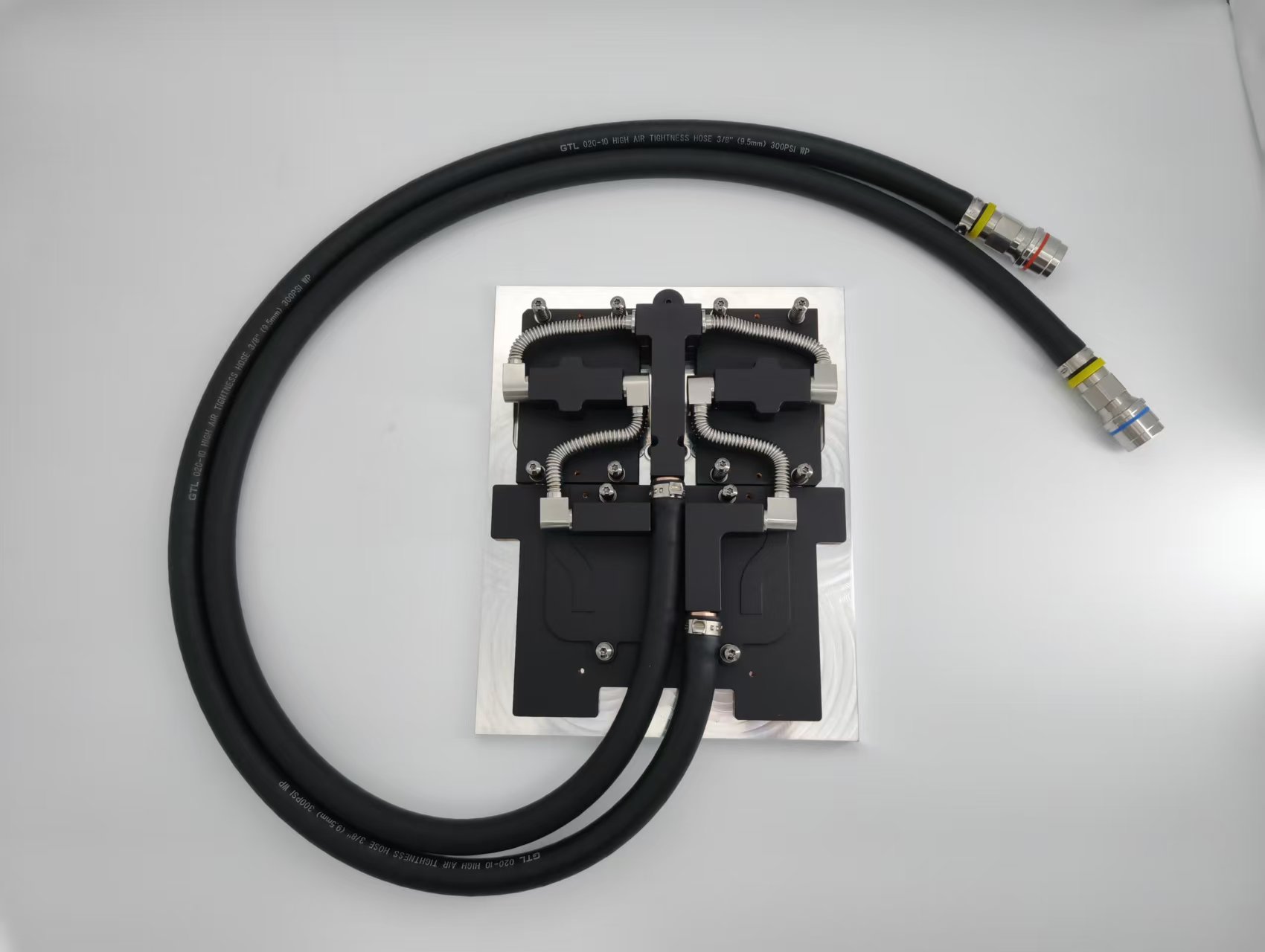
RFQ checklist
To Quote Your Liquid Cold Plate, Please Provide:
Useful pricing needs engineering limits, not only a product name. Send drawings when available so we can review manufacturability before quotation.
Send Requirements to ToneCooling Engineering Team- Application and module configuration
- Heat load per chip, module, or assembly
- Coolant type and concentration
- Flow rate or pump limit
- Maximum pressure drop
- Inlet temperature and target case temperature
- Available space and envelope
- Mounting pattern, force, flatness, and surface finish
- Port type, orientation, and connection standard
- Material preference and corrosion requirements
- Prototype quantity and annual demand
- STEP, PDF, or thermal requirements if available
Quick engineering answer
How ToneCooling Reviews This Project
A reliable cold plate quotation starts with the thermal map, coolant conditions, flow budget, pressure drop limit, mounting interface, and envelope constraints.
ToneCooling reviews those inputs before selecting copper or aluminum, internal flow path, joining process, port design, surface flatness target, and leak test plan.
Technical inputs
Engineering Data Required Before Design Freeze
Thermal Load
Heat source location, duty cycle, hot spot area, and allowable case temperature define the thermal resistance target.
Hydraulic Budget
Coolant type, flow rate, pressure drop limit, and port geometry define the internal channel and manifold approach.
Mechanical Interface
Mounting pattern, flatness, clamping load, surface finish, and envelope limit control contact resistance and assembly repeatability.
Material Compatibility
Copper, aluminum, plating, coolant chemistry, and mixed-metal loop risks are reviewed before production.
Leakage Risk
The sealing concept, joining method, working pressure, proof pressure, and leak acceptance criteria are confirmed during DFM.
Production Path
Prototype process, batch volume, inspection plan, and cost target determine whether CNC, brazing, FSW, or tube embedding is appropriate.
Manufacturing path
Recommended Cold Plate Architecture and Process Options
The right route depends on heat flux, pressure drop, joining risk, flatness, corrosion, volume, and target cost. Final selection is confirmed during DFM review.
CNC Machined Cold Plate
Suitable for prototype validation, complex interfaces, and controlled channel geometry before batch tooling.
Vacuum Brazed Cold Plate
Used for copper or aluminum structures that need sealed internal channels and repeatable thermal contact.
FSW Aluminum Cold Plate
Useful for larger aluminum plates where weld integrity, weight, and production repeatability matter.
Tubed Cold Plate
Cost-effective for medium heat flux zones and simple routing where pressure drop and geometry allow it.
Microchannel Design
Considered when heat flux is high and the pressure drop budget, cleaning process, and manufacturing route support it.
Manifold and Port Integration
Balanced flow distribution, QDCs, fittings, and hose routing are reviewed as part of the system integration.
Design targets
Typical Engineering Targets to Confirm
These are not fixed promises. Typical targets depend on chip layout, coolant, flow rate, inlet temperature, pressure drop limit, and customer test method.
| Heat load | Defined by customer heat map; final value depends on application and module layout. |
|---|---|
| Coolant | DI water, water-glycol, or specified dielectric fluid; final value depends on loop chemistry. |
| Flow rate | Selected from thermal target and pump budget; final value depends on pressure drop limit. |
| Pressure drop | Controlled by channel geometry, manifold layout, and port size; final value depends on system budget. |
| Thermal resistance | Targeted from case temperature limit and heat load; final value depends on test conditions. |
| Material | Copper, aluminum, or hybrid structure; final value depends on heat flux, mass, corrosion, and cost. |
| Manufacturing process | CNC machining, vacuum brazing, FSW, tube embedding, or bonded structure; final value depends on design conditions. |
| Leak test | Proof and leak acceptance criteria are agreed during DFM; final value depends on working pressure and customer standard. |
| Surface flatness | Specified around contact interface and mounting force; final value depends on module footprint and process. |
Manufacturing capability
From DFM Review to Prototype and OEM Production
ToneCooling supports practical manufacturing feedback before the drawing is locked, then builds prototypes, leak-tested samples, pilot runs, and batch production according to the agreed specification.
- CNC machined cold plates
- Vacuum brazed cold plates
- Copper and aluminum cold plates
- Microchannel cold plates
- Tubed and FSW cold plates
- Prototype and batch production
- 100% leak testing when specified
- DFM review before production
FAQ
Engineering Questions Before RFQ
Can ToneCooling design a custom liquid cold plate?
Yes. ToneCooling designs custom liquid cold plates around the customer heat load, coolant, flow rate, pressure drop limit, mechanical envelope, and production requirement.
What information is needed for a quote?
Please provide heat load, coolant type, flow rate, maximum pressure drop, inlet temperature, target case temperature, mechanical envelope, mounting requirements, material preference, quantity, and drawings if available.
Copper or aluminum, which is better?
Copper improves heat spreading for high heat flux zones. Aluminum can reduce weight and cost when the thermal target, coolant chemistry, corrosion control, and pressure requirement allow it.
How do you control pressure drop?
Pressure drop is controlled through channel width, path length, manifold balance, parallel flow layout, port size, and the specified flow rate.
Can you support microchannel cold plates?
Yes. Microchannel designs can be reviewed when the heat flux, pressure drop budget, manufacturability, cleaning process, and reliability requirements are suitable.
Do you provide DFM review before production?
Yes. ToneCooling reviews sealing, port design, flatness, tolerances, leakage risk, coolant compatibility, and process selection before prototype or batch production.
What leak testing is performed?
Leak testing is specified around the working pressure, coolant, joining process, and customer standard. Final pressure and acceptance criteria are confirmed during DFM.
Can you support prototype and OEM production?
Yes. ToneCooling supports prototype builds, engineering iteration, pilot runs, and OEM batch production for custom thermal management parts.
Send drawing and thermal requirements
Ready for a Manufacturable custom liquid cold plate?
Share your heat load, coolant, flow rate, pressure drop limit, target temperature, envelope, mounting pattern, and drawings. Our engineering team will review the project and respond with the next practical design step.

