
Data Center Liquid Cooling | GPU / CPU Cold Plates
Custom Liquid Cold Plate Review for Data Center Hardware
ToneCooling manufactures custom liquid cold plates for data center hardware where heat source layout, coolant path, pressure-drop limit, port orientation, mounting envelope and validation requirements must be reviewed before quotation.
Send a drawing, CAD file or thermal specification with heat load, coolant, flow rate, pressure-drop target, inlet/outlet layout, material preference, quantity and annual demand.
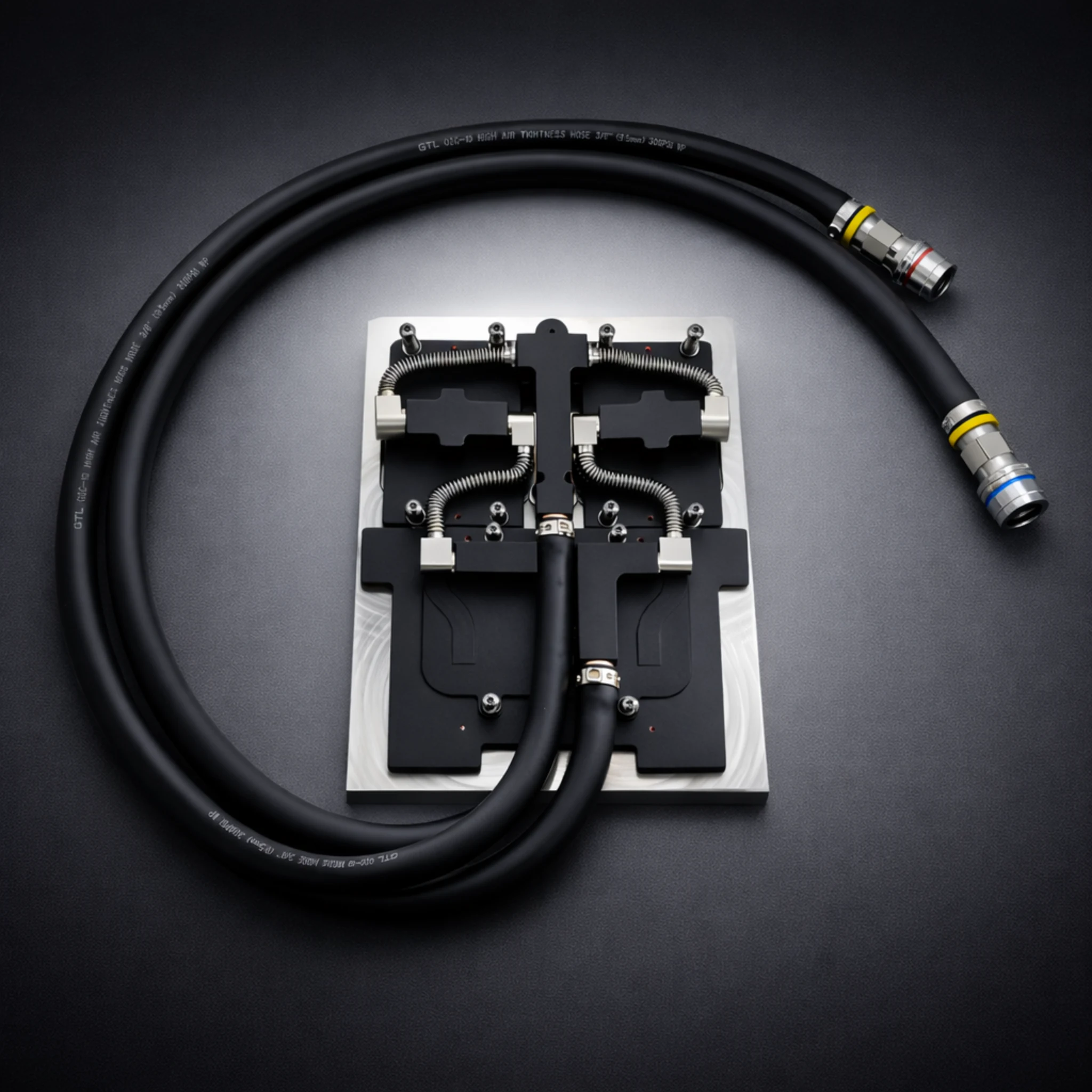
Platform Image Map: GB200, GB300, H200 and SP5 Cold Plate RFQ Review
Use these image groups to choose the closest RFQ path. Each platform still requires the official mechanical drawing, heat load, coolant, flow target and pressure-drop limit before quotation.
GB200 GPU Cold Plate
Use this path for GB200 AI server GPU cold plate projects. Send the official GB200 platform drawing, module envelope, heat load, coolant, flow rate and pressure-drop target before RFQ review.

GB300 GPU Cold Plate
Use this path for GB300 AI accelerator cold plate projects. Send the official GB300 platform drawing, module envelope, heat load, coolant, flow rate, pressure-drop target and validation requirements before quotation.

H200 GPU Cold Plate
Use this path for H200 GPU liquid cooling projects where port layout, mounting space, coolant routing and validation requirements must match the server assembly.

AMD EPYC SP5 CPU Cold Plate
Use this path for SP5 CPU direct-to-chip cooling projects. Provide socket footprint, mounting interface, stack height, coolant, flow rate and pressure-drop limit.
GB200 Liquid Cooling Board Technical Data From Product Introduction
The table below standardizes the GB200 data found in the supplied ToneCooling Product Introduction PDF. Use it as an RFQ screening reference; final quotation still requires the approved drawing, port definition, coolant loop requirement and validation criteria.
Source used for this section: supplied ToneCooling Product Introduction PDF, page 1.
What Is a Data Center Liquid Cold Plate?
A data center liquid cold plate is a liquid-cooled metal component that transfers heat from processors, GPUs, accelerators or power electronics into a coolant loop. For custom projects, the design depends on the heat source map, coolant, flow rate, pressure-drop limit, material, channel geometry, port layout and test requirements.
This page is for the global ToneCooling manufacturing site. USA, Australia and Europe local RFQ intent should be handled by the correct regional sites and should not be mixed into this global page.
Data Center Cooling Applications Reviewed
AI Server and GPU Cold Plates
For AI server, GPU, CPU and accelerator projects, the RFQ review should start with the device footprint, heat load, cold plate stack height, manifold interface, port direction, coolant and pressure-drop target.
Platform-Specific Projects
If your project references GB200, GB300, H200 or another platform, share the official mechanical and thermal requirements, drawings or customer-approved specification. Public platform wording should remain tied to review scope, not unsupported performance claims.
Direct-to-Chip Cooling
Direct-to-chip cold plates need early review of port access, sealing, serviceability, coolant compatibility, rack interface and assembly constraints.
Power Electronics and Auxiliary Modules
Data center systems may also require liquid cold plates for power electronics, optical modules or supporting hardware. These should be reviewed against the local heat source, mounting and validation needs.
Design Inputs Needed Before Quotation
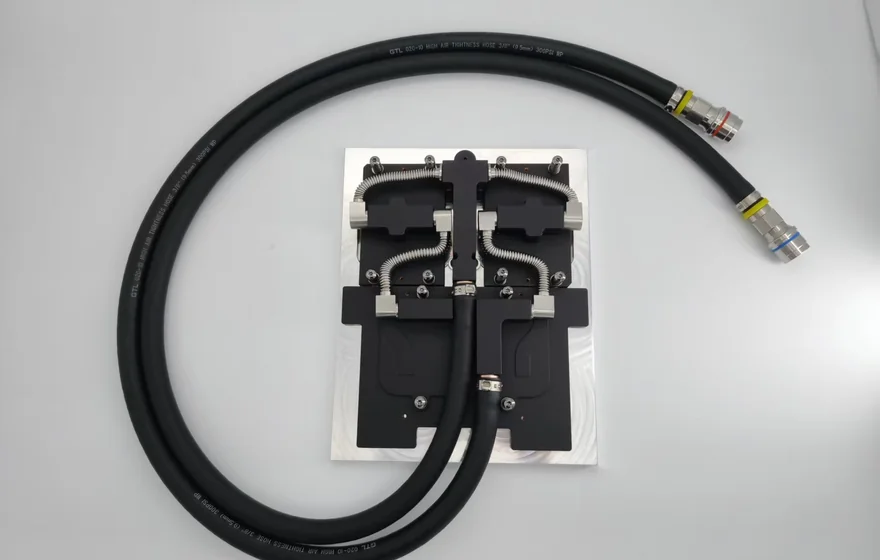
From Thermal Requirement to Manufacturable Cold Plate
The RFQ review should connect thermal demand with a manufacturable structure. ToneCooling reviews the drawing, heat source map, coolant, pressure-drop budget, material route and validation requirement before confirming the next quotation step.
1. Heat Source
Footprint, heat load, stack height and contact area.
2. Coolant Path
Channel route, flow rate, pressure-drop limit and port layout.
3. Manufacturing Route
CNC, brazing, FSW, diffusion bonding or microchannel feasibility.
4. Validation
Leak, pressure, flatness, cleanliness and documentation requirements.
Manufacturing Routes for Data Center Cold Plates
Depending on the drawing, material and channel layout, ToneCooling can review CNC machined, vacuum brazed, friction stir welded, diffusion bonded, copper, aluminium or microchannel cold plate routes. Final process selection requires DFM review and confirmed project requirements.
- CNC machined cold plates: useful when channel access, machining sequence and sealing route can be controlled by the drawing.
- Vacuum brazed cold plates: considered when internal channels, material compatibility and joint design match the validation requirement.
- FSW cold plates: often reviewed for aluminium projects where weld path access, channel geometry and port layout fit the process.
- Diffusion bonded or microchannel cold plates: reviewed only when geometry, cleanliness and validation requirements justify the route.
Leak Testing, Inspection and Validation Requirements
Specify required leak testing, pressure testing, cleanliness, flatness, surface treatment, documentation and validation stage in the RFQ. Exact test values and acceptance criteria should come from the customer specification or approved ToneCooling process records.
Terms such as GB200, GB300, H200, NVIDIA, hyperscale, IATF, ISO, 1200W and 24h can appear when relevant as project entities. They should not be used as unsupported guarantees for compatibility, certification scope, delivery time or thermal performance.
Data Center Cold Plate RFQ Checklist
Upload a drawing, CAD file or thermal specification if available. If drawings are not ready, send the closest available engineering information so the project can be screened.
- Drawing, CAD file or thermal specification
- Application and device / module footprint
- Heat load and heat source map
- Coolant type and inlet temperature
- Flow rate and pressure-drop target or limit
- Envelope, mounting space and port orientation
- Material preference and surface treatment needs
- Leak, pressure, cleanliness or documentation requirements
- Prototype quantity, annual demand and project stage
Official Platform References
Use these OEM platform pages as reference context only. ToneCooling RFQ review still requires the customer-approved drawing, module envelope, heat load, coolant, flow rate and pressure-drop target.
FAQ
What information is needed for a data center liquid cold plate quote?
Send drawings or CAD files, heat load, coolant, flow rate, pressure-drop target, inlet/outlet layout, envelope, material preference, testing requirements, quantity and annual demand.
Can ToneCooling review GPU or AI server cold plates?
ToneCooling can review custom GPU, CPU, accelerator and AI server cold plate drawings for manufacturability and RFQ completeness. Platform-specific performance claims require engineering validation and approved evidence.
How is the manufacturing route selected?
The route depends on material, channel geometry, port layout, quantity, validation requirements and pressure-drop target. CNC machining, vacuum brazing, friction stir welding, diffusion bonding or microchannel routes may be reviewed depending on the drawing.
Do I need a complete thermal simulation before requesting a quote?
A simulation is helpful but not mandatory for the first review. If simulation data is not ready, share heat load, coolant, flow rate, target pressure drop, envelope and heat source layout.
Where are ToneCooling data center cold plates manufactured?
Manufacturing is based in Huizhou, China. Regional websites should describe local communication or project coordination only when applicable, not local manufacturing.
Should this page target USA or Australia keywords?
No. This page is for the global manufacturing site. USA, Texas, Australia and Melbourne local intent should be handled by the correct regional sites with local RFQ paths.

Related Server CPU Cold Plate RFQ Path
Server CPU Liquid Cold Plates for Direct-to-Chip Cooling
Use this path for Intel LGA and AMD EPYC server CPU cold plate projects. Send the socket drawing, module envelope, heat load, coolant, flow rate, pressure-drop target, port direction and validation requirements.
View Server CPU Cold Plate RFQ PathRelated Cold Plate Resources
- Cold Plate RFQ Checklist
- Custom Liquid Cold Plate Manufacturer
- Vacuum Brazed Cold Plate Manufacturer
- FSW Liquid Cold Plate Manufacturer
- EV Battery Liquid Cooling
- IGBT Liquid Cold Plate
- Thermal Interface Material (TIM) Guide
- Data Center Cold Plate RFQ Inputs for GPU Cooling
- GPU Cold Plate Pressure Drop and Flow Rate Review
- Direct-to-Chip Cold Plate Port Layout Review
- Copper vs Aluminum Cold Plates for AI Servers
- Leak, Pressure and Cleanliness Validation
- Prepare Drawings for Data Center Cold Plate Quotation

Related Server CPU Cold Plate RFQ Path
Server CPU Liquid Cold Plates for Direct-to-Chip Cooling
Use this path for Intel LGA and AMD EPYC server CPU cold plate projects. Send the socket drawing, module envelope, heat load, coolant, flow rate, pressure-drop target, port direction and validation requirements.
View Server CPU Cold Plate RFQ PathRelated GPU Cold Plate RFQ Path
For workstation or OEM GPU projects using the RTX 5090 platform, review the drawing-based RFQ inputs for heat load, coolant, flow rate, pressure-drop target, port direction and validation scope.
View RTX 5090 GPU Liquid Cooling Plate
