🇺🇸 +1 (832) 720-7542|🇦🇺 +61 420 936 669|info@tonecooling.com|Quote Response in 24h
Guangdong, China
RFQ Response Within 24 Hours
Last Updated: 2026-04-22 Reviewed by ToneCooling Thermal Engineering Team Technical level: engineer & OEM sourcing
Product Category Hub

Thermal Product Categories for High-Density, High-Power, and AI Server Cooling

ToneCooling is a custom liquid cold plate and thermal solutions manufacturer serving AI server, EV battery, power electronics, telecom, and industrial OEMs across North America, Europe, and Asia-Pacific. Every category on this page is backed by in-house CFD simulation, bench test data, and production tooling at our Huizhou facility.

ToneCooling’s pump-driven two-phase cooling solutions are built for high-density AI and high-power electronics, supporting 500 W+ chips, heat flux up to 200 W/cm², multi-GPU temperature uniformity within ±1.5 °C, and rack-level heat dissipation above 30 kW, with CDU options ranging from 10 to 400 kW for server, cabinet, and data center deployments.
ISO 9001:2015 IATF 16949 road-map RoHS & REACH compliant UL-recognized materials ITAR-aware supply chain 150+ OEM programs shipped
Quick Selector

Which thermal category fits your workload?

Start from application if you already know the end-use environment, or from heat flux if you only have a chip datasheet. Both paths lead to the same recommendation.

In practice most OEM engineers know two numbers on day one: the device dissipation (watts) and the footprint (cm²). Divide the first by the second to get heat flux, then use the right-hand column to narrow the category. If the environment is already fixed — rack-level AI, EV traction pack, IGBT cabinet — the left-hand column will point to the same conclusion in a single click.

By Application

AI / HPCNVIDIA GB200 · H100 · B100 liquid-cooled nodesCPU/GPU cold plate →
EVBattery pack · inverter · on-board chargerBattery cold plate →
PowerIGBT / SiC module · industrial drive · wind inverterLiquid cold plate →
TelecomOptical transceiver · BBU · 5G radioHeat sink →
IndustrialLaser source · CNC spindle · semi process chillerLiquid cold plate →
ConsumerGaming laptop · SSD · LED lightingVapor chamber →

By Heat Flux & Power Density

< 10 W/cm²Low-power electronics, convective loadsHeat sink →
10–30 W/cm²Forced air or heat-pipe stackHeat sink +HP →
30–100 W/cm²Entry liquid cold plateLiquid cold plate →
100–500 W/cm²Skived-fin or brazed micro-fin cold plateCPU/GPU cold plate →
> 500 W/cm²Micro-channel / direct-contact / 2-phaseMicro-channel plate →
Thin-profileDevice envelope < 3 mmVapor chamber →
Six Categories

ToneCooling thermal product categories

Each category page links to live SKUs, design-guide deep-dives, and test-condition datasheets. Engineering parameters below are typical production ranges, not marketing approximations.
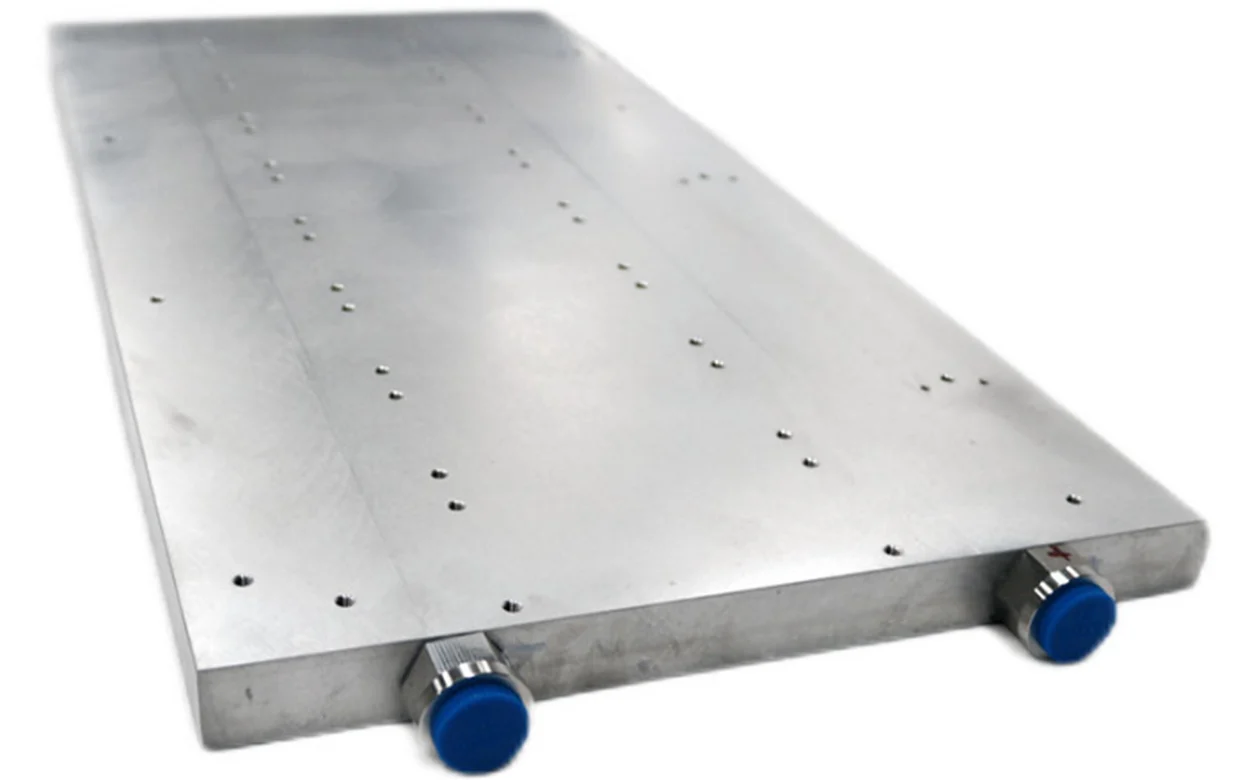
Custom liquid cold plate with inlet and outlet ports, machined aluminum

Liquid Cold Plate

Flat-plate water-cooled structures that transfer heat from flat or mounted devices into a coolant stream. The baseline for >30 W/cm² workloads.

  • Thermal resistance0.02–0.08 K/W
  • Pressure drop2–100 kPa
  • ProcessesFSW · Brazed · CNC
  • MaterialsAL6061 · AL3003 · Cu · AlSiC
Typical use: IGBT / SiC inverters · industrial lasers · rail traction · semi process chillers · wind converters
View category
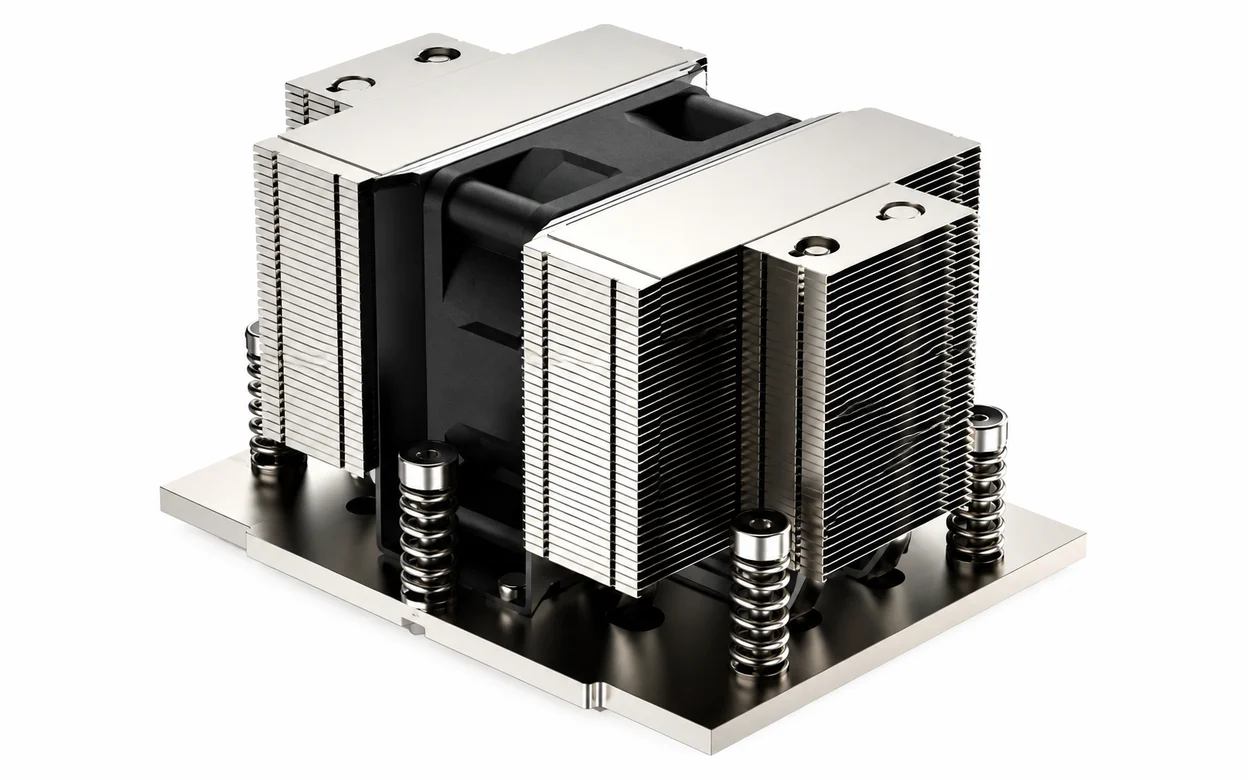
Black anodized aluminum heat sink family, extrusion and skived types

Heat Sink

Extruded, skived, stamped, or heat-pipe-stack aluminum or copper structures that shed heat into forced or natural air streams.

  • Thermal resistance0.1–1.0 °C/W
  • Air velocity0–5 m/s
  • ProcessesExtrusion · Skived · Heat-pipe stack
  • MaterialsAL6063 · Cu · Cu-plated Al
Typical use: telecom RRU · edge server · LED lighting · industrial controllers · lab instrumentation
View category
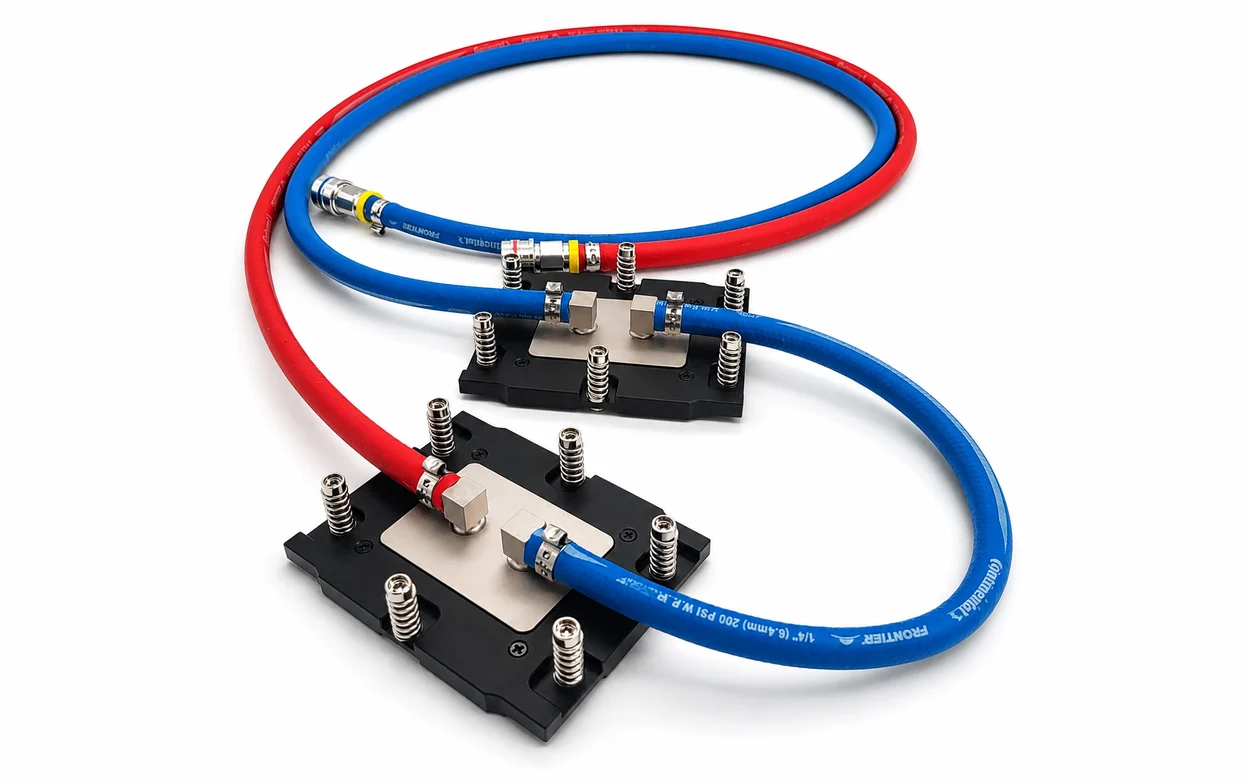
Dual CPU/GPU liquid cold plates with red and blue coolant hoses and quick-connects

CPU / GPU Cold Plate

High-performance cold plate subclass tuned for 300–1,000 W silicon packages with micro-channel or skived-fin architectures.

  • Per-die dissipation300–1,000 W
  • Thermal resistance0.02–0.04 K/W
  • Channel width0.1–1.5 mm
  • MountDirect-to-die · TIM2 · IHS
Typical use: NVIDIA GB200 / B100 / H100 nodes · AMD EPYC · Intel Xeon HBM · HPC accelerators
View category
Stamped battery pack cold plate with parallel serpentine channels for EV modules

Battery Cold Plate

Serpentine, harmonica, stamped, and vacuum-brazed plates tailored to prismatic, pouch, and cylindrical cell packs at 50–500 kW pack scale.

  • Pack rating50–500 kW
  • Channel geometrySerpentine · Diamond · I-flow
  • Join processVacuum brazed · FSW
  • Working fluid50% EG · PG · dielectric
Typical use: EV traction battery · ESS · hybrid marine · heavy-duty truck
View category
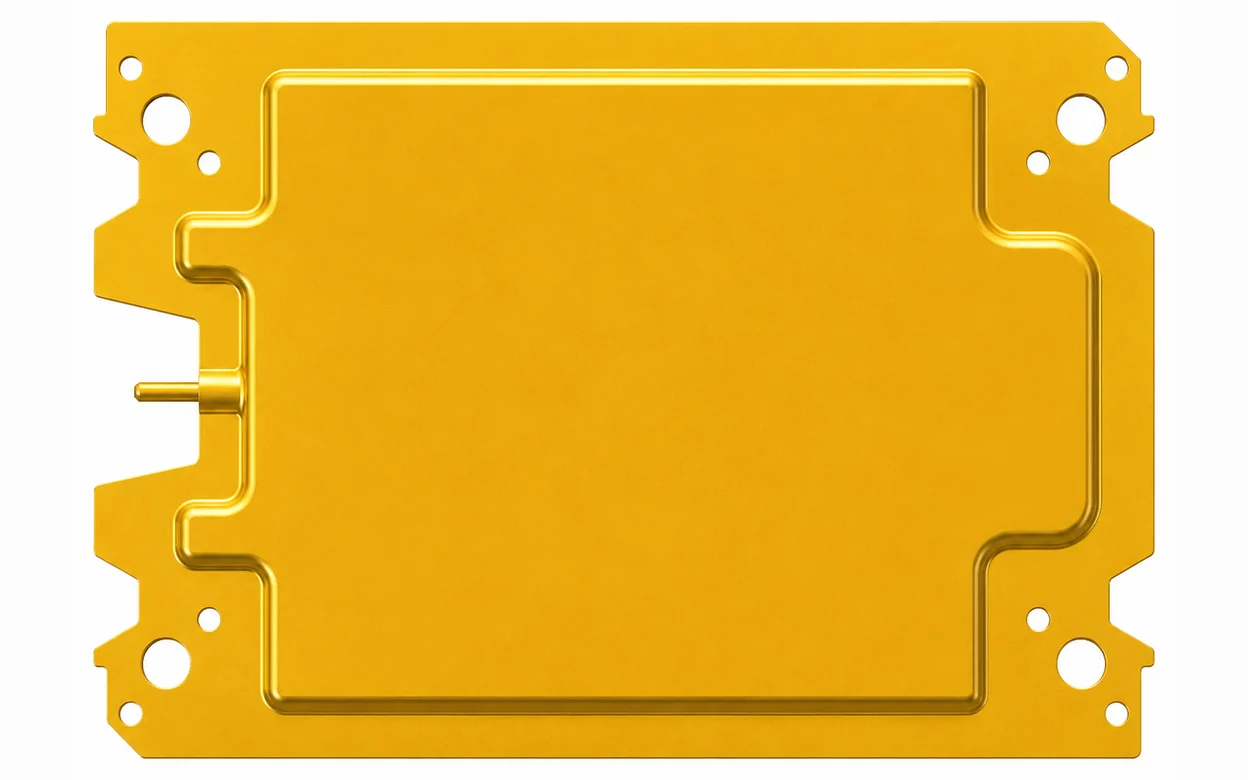
Ultra-thin vapor chambers in copper and nickel finishes, varied footprints

Vapor Chamber

Ultra-thin two-phase spreaders (0.35–3 mm) that smooth concentrated heat sources over larger fin areas via internal wick evaporation.

  • Thickness0.35–3 mm
  • Spread flux10–80 W/cm²
  • WickMesh · Sintered powder · Groove
  • OrientationAny (wick-dependent)
Typical use: gaming laptops · AI phones · optical transceiver · VR HMD · slim servers
View category
Rack-level liquid cooling platform with parallel cold plates and distribution manifold

Coolserver Platform

Rack-level liquid cooling kit: CDU + manifold + cold plate set pre-integrated for 30–150 kW/rack data-center deployments.

  • Rack density30–150 kW
  • Supply tempW32 / W40 ASHRAE
  • IntegrationIn-row CDU · rear-door · direct-to-chip
  • CertificationIntertek / TÜV test-ready
Typical use: AI training clusters · telco MEC · HPC research · edge AI POPs
View category

Engineering Parameters Master Table

Direct answer: Use this table to match heat flux, flow/air-velocity envelope, and target thermal resistance to the right category before RFQ.

Every parameter envelope below is set by ToneCooling production tooling, validated by in-house CFD and dyno bench testing. Use the heat-flux column as the first filter: if your device dissipation per unit contact area sits above the upper range for a category, escalate to the next category or request a hybrid design review. Pressure drop is reported at the listed flow rate with DI water or the specified coolant; for 50% ethylene glycol, multiply by 1.4–1.6 at the same volumetric flow.

Category Typical workload Heat flux range Thermal resistance (typ.) Flow / air velocity Pressure drop Materials Lead time
Liquid Cold Plate 1 – 40 kW / plate 30 – 500 W/cm² 0.02 – 0.08 K/W 1 – 40 L/min 2 – 100 kPa AL6061 · AL3003 · Cu · AlSiC Proto 3–4 wk · Prod 6–10 wk
Heat Sink (air-cooled) 10 – 600 W < 30 W/cm² 0.1 – 1.0 °C/W 1 – 5 m/s 10 – 150 Pa AL6063 · Cu heat-pipe stack · skived Cu Proto 2–3 wk · Prod 4–6 wk
CPU / GPU Cold Plate 300 – 1,000 W / die 50 – 500 W/cm² 0.015 – 0.04 K/W 0.5 – 3 L/min 8 – 60 kPa Cu skived · brazed Cu · micro-channel Proto 3–4 wk · Prod 8–10 wk
Battery Cold Plate 50 – 500 kW pack 1 – 20 W/cm² 0.03 – 0.10 K/W 5 – 30 L/min 5 – 80 kPa AL6063 diamond · AL3003 brazed · FSW Proto 3–5 wk · Prod 8–12 wk
Vapor Chamber 20 – 400 W local 10 – 80 W/cm² 0.05 – 0.3 K/W (spreading) Passive (two-phase) N/A Cu envelope · sintered wick · DI water Proto 4–6 wk · Prod 8–10 wk
Coolserver (rack kit) 30 – 150 kW / rack System-level Node Δ 3–7 °C over supply CDU 80–400 L/min Loop 80–250 kPa Full kit: CDU + manifold + cold plate Deploy 8–12 wk

Values represent ToneCooling typical engineering envelopes. Project-specific RFQ may target stricter ranges; see proprietary case data below for measured outcomes.

Proprietary Performance Data — ToneCooling Tested

Direct answer: Every datapoint below is from ToneCooling internal CFD simulation or bench test on production tooling — not catalog estimates.

The seven engineering cases below cover the full range of silicon, battery, power-electronics, laser, and air-cooled hardware we ship today. All simulations use measured material properties (thermal conductivity, wall roughness, fluid viscosity as a function of temperature) and are corrected against bench data when a physical sample is available. Heat-source boundary conditions reflect the customer's actual die layout rather than lumped values, so transient peaks and hot-spot migration are captured honestly. We publish these numbers so thermal engineers can benchmark our envelope before sending an RFQ.

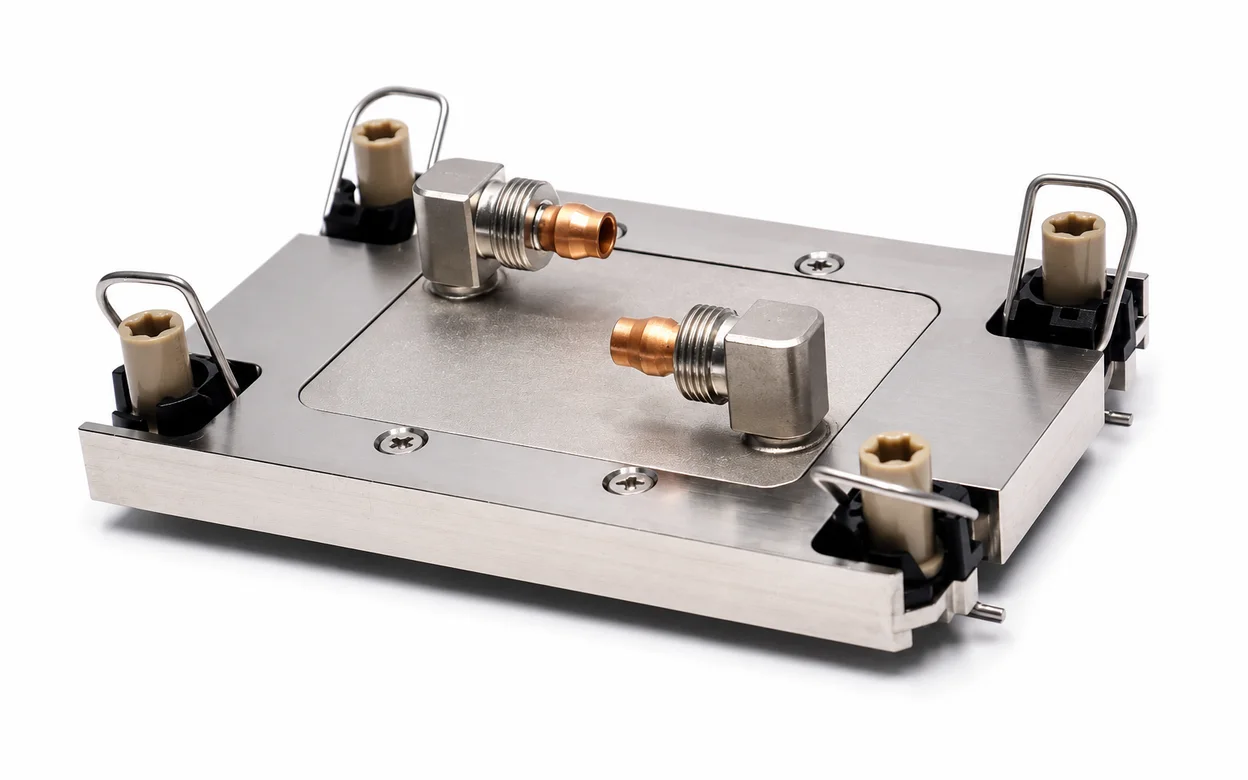
NVIDIA GB200 direct-to-chip liquid cooling kit: ToneCooling purple copper T2 cold-plate pair with 2.7 kW rating
AI Training · NVIDIA GB200 Direct-to-Chip Kit

GB200 2.7 kW assembly, Cu T2 pair · <43 °C plate surface

  • Target platformNVIDIA GB200 (Grace + 2 × B200)
  • Heat dissipation1,200 W + 1,200 W + 300 W (2.7 kW)
  • MaterialPurple copper T2
  • WeldingN₂-protected brazing + laser welding
  • Inlet25 ± 2 °C · 2.5 L/min · pure water
  • Pressure rating0.6 MPa (leak tested 8.7 bar)
  • ΔP @ 2.5 L/min35 ± 5 kPa
  • Plate Tmax< 43 °C

Source: ToneCooling production · NVIDIA GB200 direct-to-chip kit (235 × 190 × 30 mm)

NVIDIA GB300 Grace Blackwell direct-to-die liquid cold plate pair, ToneCooling production QA batch
AI Training · NVIDIA GB300 Cold Plate — Production QA

GB300 Grace + Blackwell direct-to-die pair, six-point QA certification

  • Target platformNVIDIA GB300 (Grace ARM + B300 Blackwell Ultra)
  • ConstructionCu direct-to-die skived micro-channel + QD
  • Sample size40 units (25 GPU + 14 CPU) · Nov 2025
  • TestsUltrasonic · Air leak · ΔP · Thermal · Helium · Flatness
  • Ultrasonic weld rate≥ 85 % (ring seal ≥ 0.6 mm)
  • ΔP @ 1.5 L/min (GPU)38.7 – 39.9 kPa
  • Helium leak tightest3.86 × 10⁻⁹ Pa·m³/s
  • Batch pass rate100 % (40 / 40)

Source: ToneCooling production QA · GB300 direct-to-die cold-plate batch Nov 2025

NVIDIA H200 rack-level liquid cooling kit: 8 GPU + 4 switch cold plates, 6.18 kW total dissipation
AI Cluster · NVIDIA H200 Rack-Level Kit

H200 12-device rack set, 6.18 kW total · GPU + Switch cold plates

  • Target platformNVIDIA H200 HGX rack (8 GPU + 4 Switch ASIC)
  • Heat dissipation8 × 700 W + 2 × 134 W + 2 × 156 W (6.18 kW)
  • MaterialPurple copper T2
  • WeldingContinuous N₂ tunnel-furnace brazing
  • Inlet38 °C · 8 LPM · pure water
  • Pressure rating0.8 MPa
  • ΔP18.5 ± 3.7 kPa
  • Plate Tmax< 65 °C

Source: ToneCooling production · NVIDIA H200 rack-level kit (GPU 151 × 78.2 × 43.14 mm · Switch 80 × 64.3 × 7.6 mm)

Intel Xeon Birch Stream server CPU liquid cold plate: ToneCooling purple copper T2, liquid phase diffusion welded
Server CPU · Intel Xeon Birch Stream

Intel Xeon Birch Stream 500 W cold plate, 5 kPa low-ΔP design

  • Target platformIntel Xeon 6 Birch Stream (6th-gen server CPU)
  • Heat dissipation500 W
  • MaterialPurple copper T2
  • WeldingInstantaneous Liquid Phase Diffusion Welding
  • Inlet40 °C · 1 LPM · 25 % EGW
  • Pressure rating1 MPa
  • ΔP5 kPa (ultra low)
  • Plate Tmax60 °C

Source: ToneCooling production · Intel Xeon Birch Stream cold plate (130 × 90 × 25 mm)

AMD EPYC SP5 socket dual-CPU liquid cold plate pair: ToneCooling purple copper T2, 550W per CPU
Server CPU · AMD EPYC SP5 Socket

AMD EPYC SP5 dual-CPU cold plate pair, < 3 kPa ΔP

  • Target platformAMD EPYC 9005 / 9004 series (SP5 socket)
  • Heat dissipation550 W × 2 = 1,100 W per pair
  • MaterialPurple copper T2
  • WeldingInstantaneous Liquid Phase Diffusion Welding
  • Inlet42 °C · 1 L/min · 25 % EGW
  • Pressure rating0.6 MPa
  • ΔP< 3 kPa (lowest in lineup)
  • Plate Tmax< 52 °C

Source: ToneCooling production · AMD EPYC SP5 dual-CPU cold plate (118 × 92.4 × 25 mm)

CFD: 6-module battery pack diamond-channel cold plate velocity field
New-Energy · Battery Cold Plate

Diamond-channel AL6063, 6-module pack

  • Workload6 × 369 W rated / 1,228 W peak transient
  • MaterialAL6063 diamond channel
  • Working fluid50% ethylene glycol
  • Flow rate15 L/min
  • Inlet65 °C
  • Tmax steady77.07 °C
  • Tmax 1-min peak101.03 °C

Source: ToneCooling CFD · 4-channel geometry sweep

CFD: 10 kW IGBT bank cold plate manifold pressure field, 89 kPa inlet
Industrial · Power Electronics

10 kW IGBT bank, AL6061-T6 brazed

  • Workload2 × plate × 4 IGBT = 10,000 W
  • MaterialAL6061-T6 vacuum brazed
  • Working fluidWater
  • Flow rate40 L/min
  • Ambient55 °C
  • Tmax55.38 °C
  • ΔP0.104 MPa

Source: ToneCooling CFD · 5-flow-rate sweep

CFD: 1.2 kW laser cold plate temperature field, 31.34 C plate maximum
Photonics · Laser Module

1.2 kW laser, AL6061-T6 + DI water

  • Workload1,200 W
  • MaterialAL6061-T6
  • Working fluidDeionized water
  • Flow rate10 L/min
  • Ambient25 °C
  • Plate Tmax31.34 °C
  • ΔP23.5 kPa

Source: ToneCooling CFD · Laser module study

CFD: Rail traction 6-IGBT cold plate pressure contour and flow distribution
Rail · Traction Converter

6-IGBT rail traction cold plate

  • Workload6 × IGBT modules
  • Working fluid50% ethylene glycol
  • Flow rate20 L/min
  • Ambient45 °C
  • IGBT case Tmax75.56 °C

Source: ToneCooling CFD · 4-condition sweep

CFD: Automotive FSW cold plate at 60 C inlet with 62 C maximum surface temperature
Automotive · Tier-1 IVI / Host Computer

8-device FSW cold plate, 85 °C ambient

  • Workload8 × power devices
  • Join processFriction stir welding (FSW)
  • Working fluid25% ethylene glycol
  • Flow rate1 L/min
  • Inlet / Ambient60 °C / 85 °C
  • Case Tmax64.95 °C
  • ΔP229 Pa

Source: ToneCooling CFD · Automotive IVI/host cold plate

Selected OEM Projects (Anonymized)

Direct answer: Three representative production programs where ToneCooling delivered measurable thermal gains versus baseline reference designs.

Customer names are withheld under mutual NDA, but the hardware is in production today. Each project entered ToneCooling as a failing or marginal baseline and exited with a validated CFD report, a DFM drawing pack, and a production PPAP-ready process plan. The engineering loop — requirements, geometry sweep, thermal simulation, bench validation, tooling release — typically runs four to eight weeks before prototype shipment.

Automotive · Tier-1 IVI/ADAS integrator

85 °C ambient FSW cold plate cleared first-shot SPEC

Challenge: 8-device host computer with 85 °C ambient and 1 L/min glycol flow — baseline brazed plate exceeded 85 °C case target.

Solution: Friction-stir-welded AL6061 cold plate with optimized serpentine channel and port placement.

Result: Case Tmax 64.95 °C (20 °C margin) · ΔP 229 Pa · single CFD iteration to validation.

New-Energy · Battery pack OEM

Diamond AL6063 channel cut 14 °C peak vs ADC12 baseline

Challenge: 6 × 369 W rated modules with 1,228 W 1-minute transient at 65 °C inlet — baseline ADC12 harmonica plate exceeded 115 °C transient ceiling.

Solution: Four-geometry CFD sweep (I-flow, Z-flow, serpentine, diamond) selected diamond AL6063 brazed construction.

Result: Transient Tmax 101.03 °C · steady 77.07 °C · −14 °C vs baseline.

Industrial · Power conversion OEM

10 kW IGBT bank: 5-flow sweep nailed 40 L/min optimum

Challenge: 8 IGBT modules at 10 kW total dissipation with 55 °C ambient — water flow budget contested between pump-power and thermal target.

Solution: AL6061-T6 brazed cold plate pair, 5-point flow-rate sweep (10 / 20 / 30 / 40 / 50 L/min) with ΔP and Tmax tradeoff analysis.

Result: 40 L/min operating point locked · Tmax 55.38 °C · ΔP 0.104 MPa · pump oversized by one size for margin.

Applications We Engineer For

Direct answer: Six production-validated verticals where ToneCooling ships custom thermal hardware today.

Each application has its own thermal signature: AI training stacks dissipate concentrated wattage per die, EV battery packs demand cell-level uniformity within 5 °C across the module, IGBT banks tolerate higher case temperature but need aggressive pressure-drop control, and optical modules require steady-state temperature stability within a degree. The six links below open to dedicated application hubs with workload profiles, validation targets, and representative cold-plate geometries.

FAQ — Category Selection & Engineering

Which cooling category is best for >500 W/cm² chip-level heat flux?

Direct answer: Direct-contact or micro-channel liquid cold plates are the only category that reliably handles >500 W/cm². ToneCooling ships micro-channel cold plates down to 0.1 mm channel width and thermal resistance below 0.03 K/W, validated against AI-training silicon and laser-diode stacks.

Liquid cold plate vs heat sink — when to switch?

Direct answer: Switch from heat sink to liquid cold plate when heat flux exceeds ≈30 W/cm² or total pack density exceeds ≈25 kW/m³. Below those thresholds, air-cooled heat sinks remain lower-cost and lower-risk. Between 30–80 W/cm², a heat-pipe-assisted sink can still work if airflow and fin mass are sufficient; above 80 W/cm², liquid is practically mandatory.

Can ToneCooling match both FSW and vacuum-brazed cold plate specifications?

Direct answer: Yes. ToneCooling operates FSW, vacuum brazing, CNC, skived-fin, and stamping lines in-house. The automotive case on this page used FSW (AL6061, ΔP 229 Pa); the 10 kW industrial IGBT case used vacuum-brazed AL6061-T6 (ΔP 0.104 MPa). Process selection is driven by pressure-rating, sealing class, geometry complexity, and production volume.

What working fluids does ToneCooling validate cold plates for?

Direct answer: Standard validation fluids include deionized water, 20–50% ethylene glycol, propylene glycol, and 3M Novec dielectrics. Pressure-drop curves, material-compatibility charts, and corrosion-budget assumptions are available on request with a signed NDA.

What are typical MOQ and lead times?

Direct answer: Prototypes ship in 3–4 weeks at 5–10 units per geometry. Production MOQ is typically 200 pieces with 6–10 week lead time depending on vacuum-brazing furnace load and FSW fixture availability. For rack-level Coolserver kits, deployment lead time is 8–12 weeks including CDU sourcing.

Does ToneCooling provide CFD reports and bench data with RFQ?

Direct answer: Yes. Every RFQ above 50 units includes a sealed CFD report with temperature fields, flow paths, and pressure-drop curves; bench-test correlation data is provided when a prototype has been built. Full test reports follow ISO/IEC 17025 principles: traceable instruments, documented methodology, and repeatable conditions. Customers can request raw mesh files and boundary conditions for independent verification under NDA.

Ready to move from data to design?

Request an engineering quote — our thermal engineering team returns RFQs within 24 hours with a preliminary thermal resistance and pressure-drop envelope.

ToneCooling Thermal Engineering Team

Authored & reviewed by ToneCooling senior thermal engineers (10+ years in liquid cooling, FSW, vacuum brazing, and CFD validation). For third-party validation or joint-development inquiries, contact engineering@tonecooling.com.

Last Updated: 2026-04-22 · Reviewed against internal CFD reports and production tooling data.

Scroll to Top

Get A Free Quote Now !

If you have any questions, please do not hesitate to contact us.

Quote Request
ToneCooling 19 thermal management