
Immersion Cooling vs. Direct-to-Chip Cold PlatesTwo Liquid Cooling Architectures, Different Retrofit and Serviceability Tradeoffs
Why most data centers upgrading existing racks choose direct-to-chip cold plates over full immersion — and where immersion still makes sense.
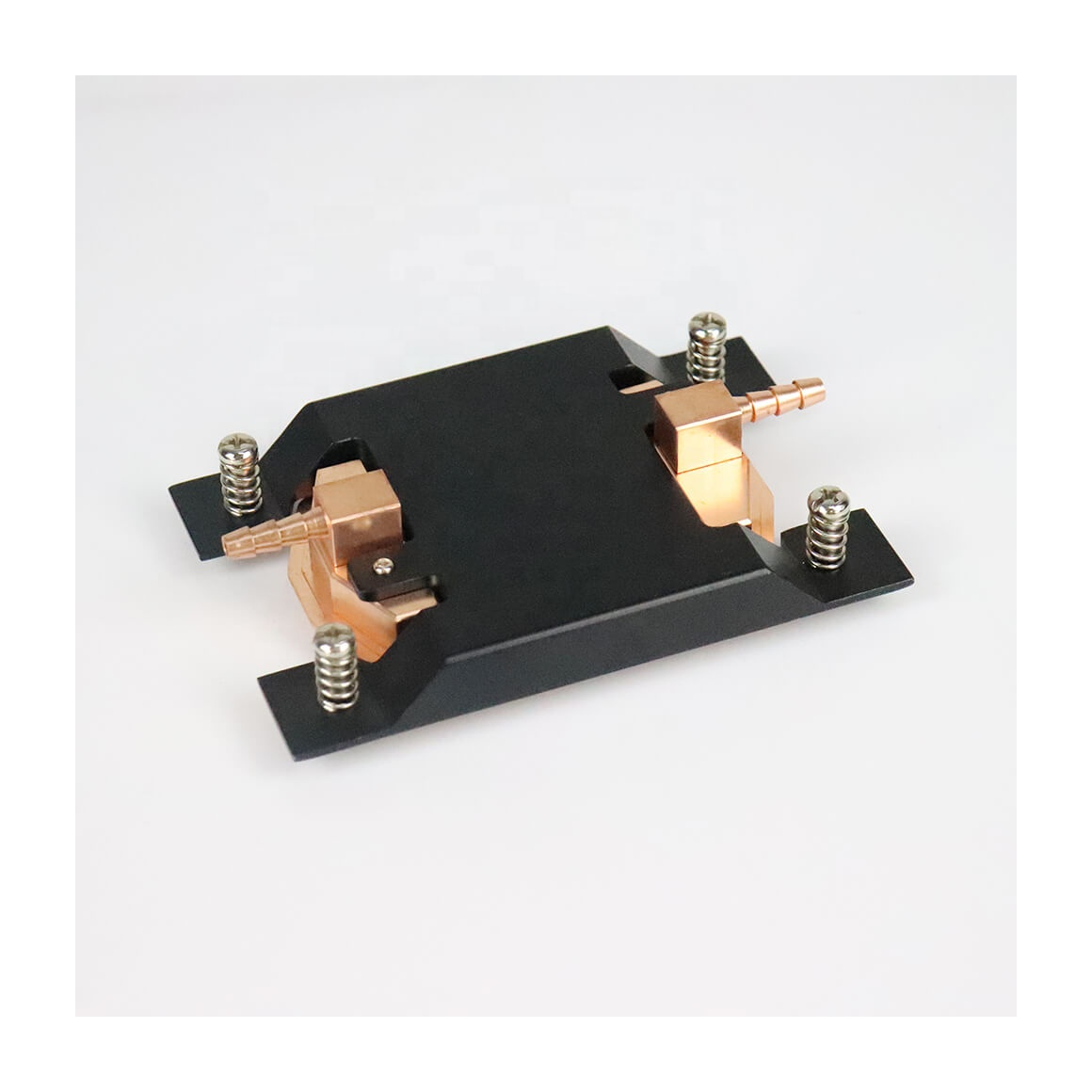
Direct-to-chip liquid cooling uses cold plates mounted on individual GPUs, CPUs, and power modules, with coolant circulated through a closed loop — compatible with standard rack form factors and serviceable component-by-component. Immersion cooling submerges entire servers in a dielectric fluid bath, removing heat from all components at once but requiring specialized tanks, dielectric fluid handling, and non-standard rack infrastructure.
Most facilities retrofitting existing air-cooled racks for AI workloads choose direct-to-chip cold plates because they fit standard rack infrastructure with far less facility redesign. See Data Center Liquid Cold Plate for platform-specific direct-to-chip options.
Who This Page Is For
Direct and liquid chip cooling refers to mounting a liquid cold plate directly onto a GPU or CPU die, removing heat via pumped coolant rather than immersing the entire server in dielectric fluid. ToneCooling manufactures direct-to-chip liquid cold plates for AI server platforms including NVIDIA GB200 NVL72, GB300, and AMD EPYC SP5, supporting 80–120kW+ per rack density.
- Data center architects choosing between immersion and direct-to-chip for a new or retrofit deployment
- Facilities teams weighing serviceability and existing rack compatibility against maximum thermal headroom
- OEMs evaluating which liquid cooling architecture to support in next-generation server designs
- Reference: Open Compute Project (OCP) liquid cooling specifications
Side-by-Side Comparison
| Factor | Direct-to-Chip Cold Plates | Immersion Cooling |
|---|---|---|
| Rack compatibility | Standard rack form factor | Requires specialized tanks |
| Retrofit complexity | Moderate (piping + CDU) | High (full infrastructure redesign) |
| Serviceability | Component-level, hot-swappable in most designs | Requires fluid drain/handling to service |
| Coverage | Targets highest-TDP components | Cools all components uniformly |
| Fluid handling | Water/glycol in closed loop | Dielectric fluid, different handling/disposal |
| Best fit | Retrofits, standard racks, GPU/CPU-dense servers | Purpose-built facilities, extreme density, edge cases |
Why Most Retrofits Choose Direct-to-Chip
- Fits inside existing rack infrastructure — no tank redesign
- Coolant loop scales incrementally as more racks convert
- Serviceability matches standard IT operations practice (swap a server without draining a tank)
- Cold plates can be engineered per-platform (GPU, CPU, IGBT) rather than requiring uniform tank design
Where cold plates fit: ToneCooling manufactures cold plates for the highest-TDP components in a direct-to-chip loop — GPUs, CPUs, and IGBT power modules — matched to your CDU’s flow and pressure budget. See AI Server Liquid Cooling Solutions.
How We Work With You
| Stage | What You Get | Typical Timing |
|---|---|---|
| Architecture review | Direct-to-chip vs. immersion fit assessment for your facility | Scheduled after RFQ review |
| Cold plate DFM | Thermal simulation for your specific chip platform | Included in the sample schedule |
| Prototype | Platform-matched cold plate sample | 4–6 weeks |
| Production | Batch production for full deployment | 6–8 weeks |
Manufacturing Process
Direct-to-chip cold plates are built via CNC micro-channel machining, vacuum brazing, or FSW depending on chip TDP and flow requirements — see Custom Liquid Cold Plate Manufacturer for full process capability.

Validation
Every cold plate is pressure- and leak-tested, with CFD thermal validation against your specific chip TDP and CDU flow/pressure budget before prototype cut.

NDA and Confidential Projects
Cooling architecture decisions are often tied to confidential hardware roadmaps.
- We sign a mutual NDA before reviewing your platform specification
Prototype to Series Production
Typical Project Profile
Illustrative composite, not a specific customer project.
A data center operator evaluated immersion cooling for a new AI cluster but determined the tank infrastructure redesign timeline conflicted with a hardware delivery deadline. ToneCooling supplied direct-to-chip cold plates matched to the existing rack footprint, allowing deployment inside the original facility timeline.
Why ToneCooling
Three contracting entities, matched to where you buy from.
Huizhou manufacturing (CNC machining + vacuum brazing + FSW under one roof) + ToneCooling Texas LLC + ToneCooling Europe OÜ — three-entity backing for direct-to-chip cold plates engineered to fit your existing rack infrastructure.
FAQ
Is immersion cooling more effective than direct-to-chip cold plates?
Immersion cooling can offer more thermal headroom because it cools all components, not just the highest-TDP ones. But for most retrofits, the facility redesign cost and complexity outweigh that headroom advantage unless density requirements are extreme.
Can direct-to-chip and immersion cooling be used in the same data center?
Yes. Some facilities use direct-to-chip cold plates for standard racks and reserve immersion for specific extreme-density zones.
Does ToneCooling supply immersion cooling tanks or dielectric fluid?
No. ToneCooling manufactures direct-to-chip liquid cold plates. For immersion projects, we can advise on component-level thermal design but do not supply tank infrastructure.
What existing infrastructure does direct-to-chip cooling require?
A CDU (coolant distribution unit) or facility liquid loop, cold plates matched to your chip platform, and piping/manifolds to distribute coolant to each rack — all compatible with standard rack form factors.
How do I decide between immersion and direct-to-chip for a new build?
Consider retrofit vs. greenfield status, target rack density, and serviceability requirements. Greenfield extreme-density builds may favor immersion; most retrofits and standard-form-factor deployments favor direct-to-chip cold plates.
Ready to review your cooling architecture?

