GPU Cold Plates for Direct-to-Chip Liquid Cooling

A GPU cold plate is a copper or aluminum heat exchanger that mounts directly on a GPU or AI accelerator and carries its heat into liquid coolant through internal channels. ToneCooling builds server GPU cold plates for NVIDIA GB300, GB200, H200 and H100 platforms, plus custom accelerator modules, in our own factory.

ToneCooling manufactures custom GPU cold plates for AI servers, HPC systems and OEM workstations. Choose a platform reference below, then confirm the module drawing, heat-source layout and cooling-loop requirements.

Engineering review covers GPU, memory and power-component interfaces, internal coolant paths, mounting features, connectors and agreed inspection requirements.

Request an OEM GPU Cold Plate Quote | View Datasheets

ToneCooling High-performance cooling thermal management
Products Categories
Get A Free Quote
Quote Request

GPU Cold Plates for Server and Workstation OEMs

Select a GPU cold plate path for your OEM server, accelerator or workstation assembly. Confirm the board revision and mechanical interface before choosing a reference product.

GPU Platform Selection

GPU Cold Plate Procurement Checklist

  • Exact GPU model, board revision, heat-source map and mounting drawing.
  • Coolant chemistry, inlet temperature, flow per branch and allowable pressure drop.
  • GPU, memory and power-component contact heights, TIM and mounting load.
  • Port positions, hoses, connectors, manifold interface and service access.
  • Prototype quantity, annual volume, inspection criteria and required documentation.

Review product datasheets or request an OEM GPU cold plate quotation.

Direct-to-chip liquid cold plate for high-power GPU module with inlet/outlet ports
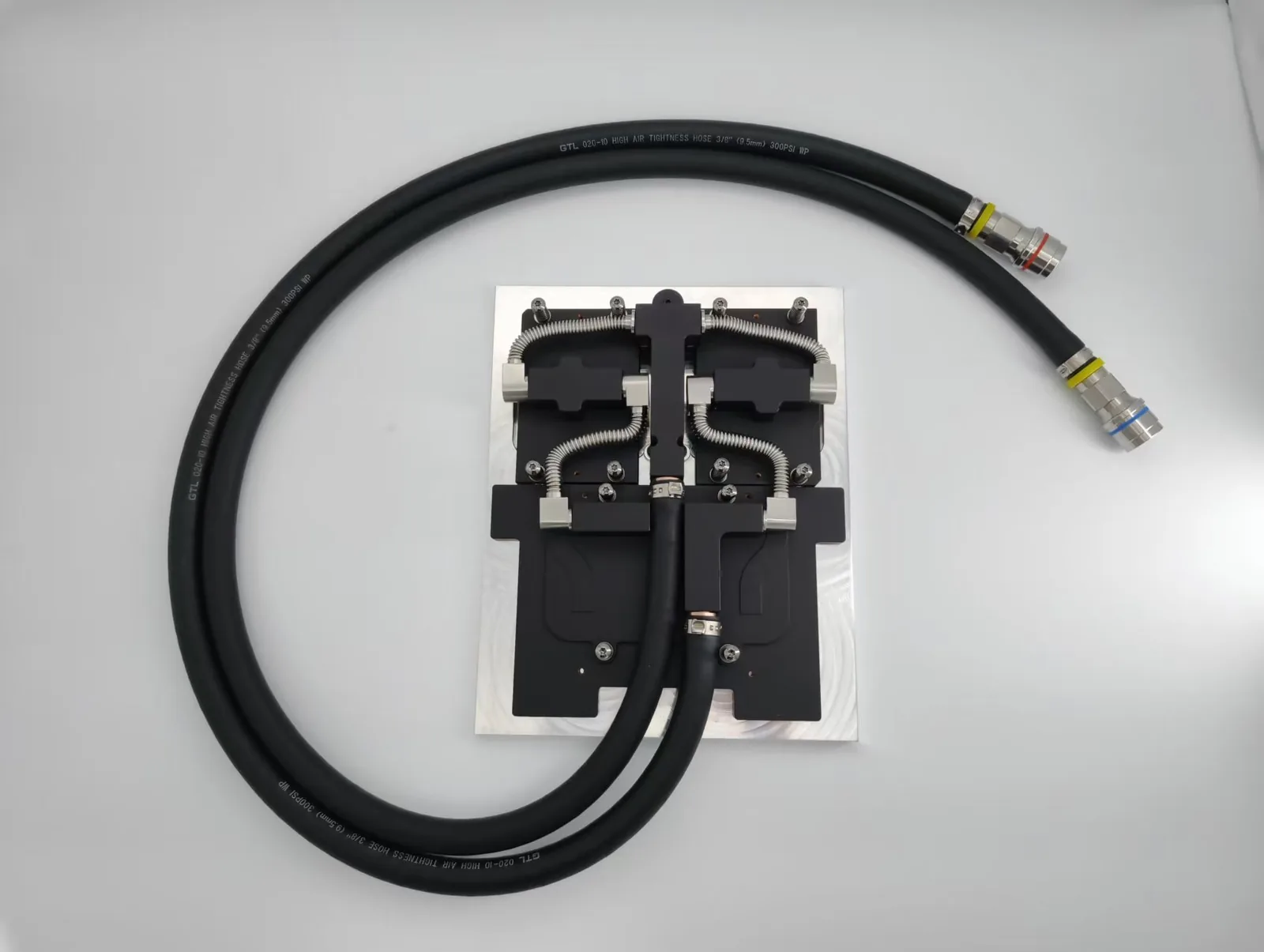
ToneCooling GB200 cold plate kit on a mounting plate with braided hoses and quick disconnect fittings
ToneCooling T-HS202323 NVIDIA h100 8 gpu nvswitch liquid cooling assembly, product view
AI data center liquid cooling system level cold plate solutions Australia | ToneCooling
ToneCooling T-HS202321 NVIDIA L40 GPU liquid cold plate, single-slot copper
ToneCooling T-HS202320 NVIDIA l20 gpu liquid cold plate, product view
ToneCooling T-HS202312 NVIDIA rtx 3080 gpu liquid cold plate, product view
ToneCooling T-HS202311 NVIDIA rtx 3090 gpu liquid cold plate, product view
ToneCooling T-HS202308 NVIDIA h800 gpu liquid cold plate, product view
ToneCooling T-HS202307 NVIDIA rtx 4090 gpu liquid cold plate single slot, product view
ToneCooling T-HS202306 NVIDIA rtx a6000 gpu liquid cold plate, product view
ToneCooling T-HS202305 NVIDIA rtx 4090 gpu liquid cold plate dual slot, product view
1 2
Efficient Heat Dissipation

Liquid cold plates provide direct thermal transfer from the graphics processor to liquid cooling systems, reducing overheating in gaming PCs, AI workstations, and high-performance computing (HPC) rigs.

Boosted GPU Performance and Stability

Maintaining lower temperatures prevents thermal throttling, enabling consistent performance during extended gaming, rendering, or cryptocurrency mining sessions.

Extended GPU Lifespan

By minimizing thermal stress on chips and VRAM, cold plates help prolong the lifespan of GPUs and related components.

Quiet and Energy-Efficient Cooling

Liquid-cooled cold plates reduce reliance on noisy fans, offering silent operation and improved energy efficiency for professional workstations and servers.

Why Choose ToneCooling For GPU Cold Plates

For a custom GPU cold plate, agree the drawing revision, contact interfaces, material, joining process and inspection plan before prototype manufacture.

Validate fit, thermal performance, pressure drop and leakage under the agreed operating conditions. Confirm the production bill of materials, packaging and traceability requirements before batch approval.

Send your GPU cold plate RFQ with your company, platform, project stage, sample quantity and annual demand.

Applications of GPU Liquid Cold Plates

Industrial and Embedded Computing

GPU Core Cooling

Cold plates attach directly to the GPU die, using high-thermal-conductivity materials and microchannels to quickly transfer heat to liquid coolant, ensuring stable performance under heavy workloads.

Data-Center-Applications

VRAM & VRM Cooling

By covering memory and voltage regulator modules, cold plates efficiently dissipate heat, preventing thermal throttling and extending component lifespan.

High performance computing applications

Liquid Cooling Interface

Cold plates serve as the key heat-transfer point in GPU liquid cooling loops, moving heat rapidly to circulating coolant with minimal temperature difference.

Data-Center-Applications

High-Density Multi-GPU Systems

For server OEMs and workstation integrators, multi-GPU cooling review includes the board layout, flow allocation, pressure-drop budget, tube routing and service access. Validate the complete assembly under the agreed workload and coolant conditions.

More Information

GPU Cold Plate Procurement FAQ

What is a GPU cold plate?

A GPU cold plate transfers heat from a graphics processor into a circulating coolant through a metal contact surface and internal flow channels. The design must match the module interface, thermal load and cooling loop.

Which GPU platform should I specify?

Provide the exact GPU or accelerator model, board revision, PCIe or module form factor, contact areas and mounting drawing. A GPU family name alone does not confirm compatibility.

What is needed for an OEM quotation?

Send the drawing, heat-source map, coolant chemistry, inlet temperature, flow rate, allowable pressure drop, TIM and mounting requirements, prototype quantity and annual demand.

Does a GPU cold plate also cool memory and power components?

Coverage depends on the approved assembly. Identify GPU, memory, voltage-regulator and switch heat sources separately, including contact height, interface material and heat load.

How should performance be compared?

Compare temperature and pressure-drop results at matching heat load, coolant, inlet temperature, flow rate, contact geometry, TIM and clamping conditions. Request the test method and measurement locations.

Can hoses, fittings and manifolds be included?

Specify the required assembly scope, connector type, tube routing, service clearance and manifold interfaces. Included components and responsibilities are confirmed in the quotation.

How are inspection and delivery agreed?

Define dimensional, leak, pressure, cleanliness and traceability requirements before prototype approval. Sample quantity, production volume and delivery are confirmed for the approved design.

Related guides