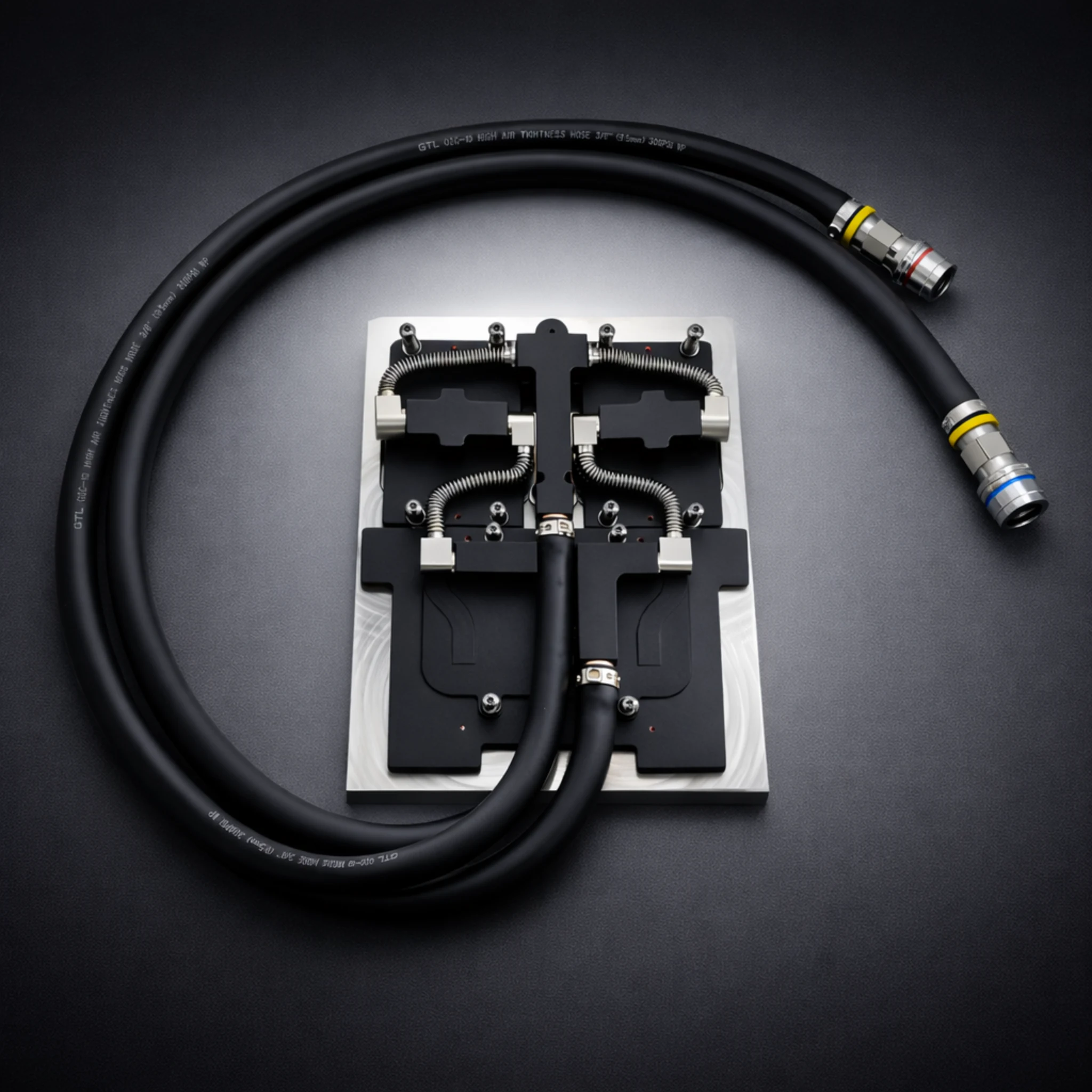
Liquid Cold Plate Corrosion Prevention is a high-performance thermal management solution engineered by ToneCooling for demanding applications.
Corrosion is the leading cause of premature failure in liquid cold plate cooling systems, responsible for over 60% of field returns in data center and industrial cooling deployments according to ToneCooling’s internal warranty analysis. A corroding liquid cold plate produces particulate contamination, reduces flow area, increases thermal resistance, and ultimately causes catastrophic coolant leaks onto high-value electronics.
What Is Liquid Cold Plate Corrosion Prevention?
Liquid cold plate corrosion occurs through four primary mechanisms, each requiring a different prevention strategy.
| Metal | Galvanic Position | Corrosion Risk in Mixed System |
|---|---|---|
| Copper (C11000) | Noble (cathodic) | Protected — causes corrosion of coupled metals |
| Stainless Steel 316L | Semi-noble | Low risk when coupled with aluminum |
| Aluminum 6061-T6 | Active (anodic) | HIGH RISK when coupled with copper |
| Aluminum 3003 | Active (anodic) | HIGH RISK when coupled with copper |
ToneCooling’s field data shows that aluminum cold plates coupled with copper fittings in a deionized water system corrode 8–12× faster than single-metal aluminum systems — the most common installation error ToneCooling’s service team encounters.
Other mechanisms: Crevice corrosion in stagnant zones, erosion corrosion at flow velocities >2.5 m/s, and microbiological corrosion (MIC) — ToneCooling identified MIC as the cause in 23% of field returns from systems operated beyond 3 years without coolant replacement.
Material Selection for Corrosion-Resistant Cold Plates
| Cold Plate Material | Compatible Fittings | Coolant Recommendation | 10-Year Corrosion Risk |
|---|---|---|---|
| Aluminum 6061 (standard) | Aluminum or brass with aluminum insert | DI water + Al inhibitor, pH 7.5–9.0 | LOW ✅ |
| Copper C11000 (premium) | Brass, copper, stainless 316L | DI water + Cu inhibitor or EG/water | LOW ✅ |
| Aluminum + copper fittings | ⚠️ Mixed metal | Requires specific inhibitor package | HIGH ⚠️ |
| Stainless steel 316L | SS316L, brass | DI water, most coolants compatible | VERY LOW ✅ |
ToneCooling’s standard: all-aluminum construction (6061-T6 body, 3003 braze alloy, aluminum fittings) with no copper in the fluid path. Validated at <0.002mm/year corrosion rate per ASTM G31 accelerated aging tests.
Coolant Selection and Chemistry for Cold Plate Corrosion Prevention
Deionized Water (Aluminum Cold Plates)
- pH: 7.5–9.0 (alkaline conditions favor aluminum oxide layer stability)
- Conductivity: <50 μS/cm
- Chloride: <10 ppm
- Corrosion inhibitor: Azole-free formulation for aluminum
- Biocide: Isothiazolinone-based at 50–100 ppm to prevent MIC
ToneCooling’s accelerated corrosion test (ASTM G31, 85°C, 1000 hours) on 6061-T6 aluminum shows a corrosion rate of 0.0018 mm/year — equivalent to <0.02mm metal loss over 10 years.
What to Avoid
- ❌ Tap water — contains dissolved minerals, chlorides, and bacteria
- ❌ Distilled water without inhibitor — aggressive toward aluminum oxides
- ❌ Undiluted ethylene glycol — poor heat transfer and reduced inhibitor effectiveness
- ❌ Silicate-based automotive antifreeze — silicate precipitation clogs microchannel cold plates
ToneCooling validates cold plates against ASHRAE TC 9.9 data center cooling guidelines for coolant compatibility in AI server liquid cooling deployments.
Corrosion Maintenance Schedule for Liquid Cold Plate Systems
| Interval | Maintenance Action | Target Value |
|---|---|---|
| Monthly | Visual inspection for white deposits (aluminum corrosion byproduct) | No visible deposits |
| Quarterly | Coolant pH and conductivity measurement | pH 7.5–9.0, <50 μS/cm |
| Quarterly | Inhibitor concentration check | Per coolant manufacturer specification |
| 6 months | Filter element replacement | Particle count <100 particles/mL >25μm |
| Annually | Full coolant chemistry analysis | Per ToneCooling coolant specification sheet |
| 2 years (DI) / 5 years (EG/water) | Complete coolant drain, flush, and refill | Fresh coolant to specification |
Frequently Asked Questions
What is the best coolant to prevent corrosion in aluminum liquid cold plates?
Deionized water with pH 7.5–9.0, conductivity below 50 μS/cm, and a certified aluminum corrosion inhibitor is the best coolant for aluminum liquid cold plates. ToneCooling testing confirms a corrosion rate below 0.002mm/year — less than 0.02mm total metal loss over 10 years of continuous operation.
Can I use copper fittings with an aluminum liquid cold plate?
Copper fittings directly coupled to aluminum cold plates accelerate aluminum corrosion by 8–12× due to galvanic corrosion. ToneCooling recommends all-aluminum systems. If mixed metals are unavoidable, use a specifically formulated mixed-metal corrosion inhibitor and increase coolant replacement frequency to annually.
How long do liquid cold plates last before corrosion becomes a problem?
ToneCooling aluminum cold plates achieve 10-year corrosion-free service life with correct coolant chemistry and biannual coolant replacement. Without proper maintenance, ToneCooling field data shows corrosion-related performance degradation beginning within 18–24 months in tap water systems.
What are the signs of corrosion in a liquid cold plate system?
Early signs include white or gray deposits around fittings (aluminum hydroxide precipitate), increased coolant turbidity, rising pressure drop from channel blockage, and coolant pH drop below 7.0. Advanced corrosion presents as coolant leaks and GPU/CPU temperature increases above baseline.
Does ToneCooling offer corrosion-resistant coatings for cold plates?
Yes. ToneCooling offers hard anodizing (25–50μm) for external surfaces and electroless nickel plating (25μm) for fluid channels in aggressive coolant applications, both validated per ASTM B117 salt spray testing.
Industry Standards & References
- ASHRAE TC 9.9 — Liquid Cooling Guidelines for Data Center Equipment
- ASTM G31 — Standard Practice for Laboratory Immersion Corrosion Testing of Metals
Concerned About Cold Plate Corrosion in Your System?
ToneCooling provides free coolant compatibility analysis and corrosion risk assessment with every cold plate inquiry.
Last Updated: 2026-04-07 | Author: DR Kevin, Thermal Engineer, ToneCooling