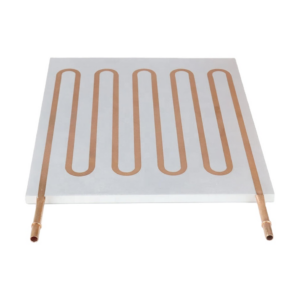
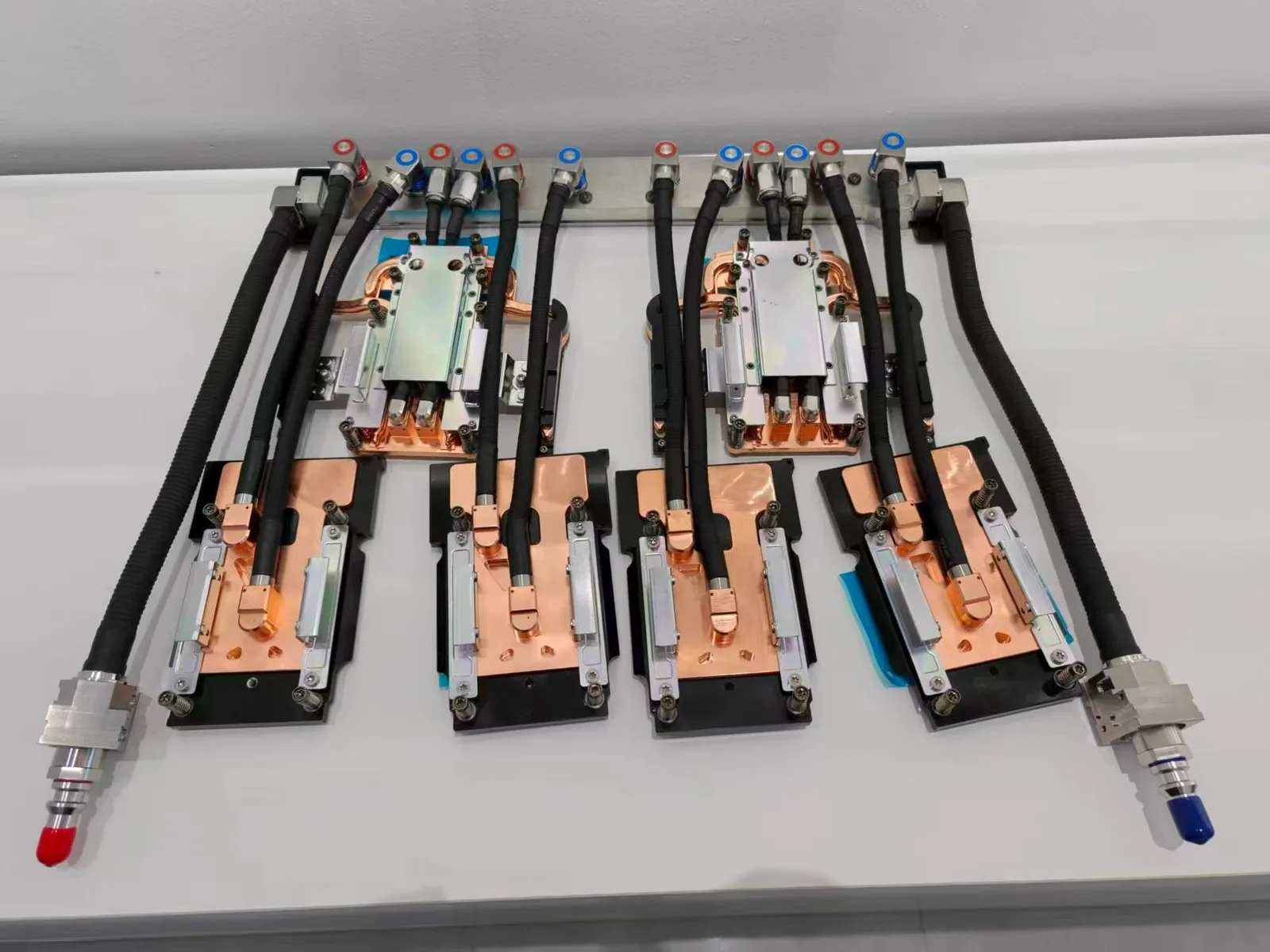
Direct-to-chip cooling is a liquid cooling method that mounts a cold plate directly on the processor die surface, circulating coolant through internal micro-channels to remove 500–2000W per chip. Compared to traditional air cooling (limited to 25kW per rack) and full immersion cooling (requires custom tanks), direct-to-chip offers the best balance of thermal performance, deployment simplicity, and cost for modern AI data centers operating at 60–120kW per rack. ToneCooling manufactures custom direct-to-chip cold plates for NVIDIA GB200, H200, AMD MI300X, Intel Xeon. ISO 9001 certified. prototypes from 1 piece.
This is a high-level overview of all three cooling approaches. For a deeper comparison of direct-to-chip cold plates versus full immersion cooling, including retrofit and serviceability tradeoffs, see our Immersion Cooling vs. Direct-to-Chip Cold Plates guide. For an air-cooling-specific breakdown for data centers, see Air Cooling vs Liquid Cooling for Data Centers.
Last Updated: 2026-04-13 | Author: ToneCooling Thermal Engineering Team

Overview
Direct-to-chip cooling is a liquid thermal management approach where a sealed cold plate is mounted in direct contact with a processor’s integrated heat spreader (IHS) or bare die. Coolant – typically 50/50 ethylene glycol-water per ASHRAE W55 guidelines – flows through internal micro-channels at 0.5–2.0 LPM, absorbing heat through forced convection and transporting it to a facility cooling loop via a Coolant Distribution Unit (CDU).
Direct-to-chip cooling achieves thermal resistance of 0.02–0.10°C/W – 10 to 20 times more effective than traditional air-cooled heatsinks (0.5–2.0°C/W). This enables:
- Rack density: 60–120kW per rack (vs 8–25kW for air cooling)
- Energy efficiency: PUE of 1.05–1.15 (vs 1.4–1.6 for air cooling) – 40–60% cooling energy savings
- Noise reduction: Eliminates or reduces server fans, lowering data center noise by 20–30 dB
- Component lifespan: Lower junction temperatures extend CPU/GPU lifespan by 2–3x
Direct-to-chip vs Air Cooling vs Immersion: Complete Comparison

| Factor | Direct-to-Chip | Air Cooling | Single-Phase Immersion | Two-Phase Immersion |
|---|---|---|---|---|
| Max rack power | 60–120kW | 8–25kW | 100–200kW | 100–250kW |
| Thermal resistance | 0.02–0.10°C/W | 0.5–2.0°C/W | 0.05–0.15°C/W | 0.03–0.10°C/W |
| PUE | 1.05–1.15 | 1.4–1.6 | 1.02–1.10 | 1.01–1.08 |
| Server modification | Minimal (add cold plates) | None | Complete redesign | Complete redesign |
| Deployment complexity | Medium | Low | High | Very high |
| Serviceability | Standard (hot-swap compatible) | Standard | Requires draining | Complex |
| Coolant | Water-glycol | Air | Dielectric fluid | Dielectric fluid |
| OCP/ASHRAE support | Full (OCP standards) | Full | Growing | Limited |
When to Choose Direct-to-Chip Cooling
Direct-to-chip is the optimal choice when:
- Upgrading existing infrastructure: direct-to-chip cold plates can be added to standard servers without complete redesign – unlike immersion which requires custom tanks and server chassis
- AI training clusters: NVIDIA GB200 NVL72 racks generate 120kW – impossible with air, and direct-to-chip is the OEM-recommended cooling method
- Budget-conscious deployment: direct-to-chip capital cost is 3–5x lower than immersion for equivalent cooling capacity
- Serviceability requirements: direct-to-chip allows standard hot-swap server maintenance without draining fluid
- Mixed cooling environments: direct-to-chip can coexist with air-cooled servers in the same data center – immersion requires dedicated rooms
ToneCooling direct-to-chip Cold Plate Specifications
| Parameter | Aluminum CNC | Copper Vacuum Brazed |
|---|---|---|
| Thermal resistance (1.5 LPM) | 0.08°C/W | 0.04°C/W |
| Max TDP | 300W | 1200W+ |
| Coolant | 50/50 EGW, DI water per ASHRAE W55 | |
| Order quantity | From 1 piece | 50 pcs |
| Prototype delivery | 4–6 weeks | |
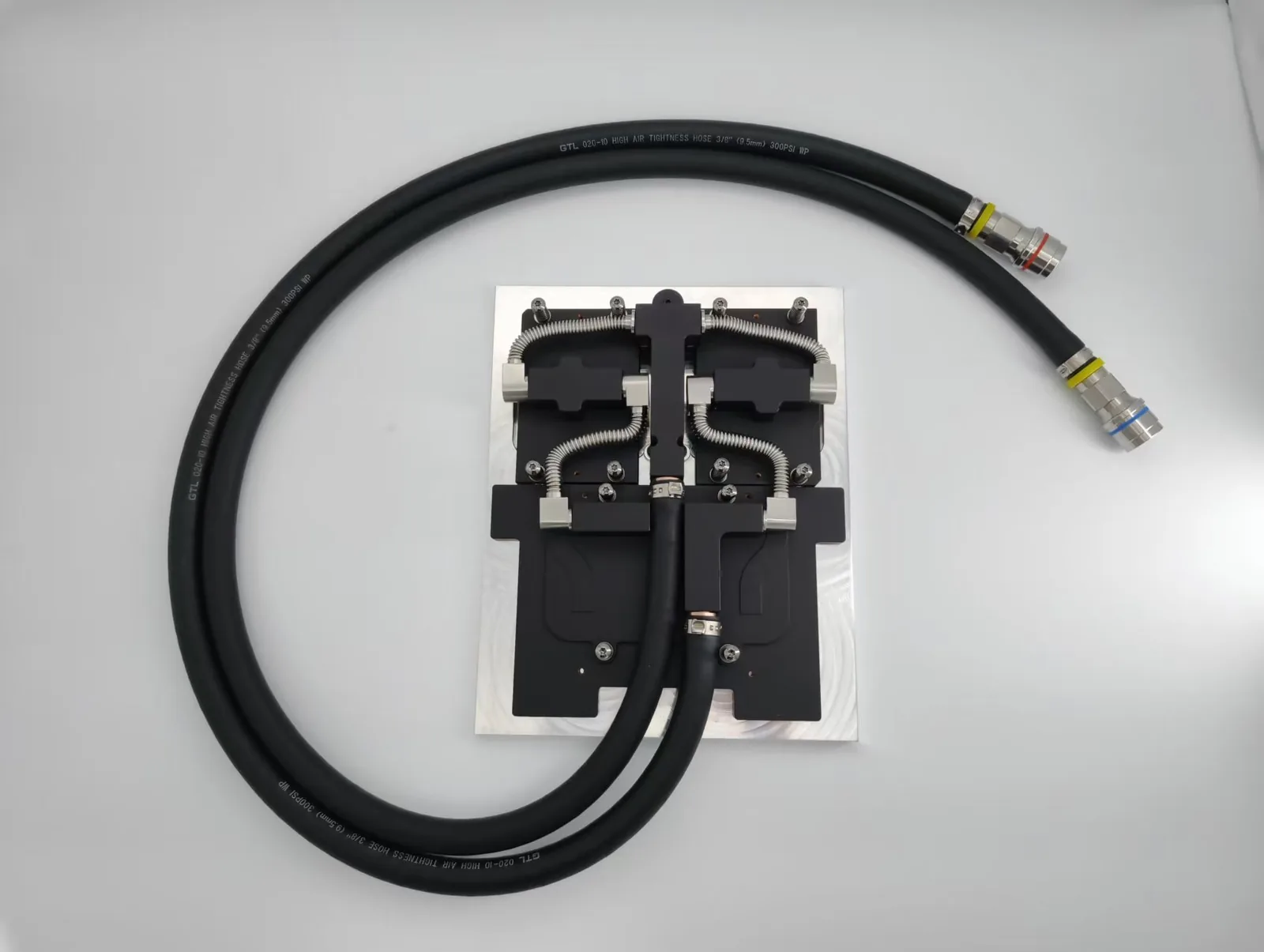
Direct-to-chip Cooling Market Trends (2026)
- OCP standardization: Open Compute Project liquid cooling specifications accelerating direct-to-chip adoption in hyperscale data centers
- Energy regulations: EU Energy Efficiency Directive pushing PUE targets below 1.2, favoring liquid cooling over air
About ToneCoolingCooling
ToneCooling is an ISO 9001 certified direct-to-chip cold plate manufacturer in Huizhou, Guangdong, China. We produce custom liquid cold plates, vapor chambers, and copper heatsinks. Australia, North America, Europe support.
Request direct-to-chip Cold Plate Quote
➔ Get direct-to-chip Cold Plate Quote | info@tonecooling.com | US: +1 (832) 720-7542
Frequently Asked Questions
What is direct-to-chip cooling?
A liquid cooling method mounting a cold plate directly on the CPU/GPU die, circulating coolant through micro-channels to remove 500–2000W per chip. 10–20x more effective than air cooling. Enables 60–120kW rack density.
Direct-to-chip vs immersion cooling: which is better?
Direct-to-chip is simpler to deploy (uses existing servers), 3–5x lower capital cost, and allows standard hot-swap maintenance. Immersion offers slightly higher cooling capacity (200kW+ per rack) but requires complete server redesign and custom tanks.
What coolant is used in direct-to-chip cooling?
50/50 ethylene glycol-water (EGW) per ASHRAE W55 guidelines. Deionized water for cleanroom environments. Propylene glycol-water for food-grade applications.
How much does direct-to-chip cooling cost per rack?
Payback period: 18–24 months via energy savings of 40–60%.
Does ToneCooling provide direct-to-chip cold plates for all GPU platforms?
Yes. NVIDIA GB200, GB300, H200, RTX series. AMD MI300X, EPYC. Intel Xeon. Custom OAM and SXM form factors.