EV Battery Cold Plate Solutions for Lithium-Ion Battery Modules
What Is Battery Cold Plate Solutions?
Battery Cold Plate Solutions is a precision-engineered thermal management component designed for high-power electronics cooling. ToneCooling provides battery cold plate solutions solutions validated for AI server, data center, EV battery, and power electronics applications.
EV battery cold plates are critical components in modern electric vehicle and energy storage thermal management. As the global energy transition accelerates, battery packs in EVs and energy storage systems generate significant heat during charging and discharging. Without effective EV battery cold plate solutions, this heat can lead to reduced battery performance, shortened lifespan, and even serious safety incidents. ToneCooling specializes in manufacturing high-performance battery cold plates using advanced FSW aluminum technology for lithium battery thermal management across electric vehicles, grid storage, and industrial applications.
Battery thermal management is a critical technology ensuring the safe, efficient, and long-lasting operation of energy storage systems. Among various thermal management solutions, battery cold plates have emerged as a mainstream thermal management solution due to their efficiency, reliability, and flexibility. Battery cold plates facilitate direct liquid contact with battery surfaces, rapidly transferring heat from batteries to the cooling medium, thereby maintaining optimal operating temperatures.
The core function of battery cold plates extends beyond heat dissipation; they also play vital roles in maintaining temperature uniformity within battery packs, preventing localized overheating, enhancing system safety, and extending battery life. As energy storage systems continue to achieve higher energy densities and face increasingly complex application environments, efficient and reliable battery cold plate solutions have become more important than ever.
Part 1: Application Equipment and Performance of Battery Cold Plates
Application Equipment
Energy Storage Container (ESS) Battery Cold Plates
Energy storage containers are core carriers of large-scale energy storage systems, typically containing thousands or even tens of thousands of battery cells. Container battery cold plates are specifically designed for such large-scale energy storage applications, capable of handling high thermal loads while providing uniform temperature distribution. These cold plates typically feature modular designs for easy integration into standard container structures while ensuring reliable operation in harsh environments.
Electric Vehicle (EV) Battery Pack Cold Plates
Electric vehicle power batteries need to deliver maximum energy output within limited space, placing extremely high demands on their thermal management systems. EV battery cold plates employ lightweight designs that ensure efficient heat dissipation while minimizing system weight. These cold plates are typically tightly integrated with battery modules, directly contacting cell surfaces for optimal thermal conduction efficiency.
Data Center Battery Cold Plates
Data center backup power systems require exceptionally high reliability, where battery cold plates ensure that UPS systems can provide stable power during critical moments. Data center battery cold plates focus on redundancy and maintenance convenience, supporting hot-swappable replacements without affecting system operation.
High-Performance Computing (HPC) Cooling Solutions
HPC systems require substantial backup power support, and the heat generated by these power systems must be dissipated promptly to avoid impacting main system operations. HPC-specific battery cold plates utilize high-precision temperature control technology to ensure computational environment stability.
Medical Equipment Battery Thermal Management
Medical devices such as portable diagnostic equipment and emergency power systems have special requirements for safety and reliability. Medical equipment battery cold plates use medical-grade materials and leak-free designs to ensure absolute safety.
Performance Characteristics
Heat Dissipation Efficiency
The heat dissipation efficiency of battery cold plates directly determines the performance of the entire energy storage system. Modern energy storage battery cold plates enhance heat dissipation efficiency through various innovative designs:
- Wide Channel Design: Reduces fluid resistance, increases flow rate, and is suitable for low-viscosity coolants and high-flow applications
- Narrow Channel Optimization: Increases heat exchange area, improves heat transfer efficiency, and is ideal for space-constrained applications
- Turbulator Structure Innovation: Disrupts laminar boundary layers through specially designed turbulator structures, enhancing turbulence effects and improving heat exchange efficiency
- Multi-Channel Parallel Layout: Ensures even distribution of coolant, avoids flow dead zones, and maximizes the use of heat exchange surfaces
Temperature Uniformity
Uneven internal temperatures within battery packs can exacerbate performance variations between cells, accelerating overall system degradation. High-quality battery cold plates ensure excellent temperature uniformity through:
- Precisely designed flow channel layouts that guarantee nearly identical cooling effects for each battery cell
- Selection of highly thermally conductive materials to rapidly balance regional temperature differences
- Intelligent flow distribution technology that dynamically adjusts coolant allocation based on thermal load
- Integrated temperature sensor points for accurate temperature monitoring and adjustment
Pressure Resistance and Sealing
Energy storage systems, particularly high-voltage applications, have strict requirements for cold plate pressure resistance and sealing:
- Aerospace-grade sealing technology ensures long-term operation without leakage
- Burst pressure testing reaches 3-5 times the working pressure, providing safety redundancy
- Multiple sealing material options compatible with different cooling media (water, glycol solutions, oil-based coolants, etc.)
- Fully automated sealing welding processes eliminate human factor influences
Lightweight Design
Especially in mobile applications, cold plate weight directly affects overall system efficiency:
- Use of high specific strength materials such as aluminum alloys and composite materials
- Topology-optimized structural designs that remove unnecessary material
- Thin-wall high-strength channel technology that ensures pressure-bearing capacity while reducing weight
- Multi-functional integrated designs that combine cold plates with structural components
Customizability
Different application scenarios have unique requirements for battery cold plates:
- Flexible size adjustments to adapt to various battery module layouts
- Diverse interface designs supporting multiple connection methods
- Material compatibility considerations for different chemical properties of coolants
- Electrical insulation options to ensure system safety

Part 2: ToneCooling Battery Cold Plates’ Unique Advantages
Manufacturing Process Advantages
Leading Brazing Technology
ToneCooling pioneers advanced vacuum brazing technology in battery cold plate manufacturing. This process achieves metallurgical bonding without melting the base material through precise control of temperature, time, and atmospheric conditions. Our brazed energy storage battery cold plates feature:
- Joint strength reaching over 90% of the base material, far exceeding traditional welding processes
- Extremely low thermal resistance values ensuring excellent thermal conduction performance
- Uniform microstructure free from defects such as pores and cracks
- Capability to handle complex channel structures achieving three-dimensional cooling paths
- Compatibility with multiple material combinations including different aluminum series, copper-aluminum composites, etc.
Brazed container battery cold plates can withstand extreme temperature cycles (-40°C to 120°C) without performance degradation, which is crucial for outdoor energy storage container applications.
Extruded Profiles and Friction Stir Welding Technology
For large flat cold plates, ToneCooling employs combined processes of extruded profiles and friction stir welding (FSW):
- First, form internal channel profiles through precision extrusion
- Then seal channels using FSW technology, a solid-state joining process requiring no melting or filler materials
- FSW joints feature fine-grained structures with mechanical properties superior to base materials
- No chemical reagents used, ensuring environmentally friendly production
- Minimal deformation guaranteeing flatness requirements
This combined process is particularly suitable for mass-producing standardized battery cold plates, significantly reducing costs while ensuring quality.
Flow Channel Structure Innovation
Wide Channel Turbulator Structure Design
ToneCooling’s patented wide channel turbulator structure adds micro turbulator elements to traditional wide channels:
- Main channels maintain large cross-sections preserving low flow resistance characteristics
- Turbulator elements strategically placed in critical thermal areas enhance local heat transfer
- CFD-optimized turbulator element shapes, sizes, and distributions
- Test data shows 35% improvement in heat transfer efficiency with only 12% increase in pressure drop
- Particularly suitable for high-flow, high-thermal-load container battery cold plate applications
Narrow Channel Bracket Version
For extremely space-constrained applications, we developed an integrated narrow channel bracket design:
- Channel height only 1.5-2.5mm, maximizing space savings
- Cold plates simultaneously serving as battery module structural supports
- High-strength thin-wall design maintaining load-bearing capacity comparable to traditional brackets
- Integrated temperature and pressure sensor installation locations
- Widely used in high-end electric vehicle battery systems
Solution Advantages
Integrated Solutions
ToneCooling provides not only battery cold plate products but complete thermal management solutions:
- Specially formulated structural adhesives optimizing thermal conduction and mechanical bonding properties
- Energy storage chassis housings integrating cooling channels reducing interfaces and connection points
- Quick-connect plumbing system designs reducing on-site installation time
- Intelligent control systems achieving precise temperature management
- Debugging and maintenance tool kits reducing lifecycle costs
Breakthrough Load Capacity
Our “600kg Load-Bearing Reinforced Liquid Cold Plate Solution” redefines cold plate functional boundaries:
- Cold plates directly serving as battery pack load-bearing structures requiring no additional brackets
- Special reinforcement rib designs increasing stiffness with minimal weight addition
- Surface anti-slip treatment ensuring secure battery module placement
- Passed rigorous tests including vibration, impact, and fatigue assessments
- Particularly suitable for mobile energy storage applications such as electric trucks and marine energy storage
High Voltage and High Efficiency Solutions
ToneCooling developed specialized solutions for particular application scenarios:
“High Voltage Series Energy Storage Liquid Cooling Solution” designed for systems above 1000V:
- Special insulation treatment ensuring high voltage safety
- Material selection preventing electrochemical corrosion
- Specially designed interfaces preventing arc generation
- Compliance with latest safety standards and certification requirements
“1C Energy Storage Liquid Cooling Solution” designed for high-rate charge/discharge applications:
- Optimized transient thermal response characteristics quickly addressing thermal shocks
- Dynamic flow regulation mechanisms adapting to different heat generation rates
- Temperature uniformity control algorithms preventing thermal runaway propagation
- Validated in practical projects supporting continuous 1C charge/discharge cycles

Part 3: How to Choose the Right Battery Cold Plate
Selecting the appropriate battery cold plate requires comprehensive consideration of multiple factors. The following key considerations will help you make the right choice:
Application Scenario Analysis
- Fixed energy storage or mobile application? Mobile applications need to consider vibration and impact factors
- What are the environmental conditions? Extreme temperatures, humidity, and corrosive environments require special designs
- What are the space constraints? Size and shape restrictions affect cold plate layout
- What are the maintainability requirements? Some applications require on-site maintenance capabilities
Battery Type and Characteristics
- Different battery chemistry systems (LFP, NMC, etc.) have different heat generation characteristics
- Battery capacity and arrangement affect thermal load distribution
- Battery maximum allowable temperature and temperature difference limits determine cooling performance requirements
- Battery performance degradation over lifecycle requires cooling capacity margin
Quantified Heat Dissipation Requirements
- Accurately calculate peak and continuous thermal loads
- Determine maximum allowable temperature and temperature uniformity requirements
- Consider transient thermal behaviors, such as thermal shocks from charge/discharge rate changes
- Evaluate cooling medium types, temperature, and flow rate limitations
Fluid Resistance Considerations
- Cooling system pumping power limitations determine allowable pressure drop ranges
- Flow resistance characteristics affect system operating costs and noise levels
- Need to consider clogging risks and maintenance cycles
Structural Strength Requirements
- Static load weight determines minimum thickness and support structures
- Dynamic load conditions (vibration, impact) require dynamic analysis
- Installation methods and interface strength require specialized evaluation
- Fatigue loads over lifecycle require design margins
Comprehensive Cost Assessment
- Balance between initial cost and lifecycle cost
- Optimization of material cost and processing cost
- Estimation of maintenance and replacement costs
- System-level cost impact analysis (such as energy saving effects)
Certification and Standard Compliance
- Industry-specific certification requirements (UL, IEC, GB, etc.)
- Safety standard compliance (explosion-proof, fire protection, electrical safety, etc.)
- Environmental standard compliance (RoHS, REACH, etc.)
- Quality system certification (ISO 9001:2015, IEC 62443 · AS9100, etc.)
Part 4: Future Development Trends in the Battery Cold Plate Industry
Battery cold plate technology is rapidly evolving, with several key directions worthy of attention:
Higher Integration
Future battery cold plates will become more integrated, evolving from single-function components to multi-functional modules:
- Integration of cooling and structural functions reducing system weight and volume
- Sensor integration enabling real-time monitoring of temperature, pressure, flow rate and other parameters
- Integration of smart valves and actuators achieving precise flow control
- Deep integration with battery management systems (BMS) enabling collaborative thermal management
Stronger Heat Dissipation Capability
As battery energy density continues to increase, heat dissipation capabilities need simultaneous enhancement:
- Application of new materials such as carbon nanotubes and graphene enhancing thermal conductivity
- Further breakthroughs in microchannel technology improving heat dissipation capacity per unit area
- Combination with phase change cooling technology handling instantaneous high thermal loads
- Adaptive channel technology dynamically adjusting cooling intensity based on thermal load distribution
Smarter Thermal Management Systems
Artificial intelligence and IoT technologies will deeply integrate into thermal management systems:
- Predictive thermal management based on machine learning proactively adjusting cooling strategies
- Application of digital twin technology virtually simulating and optimizing system performance
- Integration of edge computing nodes enabling local intelligent decision-making
- Cloud collaborative management optimizing multiple systems improving overall energy efficiency
Sustainability and Environmental Protection
Environmental requirements will drive cold plate technology toward greener development:
- Increased use of recyclable materials
- Reduced energy consumption and emissions in manufacturing processes
- Long-life design reducing replacement frequency
- Substitution of traditional coolants with environmentally friendly cooling media
Standardization and Modularization
Healthy industry development requires promoting standardization:
- Interface standardization facilitating interconnection between different systems
- Unified performance testing standards enabling more objective product comparisons
- Modular design reducing customization costs and improving delivery speed
- Quick-connect technology reducing on-site installation workload

Conclusion
As core components of energy storage system thermal management, EV battery cold plates play decisive roles in system performance, safety, and lifespan. From large-scale energy storage containers to electric vehicles, from data centers to medical equipment, efficient and reliable battery cold plate solutions are driving the widespread application and rapid development of energy storage technology. According to the U.S. Department of Energy, advanced battery thermal management is critical for next-generation EV performance.
As a leading enterprise in battery cold plate technology, ToneCooling provides customers with high-performance, high-reliability products and services through advanced manufacturing processes, innovative product designs, and comprehensive solutions. Our brazing technology, extruded profiles and friction stir welding processes ensure excellent performance in strength and thermal conductivity; innovative designs such as wide channel turbulator structures and narrow channel bracket versions meet special requirements of different application scenarios; integrated solutions and specialized high-voltage high-efficiency products demonstrate our ability to solve complex technical problems.
As energy storage technology continues to advance and market demands become increasingly diversified, ToneCooling will continue to dedicate itself to innovation and upgrading of battery cold plate technology, providing customers with higher quality products and services, and jointly promoting global energy transition and sustainable development.
Regardless of what type of energy storage system you are developing, selecting the appropriate battery cold plate solution is one of the key factors for project success. ToneCooling’s professional team is always ready to provide technical consultation and customized solutions, helping you build excellent-performing, safe and reliable energy storage systems
| Parameter | ToneCooling Specification |
|---|---|
| Material | Copper T2 / 6061 aluminum |
| Welding method | Transient liquid phase diffusion welding |
| Test pressure | 1 MPa (helium leak + nitrogen hold) |
| Working medium | PG25 (25% propylene glycol) |
| Custom design | Yes — DXF/STEP input accepted |
Frequently Asked Questions (FAQ)
What is an EV battery cold plate?
An EV battery cold plate is a liquid-cooled thermal management component designed to regulate battery pack temperatures in electric vehicles. It uses internal fluid channels to absorb and transfer heat away from battery cells, maintaining optimal operating temperatures for performance and longevity.
What materials are used for battery cold plates?
Most EV battery cold plates are manufactured from aluminum alloys (such as 3003 or 6063) due to their excellent thermal conductivity, lightweight properties, and corrosion resistance. Some high-performance applications use copper or copper-aluminum composite designs for enhanced heat transfer.
How does ToneCooling manufacture battery cold plates?
ToneCooling uses advanced friction stir welding (FSW) and vacuum brazing processes to manufacture battery cold plates. Our FSW process creates leak-free joints with superior mechanical strength, while our precision CNC machining ensures accurate internal channel geometries for optimal coolant flow distribution.
Can ToneCooling provide custom OEM/ODM battery cold plate solutions?
Yes, ToneCooling offers full custom OEM/ODM battery cold plate design and manufacturing services. Contact our engineering team to discuss your project requirements. We support clients from initial thermal simulation and prototyping through to mass production, with capabilities including custom flow channel design, pressure testing up to 1.5 MPa, and flexible production volumes from prototype to 100K+ units annually.
Why Choose ToneCooling for EV Battery Cold Plates
ToneCooling is a leading EV battery cold plate manufacturer based in Dongguan, Guangdong, China. With over a decade of experience in liquid cooling thermal management, we deliver battery cold plate solutions that meet the highest standards of performance and reliability.
- Advanced FSW Technology — Our friction stir welding process creates leak-free, high-strength joints for EV battery cold plates, ensuring long-term reliability under thermal cycling and vibration.
- Full Custom OEM/ODM Design — From initial thermal simulation to mass production, ToneCooling supports your complete EV battery cold plate development cycle with in-house engineering expertise.
- Precision CNC Machining — High-accuracy internal flow channel machining ensures optimal coolant distribution across every battery cell surface for maximum heat dissipation.
- ISO 9001 Certified Quality — Every battery cold plate undergoes 100% helium leak testing, pressure testing up to 1.5 MPa, and dimensional inspection to guarantee zero-defect delivery.
- Scalable Production Capacity — From rapid prototyping (5-7 days) to high-volume manufacturing (100K+ units/year), we scale EV battery cold plate production to match your project timeline.
- Global OEM Track Record — ToneCooling supplies battery cold plates to electric vehicle makers, BESS integrators, and industrial OEMs across North America, Europe, and Asia-Pacific.
Ready to discuss your next EV battery cold plate project? Request a quote from ToneCooling and get a response within 24 hours.
Supported Battery Cell Formats for Cold Plate Integration
ToneCooling designs EV battery cold plates optimized for all major lithium-ion cell formats. Each format presents unique thermal management challenges that our engineering team addresses through custom flow channel design and precision manufacturing.
Prismatic Cell Battery Cold Plates
Prismatic cells are widely used in electric vehicle battery packs from major automakers. ToneCooling manufactures flat-profile battery cold plates that mount directly beneath or between prismatic cell modules, providing uniform surface contact for efficient heat removal. Our FSW aluminum cold plates support module-level and pack-level cooling configurations for prismatic cell formats including CATL, BYD, and Samsung SDI standard dimensions.
Cylindrical Cell Battery Cold Plates
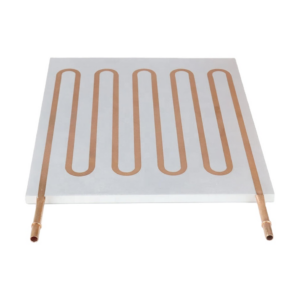
Cylindrical cells (18650, 21700, 4680) require specialized cold plate designs that accommodate the curved cell-to-plate interface. ToneCooling engineers serpentine and parallel flow channel patterns that maximize contact area with cylindrical cell holders, ensuring consistent temperature distribution across the entire battery module. Our cold plates for cylindrical cell packs support both bottom-cooling and side-cooling configurations.
Pouch Cell Battery Cold Plates
Pouch cells offer high energy density but require careful thermal management due to their thin, flexible construction. ToneCooling produces ultra-thin battery cold plates (as thin as 3mm) designed for interleaved pouch cell stacking, where cold plates are placed between individual cells or cell groups. This design enables direct cell-to-plate thermal conduction, achieving the lowest thermal resistance of any battery cold plate configuration.
Learn more about our complete range of thermal management solutions for electric vehicles, energy storage, and industrial applications.
References: ASHRAE thermal standards, Wikipedia: Heat Sink Technology
Why Choose ToneCooling for Ev Battery Liquid Cold Plate
Engineering review and prototype planning are based on the project requirements. Custom prototype lead time is normally 6–8 weeks after drawing approval and order confirmation; confirm the production schedule in the quotation.
Last Updated: 2026-04-08
Need a custom battery cold plate solutions solution?
ToneCooling engineers respond within 24 hours with CFD-validated thermal recommendations.