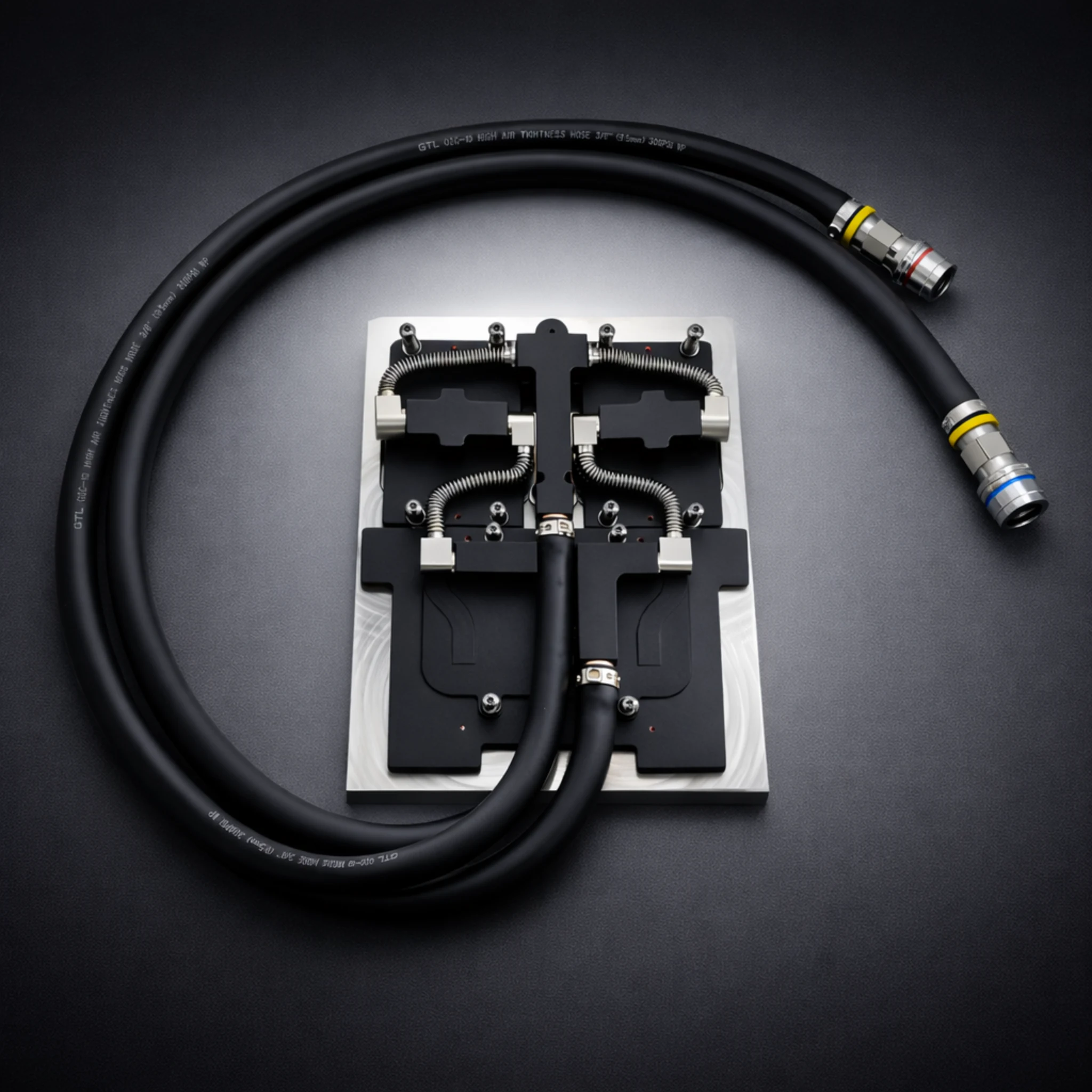
Liquid Air Cooling is a high-performance thermal management solution engineered by ToneCooling for demanding applications.
This comprehensive guide covers liquid vs air cooling solutions for industrial and OEM applications. ToneCooling provides expert insights on liquid vs air cooling technology and implementation.
Choosing the right cooling system for your PC can make or break performance, especially as hardware demands grow hotter in 2024. Whether you’re a gamer pushing frame rates, a creator rendering 4K videos, or a casual user, the debate between liquid cooling vs air cooling remains critical. Let’s dive into their pros, cons, and real-world performance to help you decide.
1. Performance Showdown: Thermal Control & Noise Levels
Temperature Management
Liquid cooling systems, like AIO (All-in-One) coolers or custom loops, excel at dissipating heat from high-end CPUs and GPUs. By transferring heat via coolant to a radiator, they efficiently handle overclocked processors or sustained workloads, often keeping temperatures 5–15°C lower than premium air coolers under heavy loads.
Air coolers, meanwhile, rely on heat pipes and fins to disperse heat. While top-tier models (e.g., Noctua NH-D15) compete with midrange AIOs, they struggle in compact cases or with extreme overclocking due to limited airflow.
2024 Trend: New hybrid air coolers with vapor chamber tech are closing the gap for midrange builds.
Noise Levels
Liquid cooling systems typically run quieter under load. The pump noise is minimal compared to air coolers’ high-RPM fans. However, budget AIOs or poorly configured setups may still produce noticeable sound.
- Liquid Cooling: ~25–35 dB (idle) | ~40–45 dB (load)
- Air Cooling: ~30–40 dB (idle) | ~45–55 dB (load)

2. Cost Analysis: Upfront vs Long-Term Expenses
Initial Investment
- Air Cooling: $20–100 for reliable coolers (e.g., Cooler Master Hyper 212).
- Liquid Cooling: 80–200+𝑓𝑜𝑟𝐴𝐼𝑂𝑠(𝑒.𝑔.,𝑁𝑍𝑋𝑇𝐾𝑟𝑎𝑘𝑒𝑛)∣300–1,000+ for custom loops.
Hidden Costs
- Liquid Cooling: Risk of leaks (rare but costly), coolant replacement every 1–2 years, and potential pump failure.
- Air Cooling: Almost zero maintenance beyond occasional dusting.
2024 Insight: Midrange AIOs now offer 5–6-year warranties, reducing long-term risks.

3. Installation & Compatibility
Space Requirements
- Air Cooling: Tall heatsinks may block RAM slots or clash with small PC cases.
- Liquid Cooling: Radiators need adequate case mounting space (240mm/360mm).
Ease of Setup
Air coolers win for simplicity—attach the bracket, mount the cooler, and done. Liquid cooling requires radiator placement, tubing routing, and ensuring proper pump power.
4. Reliability & Safety
Air coolers have no moving parts beyond fans, making them inherently safer. Liquid cooling, while generally reliable, carries a slight risk of leaks (<1% for quality AIOs). Custom loops demand meticulous maintenance to avoid corrosion or clogging.
2024 Safety Nets: Many AIOs now use non-conductive coolants to minimize damage if leaks occur.
5. Who Should Choose What?
Pick Liquid Cooling If You…
- Overclock CPUs/GPUs (e.g., Intel i9-14900K, AMD Ryzen 9 7950X)
- Prioritize a sleek, minimalist look with RGB lighting
- Want near-silent operation during intensive tasks
Stick with Air Cooling If You…
- Have a budget under $1,500
- Use midrange hardware (e.g., Ryzen 5/7, Intel i5)
- Prefer zero maintenance and “set-and-forget” reliability

2024 Verdict: No “Best” Solution—Only the Right Fit
Liquid cooling shines for high-end builds and aesthetics but costs more and requires careful setup. Air cooling remains king for affordability and hassle-free operation. As hybrid cooling solutions emerge, the gap narrows—but your choice ultimately hinges on budget, performance needs, and patience for maintenance.
FAQ Section
Q: Does liquid cooling last longer than air cooling?
A: High-quality air coolers can last a decade, while AIOs average 5–7 years before pump failure.
Q: Is liquid cooling overkill for gaming?
A: For most midrange gaming PCs, air cooling suffices. Liquid cooling benefits extreme overclockers or small-form-factor builds.
Q: Can I switch from air to liquid cooling later?
A: Yes, but ensure your case supports radiators and your motherboard has a pump header.
Meta Description:
“Liquid cooling vs air cooling for PCs in 2024: We compare temperatures, noise, cost, and reliability to help you choose the best cooling solution for gaming, work, or budget builds.”
By balancing technical details with practical advice, this guide targets both beginners and enthusiasts while optimizing for SEO through keyword integration, data-backed comparisons, and mobile-friendly formatting.
For industry standards and best practices, refer to ASHRAE thermal guidelines.
What Is Liquid Air Cooling?
Does ToneCooling offer OEM and ODM services?
Yes. ToneCooling provides full OEM and ODM services including custom design, prototyping, thermal simulation, and volume production. We serve customers in North America, Europe, and Asia-Pacific with engineering support and samples within 2–4 weeks.
What server platforms does ToneCooling support?
ToneCooling liquid cooling solutions support Intel LGA4677, Intel LGA7529, AMD SP5, and NVIDIA GPU platforms including GB200 and H100/H200 configurations.
Can ToneCooling provide direct-to-chip cooling for AI clusters?
Yes. ToneCooling designs and manufactures direct-to-chip liquid cooling cold plates for GPU and CPU in AI training and inference clusters, supporting thermal loads exceeding 700W per chip.
Get a Custom Thermal Solution from ToneCooling
ToneCooling is a professional liquid cooling solution provider specializing in custom cold plates, AIO coolers, and advanced thermal management systems. With ISO 9001:2015 certified manufacturing, we deliver prototype samples within 2–4 weeks. Contact ToneCooling today for a free consultation and quote — we respond within 24 business hours.
Industry References & Standards
Need a Custom Liquid Cold Plate?
ToneCooling engineers design thermal solutions for your specific requirements. Get an engineering RFQ review based on your uploaded requirements.
Liquid Vs Air Cooling Comparison is a critical component in modern thermal management. ToneCooling engineers this solution for AI servers, data centers, EV batteries, and power electronics requiring high-performance liquid cooling.
Liquid Vs Air Cooling Comparison: Key Specifications
When evaluating liquid vs air cooling comparison, engineers consider thermal resistance, pressure drop, flow rate, and material compatibility. ToneCooling provides detailed specs for every liquid vs air cooling comparison design, backed by CFD simulation and testing.
| Parameter | ToneCooling Specification |
|---|---|
| Material | Copper T2 / 6061 aluminum |
| Welding | TLP diffusion welding |
| Test pressure | 1 MPa (He leak + N₂ hold) |
| Coolant | PG25 (25% propylene glycol) |
| Custom design | Yes — DXF/STEP accepted |
Why Choose ToneCooling for Liquid Vs Air Cooling Comparison
ToneCooling has manufactured over 50,000 liquid vs air cooling comparison units for global OEM customers. Our liquid vs air cooling comparison production features vacuum brazing furnaces below 10⁻⁴ mbar, FSW machines with ≤0.02mm flatness, and helium leak detection at 10⁻⁸ mbar·L/s. Every liquid vs air cooling comparison undergoes 100% pressure testing at 25 bar.
Our engineering team provides free liquid vs air cooling comparison design consultation, CFD simulation, and rapid prototyping in 7-14 days. Production liquid vs air cooling comparison orders ship in 4-6 weeks under ISO 9001:2015 quality management.
Need a Custom Liquid Cold Plate?
ToneCooling engineers design thermal solutions for your requirements. Response within 24-48 hours.
Last Updated: 2026-04-08
DR Kevin, Thermal Engineer, ToneCooling