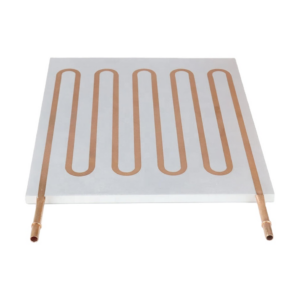
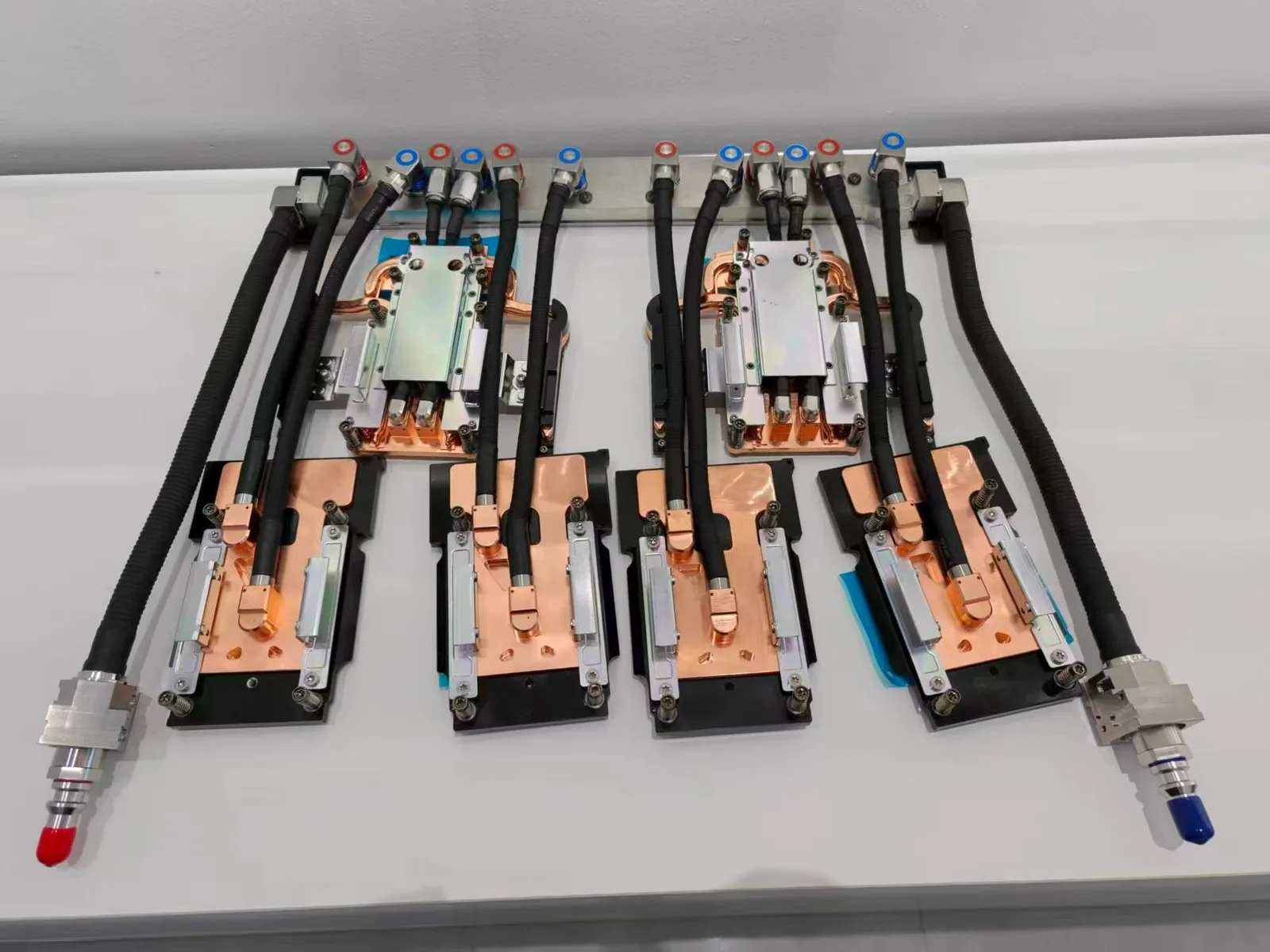
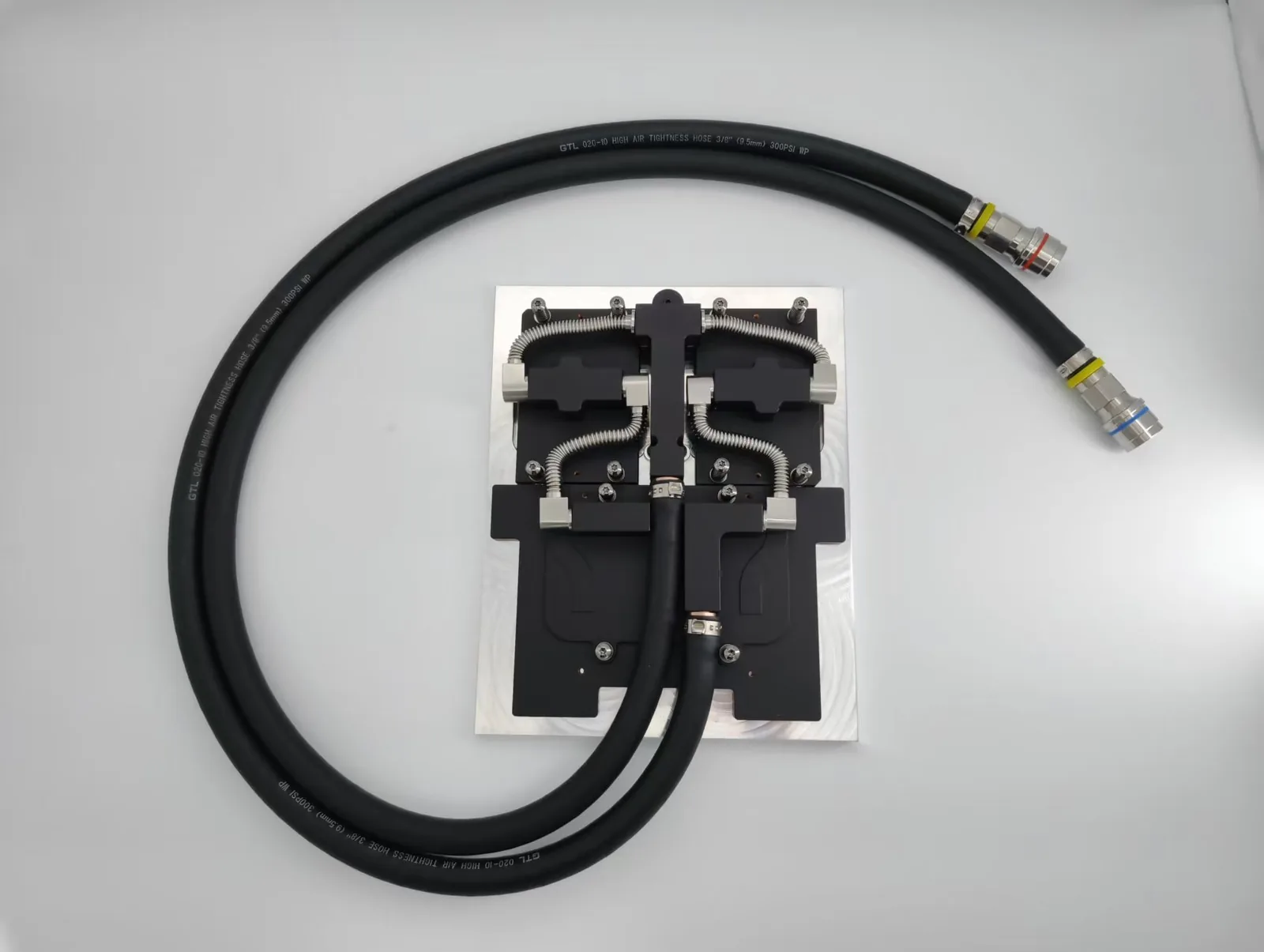
NVIDIA Rubin GPU cooling requires a fundamental shift in liquid cold plate design: single-GPU thermal design power is rising toward 1,800–2,300W, and NVIDIA confirmed at GTC 2026 that liquid cooling is now standardized — not optional — for the Vera Rubin NVL72 platform. ToneCooling manufactures direct-to-chip micro-channel cold plates for next-generation GPU platforms, building on production experience with GB200 and GB300 cooling.
NVIDIA’s Rubin architecture, launching through 2026–2027, represents a generational leap that redefines data center thermal management. With GPU TDP approaching 1,800–2,300W and unprecedented memory bandwidth requirements, the Rubin platform pushes current liquid cold plate technology to its limits.

What Changes With NVIDIA Rubin vs Blackwell Cooling?
Based on NVIDIA’s public roadmap and industry analysis:
| Specification | Blackwell (GB200/300) | Rubin R100 (2026) | Rubin Ultra (2027) |
|---|---|---|---|
| Architecture | Blackwell | Rubin | Rubin Ultra |
| Process node | TSMC 4NP | TSMC 3nm (expected) | TSMC 3nm enhanced |
| GPU TDP (estimated) | 1000-1400W | ~1400W | ~1800W |
| HBM generation | HBM3e | HBM4 | HBM4 |
| Memory capacity | 192-288 GB | ~384 GB (expected) | ~512 GB (expected) |
| NVLink generation | NVLink 5 | NVLink 6 (expected) | NVLink 6 |
| CPU companion | Grace ARM | Vera ARM (expected) | Vera ARM |
| Rack configuration | NVL72 | NVL144 (expected) | NVL144+ |
Thermal Challenges of the Rubin Generation
Challenge 1: 1800W TDP — Beyond Current Cold Plate Limits
Current production micro-channel cold plates are optimized for 1000-1200W. Scaling to 1800W requires:
- Thermal resistance below 0.012 C/W — A 40% improvement over current GB200 cold plates
- Ultra-fine micro-channels (< 0.15mm) — Pushing the limits of vacuum brazing and chemical etching
- Higher flow rates (2.5-4.0 LPM per GPU) — Significantly increased pump power and piping capacity
- Potential two-phase cooling — Phase-change (boiling) heat transfer may become necessary for the highest TDP configurations
Challenge 2: HBM4 Thermal Management
HBM4 memory stacks with ~384-512 GB capacity generate significant heat alongside the GPU die:
- Each HBM4 stack may dissipate 20-30W (vs 15-20W for HBM3e)
- 8-12 HBM stacks per GPU creates a distributed heat map around the GPU die
- Cold plate must cool both the GPU die (concentrated, high flux) and HBM stacks (distributed, moderate flux) simultaneously
- Asymmetric cold plate designs with zone-optimized channels may be required

Challenge 3: NVL144 Rack-Scale Density
The rumored NVL144 configuration would double the GPU count per rack:
| Parameter | Current NVL72 | Projected NVL144 |
|---|---|---|
| GPUs per rack | 72 | 144 |
| Rack GPU power (Rubin) | ~100-200 kW | ~200-260 kW |
| Total rack power | ~150-250 kW | ~280-350 kW |
| Coolant flow rate | 54-108 LPM | 108-216+ LPM |
| CDU capacity needed | 160+ kW | 300+ kW |
At 300+ kW per rack, even optimized liquid cooling systems face challenges with coolant distribution, pump sizing, and heat rejection at the facility level.
Challenge 4: Thermal Interface Innovation
With 1800W TDP, the thermal interface between cold plate and GPU die becomes a critical bottleneck:
- Current TIM technology — High-performance thermal paste achieves 3-5 W/mK. Phase-change materials reach 5-8 W/mK.
- Solder TIM — Indium-based solder TIM achieves 50+ W/mK but requires specialized assembly processes
- Direct liquid contact — Eliminating TIM entirely by flowing coolant directly over the die (research stage)
- Metallurgical bonding — Sintered silver or copper-tin transient liquid phase bonding for minimum interface resistance

Emerging Cooling Technologies for Rubin
Two-Phase Liquid Cooling
Phase-change (boiling) heat transfer can achieve 5-10x higher heat transfer coefficients than single-phase liquid cooling. For Rubin’s extreme TDP, two-phase cooling may become viable for production deployment:
- Utilizes latent heat of vaporization for dramatically higher heat absorption per unit coolant flow
- Enables isothermal cooling (uniform temperature across the entire cold plate surface)
- Requires different cold plate internal geometry optimized for nucleate boiling
- CDU complexity increases (condenser required instead of simple heat exchanger)
Advanced Cold Plate Architectures
- Jet impingement — Coolant jets directly onto the heat source surface through micro-nozzle arrays. Achieves heat transfer coefficients of 50,000-100,000 W/m2K.
- Hierarchical channels — Multiple length-scale channel networks (macro manifold + micro channels) for optimal flow distribution at minimal pressure drop.
- 3D-printed channels — Additive manufacturing enables complex internal geometries impossible with traditional machining or etching.
- Diamond/graphene composites — Ultra-high thermal conductivity materials (1000+ W/mK) for heat spreading layers within the cold plate.

Strategic Implications for Data Center Planning
- Facility design — New data centers should be designed for 200-300 kW per rack from day one, even if initial deployments start at 120 kW
- Cooling infrastructure — Invest in modular CDU systems that can scale capacity as GPU TDP increases
- Cold plate technology — Partner with manufacturers investing in next-gen cold plate R&D (ultra-fine micro-channels, two-phase compatibility)
- Power infrastructure — Plan electrical distribution for 250+ kW per rack with redundancy
- Site selection — Proximity to low-cost power and water/cooling resources becomes even more critical
ToneCooling Next-Generation Cold Plate Development
ToneCooling is investing in cold plate technologies for the Rubin generation and beyond:
- Ultra-fine micro-channels — R&D on sub-0.15mm channel geometries for thermal resistance below 0.012 C/W
- Multi-zone cold plates — Asymmetric designs with optimized zones for GPU die and HBM cooling
- High-flow manifolds — CFD-optimized manifolds for NVL144 rack-scale configurations at 200+ LPM
- Current production — GB200 cold plates and data center cold plates shipping now
- Design collaboration — We work with OEMs 6-12 months ahead of platform launch
Contact Our Engineering Experts Now — ToneCooling is already developing next-gen cold plate solutions. Contact us for early design collaboration or email info@tonecooling.com.
Frequently Asked Questions
When will NVIDIA Rubin be available?
NVIDIA has indicated Rubin on its 2026-2027 roadmap. The R100 GPU is expected in 2026, with Rubin Ultra following in 2027. Server OEMs typically begin thermal design 12-18 months before platform launch.
Will current liquid cooling infrastructure support Rubin?
Partially. Existing direct-to-chip liquid cooling loops can be adapted, but CDU capacity, piping, and cold plates will likely need upgrades. Cold plates designed for GB200 (1000W) will not have sufficient thermal capacity for Rubin at 1400-1800W without redesign.
Should I wait for Rubin or deploy GB200/GB300 now?
Deploy now with GB200/GB300 if your AI workloads demand it. Design your cooling infrastructure with upgrade headroom (size piping and CDU for 150%+ of current requirements). This approach avoids waiting 1-2 years while ensuring relatively smooth upgrade to Rubin when available.
Is ToneCooling one of NVIDIA’s named Rubin cold plate suppliers?
No. NVIDIA named four reference cold plate suppliers for the standardized Vera Rubin program. ToneCooling manufactures compatible direct-to-chip cold plates for OEMs and system integrators building on the Rubin platform outside NVIDIA’s reference supply chain, using the same processes proven on our GB200 and GB300 production.

Industry References & Standards
- DigiTimes: NVIDIA Standardizes Vera Rubin Liquid Cooling, Names Four Cold Plate Suppliers
- NVIDIA Developer Blog: Inside the NVIDIA Vera Rubin Platform
- Electronics Cooling Magazine
- ISO 9001:2015 Quality Management
NVIDIA Rubin GPU cooling is a critical design challenge for next-generation AI infrastructure. ToneCooling engineers direct-to-chip cold plate solutions for AI servers, data centers, EV batteries, and power electronics requiring high-performance liquid cooling.
ToneCooling Direct-to-Chip Cold Plate Manufacturing
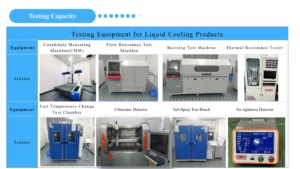
ToneCooling designs and manufactures liquid cold plates at our Huizhou, Guangdong facility — 30,000 m², 1,000,000 cold plates/year production capacity, ISO 9001 certified and IATF 16949-aligned. Our current production supports GB200 and GB300 direct-to-chip platforms with prototype delivery in 4–6 weeks, and we work with OEMs on next-generation platform cooling design 6–12 months ahead of launch.
Our engineering team provides free design consultation and CFD simulation support for custom cold plate projects. Contact us for early design collaboration or email info@tonecooling.com.
Last Updated: 2026-07-13
ToneCooling Thermal Engineering Team