A micro-channel liquid cold plate (MLCP) is a cold plate whose sub-millimeter coolant channels sit very close to the chip, so it removes the extreme heat flux of AI accelerators with lower thermal resistance than conventional machined-channel plates, at the cost of higher pressure drop and stricter coolant filtration. ToneCooling builds micro-channel and skived-fin copper cold plates for high-heat-flux AI and HPC hardware.
This article deeply explains MLCP principles, how it differs from traditional cold plates, its advantages for high-power AI chips, real-world cases, application scenarios, implementation challenges and practical FAQs.

As AI models scale and single-chip power climbs into the kilowatt range, thermal management has become the gating factor for sustained performance. Leading OEMs and hyperscalers no longer treat cooling as a commodity — it’s a strategic system element. Notably, NVIDIA’s system-level directions and DGX/HGX product roadmaps highlight their preference for advanced liquid cooling architectures; industry observers point to MLCP micro-channel liquid cooling plates as a decisive technology for next-generation GPUs.
This article explains what MLCP (Micro-Channel Liquid Cooling Plate) technology is, why it has disruptive potential, how it compares with conventional cold plates, where it excels, real deployments and the obstacles that must be overcome before broad adoption.

What Is MLCP? A Technical Definition
MLCP stands for Micro-Channel Liquid Cooling Plate. At its core, MLCP places a highly dense network of micro-scale coolant channels directly beneath or within the cold plate substrate. Channel widths can range from tens to a few hundred micrometers; channel densities frequently exceed hundreds to thousands of channels per square centimeter depending on the design.
Core characteristics
- Extremely high channel density: microchannels increase wetted surface area dramatically compared to macro channels.
- Reduced thermal boundary layer: the hydraulic boundary layer inside microchannels is thin, increasing convective heat transfer coefficients.
- Short heat conduction path: heat moves from junction → TIM → cold plate wall → fluid with minimal intermediate volume, cutting overall thermal resistance.
- Precision manufacturing: micro-fabrication methods (micromachining, additive manufacturing, laser micromilling, diffusion bonding) are required to create uniform channels and reliable seals.
Why this matters: MLCP is not simply “smaller channels”. It exploits micro-scale fluid physics to amplify heat transfer per unit area and enable cooling of heat fluxes that would overwhelm conventional cold plates.

From “Flood” to “Drip”: How MLCP Upsets the Old Cooling Paradigm
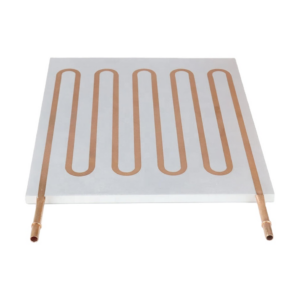
Traditional liquid cold plates typically use macroscopic channels — millimeter-scale passages, serpentine paths or parallel manifolds. These designs work well up to a point, but they leave dead zones, larger thermal gradients, and limited heat extraction density.
MLCP operates like a precision irrigation system: coolant is brought extremely close to the hottest micro-regions, making heat capture near-instantaneous. Instead of relying mainly on conduction through the base plate, MLCP leverages convective exchange in very small hydraulic diameters where heat transfer coefficients are orders of magnitude higher.
MLCP vs Traditional Cold Plate — Head-to-Head
| Metric | MLCP Micro-Channel Cold Plate | Traditional Macro-Channel Cold Plate |
|---|---|---|
| Working principle | Micro-scale channels; dominant micro-convective heat transfer; thin boundary layers | Macro channels; convective + conduction dominantly through plate |
| Heat transfer coefficient | Very high (orders of magnitude higher in microchannels) | Moderate |
| Thermal resistance (chip to fluid) | Very low — can be 30–50% lower | Higher |
| Channel density | Very high (>100–1000 channels/cm²) | Low (few channels/cm²) |
| Uniformity | Excellent; minimizes hot spots | Depends; potential for hotspots between channels |
| Manufacturing complexity | High — requires microfabrication and precision bonding | Low to medium — CNC milling, brazing common |
| Clogging sensitivity | High — strict filtration/cleanliness required | Lower |
| Cost | Higher CAPEX per plate (today) | Lower |
In short, MLCP trades increased manufacturing complexity and purity requirements for dramatically improved thermal performance — a trade that becomes favorable at extreme heat flux densities.

Why MLCP Is Particularly Suited to AI Chips
1. Handling extreme heat flux
Next-generation AI accelerators concentrate enormous power into small dies. MLCP’s high local convective coefficients enable removal of heat fluxes that would otherwise create thermal runaway in conventional plates.
2. Improved junction temperature control
Lower thermal resistance translates directly to lower junction temperatures and smaller temperature gradients across the die — essential to avoid frequency throttling and to maintain deterministic performance during long training runs.
3. Space and weight efficiency
Because MLCPs extract more heat per unit area, they can be thinner or occupy less volume. For rack-dense AI clusters this means higher compute density without proportionally larger cooling infrastructure.
4. Energy efficiency
Although microchannels can increase hydraulic resistance, MLCP’s higher heat transfer efficiency allows lower mass flow rates for the same cooling duty in many designs — potentially reducing pump energy and improving overall data center PUE when integrated holistically.

Real-World Examples & Industry Adoption
Several trends and concrete examples illustrate how MLCP moved from research labs to commercial systems:
NVIDIA and leading OEMs
NVIDIA’s recent system roadmaps (DGX, HGX references) and partner disclosures signal a preference for high-performance liquid cooling approaches that align with MLCP principles. Where NVIDIA does not explicitly brand “MLCP” in public materials, the described micro-channel and high-flux cooling solutions in B-series and successor platforms match MLCP characteristics — high channel density, low thermal resistance, and integrated cold plate stacks.
Server vendors and liquid-cooling providers
Major server OEMs such as HPE, Dell and Supermicro, plus specialized liquid cooling suppliers (several specialist suppliers), have prototyped or offered micro-channel options for high-end GPU nodes. These products are appearing in customer pilot fleets and select hyperscaler deployments where maximum density is required.
ToneCooling’s role
ToneCooling Technology Co., Ltd — with in-house bonding and brazing processes and a long history of custom cold plate design — is well positioned to support MLCP manufacture at scale. Advanced R&D and precision fabrication are prerequisites MLCP suppliers must meet; ToneCooling’s experience in vacuum brazing, friction stir welding and transient liquid phase bonding aligns with those needs.
Typical MLCP Application Scenarios
- GPU/AI training clusters: highest priority — where thermal throttling directly reduces ROI.
- HPC nodes: dense compute racks handling sustained high flux.
- Power electronics: IGBTs, wide bandgap devices with localized hotspots.
- Edge and military/aerospace systems: where volume and reliability under high loads are critical.
Challenges to MLCP Adoption — What’s Holding Back Wide Rollout?
Manufacturing complexity and cost
Producing thousands of identical microchannels with tight tolerances requires advanced fabrication and high yields. Techniques include precision etching, micromilling, laser sintering, or multi-stage diffusion bonding. These processes are costlier than traditional CNC milling and brazing.
Fluid purity and clogging
Microchannels have small hydraulic diameters; particulate contamination, corrosion products, or microbial debris can block channels. Systems using MLCP require rigorous fluid filtration, high purity fluids, inline monitors and stringent commissioning protocols.
Reliability and lifetime validation
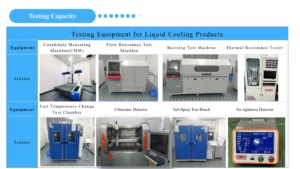
MLCPs must prove they can survive thermal cycling, vibration, and long-term corrosion without channel deformation or leaks. Accelerated life testing and material compatibility studies are more intensive than for conventional plates.
System design and controls
Higher overall hydraulic resistance may call for pumps with precise variable speed control and advanced flow balancing across racks. Integration into existing CDUs and facility water plants requires careful hydraulic modeling.
Practical Engineering Considerations
Material selection and bonding
Common MLCP materials include copper and copper alloys for thermal conductivity; stainless steel or specialized alloys may be used where corrosion resistance is paramount. Bonding options (vacuum brazing, diffusion bonding) must create leak-tight seals without introducing thermal barriers.
Thermal interface materials (TIMs)
Because MLCP effectiveness depends on minimizing thermal contact resistance, TIM selection and clamping strategy directly impacts performance. Options include soft metallic TIMs, high-performance adhesives, or thin phase-change materials engineered for low thermal resistance at clamping pressures used in server cold plate assemblies.
Filtration and fluid management
Particle filters, sediment traps, ion exchange or conductivity monitors and scheduled fluid conditioning are part of MLCP best practices. Many MLCP installations adopt closed loops with tertiary filtration and easy access service points.
Economic Considerations — When Does MLCP Make Sense?
MLCP’s higher CAPEX is most easily justified when:
- Chip power densities exceed what macro-channel cold plates can handle without throttling.
- Space is at a premium: MLCP enables more compute in the same footprint.
- Energy costs are high and reducing PUE yields strong ROI.
- Customer workloads have high value per hour (shortening training time has direct monetary value).
For many hyperscalers and AI labs, the combined benefits of guaranteed peak performance and higher rack density outweigh the higher plate cost.
Deployment & Integration Checklist
- Validate thermal requirements: map chip heat flux and ensure MLCP design margins.
- Specify fluid purity and filtration standards (micron ratings, carryover thresholds).
- Choose robust bonding/manufacturing method and validate leak testing protocol.
- Design CDU/pump system accounting for higher pressure drop and flow balancing.
- Plan maintenance: inline sensors, replacement procedures, and spare-parts stocking.
- Perform staged pilot before fleet deployment to evaluate manufacturability and reliability.
When Should an AI Hardware Team Specify a Micro-Channel Cold Plate?
Specify micro-channel when per-chip power or hotspot heat flux exceeds what your current cold plate can remove within the pressure-drop budget, and when the coolant loop can provide fine filtration and stable chemistry. For moderate heat flux, a conventional machined-channel or skived-fin plate costs less and tolerates particles better.
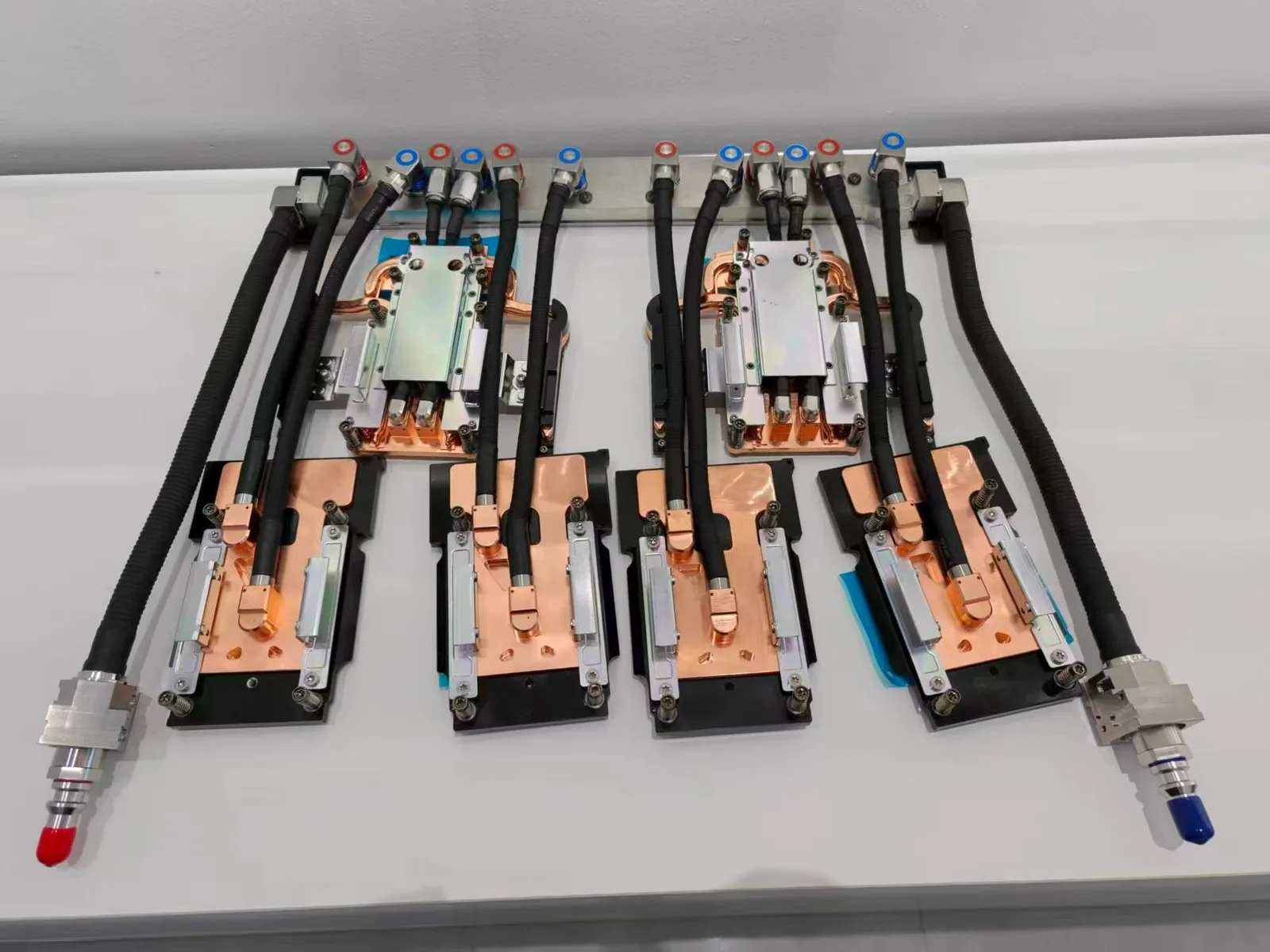
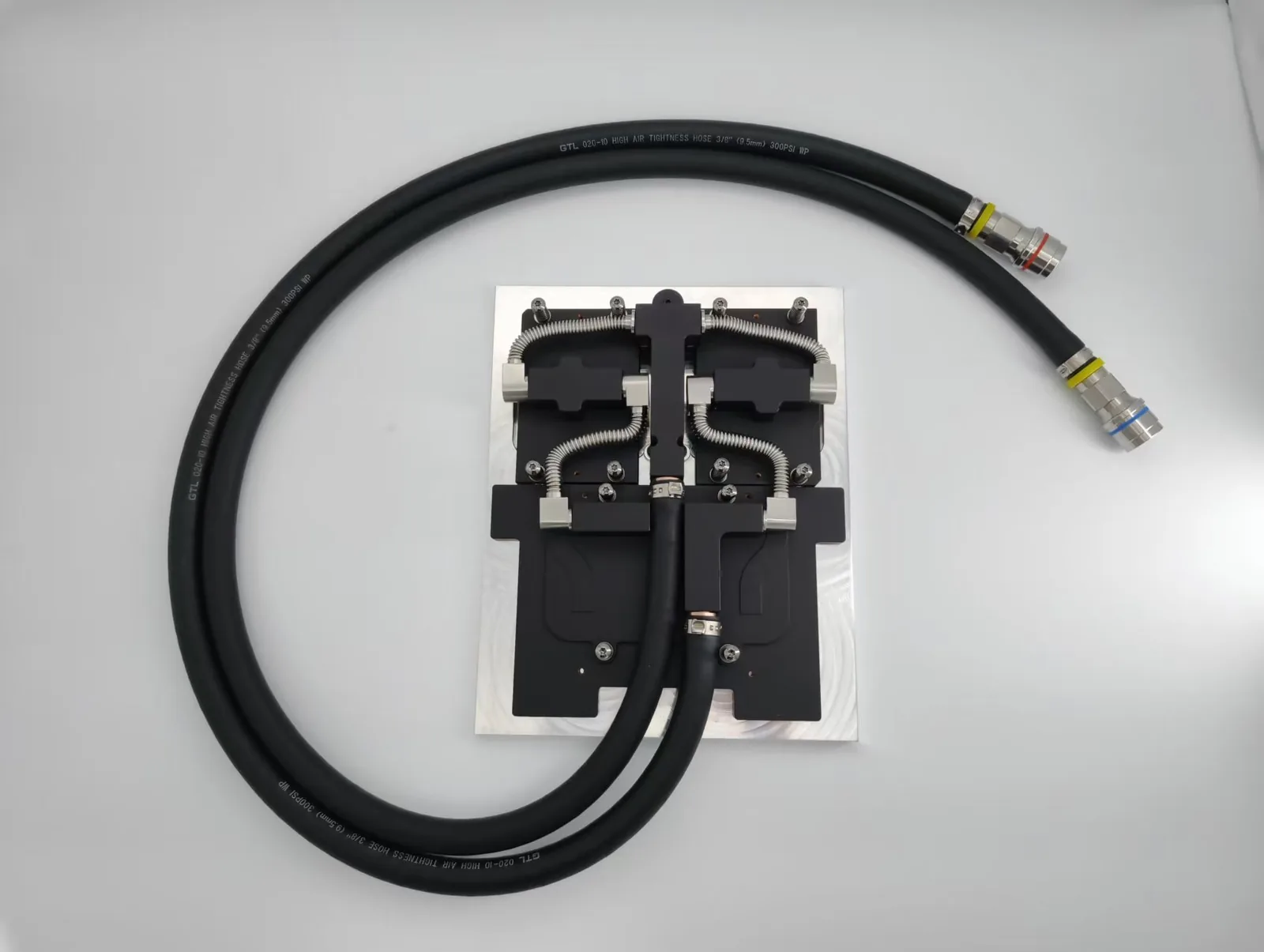
See our AI server liquid cooling kits, the GB300 4G+2C cold plate kit, or send an RFQ.
FAQ — Common Questions About MLCP
Are MLCP microchannels prone to clogging?
A: Microchannels are sensitive to particulates and corrosion products. Best practice: use high-purity coolant, multi-stage filtration (sub-micron), and regular monitoring of pressure drop. Proper commissioning and inline monitoring make clogging a manageable risk.
Will MLCP replace all traditional cold plates?
A: Not immediately. MLCP is a targeted solution for the highest heat flux applications. Traditional cold plates remain cost-effective for mainstream servers and lower power densities. Over time, as manufacturing scales and costs fall, MLCP adoption will broaden.
Which suppliers offer MLCP technology?
Microchannel cold plates are offered by specialist liquid cooling manufacturers and some server OEMs. ToneCooling builds micro-channel and skived-fin copper cold plates to customer designs and supports them from prototype to production.
How to tell if my project needs MLCP?
A: If your sustained chip heat flux or per-chip power exceeds what your current cold plates can remove without using excessive coolant flow or unacceptable junction temperatures (practical thresholds often in the several hundreds W/cm²), MLCP evaluation is warranted.
Conclusion — MLCP Is a Strategic, Not Universal, Revolution
MLCP micro-channel liquid cooling plates represent a leap in thermal engineering: by bringing coolant extremely close to heat sources and exploiting micro-fluidic heat transfer physics, MLCP handles heat fluxes that would overwhelm conventional systems. For AI accelerators and ultra-dense HPC nodes, MLCP can enable sustained peak performance, higher rack density and improved energy efficiency.
However, MLCP’s path to ubiquity depends on resolving manufacturing yield, cost, fluid purity, and long-term reliability questions. In the near term, MLCP will sit alongside conventional cold plates: the weapon of choice for the most thermally demanding workloads while mainstream cold plates continue to serve the broader server market.
Companies like ToneCooling Technology Co., Ltd, with deep experience in custom cold plate design, precision bonding, and mass production techniques, are well placed to help OEMs and hyperscalers evaluate, pilot and scale MLCP solutions.
Contact ToneCooling for MLCP & Custom Liquid Cold Plate Solutions
ToneCooling Technology Co., Ltd (est. 2004) specializes in custom liquid cold plate solutions for high-power, high-heat-flux chips. Our R&D team includes PhDs and senior engineers experienced in vacuum brazing, friction stir welding and transient liquid phase diffusion bonding — manufacturing techniques essential for reliable MLCP production. If you are evaluating MLCP for AI servers, HPC nodes, or power electronics, contact ToneCooling for a technical consultation, pilot program and manufacturability assessment.
Visit: https://tonecooling.com
For industry standards and best practices, refer to ASHRAE thermal guidelines.
Frequently Asked Questions
Does ToneCooling offer OEM and ODM services?
Yes. ToneCooling provides full OEM and ODM services including custom design, prototyping, thermal simulation, and volume production. We serve customers in North America, Europe, and Asia-Pacific with engineering support and samples within 4–6 weeks.
What materials are used in ToneCooling liquid cold plates?
ToneCooling manufactures cold plates in aluminum (6061/6063), copper (C1100/C1020), and stainless steel. Aluminum FSW cold plates are ideal for high-volume EV and industrial applications, while copper cold plates provide the highest thermal conductivity for high heat flux electronics.
What is the typical lead time for custom cold plates?
Prototype samples are delivered within 4–6 weeks. Production orders typically ship within 6–8 weeks after sample approval. An engineer reviews every RFQ and replies by email with next steps.
Get a Custom Thermal Solution from ToneCooling
ToneCooling is a professional liquid cooling solution provider specializing in custom cold plates, AIO coolers, and advanced thermal management systems. With ISO 9001 quality management and our own manufacturing facility in Huizhou, China, we deliver prototype samples typically within 4–6 weeks. Contact ToneCooling today for a free consultation and quote. An engineer reviews every RFQ and replies by email with next steps.
Related ToneCooling Resources
Industry References & Standards
Why Choose ToneCooling for Micro-Channel Cold Plates
Engineering review and prototype planning are based on the project requirements. Custom prototype lead time is normally 4–6 weeks after drawing approval and order confirmation; confirm the production schedule in the quotation.
Building AI servers? See our standard GB300 4G+2C cold plate kit and GB200 cold plate kit, both supplied to published datasheets.
Need a Custom Liquid Cold Plate?
ToneCooling engineers review your drawings and requirements and reply by email with next steps.
Last updated: 2026-10-02
Related guides
- Microchannel cold plate design guide — ΔP, filtration and RFQ inputs
- Micro-channel vs mini-channel cold plates — when to choose each
- Types of cooling plates — all construction types