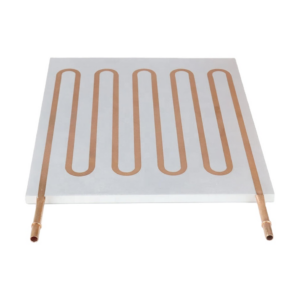
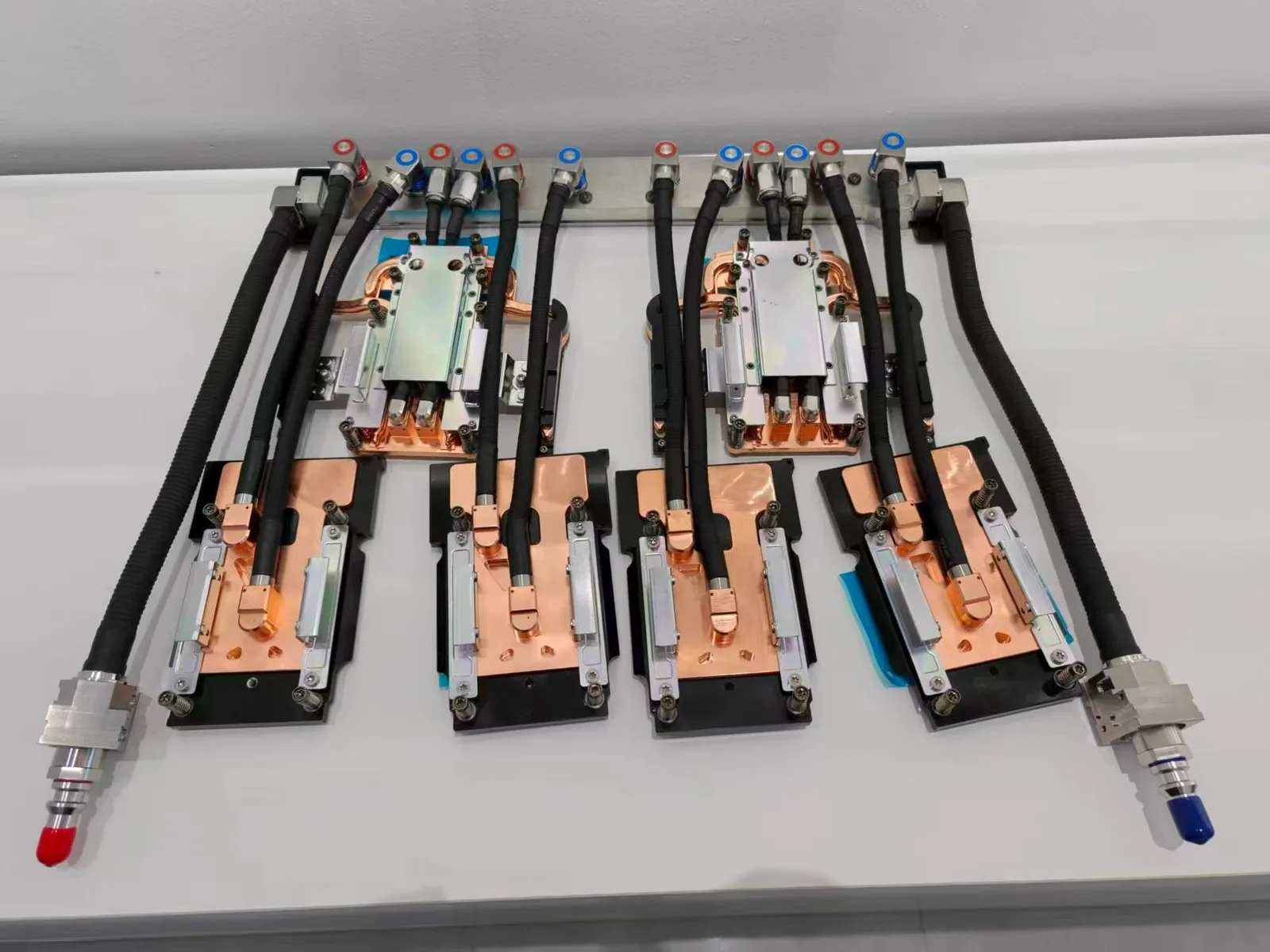
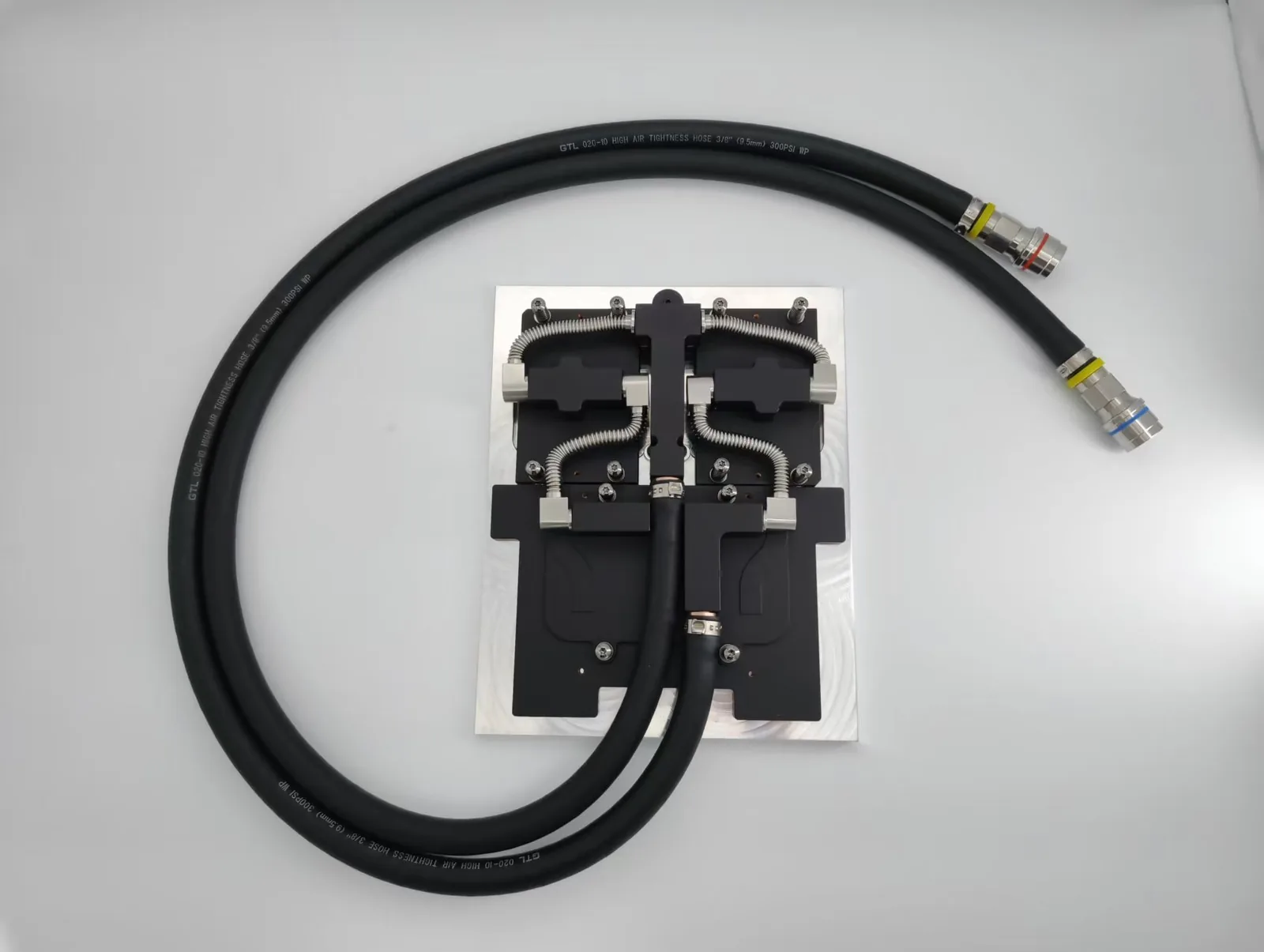
FSW, vacuum brazing and diffusion bonding are the three main ways to seal a liquid cold plate: FSW suits large aluminum plates with simple channels, vacuum brazing joins complex internal fins in one furnace cycle, and diffusion bonding gives solid, filler-free copper joints for the highest heat flux. ToneCooling recommends the process during DFM review.
Cold plate welding methods determine the hermetic integrity, thermal performance, and production cost of every liquid cold plate. The three primary joining processes — friction stir welding (FSW), vacuum brazing, and diffusion bonding — each offer distinct advantages depending on channel geometry, material, volume, and application requirements. Selecting the wrong joining method is one of the most common and expensive mistakes in cold plate procurement.
ToneCooling manufactures cold plates using all three methods and has processed over 50,000 units across AI server, EV battery, IGBT, and aerospace applications. This guide provides an engineer-to-engineer comparison based on real production data.
What Are the Main Cold Plate Welding Methods?
The three primary cold plate welding methods are friction stir welding (FSW), vacuum brazing, and diffusion bonding. Each joins the cover plate to the channel body through different mechanisms — FSW uses a rotating tool to plasticize the metal, vacuum brazing uses a filler alloy at elevated temperature, and diffusion bonding uses heat and pressure to create an atomic-level bond without filler. A fourth method, laser welding, is used for thin-wall stainless steel cold plates in specialized applications.
Method Comparison: Performance, Cost, and Application
| Parameter | FSW | Vacuum Brazing | Diffusion Bonding |
|---|---|---|---|
| Joint integrity | Excellent | Very Good | Outstanding |
| Hermeticity | ≤ 10⁻⁸ mbar·L/s | ≤ 10⁻⁸ mbar·L/s | ≤ 10⁻¹⁰ mbar·L/s |
| Max operating pressure | 30 bar | 25 bar | 50+ bar |
| Surface flatness | ≤ 0.02mm | ≤ 0.05mm | ≤ 0.01mm |
| Min channel width | 1.0mm | 0.5mm | 0.3mm |
| Materials | Al, Cu, Ti | Al, Cu, SS | Cu, Ti, SS |
| Tooling cost | Medium | Low | High |
| Unit cost (100 pcs) | Medium | Low–Medium | High |
| Typical applications | EV battery, server | IGBT, GPU, laser | Aerospace, defense |
Friction Stir Welding (FSW) for Cold Plates
FSW is a solid-state welding process where a rotating pin tool plasticizes aluminum or copper without melting it. The tool traverses the joint line between the cover plate and channel body, creating a continuous metallurgical bond. Because no filler metal is used and the material never reaches liquidus temperature, FSW eliminates flux contamination, porosity, and thermal distortion.
FSW Technical Specifications (ToneCooling Production Data)
- Rotation speed: 800–1500 RPM (aluminum), 400–800 RPM (copper)
- Traverse speed: 300–600 mm/min
- Weld depth: Up to 8mm single-pass
- Joint tensile strength: 85–95% of base material
- Flatness after welding: ≤ 0.02mm (aluminum), ≤ 0.03mm (copper)
When to Choose FSW
- Large-format aluminum cold plates (EV battery packs, rack-level cooling)
- Applications requiring ≤ 0.02mm flatness without post-weld machining
- High-volume production (FSW is fully automated, cycle time 60–120 seconds)
- Copper cold plates for server applications where brazing temperature causes warpage
Vacuum Brazing for Cold Plates
Vacuum brazing heats the cold plate assembly in a furnace at pressure below 10⁻⁴ mbar. A brazing filler (typically Al-Si 4047 for aluminum, or BNi-2 for copper-nickel assemblies) melts at 575–620°C and flows by capillary action to fill the joint gap. The vacuum atmosphere eliminates oxidation, producing flux-free, void-free joints across the entire internal fin structure.
Vacuum Brazing Process Parameters
| Parameter | Aluminum Brazing | Copper Brazing |
|---|---|---|
| Furnace atmosphere | < 5×10⁻⁵ mbar | < 10⁻⁴ mbar |
| Peak temperature | 605–615°C | 780–830°C |
| Dwell time at peak | 15–25 min | 10–20 min |
| Filler alloy | Al-Si 4047 (12% Si) | Cu-Ag-P or BNi-2 |
| Joint gap tolerance | 0.05–0.15mm | 0.03–0.10mm |
| Post-braze flatness | ≤ 0.05mm | ≤ 0.04mm |
Vacuum brazing enables the most complex internal geometries — including offset fin arrays, turbulators, and multi-pass serpentine channels — because the filler flows to every internal surface simultaneously. This makes vacuum brazing the preferred method for IGBT cold plates and high-performance GPU cold plates where channel geometry optimization is critical.
When to Choose Vacuum Brazing
- Complex internal fin geometries (offset fins, turbulators, pin arrays)
- IGBT cold plates requiring Rth < 0.05°C/W
- Medium volume production (50–5000 units per run, batch furnace)
- When design requires channel widths below 1.0mm
Diffusion Bonding for Cold Plates
Diffusion bonding applies heat (60–80% of melting point) and uniaxial pressure to create atomic interdiffusion across the joint interface — no filler metal is used. The result is a 100% solid-state metallic bond indistinguishable from the base material in cross-section.
- Bond strength: Equal to base material (100% metallic, no interface layer)
- Hermeticity: ≤ 10⁻¹⁰ mbar·L/s — the highest of any joining method
- Minimum channel width: 0.3mm (enables true microchannel cold plates)
- Operating pressure: Validated to 70 bar for titanium assemblies
- Lead time: 5–8 weeks (HIP cycle + inspection)
The primary limitation is cost: HIP furnace time, long cycle duration, and 100% NDT inspection make diffusion bonding 3–5× more expensive per unit than vacuum brazing. It is justified only when no other method can meet the hermeticity, pressure rating, or channel geometry requirement.
How to Choose the Right Cold Plate Welding Method
Use this decision framework based on your primary constraint:
- Large-format plate (> 400mm) + aluminum + high volume → FSW
- Complex channel geometry + copper + IGBT/GPU → Vacuum Brazing
- Maximum hermeticity + < 0.5mm channels + aerospace → Diffusion Bonding
- Thin-wall stainless + < 2mm wall + medical → Laser Welding
ToneCooling’s engineering team reviews your application requirements and recommends the optimal joining method during the DFM (Design for Manufacturability) stage at no charge. Submit your cold plate requirements here.
Frequently Asked Questions: Cold Plate Welding Methods
Which cold plate welding method has the best hermeticity?
Diffusion bonding achieves the best hermeticity at ≤ 10⁻¹⁰ mbar·L/s because no filler material or interface layer exists — the bond is 100% base metal. FSW and vacuum brazing both achieve ≤ 10⁻⁸ mbar·L/s, which is sufficient for all standard liquid cooling applications. For most AI server and EV battery cold plates, vacuum brazing or FSW hermeticity levels are more than adequate.
Can copper cold plates be friction stir welded?
Yes. Copper FSW is technically feasible but requires specialized tooling made from PCBN (polycrystalline cubic boron nitride) due to copper’s high thermal conductivity and hardness. Tool wear is significantly higher than aluminum FSW, increasing per-unit cost. ToneCooling uses copper FSW for server cold plates where vacuum brazing distortion is unacceptable, but vacuum brazing remains more cost-effective for most copper cold plate applications.
What is the maximum operating pressure for brazed cold plates?
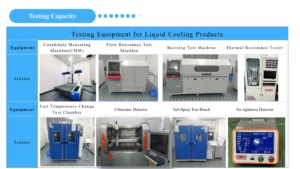
ToneCooling’s vacuum-brazed aluminum cold plates are rated to 25 bar operating pressure with 2× safety factor tested at 50 bar. Copper vacuum-brazed cold plates achieve 30 bar operating pressure. For applications above 30 bar, diffusion bonding or FSW with full-penetration welds is recommended. All pressure ratings are validated by hydraulic burst test and helium leak test on production samples.
How does the joining method affect cold plate thermal resistance?
The joining method contributes a thermal interface resistance at the cover-to-fin joint. ToneCooling measurements show: vacuum brazing joint resistance = 0.003–0.006°C/W; FSW joint resistance = 0.002–0.004°C/W; diffusion bonding joint resistance = < 0.001°C/W (effectively zero). For most applications, this difference is negligible compared to the convective resistance of the coolant-to-fin interface, which dominates total cold plate Rth.
Related ToneCooling Resources
Industry References & Standards
Why Choose ToneCooling for Vacuum Brazing Liquid Cold Plate
Engineering review and prototype planning are based on the project requirements. Custom prototype lead time is normally 4–6 weeks after drawing approval and order confirmation; confirm the production schedule in the quotation.
Need a Custom Liquid Cold Plate?
ToneCooling engineers review your drawings and requirements and reply by email with next steps.