This comprehensive guide covers guide to battery thermal solutions for industrial and OEM applications. ToneCooling provides expert insights on guide to battery thermal technology and implementation.
Battery Thermal Management Autonomous Evs is a high-performance thermal management solution engineered by ToneCooling for demanding applications.
As electric and autonomous vehicles evolve, one challenge defines their performance and reliability — battery thermal management. With massive energy demands from sensors, processors, and motors, autonomous EVs generate intense heat that must be controlled precisely.
Among all available cooling methods, liquid cold plates have emerged as the most effective solution for maintaining safe, efficient, and consistent operation.
A properly designed thermal system ensures that every component inside the vehicle — from the battery cells to the computing core — functions within its safe temperature range. Without it, even the most advanced vehicle could lose efficiency, range, and reliability in harsh driving or high-load conditions.

What Is Battery Thermal Management Autonomous Evs?
Battery systems are the energy core of any electric vehicle, but in autonomous EVs, the heat load is significantly higher. The vehicle’s onboard computers, radar, and LiDAR sensors operate continuously, drawing additional power. Without proper cooling, cell temperatures rise quickly, leading to uneven performance, shorter battery life, and even thermal runaway risks.
As autonomy increases, batteries face more thermal stress during long hours of operation. High internal resistance can reduce driving range, while thermal imbalance between cells causes accelerated degradation. Stable temperature control ensures longer battery lifespan, predictable power output, and safer operation of critical autonomous driving systems.
Effective thermal management isn’t just about efficiency — it’s about the reliability and safety of every trip the vehicle makes, especially when human drivers aren’t present to intervene.
Common Cooling Challenges in EV Battery Systems — Guide to battery thermal
The push for lightweight, high-capacity batteries introduces complex cooling challenges:
Uneven temperature distribution among cells, which affects performance balance.
High heat density during fast charging and regenerative braking cycles.
Limited installation space, restricting airflow or bulky cooling systems.
Demand for lightweight materials without sacrificing structural integrity.
Safety concerns over potential coolant leaks near high-voltage components.
These issues make it difficult for manufacturers to maintain consistent battery performance. To meet these demands, EV designers increasingly rely on liquid cooling — particularly via cold plate systems integrated directly into the battery pack, inverter housing, or onboard charger.
The Rise of Liquid Cold Plate Technology — Guide to battery thermal
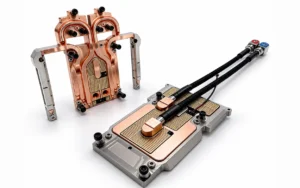
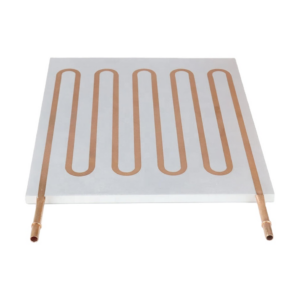
A liquid cold plate is a precision-engineered component made from aluminum or copper, featuring internal channels that circulate coolant directly under the battery cells. As the fluid flows through these passages, it absorbs and transfers heat away, maintaining uniform temperature across the entire module.
Unlike air-based cooling, which depends on space and airflow, liquid cold plates achieve direct heat contact, improving efficiency and allowing compact system design. This makes them ideal for autonomous EVs, where space is limited, and power demands are continuous.
Key advantages include:
Higher cooling capacity for dense energy packs.
Uniform temperature distribution that prevents hot spots.
Compact and sealed construction, suited for vibration-heavy vehicle environments.
Lower noise operation, essential for passenger comfort.
By combining efficient fluid dynamics with advanced materials, cold plate systems create a stable thermal environment that supports both battery performance and system safety.
How Liquid Cold Plates Improve Battery Performance
Battery cells perform best when their temperature stays within a narrow range. Deviations can drastically reduce lifespan or efficiency. Liquid cold plates help achieve that stability:
Temperature Uniformity: Every cell operates at nearly identical temperature, minimizing internal stress.
Fast Charging Support: The system handles increased thermal load during rapid charging without overheating.
Extended Battery Lifespan: Lower and stable temperatures reduce material degradation.
Higher Energy Efficiency: Cooling stability means consistent voltage output, crucial for self-driving control systems.
Additionally, efficient thermal control reduces the strain on auxiliary cooling systems, leading to lower overall energy consumption — a critical factor for maximizing vehicle range.

Design Considerations for EV Cold Plates
Each cold plate must balance thermal efficiency, weight, and durability. The best designs are the result of careful engineering:
Flow Channel Geometry: Optimized channels ensure even coolant distribution and low pressure drop.
Material Selection: Aluminum offers a strong balance of weight and conductivity, while copper is preferred for high-performance cooling zones.
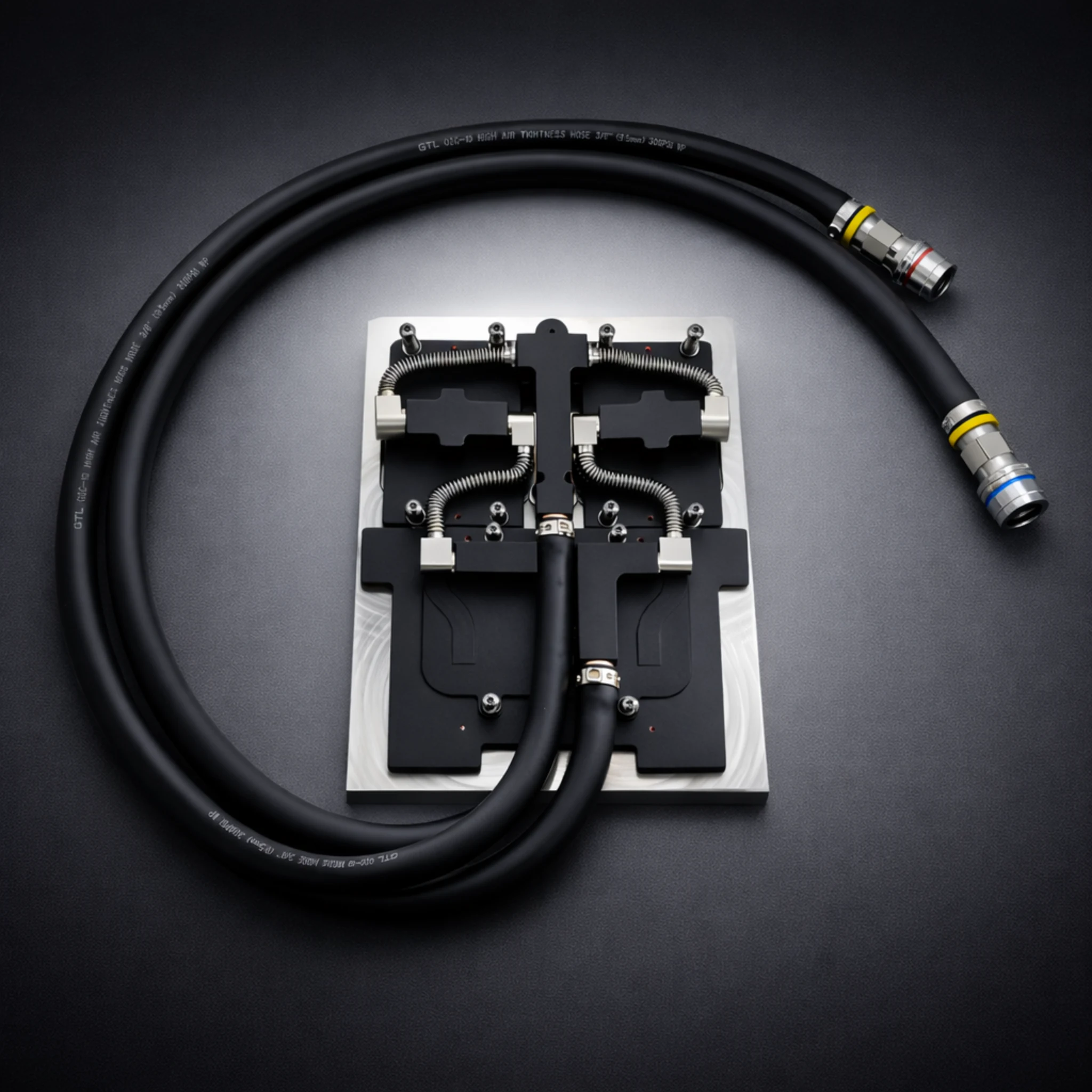
Connection Interfaces: Leak-proof joints and precision welding prevent coolant loss under vibration.
Manufacturing Techniques: Advanced processes like friction stir welding or vacuum brazing ensure tight seals and uniform internal structure.
Customization: OEM partners often request bespoke cold plates to match their specific battery layout, coolant type, or heat dissipation requirements.
By offering custom liquid cold plate solutions, manufacturers can meet these varied technical needs — from prototype development to full-scale EV production.
Cold Plates Beyond Batteries: Expanding EV Applications
While most discussions center on battery cooling, liquid cold plates also play vital roles in other parts of autonomous EVs:
Inverter Cooling: Prevents power electronics from overheating under continuous torque control.
Onboard Chargers: Keeps high-voltage charging modules stable during long charging sessions.
Sensor and AI System Cooling: Ensures high-performance processors and LiDAR modules maintain reliable operation.
Motor Controllers: Regulates thermal buildup in high-current drive circuits.
Each of these applications relies on precise thermal regulation to function safely — reinforcing the central role of cold plate technology in modern electric vehicle design.
The Future of Battery Cooling in Autonomous Vehicles
Thermal management will remain a defining factor in the next generation of EV design. The industry is shifting toward smart, adaptive cooling systems that can respond to real-time conditions.
Emerging trends include:
Integrated thermal modules combining structural support and cooling function.
Lightweight composite cold plates with higher thermal conductivity and corrosion resistance.
AI-controlled cooling loops that adjust flow rates dynamically based on temperature readings.
Environmentally friendly coolants to support sustainable vehicle manufacturing.
These innovations promise safer, more efficient, and longer-lasting battery systems — the foundation of future autonomous electric mobility. Manufacturers investing early in advanced liquid cold plate technology will stay ahead as global EV production accelerates.
Conclusion
Effective battery thermal management defines the success of autonomous EVs. Liquid cold plates provide precise, reliable cooling performance unmatched by conventional systems. They protect critical components, extend battery life, and enhance overall vehicle efficiency.
By partnering with a ToneCooling, EV manufacturers and integrators gain access to custom-engineered solutions built for performance, durability, and scalability. From prototype to production, precision thermal management ensures every vehicle delivers maximum reliability — mile after mile.
Ready to improve your EV cooling system?
Contact us today to learn more about our custom liquid cold plates for battery modules, power electronics, and autonomous vehicle platforms.
For industry standards and best practices, refer to SAE International.
| Parameter | ToneCooling Specification |
|---|---|
| Material | Copper T2 / 6061 aluminum |
| Welding method | Transient liquid phase diffusion welding |
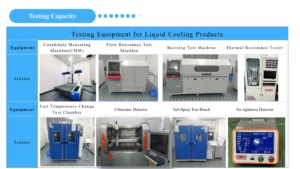
| Test pressure | 1 MPa (helium leak + nitrogen hold) |
| Working medium | PG25 (25% propylene glycol) |
| Custom design | Yes — DXF/STEP input accepted |
Frequently Asked Questions
Does ToneCooling offer OEM and ODM services?
Yes. ToneCooling provides full OEM and ODM services including custom design, prototyping, thermal simulation, and volume production. We serve customers in North America, Europe, and Asia-Pacific with engineering support and samples within 6–8 weeks.
What certifications does ToneCooling hold for automotive products?
ToneCooling is ISO 9001:2015 certified and follows IATF 16949 quality standards for automotive-grade products. All battery cold plates undergo 100% pressure testing and helium leak testing before shipment.
What coolant is compatible with ToneCooling battery cold plates?
ToneCooling battery cold plates are designed for 50/50 water-ethylene glycol coolant, providing freeze protection to -37°C. All wetted surfaces are corrosion-resistant and compatible with standard automotive cooling circuits.
Get a Custom Thermal Solution from ToneCooling
ToneCooling is a professional liquid cooling solution provider specializing in custom cold plates, AIO coolers, and advanced thermal management systems. With ISO 9001:2015 certified manufacturing, we deliver prototype samples within 6–8 weeks. Contact ToneCooling today for a free consultation and quote — we respond within 24 business hours.
For industry standards and best practices, refer to SAE International.
Frequently Asked Questions
Does ToneCooling offer OEM and ODM services?
Yes. ToneCooling provides full OEM and ODM services including custom design, prototyping, thermal simulation, and volume production. We serve customers in North America, Europe, and Asia-Pacific with engineering support and samples within 6–8 weeks.
What certifications does ToneCooling hold for automotive products?
ToneCooling is ISO 9001:2015 certified and follows IATF 16949 quality standards for automotive-grade products. All battery cold plates undergo 100% pressure testing and helium leak testing before shipment.
What coolant is compatible with ToneCooling battery cold plates?
ToneCooling battery cold plates are designed for 50/50 water-ethylene glycol coolant, providing freeze protection to -37°C. All wetted surfaces are corrosion-resistant and compatible with standard automotive cooling circuits.
Get a Custom Thermal Solution from ToneCooling
ToneCooling is a professional liquid cooling solution provider specializing in custom cold plates, AIO coolers, and advanced thermal management systems. With ISO 9001:2015 certified manufacturing, we deliver prototype samples within 6–8 weeks. Contact ToneCooling today for a free consultation and quote — we respond within 24 business hours.
References: ASHRAE thermal standards, Wikipedia: Heat Sink Technology
Why Choose ToneCooling for Ev Battery Thermal Management
Engineering review and prototype planning are based on the project requirements. Custom prototype lead time is normally 6–8 weeks after drawing approval and order confirmation; confirm the production schedule in the quotation.
Last Updated: 2026-04-08
Need a custom battery thermal management autonomous evs solution?
ToneCooling engineers respond within 24 hours with CFD-validated thermal recommendations.