Introduction — How liquid cold plates
Liquid Cold Plates Support Fast is a high-performance thermal management solution engineered by ToneCooling for demanding applications.
This guide on How liquid cold plates provides key insights for engineers and procurement teams. As electric vehicles (EVs) continue to advance toward higher charging power and faster turnaround times, effective thermal management has become a crucial engineering challenge. Rapid charging produces significant heat within the battery pack due to high current flow and internal resistance.
Without proper heat dissipation, cell temperatures can rise quickly, forcing the battery management system (BMS) to reduce charging speed for safety.
This is where liquid cold plates play a vital role. They are an essential part of the EV battery’s thermal management system, keeping temperature uniform and stable even during ultra-fast charging. This article explains how liquid cold plates work, why they matter for fast charging, and how you can optimize their design and integration for better performance and reliability.

How Fast EV Charging Creates Thermal Challenges — How liquid cold plates
When charging an EV battery, energy conversion is not 100% efficient. The internal resistance of lithium-ion cells causes I²R losses, which generate heat. As charging current increases — especially during 150 kW to 350 kW fast charging — this heat becomes substantial.
If battery temperature exceeds the optimal range (typically 25 °C – 45 °C), several issues occur:
The BMS limits charging current, reducing speed.
Electrolyte degradation accelerates, affecting long-term performance.
Thermal runaway risks increase under extreme conditions.
Efficient heat removal is therefore essential to maintain fast, safe, and consistent charging performance.
What Are Liquid Cold Plates? — How liquid cold plates
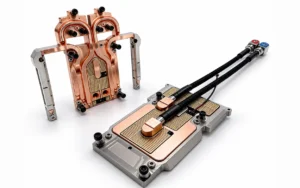
A liquid cold plate is a compact heat exchanger installed directly beneath or alongside battery modules. It transfers heat from the cells to a circulating coolant — usually a water-glycol mixture — that carries it away to a radiator or chiller system.
A typical liquid cold plate consists of:
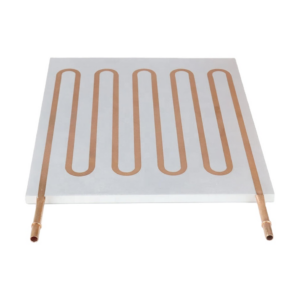
Base plate: Made from aluminum or copper for high thermal conductivity.
Internal channels or microstructures: Allow coolant flow for uniform heat absorption.
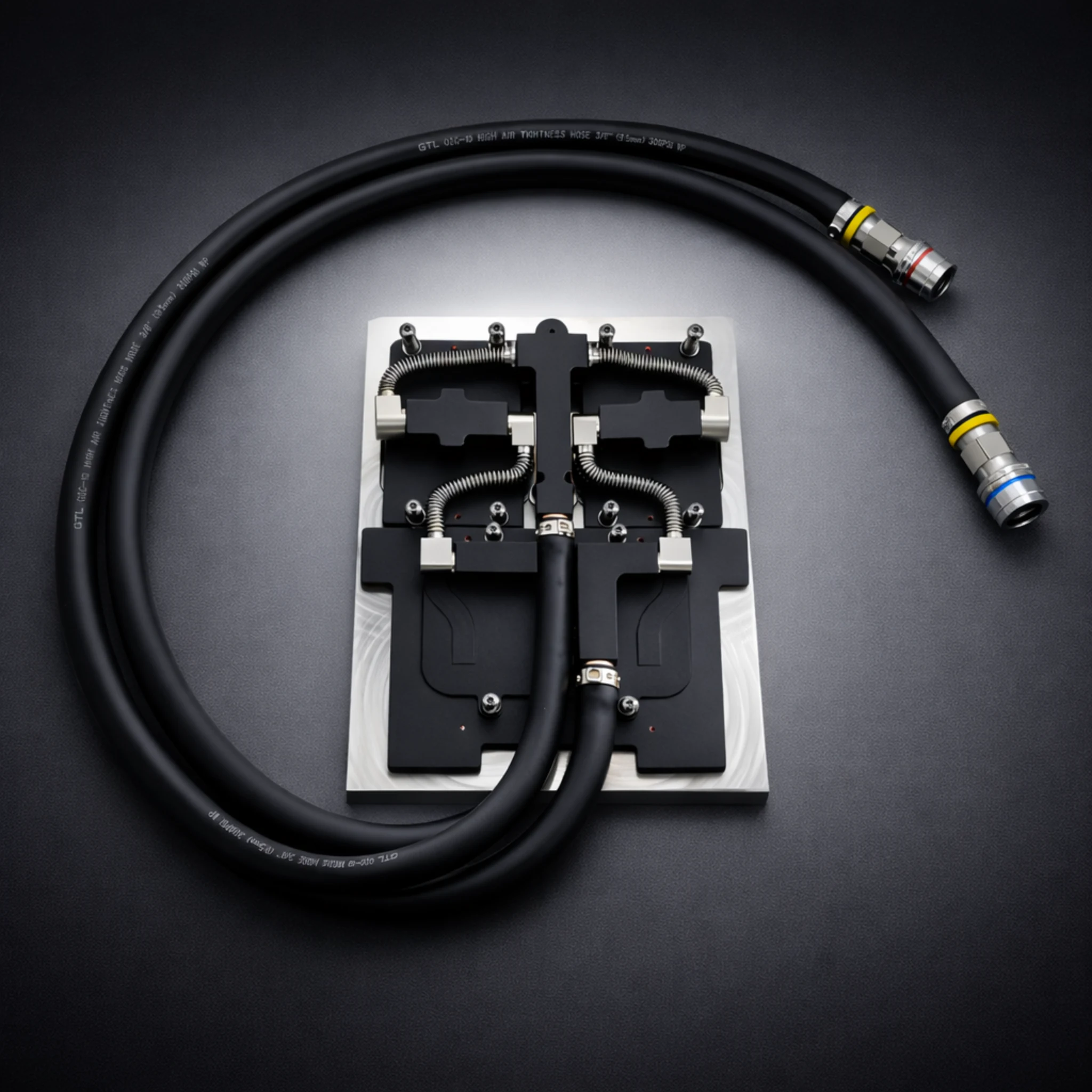
Inlet and outlet ports: Connect the plate to the vehicle’s cooling circuit.
By maintaining efficient contact with the battery module surface, cold plates ensure that the cells stay within the optimal temperature window, even during high-current charging.
How Liquid Cold Plates Support Fast Charging
1. Maintaining Uniform Temperature
Fast charging introduces uneven heat generation across cells. Some cells may heat up faster depending on their position, internal chemistry, or electrical load. Liquid cold plates distribute coolant evenly across the entire module, ensuring consistent temperature uniformity.
This prevents localized hot spots, which can reduce the lifespan of individual cells and cause imbalance in the battery pack. Uniform temperature also helps the BMS accurately monitor and manage charging current.
2. Enabling Higher Charging Power
The faster the heat can be removed, the higher the charging current the system can safely sustain. With efficient liquid cooling, batteries can handle greater C-rates — allowing faster charge times without compromising safety or performance.
For example, a pack with a well-designed cold plate can maintain stable cell temperatures at 200 A or higher charging currents, while an air-cooled system would quickly overheat under the same load.
3. Protecting Battery Chemistry
Lithium plating and electrolyte decomposition often occur at high temperatures. By keeping the battery within its thermal comfort zone, cold plates reduce these risks and preserve electrochemical stability. This directly improves battery cycle life, helping you meet warranty and reliability requirements.
4. Supporting Compact Battery Designs
Modern EVs aim for higher energy density and limited space. Liquid cold plates provide a compact and lightweight solution for heat management compared to air cooling, which needs larger ducts or fans. This allows tighter battery packing and higher overall energy capacity.

Cold Plate Design Considerations for Fast Charging Applications
Designing an effective liquid cold plate requires a balance between thermal efficiency, weight, manufacturability, and cost.
Material Selection
Aluminum: Common for its excellent thermal conductivity, corrosion resistance, and low weight.
Copper: Offers better heat transfer but is heavier and more expensive.
Composite designs: Combine aluminum and stainless steel to optimize performance and durability.
The choice depends on your system requirements and the coolant used.
Flow Channel Geometry
The internal structure of the cold plate — whether serpentine, parallel, or microchannel — determines how efficiently the coolant absorbs and transports heat.
Serpentine designs ensure complete fluid coverage but may cause higher pressure drops.
Parallel microchannels offer better flow uniformity and reduced pressure loss.
Pin-fin structures improve turbulence and heat transfer but increase manufacturing complexity.
For fast charging systems, a microchannel cold plate with optimized turbulence often provides the best trade-off between thermal performance and pumping power.
Coolant Flow Rate and Temperature
Maintaining the right flow rate and coolant temperature is key. Too slow, and the plate overheats; too fast, and pumping losses rise. Engineers typically aim for a temperature rise of less than 5 °C across the plate to ensure uniform cooling.
Thermal Interface Materials (TIMs)
A thin layer of TIM between the cold plate and battery cell surface enhances thermal contact. High-conductivity silicones or phase-change materials help reduce thermal resistance and improve temperature uniformity.
Integration with the EV Cooling System
Cold plates do not work alone. They are part of a larger thermal management architecture that also includes:
Pumps and valves for coolant circulation.
Heat exchangers (radiators or chillers) for rejecting absorbed heat.
Temperature sensors for monitoring and feedback control.
Control algorithms in the BMS to balance charging current and cooling demand.
For fast charging, the system must coordinate these components dynamically. When the charging session starts, the control unit increases coolant flow and activates additional thermal circuits to prevent temperature spikes. Once charging slows or stops, the flow adjusts to maintain thermal equilibrium.
Advantages of Using Liquid Cold Plates in EVs
Superior Heat Removal Efficiency – Compared with air cooling, liquid cold plates achieve up to five times higher heat transfer rates, enabling much faster heat dissipation.
Improved Charging Performance – Stable temperature conditions allow consistent high-current charging without triggering thermal throttling.
Enhanced Battery Longevity – Lower and more uniform temperatures minimize stress on cells and slow down capacity fade.
Compact and Lightweight Design – Less space required for ducts or fans, allowing better battery packaging.
Noise Reduction – Liquid systems operate more quietly than air-based alternatives.
Limitations and Challenges
While effective, liquid cold plates also come with engineering and manufacturing challenges:
Complexity: They require precision machining or brazing, raising production costs.
Coolant Management: Leakage or contamination can affect system reliability.
Maintenance Requirements: Periodic inspection and coolant replacement are necessary to prevent corrosion or microbial growth.
Thermal Cycling Stress: Repeated temperature changes can cause material fatigue or seal degradation over time.
Proper design and material selection minimize these drawbacks, ensuring stable long-term operation.

Future Trends in EV Battery Cooling
The evolution of fast charging continues to push cooling technologies forward. Some current innovations include:
Two-phase cooling systems, using dielectric fluids that absorb latent heat during phase change for superior heat transfer.
Integrated cooling structures, where cold plates are embedded within the battery pack housing to reduce thermal resistance.
Smart thermal management, combining real-time data analytics and adaptive flow control to optimize efficiency during charging cycles.
As EV charging moves toward ultra-fast 800 V architectures, thermal management systems must evolve accordingly. Liquid cold plates will remain a critical foundation, supported by new materials and intelligent control strategies.
Best Practices for Engineers and Manufacturers
If you are designing or integrating liquid cold plates for fast charging EVs, consider the following practices:
Model Early, Validate Often – Use CFD simulation to optimize flow distribution and heat transfer before prototyping.
Focus on Contact Resistance – Ensure tight, uniform contact between the cold plate and battery module to minimize interface losses.
Balance Flow and Power – Optimize pump sizing to achieve effective cooling without excessive energy consumption.
Plan for Maintenance Access – Design for easy inspection and coolant replacement to simplify service operations.
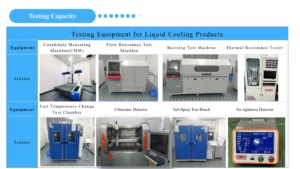
Test Under Real Conditions – Validate thermal performance during fast-charging scenarios, not just under steady-state lab conditions.
These practices help you achieve consistent reliability and thermal efficiency throughout the vehicle’s service life.
FAQ
Q1: How does a liquid cold plate differ from air cooling?
A liquid cold plate transfers heat through circulating coolant, which has far higher thermal capacity than air. This allows faster and more uniform temperature control, especially critical during high-power charging.
Q2: Can cold plates be customized for specific battery modules?
Yes. Cold plates are typically designed to match the exact cell layout and thermal profile of your battery module, ensuring efficient contact and flow distribution.
Q3: What coolant is commonly used?
A mixture of water and ethylene or propylene glycol is standard. It provides effective heat transfer while preventing freezing and corrosion.
Q4: How often should the coolant be replaced?
Generally every two to three years, depending on vehicle use and environmental conditions. Regular maintenance prevents scaling, corrosion, and biological growth.
Q5: Are cold plates suitable for solid-state batteries?
Yes. Although solid-state batteries generate less heat overall, they still benefit from controlled temperature management for optimal performance and safety.
Conclusion
Fast EV charging introduces significant thermal stress on battery systems, making efficient cooling an engineering necessity. Liquid cold plates provide a proven, compact, and effective method to manage this heat, allowing batteries to sustain high charging power safely.
By understanding their design principles and optimizing integration, you can achieve stable temperature control, extended battery life, and faster charging speeds — all essential for next-generation electric vehicles.
About ToneCooling
ToneCooling specializes in the design and manufacture of liquid cold plates and thermal management systems for electric vehicles, energy storage, and industrial electronics. With advanced manufacturing capability and a strong focus on OEM customization, ToneCooling helps global clients achieve efficient, reliable, and scalable cooling performance. Our engineering team provides full support from concept to mass production, ensuring every solution meets strict quality and thermal standards.
For industry standards and best practices, refer to ASHRAE thermal guidelines.
| Parameter | ToneCooling Specification |
|---|---|
| Material | Copper T2 / 6061 aluminum |
| Welding method | Transient liquid phase diffusion welding |
| Test pressure | 1 MPa (helium leak + nitrogen hold) |
| Working medium | PG25 (25% propylene glycol) |
| Custom design | Yes — DXF/STEP input accepted |
Frequently Asked Questions
Does ToneCooling offer OEM and ODM services?
Yes. ToneCooling provides full OEM and ODM services including custom design, prototyping, thermal simulation, and volume production. We serve customers in North America, Europe, and Asia-Pacific with engineering support and samples within 6–8 weeks.
What materials are used in ToneCooling liquid cold plates?
ToneCooling manufactures cold plates in aluminum (6061/6063), copper (C1100/C1020), and stainless steel. Aluminum FSW cold plates are ideal for high-volume EV and industrial applications, while copper brazed cold plates provide maximum thermal conductivity (398 W/m·K) for high heat flux electronics.
What is the typical lead time for custom cold plates?
Prototype samples are delivered within 6–8 weeks. Production orders typically ship within 4–6 weeks after sample approval. ToneCooling responds to all quote requests within 24 business hours.
Get a Custom Thermal Solution from ToneCooling
ToneCooling is a professional liquid cooling solution provider specializing in custom cold plates, AIO coolers, and advanced thermal management systems. With ISO 9001:2015 certified manufacturing, we deliver prototype samples within 6–8 weeks. Contact ToneCooling today for a free consultation and quote — we respond within 24 business hours.
For industry standards and best practices, refer to ASHRAE thermal guidelines.
Frequently Asked Questions
Does ToneCooling offer OEM and ODM services?
Yes. ToneCooling provides full OEM and ODM services including custom design, prototyping, thermal simulation, and volume production. We serve customers in North America, Europe, and Asia-Pacific with engineering support and samples within 6–8 weeks.
What materials are used in ToneCooling liquid cold plates?
ToneCooling manufactures cold plates in aluminum (6061/6063), copper (C1100/C1020), and stainless steel. Aluminum FSW cold plates are ideal for high-volume EV and industrial applications, while copper brazed cold plates provide maximum thermal conductivity (398 W/m·K) for high heat flux electronics.
What is the typical lead time for custom cold plates?
Prototype samples are delivered within 6–8 weeks. Production orders typically ship within 4–6 weeks after sample approval. ToneCooling responds to all quote requests within 24 business hours.
Get a Custom Thermal Solution from ToneCooling
ToneCooling is a professional liquid cooling solution provider specializing in custom cold plates, AIO coolers, and advanced thermal management systems. With ISO 9001:2015 certified manufacturing, we deliver prototype samples within 6–8 weeks. Contact ToneCooling today for a free consultation and quote — we respond within 24 business hours.
Need a Custom Liquid Cold Plate?
ToneCooling engineers design thermal solutions for your specific requirements. Get an engineering RFQ review based on your uploaded requirements.
Last Updated: 2026-04-08
References: ISO 9001