This comprehensive guide covers the role of liquid solutions for industrial and OEM applications. ToneCooling provides expert insights on the role of liquid technology and implementation.
A liquid cold plate helps manage heat in an electric vehicle. This system keeps battery temperatures within safe limits to prevent damage and maintain efficiency. By controlling heat, it reduces the risk of thermal runaway and supports safe vehicle operation.

What Is Role Liquid Cold Plates Electric?
Battery Temperature Control — The role of liquid
A liquid cold plate helps regulate battery temperature in electric vehicles. Engineers design these plates to move coolant across the battery surface. This process removes excess heat and keeps cells within a safe temperature range.
Maintaining proper battery temperature supports thermal management and prevents damage. Cells that stay cool last longer and work more efficiently. The liquid cold plate ensures that each cell receives equal cooling.
Tip: Uniform cooling helps avoid hot spots that can lead to battery thermal runaway.
Thermal management systems use sensors to monitor battery temperature. These sensors send data to the control unit. The system adjusts coolant flow to maintain optimal conditions.
Preventing Overheating and Thermal Runaway — The role of liquid
Thermal runaway is a dangerous event where battery cells overheat and cause a chain reaction. A liquid cold plate plays a key role in stopping this process. It removes heat quickly and keeps temperatures stable.
Thermal management reduces the risk of overheating. When cells stay cool, they do not reach the point where thermal runaway can start. The liquid cold plate acts as a barrier against uncontrolled temperature spikes.
- Key benefits of liquid cold plate technology:
- Stops thermal runaway before it begins
- Maintains safe battery operation
- Supports long-term battery health
Thermal management systems work with the liquid cold plate to detect early signs of overheating. They respond by increasing coolant flow or shutting down affected cells. This quick action prevents battery thermal runaway and protects the vehicle.
Note: Effective thermal management is essential for electric vehicle safety. It keeps batteries safe and prevents thermal runaway events.
Liquid Cold Plate Design and Optimization
Structure and Microchannel Technology
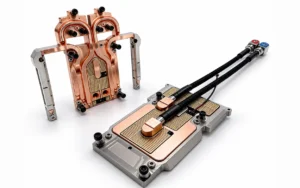
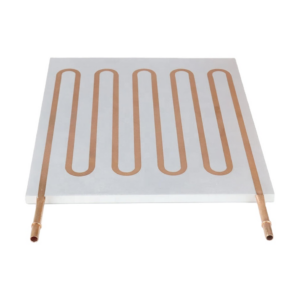
Engineers design the structure of a battery cold plate to improve heat dissipation in electric vehicles. Microchannel technology uses tiny channels inside the plate to guide coolant across the battery surface. This design increases the contact area between the coolant and the battery, which helps remove heat quickly.
Microchannels allow for precise control of temperature. They help keep each battery cell at a similar temperature. This uniform cooling reduces the risk of overheating and supports battery safety.
Note: Microchannel plates can be made from materials like aluminum or copper. These metals conduct heat well and help maintain stable battery performance.
Size, Thickness, and Cell Integration
The size and thickness of a liquid cold plate affect how well it manages heat dissipation. A thicker plate can absorb more heat, but it may add weight to the battery pack. Engineers must balance plate thickness with the need for lightweight design.
Proper integration with battery cells is important for energy efficiency. The plate must fit closely to each cell to ensure even cooling. If the plate is too large or too small, some cells may get too hot or too cold.
| Design Factor | Impact on Heat Dissipation | Impact on Battery Pack |
|---|---|---|
| Plate Size | Controls cooling area | Affects fit and weight |
| Plate Thickness | Absorbs more heat | May increase mass |
| Microchannels | Improves heat removal | Supports uniformity |
Maintaining temperature uniformity helps prevent thermal runaway. It also keeps batteries working within their optimal range. This design approach supports long battery life and safe operation.

Thermal Management System in Electric Vehicles
Liquid vs. Air Cooling Methods
A thermal management system in electric vehicles uses different methods to control battery temperature. Air cooling moves air across battery surfaces to remove heat. Liquid cooling uses a coolant that flows through channels or a liquid cold plate to absorb and carry away heat.
Liquid cooling offers better thermal management than air cooling. It can transfer heat faster and more evenly. This method helps keep battery cells at a stable temperature during charging and driving.
Note: Engineers often choose liquid cooling for high-performance electric vehicles because it improves cooling efficiency and battery safety.
Heat Transfer Efficiency and Performance
A thermal management system must move heat away from batteries quickly. Liquid cooling provides higher heat transfer efficiency than air cooling. The coolant in a liquid cold plate absorbs heat directly from the battery cells.
This process keeps the battery pack within a safe temperature range. Good thermal management prevents overheating and supports longer battery life. Liquid cooling also helps maintain consistent performance, even in extreme conditions.
| Cooling Method | Heat Transfer Efficiency | Battery Protection | Weight Impact |
|---|---|---|---|
| Air Cooling | Low | Moderate | Low |
| Liquid Cooling | High | High | Moderate |
A well-designed thermal management system ensures electric vehicles operate safely and efficiently. Liquid cooling stands out for its ability to manage heat and protect battery health.
Thermal Runaway Prevention Strategies
Uniform Heat Distribution
Uniform heat distribution plays a critical role in stopping thermal runaway in electric vehicles. Engineers design thermal management systems to spread heat evenly across all battery cells. This approach prevents any single cell from reaching dangerous temperatures.
A liquid cold plate helps achieve uniform cooling by directing coolant through microchannels. These channels touch each cell and remove heat at the same rate. Consistent temperature control lowers the risk of thermal runaway and supports battery safety.
Tip: Sensors in thermal management systems monitor temperature differences between cells. They alert the control unit if a cell gets too hot, allowing quick action to prevent thermal runaway.
The table below shows how uniform heat distribution affects battery safety:
| Feature | Impact on Thermal Runaway | Benefit for Battery Pack |
|---|---|---|
| Even Cooling | Reduces risk | Extends battery life |
| Temperature Monitoring | Detects early warning | Improves safety |
| Microchannel Design | Supports uniformity | Prevents hot spots |
Emergency Containment Features
Emergency containment features act as a last line of defense against thermal runaway. Engineers add barriers and insulation to battery packs to stop heat from spreading. These features keep a thermal event contained within a small area.
Thermal management systems work with emergency containment to protect the vehicle. If sensors detect thermal runaway, the system can isolate affected cells and shut down power. This quick response limits damage and keeps passengers safe.
- Key emergency containment strategies:
- Physical barriers between cells
- Fire-resistant materials around battery modules
- Automatic shutdown systems in thermal management
Note: Emergency containment features do not replace the need for uniform heat distribution. They provide extra protection if thermal runaway occurs.
A liquid cold plate supports these strategies by keeping temperatures stable and reducing the chance of a thermal event. Together, thermal management and containment features create a safer environment for electric vehicles.
Conlcusion
A liquid cold plate helps electric vehicles stay safe and efficient. Engineers use design optimization and thermal management systems to prevent thermal runaway and improve battery performance. Advanced cooling solutions will shape the future of electric vehicles.
Reliable cooling technology supports longer battery life and safer driving.
For industry standards and best practices, refer to ASHRAE thermal guidelines.
Frequently Asked Questions
Does ToneCooling offer OEM and ODM services?
Yes. ToneCooling provides full OEM and ODM services including custom design, prototyping, thermal simulation, and volume production. We serve customers in North America, Europe, and Asia-Pacific with engineering support and samples within 6–8 weeks.
What materials are used in ToneCooling liquid cold plates?
ToneCooling manufactures cold plates in aluminum (6061/6063), copper (C1100/C1020), and stainless steel. Aluminum FSW cold plates are ideal for high-volume EV and industrial applications, while copper brazed cold plates provide maximum thermal conductivity (398 W/m·K) for high heat flux electronics.
What is the typical lead time for custom cold plates?
Prototype samples are delivered within 6–8 weeks. Production orders typically ship within 4–6 weeks after sample approval. ToneCooling responds to all quote requests within 24 business hours.
Get a Custom Thermal Solution from ToneCooling
ToneCooling is a professional liquid cooling solution provider specializing in custom cold plates, AIO coolers, and advanced thermal management systems. With ISO 9001:2015 certified manufacturing, we deliver prototype samples within 6–8 weeks. Contact ToneCooling today for a free consultation and quote — we respond within 24 business hours.
For industry standards and best practices, refer to ASHRAE thermal guidelines.
Frequently Asked Questions
Does ToneCooling offer OEM and ODM services?
Yes. ToneCooling provides full OEM and ODM services including custom design, prototyping, thermal simulation, and volume production. We serve customers in North America, Europe, and Asia-Pacific with engineering support and samples within 6–8 weeks.
What materials are used in ToneCooling liquid cold plates?
ToneCooling manufactures cold plates in aluminum (6061/6063), copper (C1100/C1020), and stainless steel. Aluminum FSW cold plates are ideal for high-volume EV and industrial applications, while copper brazed cold plates provide maximum thermal conductivity (398 W/m·K) for high heat flux electronics.
What is the typical lead time for custom cold plates?
Prototype samples are delivered within 6–8 weeks. Production orders typically ship within 4–6 weeks after sample approval. ToneCooling responds to all quote requests within 24 business hours.
Get a Custom Thermal Solution from ToneCooling
ToneCooling is a professional liquid cooling solution provider specializing in custom cold plates, AIO coolers, and advanced thermal management systems. With ISO 9001:2015 certified manufacturing, we deliver prototype samples within 6–8 weeks. Contact ToneCooling today for a free consultation and quote — we respond within 24 business hours.
Need a Custom Liquid Cold Plate?
Role Liquid Cold Plates Electric is a high-performance thermal management solution engineered by ToneCooling for demanding applications.
ToneCooling engineers design thermal solutions for your specific requirements. Get an engineering RFQ review based on your uploaded requirements.
Why Choose ToneCooling for Semiconductor Test Fixture Cold Plate
Engineering review and prototype planning are based on the project requirements. Custom prototype lead time is normally 6–8 weeks after drawing approval and order confirmation; confirm the production schedule in the quotation.
Need a Custom Liquid Cold Plate?
ToneCooling engineers design thermal solutions for your requirements. Response within 24-48 hours.
Last Updated: 2026-04-08
References: ISO 9001
Related articles