This comprehensive guide covers maximizing battery lifespan with solutions for industrial and OEM applications. ToneCooling provides expert insights on maximizing battery lifespan with technology and implementation.
Maximizing Battery Lifespan Aluminum Cold is a high-performance thermal management solution engineered by ToneCooling for demanding applications.
This guide on Maximizing battery lifespan with provides key insights for engineers and procurement teams. Energy Storage Systems (ESS) are central to modern renewable energy infrastructure, electric vehicles, and industrial power solutions. As these systems become more widespread, extending battery life has emerged as a critical factor for efficiency and cost-effectiveness.
One of the main contributors to battery degradation is heat. Batteries, especially lithium-ion types commonly used in ESS, are sensitive to temperature fluctuations. Excessive heat or uneven temperature distribution can accelerate chemical degradation, reduce charge capacity, and shorten the overall operational lifespan of the battery.
This is where aluminum cold plates come into play. By providing a highly effective thermal management solution, aluminum cold plates help maintain uniform temperatures, minimize hotspots, and ultimately enhance the reliability and longevity of ESS batteries.

What Is Maximizing Battery Lifespan Aluminum Cold?
How heat affects lithium-ion batteries — Maximizing battery lifespan with
Heat plays a major role in the degradation of lithium-ion batteries. High temperatures accelerate chemical reactions inside the cells. These reactions can cause unwanted side effects, such as gas formation and electrode breakdown.
When batteries operate above their recommended temperature range, they lose capacity faster. Excessive heat can also trigger safety risks, including thermal runaway. Proper battery thermal management helps prevent these issues and keeps batteries operating safely.
Common causes of reduced battery lifespan — Maximizing battery lifespan with
Several factors contribute to reduced battery lifespan in energy storage systems. Frequent cycling, deep discharges, and overcharging all stress the cells. Poor battery thermal management leads to hotspots that can degrade cell capacity and shorten service life.
Environmental conditions, such as high ambient temperatures, also impact battery health. Inconsistent cooling from inadequate thermal management systems increases the risk of uneven aging. Operators must address these causes to maintain optimal performance.
Importance of consistent temperature management
Consistent temperature management is essential for protecting batteries and maximizing battery lifespan. Battery cold plates help maintain uniform temperatures across all cells. This approach reduces thermal gradients and prevents hotspots.
What Are Aluminum Cold Plates?
Definition and working principle
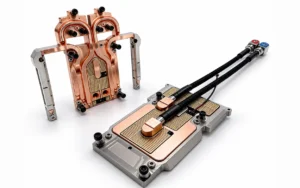
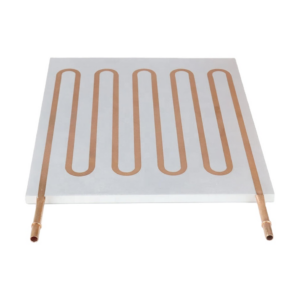
Aluminum cold plates serve as specialized components in energy storage systems. They transfer heat away from battery cells using a network of internal channels. Coolant flows through these channels and absorbs heat, which helps maintain stable operating temperatures.
Key Advantages
Aluminum cold plates offer several important benefits for energy storage.
- They provide good thermal conductivity, which ensures rapid heat transfer.
- The plates help prevent overheating and reduce the risk of thermal events.
- Operators see improved efficiency and longer battery service life.
Key materials and manufacturing considerations
Manufacturers select aluminum for its lightweight nature and high conductivity. They often use advanced alloys to improve corrosion resistance. Precision machining creates microchannels that maximize surface area and enhance heat removal.
How Aluminum Cold Plates Improve Battery Lifespan
Efficient heat dissipation
Aluminum cold plates use high conductivity to move heat away from battery cells quickly. Microchannel designs inside the plates allow coolant to flow evenly, which supports uniform heat distribution. This process keeps each battery at a stable temperature, which is vital for battery thermal management in high-power battery systems.
Uniform cooling prevents temperature spikes that can damage batteries. Battery cell cold plates help maintain the right temperature for every cell, even during demanding high-performance applications. This approach increases efficiency and helps batteries deliver steady power.
Reducing hotspots and thermal stress
Hotspots form when some areas of a battery get much hotter than others. These spots can cause thermal stress, which leads to faster wear and possible safety risks. Aluminum cold plates reduce hotspots by spreading heat evenly across the battery pack.
Thermal management systems that use microchannel cold plates lower the chance of thermal runaway. This safety feature protects both the battery and the energy storage system. Operators see fewer failures and lower maintenance costs.
Performance stability
Consistent temperature control extends battery lifespan by slowing down the aging process. Batteries that stay cool can handle more charge and discharge cycles without losing capacity. This stability means the battery will keep its performance over time.
Aluminum cold plates support long-term reliability in high-performance applications. They help storage systems deliver safe, stable energy for years. By improving cooling, these plates reduce costs and increase the value of the battery system.

Design Considerations for Aluminum Cold Plates
Plate thickness, channel design, and flow rate optimization
Engineers must focus on key design considerations when developing aluminum cold plates for battery thermal management. Plate thickness affects both weight and heat transfer. Thicker plates can handle more heat but may add unnecessary mass to the system.
Channel design plays a major role in how well the plate removes heat. Microchannels increase surface area and improve conductivity. Proper channel layout ensures coolant flows evenly, which supports active temperature regulation.
Flow rate optimization is essential for efficient cooling. Too much flow can waste energy, while too little may not remove enough heat. Engineers use simulations to find the best balance for each application.
Integration with battery modules and pack layout
Aluminum cold plates must fit seamlessly with battery modules. Good integration allows the thermal management component to contact each cell directly. This setup helps maintain uniform temperatures across the entire pack.
Designers often customize cold plates to match the shape and size of the battery modules. Careful planning ensures that the plates do not interfere with electrical connections or other system parts. Well-integrated plates support reliable operation and extend battery lifespan.
Some commercial energy storage systems use modular cold plate designs. These systems show improved performance and longer service life for batteries.
Compatibility with various battery chemistries
Different batteries require different cooling strategies. Aluminum cold plates work well with many chemistries, including lithium-ion and newer alternatives. The plate material must resist corrosion and not react with the coolant or battery materials.
Thermal management systems must adapt to the specific needs of each chemistry. Engineers select materials and designs that match the operating range of the chosen battery. This approach ensures safe operation and supports long-term storage performance.
Conclusion
Maintaining the health and longevity of batteries in energy storage systems is essential for operational efficiency and cost savings. Aluminum cold plates provide an effective, reliable, and scalable solution for battery thermal management. By ensuring uniform temperature distribution, reducing hotspots, and managing heat effectively, these cold plates extend battery life, enhance performance, and reduce maintenance costs.
For ESS operators and manufacturers, investing in well-designed aluminum cold plates is a strategic step toward maximizing battery lifespan, improving system reliability, and supporting the transition to renewable energy and electric mobility.
For industry standards and best practices, refer to ASHRAE thermal guidelines.
| Parameter | ToneCooling Specification |
|---|---|
| Material | Copper T2 / 6061 aluminum |
| Welding method | Transient liquid phase diffusion welding |
| Test pressure | 1 MPa (helium leak + nitrogen hold) |
| Working medium | PG25 (25% propylene glycol) |
| Custom design | Yes — DXF/STEP input accepted |
Frequently Asked Questions
Does ToneCooling offer OEM and ODM services?
Yes. ToneCooling provides full OEM and ODM services including custom design, prototyping, thermal simulation, and volume production. We serve customers in North America, Europe, and Asia-Pacific with engineering support and samples within 6–8 weeks.
What materials are used in ToneCooling liquid cold plates?
ToneCooling manufactures cold plates in aluminum (6061/6063), copper (C1100/C1020), and stainless steel. Aluminum FSW cold plates are ideal for high-volume EV and industrial applications, while copper brazed cold plates provide maximum thermal conductivity (398 W/m·K) for high heat flux electronics.
What is the typical lead time for custom cold plates?
Prototype samples are delivered within 6–8 weeks. Production orders typically ship within 4–6 weeks after sample approval. ToneCooling responds to all quote requests within 24 business hours.
Get a Custom Thermal Solution from ToneCooling
ToneCooling is a professional liquid cooling solution provider specializing in custom cold plates, AIO coolers, and advanced thermal management systems. With ISO 9001:2015 certified manufacturing, we deliver prototype samples within 6–8 weeks. Contact ToneCooling today for a free consultation and quote — we respond within 24 business hours.
For industry standards and best practices, refer to ASHRAE thermal guidelines.
Frequently Asked Questions
Does ToneCooling offer OEM and ODM services?
Yes. ToneCooling provides full OEM and ODM services including custom design, prototyping, thermal simulation, and volume production. We serve customers in North America, Europe, and Asia-Pacific with engineering support and samples within 6–8 weeks.
What materials are used in ToneCooling liquid cold plates?
ToneCooling manufactures cold plates in aluminum (6061/6063), copper (C1100/C1020), and stainless steel. Aluminum FSW cold plates are ideal for high-volume EV and industrial applications, while copper brazed cold plates provide maximum thermal conductivity (398 W/m·K) for high heat flux electronics.
What is the typical lead time for custom cold plates?
Prototype samples are delivered within 6–8 weeks. Production orders typically ship within 4–6 weeks after sample approval. ToneCooling responds to all quote requests within 24 business hours.
Get a Custom Thermal Solution from ToneCooling
ToneCooling is a professional liquid cooling solution provider specializing in custom cold plates, AIO coolers, and advanced thermal management systems. With ISO 9001:2015 certified manufacturing, we deliver prototype samples within 6–8 weeks. Contact ToneCooling today for a free consultation and quote — we respond within 24 business hours.
Need a Custom Liquid Cold Plate?
ToneCooling engineers design thermal solutions for your specific requirements. Get an engineering RFQ review based on your uploaded requirements.
Why Choose ToneCooling for Aluminum Liquid Cold Plate
Engineering review and prototype planning are based on the project requirements. Custom prototype lead time is normally 6–8 weeks after drawing approval and order confirmation; confirm the production schedule in the quotation.
Need a Custom Liquid Cold Plate?
ToneCooling engineers design thermal solutions for your requirements. Response within 24-48 hours.
Last Updated: 2026-04-08
References: ISO 9001
Related articles