
This comprehensive guide covers vapor chamber vs solutions for industrial and OEM applications. ToneCooling provides expert insights on vapor chamber vs technology and implementation.
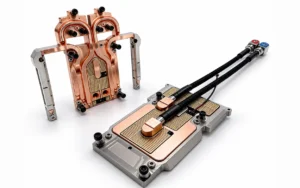
Vapor Chamber Liquid Cooling Plate is a high-performance thermal management solution engineered by ToneCooling for demanding applications.
Choosing between a vapor chamber and a liquid cooling plate for high-performance electronics depends on several factors: power, available space, noise, reliability, maintenance needs, and budget. Both vapor chambers and liquid cooling plates are cutting-edge thermal management solutions for high performance, heat management, and thermal control in electronics. Anyone selecting a thermal management system for high-performance computing should consider the unique demands of their device and cooling solution.
What Is Vapor Chamber Liquid Cooling Plate?
Vapor Chamber — Vapor chamber vs
A vapor chamber uses a sealed metal plate filled with a small amount of liquid. When heat from electronics enters the chamber, the liquid turns into vapor and spreads the heat quickly across the surface. This process allows vapor chamber cooling to move heat away from hot spots, making it a popular choice for thin devices and compact systems.
Vapor chamber technology works without moving parts. This design increases reliability and reduces the risk of mechanical failure. Many engineers choose vapor chamber solutions for applications where space is limited and silent operation is important.

Liquid Cooling Plate — Vapor chamber vs
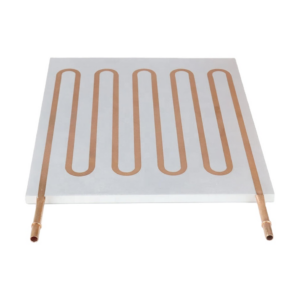
A liquid cooling plate is a metal plate with internal channels for coolant to flow through. Heat from electronic components transfers directly into the plate and then into the circulating coolant. Unlike full liquid cooling systems, liquid cooling plates focus only on the passive heat removal component without pumps, tubing, or radiators in this comparison.
Liquid cooling plates can handle higher heat loads than vapor chambers. The liquid inside the channels absorbs heat efficiently, making them suitable for high-power electronics, servers, industrial devices, and other applications with high thermal flux. They are passive, reliable, and often sealed, requiring minimal maintenance if integrated properly.

How These Cooling Technologies Work
Vapor Chamber Principle
A vapor chamber uses a flat, sealed metal enclosure with a small amount of working fluid inside. When heat from electronic components enters the vapor chamber, the fluid absorbs the energy and turns into vapor. The vapor spreads quickly across the chamber, carrying heat away from the source.
The vapor then reaches cooler areas of the chamber and condenses back into liquid. This cycle repeats, allowing the vapor chamber to move heat efficiently. Engineers often use this method for cooling in devices where space is limited and even heat distribution is important.
Liquid Cooling Plate Principle
A liquid cooling plate uses a metal plate with internal channels designed for coolant flow. Heat from electronics transfers directly to the plate, and the coolant circulating within absorbs and removes the heat. This allows the plate to handle higher heat densities than a vapor chamber.
Unlike system-level liquid cooling solutions, the liquid cooling plate itself has no moving parts, making it quiet and reliable. The efficiency comes from direct contact with the heat source, high thermal conductivity of the plate, and the liquid flowing inside the channels. These plates can be customized for shape and channel design to match the thermal and spatial requirements of the device.
Performance Comparison
Heat transfer plays a key role in the performance of any cooling system.
- Vapor chambers spread heat quickly across their surface, helping prevent hot spots. This method works well for devices with limited space and moderate heat loads.
- Liquid cooling plates transfer heat directly to the circulating liquid, allowing them to handle higher heat flux than vapor chambers. This makes them suitable for servers, industrial modules, and high-power electronics.
| System Type | Cooling Efficiency | Space Needed | Maintenance |
|---|---|---|---|
| Vapor Chamber | High (compact) | Low | Low |
| Liquid Cooling Plate | Very High | Moderate | Low if sealed |
Advantages and Disadvantages
Vapor Chamber Pros and Cons
Vapor chamber cooling offers several advantages for high-performance electronics. It provides even heat distribution, which helps prevent hot spots. The design has no moving parts, so it increases reliability and reduces noise.
Many engineers choose vapor chamber solutions for compact devices. The thin profile fits well in laptops and smartphones. Maintenance needs stay low because the system is sealed.
However, vapor chamber technology has disadvantages. It cannot handle extremely high heat loads like liquid cooling plates. The cooling capacity may not meet the needs of very powerful systems.
Liquid Cooling Plate Pros and Cons
Liquid cooling plates bring many advantages to demanding applications. They manage higher heat loads than vapor chambers. The design allows liquid to absorb heat efficiently, making them suitable for high-power devices.
Liquid cooling plates provide flexibility in layout, allowing engineers to match the plate to complex component arrangements. They also maintain stable temperatures for long-duration high-power operation.
Despite these advantages, liquid cooling plates have some limitations. They require more thickness than vapor chambers and may have a higher upfront cost due to materials and channel design complexity. Proper installation is important to avoid leaks if integrated into a liquid loop.
| System | Advantages | Disadvantages |
|---|---|---|
| Vapor Chamber | Silent, reliable, compact | Limited heat capacity |
| Liquid Cooling Plate | High heat load, flexible, efficient | Requires thicker plate, higher cost |
Space, Noise, and Maintenance
Space Needs
- Vapor chambers use a thin, flat design and fit in devices with limited space.
- Liquid cooling plates are thicker but still compact relative to the heat they can handle. Engineers often select them for high-power electronics where space allows.
Noise Levels
- Vapor chamber technology operates silently with no moving parts.
- Liquid cooling plates are passive; the plate itself is silent. Any noise only comes from the external cooling system if connected (not the plate itself).
Maintenance
- Vapor chamber systems require little maintenance due to their sealed design.
- Liquid cooling plates also require minimal maintenance if properly sealed. Inspections are recommended if the plate is integrated into a larger liquid loop.
Cost and Complexity
Upfront Cost
- Vapor chamber systems usually cost less due to simple construction.
- Liquid cooling plates may cost more upfront because of material and manufacturing requirements, but they are highly efficient for high-power applications.
Installation
- Vapor chamber installation is straightforward: place the chamber on the heat source, secure it, and ensure proper contact.
- Liquid cooling plate installation focuses on proper thermal contact with the components and integration with the device’s coolant loop if needed.
Applications Comparision
| Application Type | Vapor Chamber | Liquid Cooling Plate |
|---|---|---|
| Laptops / Tablets | ✔ | |
| Smartphones | ✔ | |
| Servers / High-Power Modules | ✔ | |
| Industrial Electronics | ✔ | |
| LED Lighting | ✔ | |
| Power Amplifiers | ✔ |
When to Use Vapor Chamber
Vapor chambers are best used in devices with limited internal space, moderate heat loads, and where silent operation is important. They are ideal for applications that require even heat distribution and low maintenance.
When to Use Liquid Cooling Plate
Liquid cooling plates are suitable for high-power electronics with concentrated heat flux and applications that require precise temperature control. They are preferred when higher heat removal capacity is needed, layouts may need customization, or devices generate thermal loads beyond the capability of vapor chambers.
Hybrid Cooling Solutions
Some engineers combine vapor chamber and liquid cooling plate methods to create hybrid cooling solutions. The vapor chamber spreads heat quickly across a surface, while the liquid cooling plate removes the heat efficiently. This combination helps prevent hot spots and keeps temperatures stable in compact, high-power electronics.
| Feature | Vapor Chamber | Liquid Cooling Plate | Hybrid System |
|---|---|---|---|
| Heat Spreading | Good | Moderate | Excellent |
| Heat Removal | Moderate | Excellent | Excellent |
| Space Efficiency | High | Moderate | Moderate |
| Maintenance | Low | Low | Moderate |
Choosing the Right Thermal Management Technologies
Step-by-Step Guide:
Determine Thermal Design Power (TDP)
High TDP → liquid cooling plate
Moderate TDP → vapor chamber
Assess Space Constraints
Vapor chamber → thin or compact designs
Liquid cooling plate → moderate thickness allowed
Consider Noise Requirements
Both are silent in their passive forms
Evaluate Reliability and Maintenance
Vapor chamber → very low maintenance
Liquid cooling plate → low maintenance if properly sealed
Set a Budget
Vapor chamber → generally lower upfront cost
Liquid cooling plate → higher cost for higher heat capacity
Key Questions for Consulting a Thermal Management Expert:
What is the maximum TDP of my system?
How much space is available for a cooling solution?
Is silent operation important?
How often can the system be serviced?
What is the total cost of ownership?
Could a hybrid vapor chamber + liquid cooling plate solution improve performance?
Vapor chambers work well in compact, quiet devices. Liquid cooling suits applications with high heat loads. Consultation with thermal management professionals ensures reliable results.
For industry standards and best practices, refer to Electronics Cooling.
Frequently Asked Questions
Does ToneCooling offer OEM and ODM services?
Yes. ToneCooling provides full OEM and ODM services including custom design, prototyping, thermal simulation, and volume production. We serve customers in North America, Europe, and Asia-Pacific with engineering support and samples within 2–4 weeks.
What materials are used in ToneCooling liquid cold plates?
ToneCooling manufactures cold plates in aluminum (6061/6063), copper (C1100/C1020), and stainless steel. Aluminum FSW cold plates are ideal for high-volume EV and industrial applications, while copper brazed cold plates provide maximum thermal conductivity (398 W/m·K) for high heat flux electronics.
What is the typical lead time for custom cold plates?
Prototype samples are delivered within 2–4 weeks. Production orders typically ship within 4–6 weeks after sample approval. ToneCooling responds to all quote requests within 24 business hours.
Get a Custom Thermal Solution from ToneCooling
ToneCooling is a professional liquid cooling solution provider specializing in custom cold plates, AIO coolers, and advanced thermal management systems. With ISO 9001:2015 certified manufacturing, we deliver prototype samples within 2–4 weeks. Contact ToneCooling today for a free consultation and quote — we respond within 24 business hours.
For industry standards and best practices, refer to Electronics Cooling.
Frequently Asked Questions
Does ToneCooling offer OEM and ODM services?
Yes. ToneCooling provides full OEM and ODM services including custom design, prototyping, thermal simulation, and volume production. We serve customers in North America, Europe, and Asia-Pacific with engineering support and samples within 2–4 weeks.
What materials are used in ToneCooling liquid cold plates?
ToneCooling manufactures cold plates in aluminum (6061/6063), copper (C1100/C1020), and stainless steel. Aluminum FSW cold plates are ideal for high-volume EV and industrial applications, while copper brazed cold plates provide maximum thermal conductivity (398 W/m·K) for high heat flux electronics.
What is the typical lead time for custom cold plates?
Prototype samples are delivered within 2–4 weeks. Production orders typically ship within 4–6 weeks after sample approval. ToneCooling responds to all quote requests within 24 business hours.
Get a Custom Thermal Solution from ToneCooling
ToneCooling is a professional liquid cooling solution provider specializing in custom cold plates, AIO coolers, and advanced thermal management systems. With ISO 9001:2015 certified manufacturing, we deliver prototype samples within 2–4 weeks. Contact ToneCooling today for a free consultation and quote — we respond within 24 business hours.
References: ASHRAE thermal standards, Wikipedia: Heat Sink Technology
Need a Custom Liquid Cold Plate?
ToneCooling engineers design thermal solutions for your specific requirements. Get an engineering RFQ review based on your uploaded requirements.
Vapor Chamber Vs Liquid Cooling is a critical component in modern thermal management. ToneCooling engineers this solution for AI servers, data centers, EV batteries, and power electronics requiring high-performance liquid cooling.
Vapor Chamber Vs Liquid Cooling: Key Specifications
When evaluating vapor chamber vs liquid cooling, engineers consider thermal resistance, pressure drop, flow rate, and material compatibility. ToneCooling provides detailed specs for every vapor chamber vs liquid cooling design, backed by CFD simulation and testing.
Why Choose ToneCooling for Vapor Chamber Vs Liquid Cooling
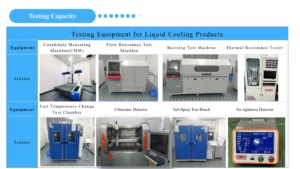
ToneCooling has manufactured over 50,000 vapor chamber vs liquid cooling units for global OEM customers. Our vapor chamber vs liquid cooling production features vacuum brazing furnaces below 10⁻⁴ mbar, FSW machines with ≤0.02mm flatness, and helium leak detection at 10⁻⁸ mbar·L/s. Every vapor chamber vs liquid cooling undergoes 100% pressure testing at 25 bar.
Our engineering team provides free vapor chamber vs liquid cooling design consultation, CFD simulation, and rapid prototyping in 7-14 days. Production vapor chamber vs liquid cooling orders ship in 4-6 weeks under ISO 9001:2015 quality management.
Need a Custom Liquid Cold Plate?
ToneCooling engineers design thermal solutions for your requirements. Response within 24-48 hours.
Last Updated: 2026-04-08
DR Kevin, Thermal Engineer, ToneCooling




.jpg.webp)


