This comprehensive guide covers how containerized ess solutions for industrial and OEM applications. ToneCooling provides expert insights on how containerized ess technology and implementation.
Containerized Ess Benefitsfrom Liquid Cooling is a high-performance thermal management solution engineered by ToneCooling for demanding applications.
This guide on How containerized ess provides key insights for engineers and procurement teams. Containerized energy storage systems (ESS) have become a cornerstone of modern energy infrastructure, providing modular and scalable solutions for grid stabilization, renewable energy integration, and industrial backup power. By packing high-capacity lithium-ion batteries into compact containers, operators can deploy energy storage systems quickly and efficiently.
However, this high-density arrangement brings a critical challenge: heat management. Battery modules and associated power electronics generate significant heat during operation. Without effective cooling, efficiency drops, battery lifespan shortens, and safety risks—such as thermal runaway—can arise.
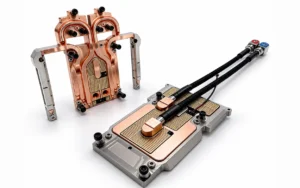
Liquid cooling plates, or cold plates, offer a precise solution. They transfer heat from battery cells and electronics directly to a circulating coolant, maintaining stable temperatures, improving safety, and enabling higher energy density in containerized ESS.

What Is Containerized Ess Benefitsfrom Liquid Cooling?
Containerized ESS is compact by design, but this very compactness makes thermal management challenging:
- High-density battery layout: Closely packed cells generate hotspots if cooling is inadequate.
- Heat from power electronics: Inverters, DC/DC converters, and battery management systems contribute to the overall thermal load.
- Limited airflow: Containers restrict natural convection, making passive air cooling largely ineffective.
- Battery sensitivity: Lithium-ion cells perform optimally within a narrow temperature range. Operating above this range accelerates degradation and increases thermal runaway risk.
Without effective thermal management, energy storage systems face reduced efficiency, shorter battery life, and higher maintenance costs. Liquid cooling plates address these issues by removing heat directly and evenly across all modules, ensuring safe and reliable operation.
What Liquid Cooling Plates Do — How containerized ess
Liquid cooling plates remove heat by circulating coolant through channels in direct contact with battery modules or electronics. Key advantages include:
- Direct-contact cooling: Coolant channels absorb heat directly from the source, increasing efficiency.
- Uniform temperature distribution: Multiple channels spread heat evenly across cells, preventing hotspots.
- Compact integration: Cold plates fit into modular battery racks without increasing container size.
- Energy efficiency: Liquid cooling handles high heat loads more effectively than air systems, while consuming less energy.
Technical details:
- Materials: Aluminum is widely used for its balance of thermal conductivity, weight, and cost. Copper is chosen for high-performance applications where maximum heat transfer is required.
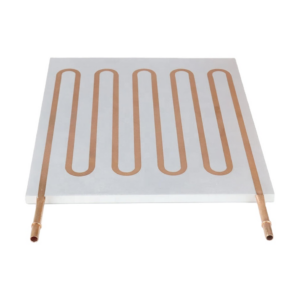
- Flow channel design: Serpentine or microchannel paths optimize heat removal while minimizing pressure drops.
- Coolant selection: Water-glycol mixtures are common for freeze protection; dielectric fluids are used when electrical isolation is needed.
A well-designed liquid cooling plate can maintain the temperature difference between the coolant and battery cells below 5°C even under full-load conditions, ensuring stable performance.
Benefits of Cold Plates in Containerized ESS — How containerized ess
Higher battery density per container
Efficient heat removal allows batteries to be packed more closely, increasing the total energy storage within the same container footprint. For example, a 1 MWh container with liquid cooling can hold up to 15–20% more cells than an air-cooled system.
Enhanced safety
Uniform cooling prevents hotspots and reduces the risk of thermal runaway. Integration with battery management systems allows for real-time monitoring and early detection of temperature anomalies.
Extended battery life
Maintaining stable operating temperatures reduces capacity degradation. Batteries in liquid-cooled containers can last 20–30% longer under high-density operation.
Energy efficiency
Liquid cooling uses less energy than high-powered fans needed for air cooling, lowering operational costs in large-scale ESS deployments.
Modularity and scalability
Battery cold plates can be customized for specific container layouts and battery module designs, allowing operators to expand energy storage systems without redesigning the entire thermal management setup.

Choosing the Right Liquid Cooling Plate
Selecting the right cold plate is critical for optimal ESS performance:
- Material selection: Aluminum offers lightweight and cost-effective solutions; copper provides higher thermal conductivity for high-density systems.
- Flow channel design: Proper design ensures uniform coolant distribution and minimizes pressure drops, preventing uneven cooling.
- Integration with battery modules: Plates must fit the containerized ESS layout, with standardized inlet/outlet connections for easy maintenance.
- Customization and OEM solutions: Plates can be tailored for coolant type, flow rate, thickness, and geometry to meet specific ESS requirements or extreme operating conditions.
High-quality liquid cooling plates maintain consistent temperatures, reduce thermal stress, extend battery lifespan, and enhance overall system efficiency.
Conclusion
Effective thermal management is essential for containerized ESS performance. Liquid cooling plates provide direct, efficient, and scalable heat removal, ensuring uniform temperatures across battery modules and power electronics.
Key advantages include:
- Higher energy density per container
- Enhanced safety and reduced thermal risk
- Extended battery lifespan
- Improved energy efficiency
- Modularity and scalable deployment options
Adopting liquid cooling plates is a strategic choice to achieve high-performance, safe, and cost-efficient containerized energy storage solutions.
FAQ
Q1: What is a liquid cooling plate and how does it work in ESS?
A liquid cooling plate, also called a cold plate, is a device that transfers heat from battery cells or power electronics to a circulating coolant. Coolant channels run through the plate, absorbing heat directly and maintaining uniform temperatures across all modules. This prevents hotspots and improves safety, efficiency, and battery life in containerized ESS.
Q2: Why are liquid cooling plates necessary for containerized ESS?
Containerized ESS has a compact layout and high-density battery packs. This makes passive air cooling insufficient, as airflow is limited and batteries generate significant heat. Liquid cooling plates provide direct cooling, ensuring safe operation, higher energy density, and extended battery lifespan.
Q3: How much temperature reduction can liquid cooling plates achieve?
A well-designed liquid cooling plate can maintain the temperature difference between the coolant and battery cells below 5°C under full-load conditions. This stable temperature distribution prevents thermal stress, reduces degradation, and minimizes the risk of thermal runaway.
Q4: What materials are used for liquid cooling plates?
Aluminum is commonly used for its lightweight, cost-effectiveness, and adequate thermal conductivity. Copper is used in high-performance applications due to its superior heat transfer properties. Selection depends on ESS design, heat load, and cost considerations.
Q5: Can liquid cooling plates be customized for different ESS layouts?
Yes. Liquid cooling plates can be tailored for specific container layouts, battery module dimensions, coolant type, flow rate, and thickness. OEM solutions allow seamless integration into various containerized ESS configurations, making expansion or high-density installations easier.
Q6: How do liquid cooling plates improve ESS safety?
By maintaining uniform temperatures and preventing hotspots, liquid cooling plates reduce the risk of thermal runaway in lithium-ion batteries. They also integrate with battery management systems for real-time monitoring, enabling early detection of anomalies.
Q7: Do liquid cooling plates save energy compared to air cooling?
Yes. Liquid cooling systems consume less energy than high-powered fans required for air cooling, making them more efficient for large-scale ESS deployments. This reduces operational costs while improving thermal performance.
For industry standards and best practices, refer to ASHRAE thermal guidelines.
| Parameter | ToneCooling Specification |
|---|---|
| Material | Copper T2 / 6061 aluminum |
| Welding method | Transient liquid phase diffusion welding |
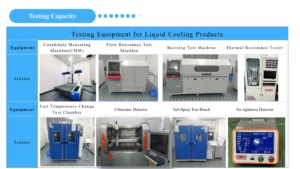
| Test pressure | 1 MPa (helium leak + nitrogen hold) |
| Working medium | PG25 (25% propylene glycol) |
| Custom design | Yes — DXF/STEP input accepted |
Frequently Asked Questions
Does ToneCooling offer OEM and ODM services?
Yes. ToneCooling provides full OEM and ODM services including custom design, prototyping, thermal simulation, and volume production. We serve customers in North America, Europe, and Asia-Pacific with engineering support and samples within 6–8 weeks.
What materials are used in ToneCooling liquid cold plates?
ToneCooling manufactures cold plates in aluminum (6061/6063), copper (C1100/C1020), and stainless steel. Aluminum FSW cold plates are ideal for high-volume EV and industrial applications, while copper brazed cold plates provide maximum thermal conductivity (398 W/m·K) for high heat flux electronics.
What is the typical lead time for custom cold plates?
Prototype samples are delivered within 6–8 weeks. Production orders typically ship within 4–6 weeks after sample approval. ToneCooling responds to all quote requests within 24 business hours.
Get a Custom Thermal Solution from ToneCooling
ToneCooling is a professional liquid cooling solution provider specializing in custom cold plates, AIO coolers, and advanced thermal management systems. With ISO 9001:2015 certified manufacturing, we deliver prototype samples within 6–8 weeks. Contact ToneCooling today for a free consultation and quote — we respond within 24 business hours.
For industry standards and best practices, refer to ASHRAE thermal guidelines.
Frequently Asked Questions
Does ToneCooling offer OEM and ODM services?
Yes. ToneCooling provides full OEM and ODM services including custom design, prototyping, thermal simulation, and volume production. We serve customers in North America, Europe, and Asia-Pacific with engineering support and samples within 6–8 weeks.
What materials are used in ToneCooling liquid cold plates?
ToneCooling manufactures cold plates in aluminum (6061/6063), copper (C1100/C1020), and stainless steel. Aluminum FSW cold plates are ideal for high-volume EV and industrial applications, while copper brazed cold plates provide maximum thermal conductivity (398 W/m·K) for high heat flux electronics.
What is the typical lead time for custom cold plates?
Prototype samples are delivered within 6–8 weeks. Production orders typically ship within 4–6 weeks after sample approval. ToneCooling responds to all quote requests within 24 business hours.
Get a Custom Thermal Solution from ToneCooling
ToneCooling is a professional liquid cooling solution provider specializing in custom cold plates, AIO coolers, and advanced thermal management systems. With ISO 9001:2015 certified manufacturing, we deliver prototype samples within 6–8 weeks. Contact ToneCooling today for a free consultation and quote — we respond within 24 business hours.
Need a Custom Liquid Cold Plate?
ToneCooling engineers design thermal solutions for your specific requirements. Get an engineering RFQ review based on your uploaded requirements.
Why Choose ToneCooling for Energy Storage System Liquid Cooling
Engineering review and prototype planning are based on the project requirements. Custom prototype lead time is normally 6–8 weeks after drawing approval and order confirmation; confirm the production schedule in the quotation.
Need a Custom Liquid Cold Plate?
ToneCooling engineers design thermal solutions for your requirements. Response within 24-48 hours.
Last Updated: 2026-04-08
References: ISO 9001
Related articles