Better battery cooling makes packs safer and longer-lasting by keeping cells cool and uniform, which slows degradation and lowers the risk of thermal runaway. ToneCooling designs and builds custom battery cold plates for EV and energy storage systems.
Maximize battery performance and safety with our cold plates—high-efficiency cooling, lightweight design, ideal for EVs and ESS.
📘 Battery Cold Plate Solutions – Engineer’s Quick Guide
Batteries generate heat during charge and discharge; overheating can cause performance degradation, shortened lifespan, and safety risks.
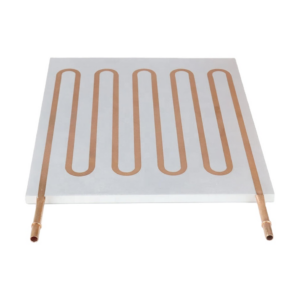
Cold plates = mainstream liquid cooling solution → high-efficiency heat dissipation + temperature uniformity + enhanced safety + extended battery life.
🔹 Key Application Scenarios
| Application | Requirements | Cold Plate Features |
|---|---|---|
| Energy Storage Container (ESS) | Large-scale cells, high thermal load | Modular design, robust in harsh environments, uniform flow channels |
| Electric Vehicle (EV) | High energy density, limited space | Lightweight, direct cell contact, high thermal efficiency |
| Data Center UPS | High reliability, hot-swappable | Redundant design, easy maintenance |
| High-Performance Computing (HPC) | Stable backup power | Precise temperature control, ensures computational stability |
| Medical Equipment | Absolute safety and reliability | Medical-grade materials, leak-free design |
🔹 Key Performance Features
Heat Dissipation Efficiency: wide channels / narrow channels / turbulator structures / parallel flow channels
Temperature Uniformity: optimized flow channels + high thermal conductivity materials + intelligent coolant distribution
Pressure Resistance & Sealing: 3–5× burst pressure, aerospace-grade seals, automated welding
Lightweight Design: aluminum alloys, composites, topology optimization, thin-wall channels
Customizability: multiple interfaces, size options, insulation, coolant compatibility
🔹 ToneCooling Technical Highlights
Advanced Manufacturing Processes
Vacuum Brazing: joint strength ≥ 90% of base material, low thermal resistance, suitable for complex flow channels
Extruded Profiles + Friction Stir Welding (FSW): eco-friendly, minimal distortion, high batch consistency
Flow Channel Innovations
Wide Channel Turbulator Structure: heat transfer efficiency +35%, pressure drop only +12%
Narrow Channel Integrated Bracket: channel height 1.5–2.5mm, also serves as battery structural support
Integrated Solutions
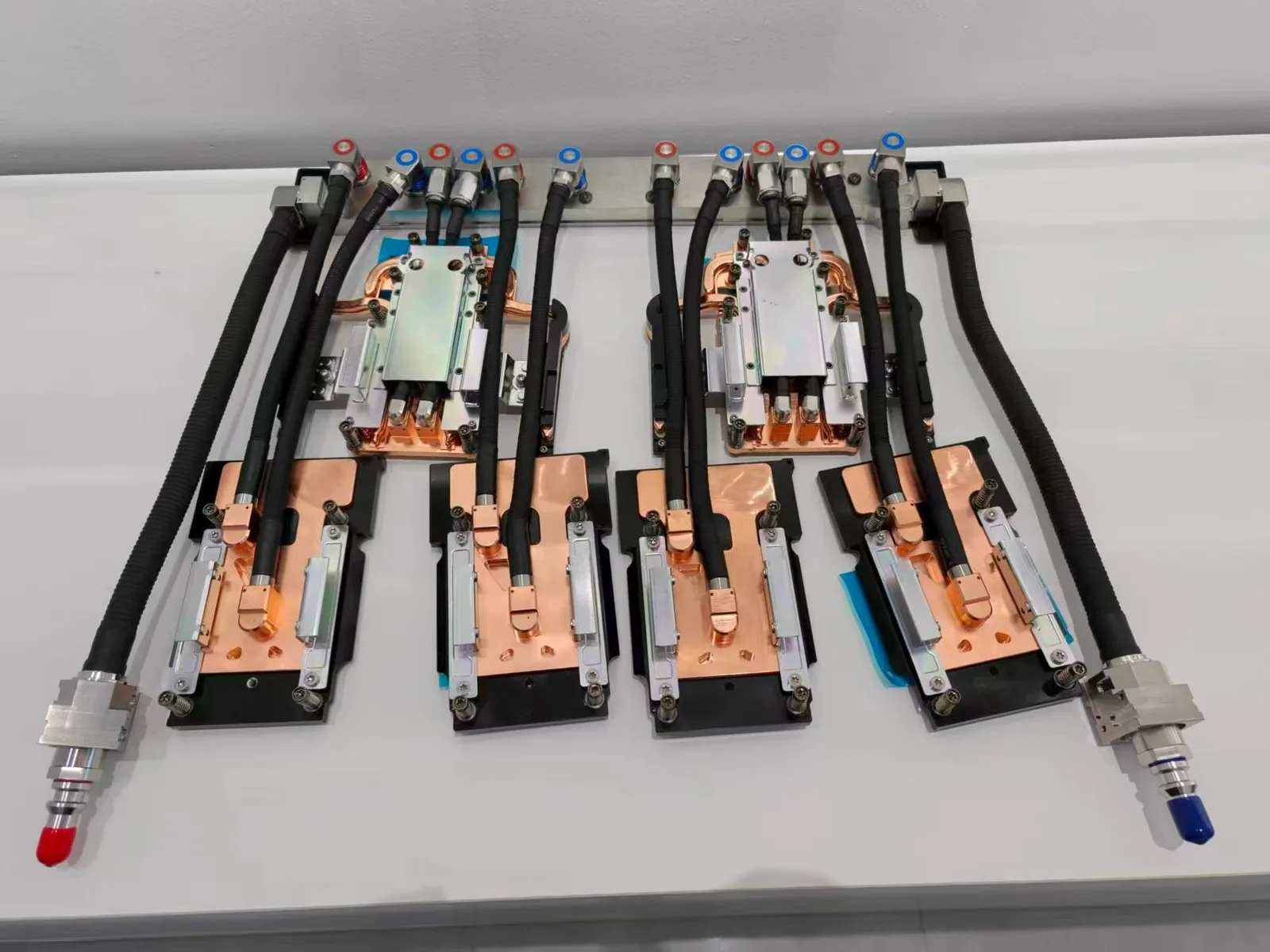
Cold plate + structural adhesive + quick-connect plumbing + intelligent temperature control system
Supports 600kg battery pack without additional brackets
High Voltage Series (>1000V): insulation, electrochemical corrosion resistance, arc prevention
1C High-Rate Series: fast thermal response, prevents thermal runaway propagation
🔹 Key Selection Considerations
Operating Environment: stationary or mobile? Extreme temperature/humidity conditions?
Battery Type & Specs: LFP / NMC? Maximum temperature and temperature uniformity limits?
Thermal Management Needs: peak thermal load, allowable temperature variation, transient thermal shocks?
System Matching: flow resistance, pump power, maintenance cycle?
Cost Evaluation: initial cost vs. lifecycle cost
Standards & Certification: UL / IEC / GB / AEC-Q200 / ISO / RoHS
🔹 Future Development Trends
Higher Integration: cold plate = structural component + sensors + valves + BMS interface
Enhanced Heat Dissipation: new materials (graphene / carbon nanotubes), microchannel designs, phase-change cooling
Smarter Systems: AI-based predictive thermal management, digital twin simulations, edge computing + cloud collaboration
Sustainability: recyclable materials, eco-friendly coolants, long-life design
Standardization & Modularization: unified interfaces, rapid installation, lower customization costs
🔹 Key Engineering Value
Efficient Heat Dissipation: ensures safe battery operation, extends system lifespan
Temperature Uniformity: minimizes cell-to-cell variation, improves overall performance stability
Reliable Sealing: suitable for high-voltage and complex operating conditions, eliminates leakage risks
Lightweight Structure: reduces system weight, enhances energy efficiency
Flexible Customization: adapts to various battery types and operating scenarios
Integrated Solutions: combines cold plate, structural support, and intelligent control for higher system reliability

For industry standards and best practices, refer to SAE International.
Frequently Asked Questions
Does ToneCooling offer OEM and ODM services?
Yes. ToneCooling provides full OEM and ODM services including custom design, prototyping, thermal simulation, and volume production. We serve customers in North America, Europe, and Asia-Pacific with engineering support and samples within 4–6 weeks.
What certifications does ToneCooling hold for automotive products?
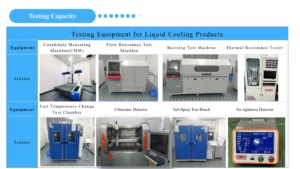
ToneCooling works under ISO 9001 quality management and an IATF 16949-aligned quality system for automotive-grade products. All battery cold plates undergo 100% pressure testing and helium leak testing before shipment.
What coolant is compatible with ToneCooling battery cold plates?
ToneCooling battery cold plates are designed for 50/50 water-ethylene glycol coolant, providing freeze protection to -37°C. All wetted surfaces are corrosion-resistant and compatible with standard automotive cooling circuits.
Get a Custom Thermal Solution from ToneCooling
ToneCooling is a professional liquid cooling solution provider specializing in custom cold plates, AIO coolers, and advanced thermal management systems. With ISO 9001 quality management and our own manufacturing facility in Huizhou, China, we deliver prototype samples typically within 4–6 weeks. Contact ToneCooling today for a free consultation and quote. An engineer reviews every RFQ and replies by email with next steps.
For industry standards and best practices, refer to SAE International.
Get a Custom Thermal Solution from ToneCooling
ToneCooling is a professional liquid cooling solution provider specializing in custom cold plates, AIO coolers, and advanced thermal management systems. With ISO 9001 quality management and our own manufacturing facility in Huizhou, China, we deliver prototype samples typically within 4–6 weeks. Contact ToneCooling today for a free consultation and quote. An engineer reviews every RFQ and replies by email with next steps.
References: ASHRAE thermal standards
Why Choose ToneCooling for Revolutionize Battery Cooling Longer
Engineering review and prototype planning are based on the project requirements. Custom prototype lead time is normally 4–6 weeks after drawing approval and order confirmation; confirm the production schedule in the quotation.
Need a Custom Liquid Cold Plate?
ToneCooling engineers review your drawings and requirements and reply by email with next steps.
Last updated: 2026-10-02