Guangdong, China
Global Engineering RFQ Review

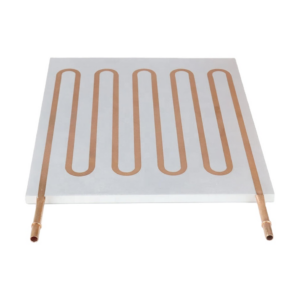
Battery Cooling Plate Design: Channel Geometry, Materials & Manufacturing for EV Packs

Table of Contents

This guide explores battery cooling plate design principles including serpentine, parallel, and pin-fin channel geometries for prismatic, pouch, and cylindrical cell formats. Topics include material selection between aluminum and copper, thermal interface considerations, pressure drop optimization, and manufacturing process trade-offs for automotive and energy storage battery pack thermal management.

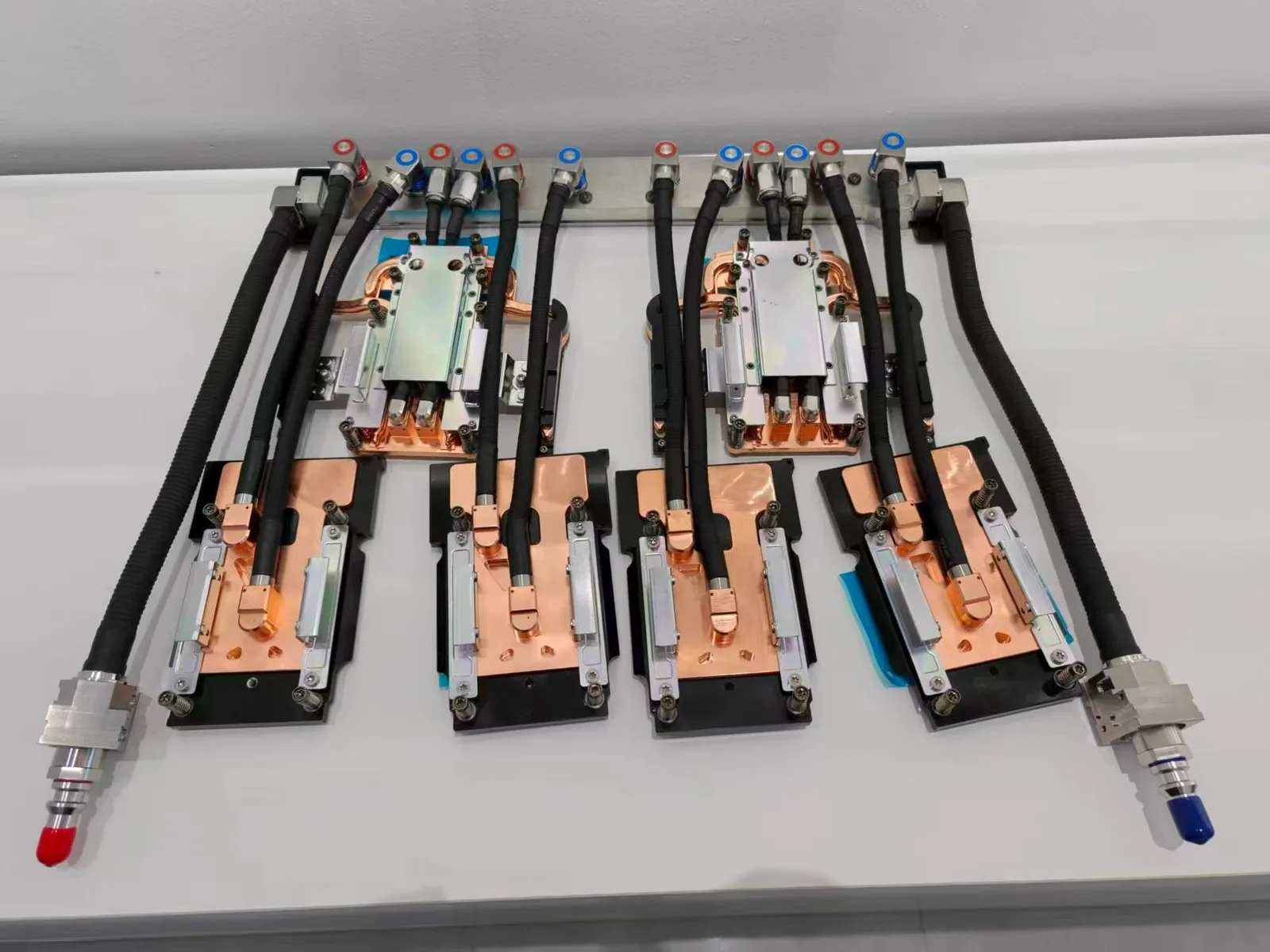
EV battery cold plate is a critical component in modern thermal management systems. ToneCooling specializes in custom EV battery cold plate solutions for OEM and industrial applications. This article covers key aspects of EV battery cold plate technology, design considerations, and manufacturing processes.

EV battery cold plate Overview

As a leading manufacturer of EV battery cold plate products, ToneCooling offers comprehensive engineering support for EV battery cold plate projects. Our EV battery cold plate solutions are designed for maximum thermal performance, reliability, and cost-effectiveness in demanding applications.

This guide explores battery cooling plate design principles including serpentine, parallel, and pin-fin channel geometries for prismatic, pouch, and cylindrical cell formats. Topics include material selection between aluminum and copper, thermal interface considerations, pressure drop optimization, and manufacturing process trade-offs for automotive and energy storage battery pack thermal management.

For industry standards and best practices, refer to SAE International.

ParameterToneCooling Specification
MaterialCopper T2 / 6061 aluminum
Welding methodTransient liquid phase diffusion welding
Test pressure1 MPa (helium leak + nitrogen hold)
Working mediumPG25 (25% propylene glycol)
Custom designYes — DXF/STEP input accepted

Frequently Asked Questions — Battery cooling plate design ev

Does ToneCooling offer OEM and ODM services? — Battery cooling plate design ev

Yes. ToneCooling provides full OEM and ODM services including custom design, prototyping, thermal simulation, and volume production. We serve customers in North America, Europe, and Asia-Pacific with engineering support and samples within 2–4 weeks.

What materials are used in ToneCooling liquid cold plates? — Battery cooling plate design ev

ToneCooling manufactures cold plates in aluminum (6061/6063), copper (C1100/C1020), and stainless steel. Aluminum FSW cold plates are ideal for high-volume EV and industrial applications, while copper brazed cold plates provide maximum thermal conductivity (398 W/m·K) for high heat flux electronics.

What is the typical lead time for custom cold plates?

Prototype samples are delivered within 2–4 weeks. Production orders typically ship within 4–6 weeks after sample approval. ToneCooling responds to all quote requests within 24 business hours.

Get a Custom Thermal Solution from ToneCooling

ToneCooling is a professional liquid cooling solution provider specializing in custom cold plates, AIO coolers, and advanced thermal management systems. With ISO 9001:2015 certified manufacturing, we deliver prototype samples within 2–4 weeks. Contact ToneCooling today for a free consultation and quote — we respond within 24 business hours.

References: ASHRAE thermal standards, Wikipedia: Heat Sink Technology

About ToneCooling

ToneCooling is a professional OEM manufacturer specializing in custom liquid cooling solutions, cold plates, and thermal management systems. With over 10 years of experience serving global OEM customers, we deliver high-performance cooling solutions for servers, data centers, electric vehicles, energy storage systems, and industrial applications. Our engineering team provides end-to-end support from thermal simulation and design optimization to prototype development and mass production. All products are manufactured in our ISO-certified facilities with rigorous quality control. Contact ToneCooling for custom cooling solutions tailored to your project requirements.

Why Choose ToneCooling for EV battery cold plate

ToneCooling provides professional EV battery cold plate solutions with custom designs, fast prototyping, and competitive OEM pricing. Our EV battery cold plate products serve data center, EV, industrial, and semiconductor applications worldwide.

Contact ToneCooling for custom EV battery cold plate solutions. Visit tonecooling.com or email info@tonecooling.com. US: +1 (832) 720-7542. Response within 24 business hours.

Need a Custom Liquid Cold Plate?

Battery Cooling Plate Design Ev is a high-performance thermal management solution engineered by ToneCooling for demanding applications.

ToneCooling engineers design thermal solutions for your specific requirements. Get an engineering RFQ review based on your uploaded requirements.

Request Engineering RFQ

Semiconductor Test Fixture Cold Plate is a critical component in modern thermal management. ToneCooling engineers this solution for AI servers, data centers, EV batteries, and power electronics requiring high-performance liquid cooling.

Semiconductor Test Fixture Cold Plate: Key Specifications

When evaluating semiconductor test fixture cold plate, engineers consider thermal resistance, pressure drop, flow rate, and material compatibility. ToneCooling provides detailed specs for every semiconductor test fixture cold plate design, backed by CFD simulation and testing.

Why Choose ToneCooling for Semiconductor Test Fixture Cold Plate

ToneCooling has manufactured over 50,000 semiconductor test fixture cold plate units for global OEM customers. Our semiconductor test fixture cold plate production features vacuum brazing furnaces below 10⁻⁴ mbar, FSW machines with ≤0.02mm flatness, and helium leak detection at 10⁻⁸ mbar·L/s. Every semiconductor test fixture cold plate undergoes 100% pressure testing at 25 bar.

Our engineering team provides free semiconductor test fixture cold plate design consultation, CFD simulation, and rapid prototyping in 7-14 days. Production semiconductor test fixture cold plate orders ship in 4-6 weeks under ISO 9001:2015 quality management.

Need a Custom Liquid Cold Plate?

ToneCooling engineers design thermal solutions for your requirements. Response within 24-48 hours.

Request Engineering RFQ

Why Choose ToneCooling for Battery Cooling Plate Design Ev?

ToneCooling is a liquid cold plate and AIO cooler manufacturer serving AI server, EV battery, and power electronics applications. Our battery cooling plate design ev solutions use copper T2 construction, transient liquid phase diffusion welding, and CFD-validated thermal design. Every unit passes 100% helium leak inspection and 6-hour nitrogen pressure hold testing before shipment.

Contact our thermal engineering team at info@tonecooling.com with your system layout and TDP requirements. → Request a quote

Last Updated: 2026-04-08

DR Kevin, Thermal Engineer, ToneCooling

Frequently Asked Questions

What channel geometry is best for battery cooling plates?

Serpentine channels provide simple manufacturing and good temperature uniformity for small modules. Parallel channels offer lower pressure drop for large packs but require careful flow balancing. Pin-fin patterns deliver the highest heat transfer for high-C-rate applications but increase manufacturing complexity. Selection depends on cell format, discharge rate, and volume.

Should battery cooling plates be aluminum or copper?

Aluminum (3003 or 6061) is the standard choice for 95%+ of battery cooling plates due to lower cost, lighter weight, easier manufacturing, and adequate thermal conductivity (150-180 W/mK). Copper is reserved for extreme high-C-rate applications (5C+) where its 385 W/mK conductivity provides measurable benefit despite 3x the weight and 4x the cost.

How does ToneCooling ensure leak-free battery cooling plates?

Every ToneCooling battery cooling plate undergoes 100% helium leak testing (detection threshold: 1e-8 atm cc/sec), followed by pressure decay testing at 1.5x operating pressure. Vacuum brazed plates receive additional X-ray inspection on a sample basis. For automotive OEMs, full PPAP documentation and traceability from raw material to shipped unit is provided.

Picture of ToneCooling Engineering Team

ToneCooling Engineering Team

The ToneCooling thermal engineering team designs, simulates, and validates custom liquid cold plates for GPU, CPU, IGBT, and EV battery applications.

Welcome To Share This Page:
Product Categories
Latest News
Get A Free Quote Now !
Quote Request

Related Products

Related News

Drawing preparation checklist for data center liquid cold plate quotation, covering CAD files, heat source maps, port layout, material and validation inputs.
Validation items engineers should define before requesting a data center liquid cold plate quote, including leak test, pressure test, cleanliness and documentation.
Copper and aluminum cold plate tradeoffs for AI server projects, including thermal performance, weight, corrosion, joining route and RFQ inputs.
Engineering checklist for direct-to-chip cold plate port layout, hose clearance, serviceability and RFQ preparation in AI server cooling projects.
How to prepare pressure-drop and flow-rate inputs for custom GPU liquid cold plate RFQs used in AI server and data center cooling projects.
RFQ inputs engineers should prepare for data center GPU cold plates, including drawings, heat load, coolant, flow rate, pressure-drop target and validation requirements.

ToneCooling (Guangdong ToneCooling Precision Manufacturing Co., Ltd.) has completed its new 30,000m² manufacturing facility in Dongguan, Guangdong, China — an

An FSW liquid cold plate (friction stir welded liquid cold plate) is a sealed thermal management heat exchanger manufactured by

Last Updated: 2026-05-08
Scroll to Top

Get A Free Quote Now !

If you have any questions, please do not hesitate to contact us.

Quote Request
ToneCooling 19 thermal management
(function () { 'use strict'; if (window.tcDataCenterV14TrackingLoaded) return; window.tcDataCenterV14TrackingLoaded = true;var SITE_MARKET = 'global'; var TARGET_SEGMENT = 'data_center_gpu_cpu'; var TRACKED_FORM_IDS = ['3', '4']; var PAGE_PATH = '/liquid-cold-plates/data-center-liquid-cold-plate/'; var THANK_YOU_PATH = '/thank-you/data-center-cold-plate-rfq/'; var DEBUG = /(?:\?|&)tc_debug=1(?:&|$)/.test(window.location.search); var formStarted = false; var formSubmitted = false;function cleanPath() { return window.location.pathname || '/'; }function matchedFormId(form) { var idStr = String((form && (form.getAttribute('data-form_id') || form.id)) || ''); for (var i = 0; i < TRACKED_FORM_IDS.length; i++) { if (idStr.indexOf(TRACKED_FORM_IDS[i]) !== -1) return TRACKED_FORM_IDS[i]; } if (form && form.querySelector('[name="gpu_cpu_footprint"]')) return '4'; return null; }function pushEvent(name, payload) { payload = payload || {}; payload.site_market = SITE_MARKET; payload.target_segment = TARGET_SEGMENT; payload.form_id = payload.form_id || '4'; payload.page_path = payload.page_path || (isThankYouPath() ? THANK_YOU_PATH : cleanPath()); if (DEBUG) payload.debug_mode = true; if (typeof window.gtag === 'function') { window.gtag('event', name, payload); } else { window.dataLayer = window.dataLayer || []; window.dataLayer.push(Object.assign({ event: name }, payload)); } try { window.dispatchEvent(new CustomEvent('tc_inquiry_tracking_event', { detail: { name: name, payload: payload } })); } catch (err) {} if (DEBUG && window.console && window.console.info) { window.console.info('[TC Data Center V1.4 Tracking]', name, payload); } }function closest(el, selector) { while (el && el.nodeType === 1) { if (el.matches && el.matches(selector)) return el; el = el.parentElement; } return null; }function isThankYouPath() { var path = cleanPath(); var search = window.location.search || ''; return path.indexOf('/thank-you') === 0 || /(?:\?|&)page_id=9601(?:&|$)/.test(search); }function fileTypeCategory(file) { var name = file && file.name ? String(file.name).toLowerCase() : ''; var ext = (name.match(/\.([a-z0-9]+)$/) || [])[1] || ''; if (['step', 'stp', 'igs', 'iges', 'x_t', 'x_b', 'sldprt', 'sldasm', 'stl'].indexOf(ext) !== -1) return 'cad'; if (['dwg', 'dxf'].indexOf(ext) !== -1) return 'cad'; if (ext === 'pdf') return 'pdf'; if (['jpg', 'jpeg', 'png', 'webp'].indexOf(ext) !== -1) return 'image'; if (['xls', 'xlsx', 'csv'].indexOf(ext) !== -1) return 'spreadsheet'; return 'other'; }function valueExists(form, name) { var field = form ? form.querySelector('[name="' + name + '"]') : null; return !!(field && String(field.value || '').trim()); }function qualityBand(form) { var score = 0; var fileInput = form ? form.querySelector('input[type="file"]') : null; if (valueExists(form, 'company') && valueExists(form, 'email')) score += 25; if (valueExists(form, 'application')) score += 20; if (fileInput && fileInput.files && fileInput.files.length) score += 20; if (valueExists(form, 'heat_load') || valueExists(form, 'coolant_type') || valueExists(form, 'flow_target') || valueExists(form, 'pressure_drop_limit')) score += 15; if (valueExists(form, 'prototype_quantity') || valueExists(form, 'annual_volume')) score += 10; if (valueExists(form, 'target_schedule') || valueExists(form, 'country_region')) score += 10; if (score < 40) return '0-39'; if (score < 60) return '40-59'; if (score < 80) return '60-79'; return '80-100'; }document.addEventListener('click', function (event) { var link = closest(event.target, 'a[data-event="cta_click"], a[data-cta-label], .tc-data-center-hero a'); if (!link) return; pushEvent('cta_click', { cta_label: link.getAttribute('data-cta-label') || (link.textContent || '').replace(/\s+/g, ' ').trim() || 'data_center_cta' }); }, true);document.addEventListener('focusin', function (event) { var form = closest(event.target, 'form'); if (!form || formStarted) return; var fid = matchedFormId(form); if (!fid) return; formStarted = true; pushEvent('form_start', { form_id: fid }); }, true);document.addEventListener('change', function (event) { var input = event.target; var form = closest(input, 'form'); if (!input || input.type !== 'file' || !form || !input.files || !input.files.length) return; pushEvent('file_upload', { upload_used: 'yes', file_type_category: fileTypeCategory(input.files[0]) }); }, true);document.addEventListener('submit', function (event) { var form = closest(event.target, 'form'); if (!form || formSubmitted) return; var fid = matchedFormId(form); if (!fid) return; formSubmitted = true; pushEvent('form_submit', { form_id: fid, rfq_quality_score_band: qualityBand(form) }); }, true);if (isThankYouPath()) { pushEvent('thank_you_page_view', { page_path: THANK_YOU_PATH }); } }());