This guide covers liquid cooling plate design for Battery Energy Storage Systems (BESS), including bottom-cooling and side-cooling configurations, immersion-ready hybrid architectures, and manufacturing processes such as stamping-brazing and friction stir welding. ToneCooling engineers provide practical design parameters for containerized and grid-scale ESS applications requiring reliable thermal management under high C-rate cycling conditions.
Overview
The global Battery Energy Storage System (BESS) market is projected to exceed 500 GWh of annual deployments by 2030, driven by renewable energy integration, grid stabilization, and peak shaving applications. As energy storage systems scale from residential units to utility-scale containerized installations, thermal management has emerged as the critical factor determining battery lifespan, safety, and round-trip efficiency.
Liquid cooling plates — specifically aluminum stamped-and-brazed and friction stir welded (FSW) designs — have become the industry standard for commercial and utility-scale BESS modules. This guide covers the engineering principles behind ESS liquid cooling plate design, material selection, and manufacturing considerations.
Why BESS Requires Liquid Cooling — ESS thermal management
Lithium-ion cells (NMC, LFP, NCA) generate heat during both charge and discharge cycles through ohmic resistance, electrochemical reaction entropy, and SEI layer impedance. At the module level, heat generation rates range from 5–30 W per cell depending on C-rate, state of charge, and ambient conditions. A standard 51.2V/280Ah LFP BESS module containing 16 cells in series generates 80–480 W of total heat during normal operation.
The critical thermal requirement is not just removing this heat — it is maintaining temperature uniformity. Cell-to-cell temperature variation within a module must stay below 3–5°C to prevent capacity imbalance, accelerated aging of hotter cells, and potential thermal runaway propagation. Air cooling alone cannot achieve this uniformity in densely packed modules, especially in containerized installations where ambient temperatures may reach 45°C+.
Liquid cooling plates positioned between cell rows or underneath module assemblies provide the direct, uniform heat removal path needed to keep every cell within its optimal 20–35°C operating window.
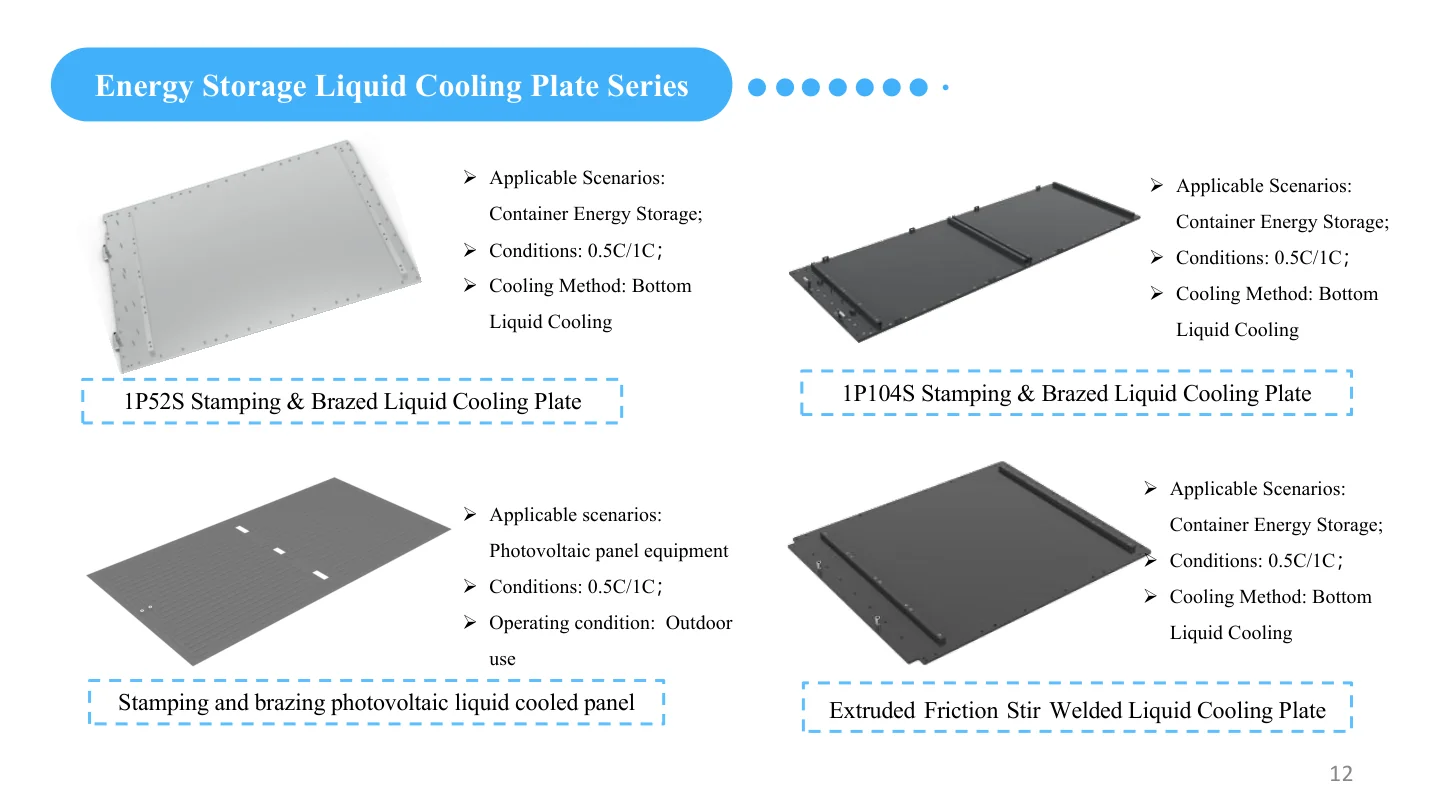
Cooling Plate Architecture for BESS Modules — ESS thermal management
Bottom Cooling Configuration — ESS thermal management
The most common configuration places the cooling plate beneath the cell array, with cells standing vertically on the cold plate surface. Heat flows from cell casings through a thermal interface pad into the aluminum cold plate. This configuration is standard for prismatic LFP cells (CATL, BYD, EVE) and provides the most straightforward module assembly process.
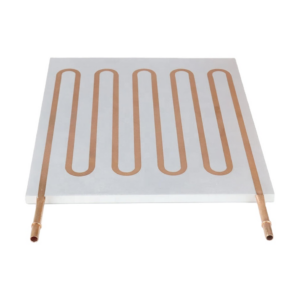
Key design parameters for bottom-cooling plates: the plate must provide uniform temperature distribution across the entire cell array footprint (typically 400–600mm × 200–400mm for standard modules). Internal flow channels must be designed so that the coolant temperature rise from inlet to outlet creates less than 2°C surface temperature variation. ToneCooling achieves this through optimized serpentine or U-flow channel layouts with CFD-validated flow distribution.
Side Cooling Configuration
Side cooling places thin cooling plates (2–4mm thick) between individual cells or between groups of 2–4 cells. This configuration provides more direct thermal contact with the cell’s largest surface area and can achieve lower cell-to-plate thermal resistance. However, side cooling adds complexity to module assembly, increases the number of cooling plates per module, and requires thin-wall manufacturing precision.
Side cooling is preferred for high-C-rate applications (grid frequency regulation, fast-response peak shaving) where heat generation rates are high and cell temperatures must be tightly controlled. ToneCooling’s harmonica-tube side cooling plates achieve 2mm wall thickness with reliable leak-proof performance at pressures up to 4 bar.
Immersion-Ready Hybrid Designs
As the industry explores dielectric immersion cooling for BESS, hybrid cold plate designs that can function both as traditional liquid cold plates and as heat exchange surfaces in immersion systems are gaining interest. ToneCooling’s hybrid plates feature external surface texturing that enhances nucleate boiling heat transfer when submerged in dielectric fluid, while maintaining standard internal coolant channels for conventional operation.
Manufacturing Processes for ESS Cold Plates
Stamping & Brazing (High Volume)
For production volumes exceeding 5,000 units/year, stamped-and-brazed construction offers the best cost-performance ratio. Two stamped aluminum sheets with pressed channel features are vacuum-brazed together to form the internal flow path. This process achieves:
- Unit cost reduction of 40–60% compared to CNC-machined designs at volume
- Consistent quality through automated stamping with SPC monitoring
- Thin wall capability (minimum 1.5mm per side) for lightweight designs
- Scalable production rates confirmed per project

Friction Stir Welding (FSW)
FSW is increasingly used for large-format ESS cold plates (600mm+ length) where brazing distortion becomes difficult to control. The solid-state welding process produces joints with near-parent-material strength without the thermal distortion associated with brazing. FSW cold plates are particularly advantageous for:
- Large containerized BESS modules requiring plates > 800mm in length
- Applications requiring extremely flat mounting surfaces (< 30μm flatness)
- Designs where post-weld CNC machining is required for integrated mounting features
- Moderate volumes (500–10,000 units/year) where stamping tooling investment is not justified
CNC Machined (Prototype & Low Volume)
For prototyping and low-volume production (< 500 units/year), CNC-machined cold plates with brazed or FSW cover plates provide maximum design flexibility. Channel geometries can be iterated rapidly without tooling changes, making this the preferred approach for new BESS platform development and thermal validation testing.
Containerized BESS: System-Level Cooling Integration
Standard 20-foot BESS containers house 10–20 battery racks with total energy capacity of 2–5 MWh. The liquid cooling system must reject 20–100 kW of heat from the container through an external dry cooler or chiller unit. Cold plate design must consider the entire cooling loop:
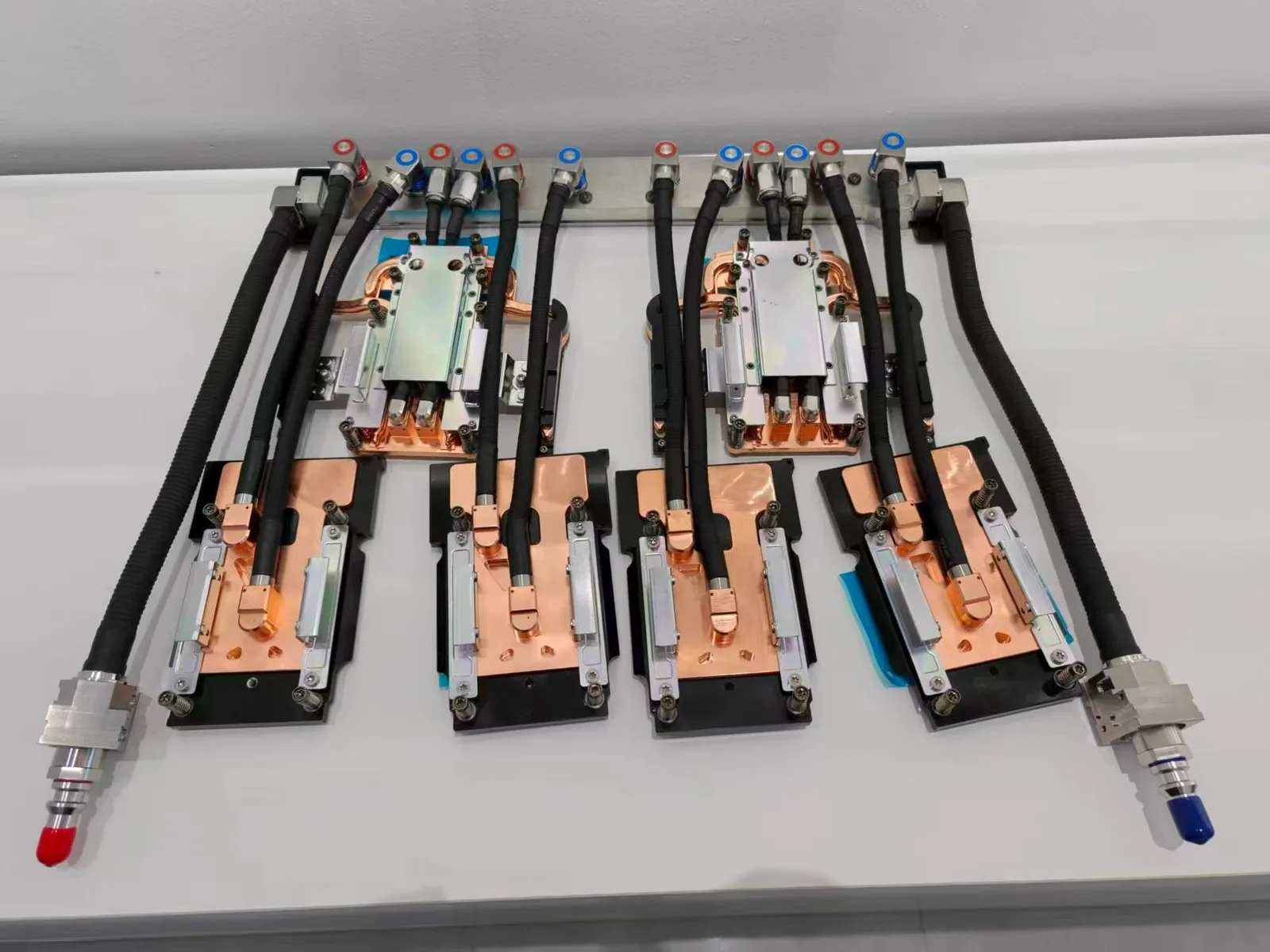
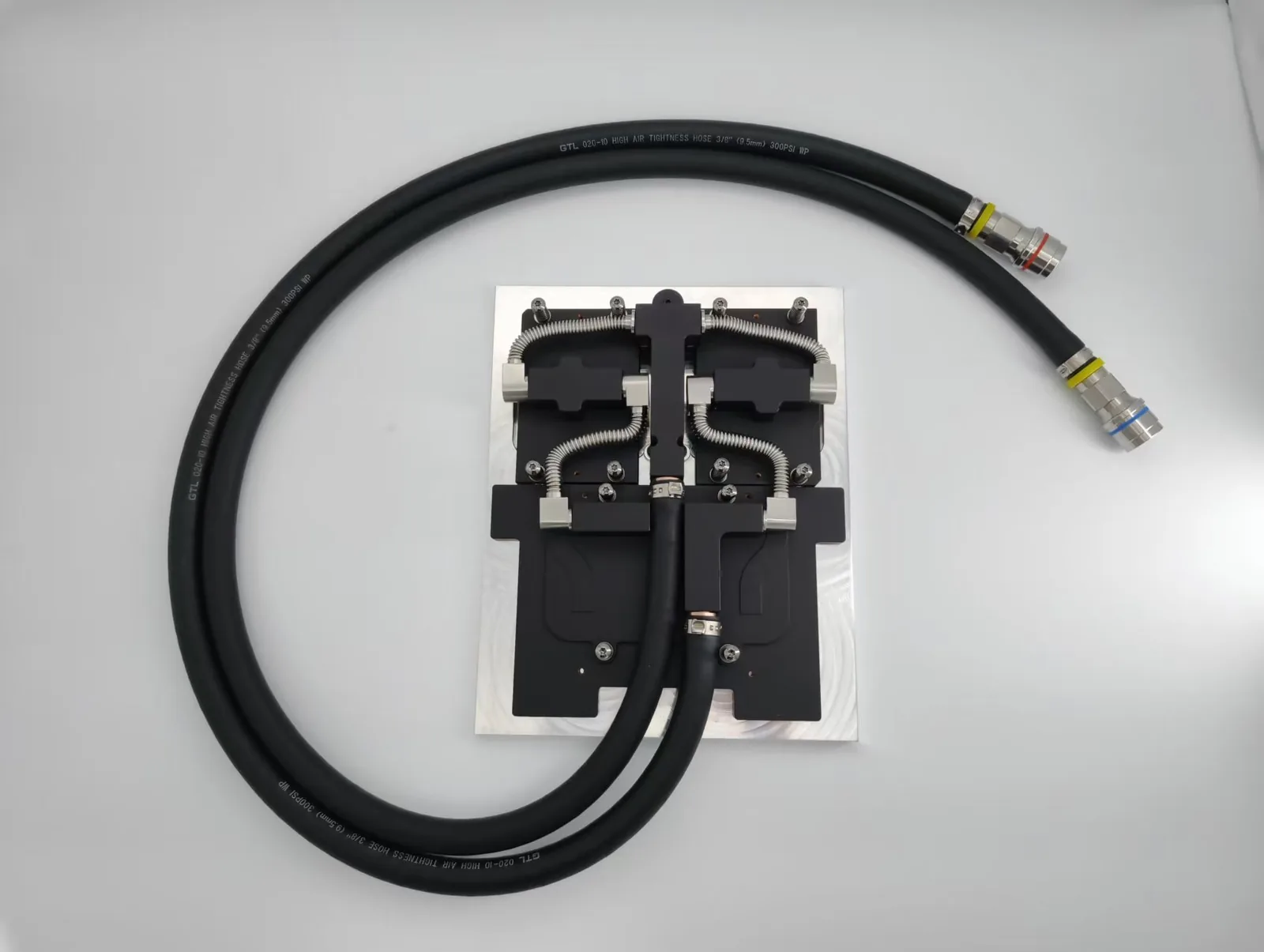
Coolant distribution: Manifold systems distribute coolant to 40–100+ individual cold plates within the container. ToneCooling designs manifold assemblies with balanced flow distribution (±5% across all cold plates) to ensure uniform module temperatures throughout the container.
Pressure drop budget: The total system pressure drop across all cold plates, manifolds, and piping must stay within the pump’s operating range (typically 50–150 kPa for container systems). Individual cold plate pressure drop targets of 10–30 kPa at design flow rate are typical.
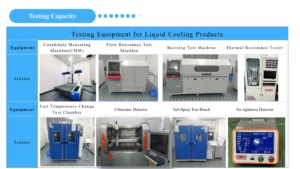
Leak containment: With hundreds of coolant connections in a container, leak prevention is paramount. ToneCooling’s cold plates use O-ring face seal (ORFS) or push-to-connect fittings rated for 100,000+ pressure cycles. Every plate undergoes 100% helium leak testing before shipment.
Quality & Certifications
ToneCooling’s ESS cold plates are manufactured under our comprehensive quality management system:
- ISO 9001:2015 — Quality Management System
- 2 Invention Patents + 6 Utility Model Patents — Proprietary cooling plate technologies
Full PPAP (Production Part Approval Process) documentation, material certifications, dimensional inspection reports, and leak test records are provided with every production shipment.
Work With ToneCooling
From concept design through high-volume production, ToneCooling supports BESS OEMs and system integrators worldwide. Our engineering team provides rapid thermal analysis, CFD simulation, and prototype delivery within 4–6 weeks of design freeze. Production lead times of 6–8 weeks support aggressive BESS deployment schedules.
With facilities in Huizhou, China (Manufacturing HQ), Austin, Texas (Americas), and Melbourne, Australia (Asia-Pacific), we provide global coverage with local technical support.
Contact us: info@tonecooling.com | bd@tonecoolingtexas.com | | Request RFQ
For industry standards and best practices, refer to SAE International.
| Parameter | ToneCooling Specification |
|---|---|
| Material | Copper T2 / 6061 aluminum |
| Welding method | Transient liquid phase diffusion welding |
| Test pressure | 1 MPa (helium leak + nitrogen hold) |
| Working medium | PG25 (25% propylene glycol) |
| Custom design | Yes — DXF/STEP input accepted |
Frequently Asked Questions
Does ToneCooling offer OEM and ODM services?
Yes. ToneCooling provides full OEM and ODM services including custom design, prototyping, thermal simulation, and volume production. We serve customers in North America, Europe, and Asia-Pacific with engineering support and samples within 4–6 weeks.
What certifications does ToneCooling hold for automotive products?
ToneCooling is ISO 9001:2015 certified and runs IATF 16949-aligned quality practices for automotive-grade products. All battery cold plates undergo 100% pressure testing and helium leak testing before shipment.
What coolant is compatible with ToneCooling battery cold plates?
ToneCooling battery cold plates are designed for 50/50 water-ethylene glycol coolant, providing freeze protection to -37°C. All wetted surfaces are corrosion-resistant and compatible with standard automotive cooling circuits.
References: ASHRAE thermal standards, Wikipedia: Heat Sink Technology
Contact ToneCooling
Ready to discuss your thermal management requirements? ToneCooling’s engineering team supports OEM and B2B customers worldwide.
- Website: tonecooling.com
- Email: info@tonecooling.com
- US Phone: +1 (512) 601-7768
- AU Phone: +61 2 8005 1735
Contact us today for a fast, no-obligation consultation and quotation.
Why Choose ToneCooling for ESS thermal management
ToneCooling provides professional ESS thermal management solutions with custom designs, fast prototyping, and competitive OEM pricing. Our ESS thermal management products serve data center, EV, industrial, and semiconductor applications worldwide.
Contact ToneCooling for custom ESS thermal management solutions. Visit tonecooling.com or email info@tonecooling.com. US: +1 (832) 720-7542. Engineering review of every RFQ.
Why Choose ToneCooling for Bess Liquid Cooling Plate
Engineering review and prototype planning are based on the project requirements. Custom prototype lead time is normally 4–6 weeks after drawing approval and order confirmation; confirm the production schedule in the quotation.
Last Updated: 2026-04-08
Need a custom energy storage ess liquid cooling solution?
ToneCooling engineers respond with CFD-validated thermal recommendations.
Frequently Asked Questions
What cooling plate configuration is best for BESS modules?
For standard prismatic-cell BESS modules, bottom-cooling plates using stamped-and-brazed aluminum construction offer the best balance of thermal performance, weight, and cost at scale. Side-cooling configurations are preferred when cell tab temperatures are the primary concern or when module height constraints limit bottom-plate contact area.
What materials are used for ESS liquid cooling plates?
Aluminum alloy 3003 or 6061 is the standard material for ESS cooling plates due to its excellent thermal conductivity, low density, and corrosion resistance with standard glycol-water coolants. Copper alloys are used selectively for high-heat-flux zones but add significant weight and cost.
How does ToneCooling manufacture cooling plates for energy storage systems?
ToneCooling produces ESS cooling plates using stamping-and-brazing for high-volume production, friction stir welding (FSW) for medium volumes requiring superior joint strength, and CNC machining for prototypes and low-volume custom designs. All processes include helium leak testing and thermal performance validation.