Guangdong, China
Global Engineering RFQ Review

AI Server Liquid Cooling Guide for GB200 and H100

Table of Contents

Why AI Servers Require Liquid Cooling

Modern AI accelerators and CPUs generate heat densities that exceed the practical limits of forced air cooling. The power demands of today’s liquid cooling AI servers platforms are staggering:

  • NVIDIA H100 SXM: 700W TDP
  • NVIDIA GB200 Grace Blackwell: 1,200W+ per compute tray
  • AMD EPYC Genoa (SP5): up to 400W TDP
  • Intel Xeon Sapphire Rapids (LGA4677): up to 350W TDP

Air cooling at these power levels requires impractically high airflow velocities, generates excessive noise, and increases data center PUE significantly. Liquid cooling removes heat more efficiently, enabling higher compute density per rack and lower operating costs. For data center operators deploying AI infrastructure at scale, liquid cooling AI servers is no longer optional — it is a baseline requirement.

AIO Liquid Coolers vs Cold Plates for AI Servers

When evaluating liquid cooling AI servers options, two primary approaches dominate the market: all-in-one (AIO) liquid coolers and custom cold plates. Each serves different thermal requirements and integration scenarios.

AIO Liquid Coolers — Best for CPU Thermal Management

All-in-one liquid coolers integrate the pump, radiator, and cold plate in a self-contained unit. They are ideal for:

ToneCooling liquid cooling ai servers — How to Choose a Liquid Cooling Solution
ToneCooling 2U AIO Liquid Cooler for 1U/2U Server Chassis
  • Server CPU cooling in 1U and 2U rack configurations
  • Intel Xeon (LGA4677) and AMD EPYC (SP5) processor cooling
  • OEM server builds requiring a validated, drop-in cooling solution
  • Applications requiring up to 650W total CPU dissipation

ToneCooling offers 1U AIO coolers (up to 600W) and 2U AIO coolers (up to 650W) supporting LGA4677, LGA4189, SP3, and SP5 platforms.

Custom Cold Plates — Best for GPU and Accelerator Cooling

Custom liquid cold plates provide direct liquid contact with high-TDP components. They are the standard solution for:

nvidia h200 liquid cooling cold plate gpu switch scaledliquid cold plate for GPU AI accelerator cooling” width=”800″ />
ToneCooling Custom Liquid Cold Plate for GPU & AI Accelerator Cooling
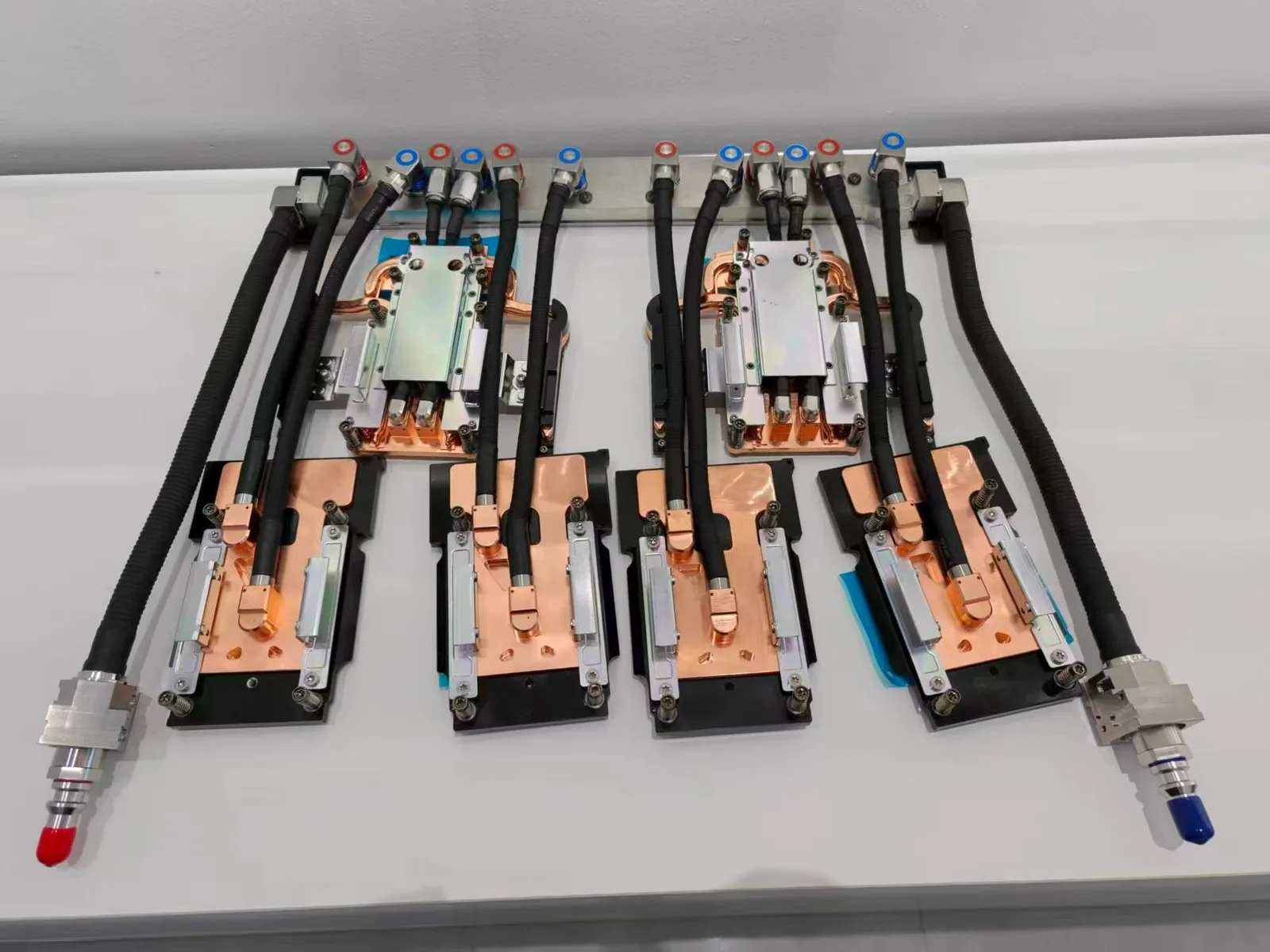
  • GPU cold plates for NVIDIA H100, H200, GB200 modules
  • FPGA and custom AI accelerator thermal management
  • Applications requiring precise thermal resistance optimization
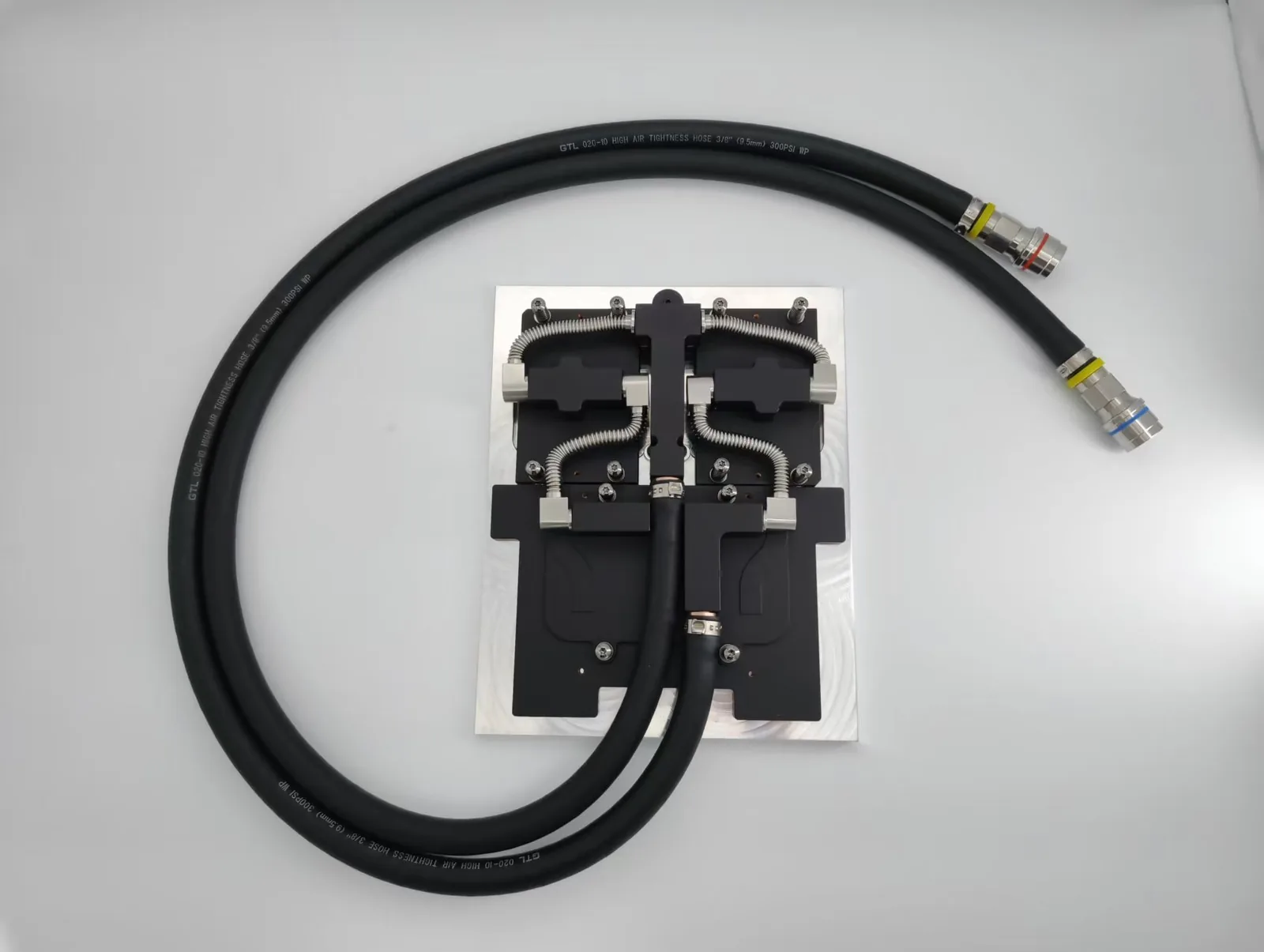
  • Rack-level liquid cooling loops with manifold distribution

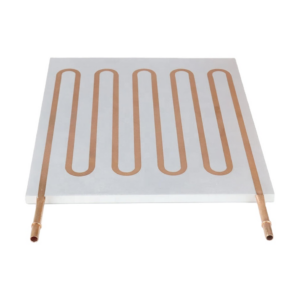
ToneCooling manufactures copper brazed, friction stir welded, and tube-embedded cold plates for custom AI hardware projects.

Key Selection Criteria for Liquid Cooling AI Servers

Choosing the right liquid cooling approach requires evaluating several technical factors:

1. TDP and Thermal Budget

Identify the total thermal load per node. For CPU-only cooling up to 650W, AIO coolers are sufficient. For GPU or accelerator loads above 700W, custom cold plates are required. Understanding the full thermal envelope is the first step in any liquid cooling AI servers project.

2. Chassis Form Factor

  • 1U chassis: use 1U AIO coolers with 40mm radiator height
  • 2U chassis: 2U AIO coolers offer higher dissipation capacity
  • Open-frame AI racks: custom cold plate + manifold systems

3. Platform Compatibility

Confirm CPU socket compatibility. ToneCooling AIO coolers support LGA4677, LGA4189, SP3, and SP5 with swappable brackets, making them versatile across multiple server platforms.

4. OEM Integration Requirements

For volume production, consider custom bracket options, tubing length, and fitting specifications to match your chassis design. ToneCooling provides full OEM and ODM services for liquid cooling AI servers deployments.

ToneCooling Solutions for AI Server Cooling

ToneCooling provides a complete range of liquid cooling AI servers solutions:

Our thermal management solutions are designed to meet industry standards including ASHRAE data center cooling guidelines.

ParameterToneCooling Specification
MaterialCopper T2 / 6061 aluminum
Welding methodTransient liquid phase diffusion welding
Test pressure1 MPa (helium leak + nitrogen hold)
Working mediumPG25 (25% propylene glycol)
Custom designYes — DXF/STEP input accepted

Frequently Asked Questions

What is the maximum TDP that ToneCooling AIO coolers support?

Our 2U dual-CPU AIO cooler supports up to 650W combined TDP. For single-socket configurations, the 1U single-CPU model handles up to 350W. For higher TDP requirements typical of GPU accelerators, we recommend custom cold plate solutions.

Are ToneCooling coolers compatible with NVIDIA GB200 servers?

Yes. We provide liquid cooling solutions for GB200-based infrastructure. The GB200 Grace CPU uses an LGA-style socket compatible with our cold plate product line. Contact us with your chassis specifications for a custom thermal solution.

Can ToneCooling supply a complete rack-level cooling system?

Yes. We supply cold plates, manifolds, quick-disconnect fittings, and AIO coolers for complete rack-level liquid cooling systems. OEM and custom configurations are available for liquid cooling AI servers at any scale.

How do I request a quote for an AI server cooling project?

Contact ToneCooling via our website with your platform specs (CPU/GPU model, TDP, chassis form factor, quantity). We typically respond to quote requests within 24 hours.

Ready to spec your AI server cooling solution? Contact ToneCooling for a technical consultation and OEM quote.

Related ToneCooling Solutions

Request a Custom Quote from ToneCooling →

Industry References & Standards

Liquid Cooling Ai Servers is a high-performance thermal management solution engineered by ToneCooling for demanding applications.

Nvidia Gb200 Liquid Cooling is a critical component in modern thermal management. ToneCooling engineers this solution for AI servers, data centers, EV batteries, and power electronics requiring high-performance liquid cooling.

Nvidia Gb200 Liquid Cooling: Key Specifications

When evaluating nvidia gb200 liquid cooling, engineers consider thermal resistance, pressure drop, flow rate, and material compatibility. ToneCooling provides detailed specs for every nvidia gb200 liquid cooling design, backed by CFD simulation and testing.

Why Choose ToneCooling for Nvidia Gb200 Liquid Cooling

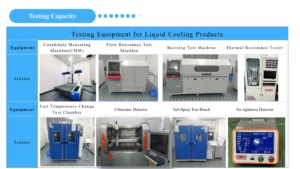
ToneCooling has manufactured over 50,000 nvidia gb200 liquid cooling units for global OEM customers. Our nvidia gb200 liquid cooling production features vacuum brazing furnaces below 10⁻⁴ mbar, FSW machines with ≤0.02mm flatness, and helium leak detection at 10⁻⁸ mbar·L/s. Every nvidia gb200 liquid cooling undergoes 100% pressure testing at 25 bar.

Our engineering team provides free nvidia gb200 liquid cooling design consultation, CFD simulation, and rapid prototyping in 7-14 days. Production nvidia gb200 liquid cooling orders ship in 4-6 weeks under ISO 9001:2015 quality management.

Last Updated: 2026-04-08

DR Kevin, Thermal Engineer, ToneCooling

Need a custom liquid cooling ai servers solution?

ToneCooling engineers respond within 24 hours with CFD-validated thermal recommendations.

Request a quote →

Picture of ToneCooling Engineering Team

ToneCooling Engineering Team

The ToneCooling thermal engineering team designs, simulates, and validates custom liquid cold plates for GPU, CPU, IGBT, and EV battery applications.

Welcome To Share This Page:
Product Categories
Latest News
Get A Free Quote Now !
Quote Request

Related Products

Related News

Drawing preparation checklist for data center liquid cold plate quotation, covering CAD files, heat source maps, port layout, material and validation inputs.
Validation items engineers should define before requesting a data center liquid cold plate quote, including leak test, pressure test, cleanliness and documentation.
Copper and aluminum cold plate tradeoffs for AI server projects, including thermal performance, weight, corrosion, joining route and RFQ inputs.
Engineering checklist for direct-to-chip cold plate port layout, hose clearance, serviceability and RFQ preparation in AI server cooling projects.
How to prepare pressure-drop and flow-rate inputs for custom GPU liquid cold plate RFQs used in AI server and data center cooling projects.
RFQ inputs engineers should prepare for data center GPU cold plates, including drawings, heat load, coolant, flow rate, pressure-drop target and validation requirements.

ToneCooling (Guangdong ToneCooling Precision Manufacturing Co., Ltd.) has completed its new 30,000m² manufacturing facility in Dongguan, Guangdong, China — an

An FSW liquid cold plate (friction stir welded liquid cold plate) is a sealed thermal management heat exchanger manufactured by

Last Updated: 2026-05-08
Scroll to Top

Get A Free Quote Now !

If you have any questions, please do not hesitate to contact us.

Quote Request
ToneCooling 19 thermal management
(function () { 'use strict'; if (window.tcDataCenterV14TrackingLoaded) return; window.tcDataCenterV14TrackingLoaded = true;var SITE_MARKET = 'global'; var TARGET_SEGMENT = 'data_center_gpu_cpu'; var TRACKED_FORM_IDS = ['3', '4']; var PAGE_PATH = '/liquid-cold-plates/data-center-liquid-cold-plate/'; var THANK_YOU_PATH = '/thank-you/data-center-cold-plate-rfq/'; var DEBUG = /(?:\?|&)tc_debug=1(?:&|$)/.test(window.location.search); var formStarted = false; var formSubmitted = false;function cleanPath() { return window.location.pathname || '/'; }function matchedFormId(form) { var idStr = String((form && (form.getAttribute('data-form_id') || form.id)) || ''); for (var i = 0; i < TRACKED_FORM_IDS.length; i++) { if (idStr.indexOf(TRACKED_FORM_IDS[i]) !== -1) return TRACKED_FORM_IDS[i]; } if (form && form.querySelector('[name="gpu_cpu_footprint"]')) return '4'; return null; }function pushEvent(name, payload) { payload = payload || {}; payload.site_market = SITE_MARKET; payload.target_segment = TARGET_SEGMENT; payload.form_id = payload.form_id || '4'; payload.page_path = payload.page_path || (isThankYouPath() ? THANK_YOU_PATH : cleanPath()); if (DEBUG) payload.debug_mode = true; if (typeof window.gtag === 'function') { window.gtag('event', name, payload); } else { window.dataLayer = window.dataLayer || []; window.dataLayer.push(Object.assign({ event: name }, payload)); } try { window.dispatchEvent(new CustomEvent('tc_inquiry_tracking_event', { detail: { name: name, payload: payload } })); } catch (err) {} if (DEBUG && window.console && window.console.info) { window.console.info('[TC Data Center V1.4 Tracking]', name, payload); } }function closest(el, selector) { while (el && el.nodeType === 1) { if (el.matches && el.matches(selector)) return el; el = el.parentElement; } return null; }function isThankYouPath() { var path = cleanPath(); var search = window.location.search || ''; return path.indexOf('/thank-you') === 0 || /(?:\?|&)page_id=9601(?:&|$)/.test(search); }function fileTypeCategory(file) { var name = file && file.name ? String(file.name).toLowerCase() : ''; var ext = (name.match(/\.([a-z0-9]+)$/) || [])[1] || ''; if (['step', 'stp', 'igs', 'iges', 'x_t', 'x_b', 'sldprt', 'sldasm', 'stl'].indexOf(ext) !== -1) return 'cad'; if (['dwg', 'dxf'].indexOf(ext) !== -1) return 'cad'; if (ext === 'pdf') return 'pdf'; if (['jpg', 'jpeg', 'png', 'webp'].indexOf(ext) !== -1) return 'image'; if (['xls', 'xlsx', 'csv'].indexOf(ext) !== -1) return 'spreadsheet'; return 'other'; }function valueExists(form, name) { var field = form ? form.querySelector('[name="' + name + '"]') : null; return !!(field && String(field.value || '').trim()); }function qualityBand(form) { var score = 0; var fileInput = form ? form.querySelector('input[type="file"]') : null; if (valueExists(form, 'company') && valueExists(form, 'email')) score += 25; if (valueExists(form, 'application')) score += 20; if (fileInput && fileInput.files && fileInput.files.length) score += 20; if (valueExists(form, 'heat_load') || valueExists(form, 'coolant_type') || valueExists(form, 'flow_target') || valueExists(form, 'pressure_drop_limit')) score += 15; if (valueExists(form, 'prototype_quantity') || valueExists(form, 'annual_volume')) score += 10; if (valueExists(form, 'target_schedule') || valueExists(form, 'country_region')) score += 10; if (score < 40) return '0-39'; if (score < 60) return '40-59'; if (score < 80) return '60-79'; return '80-100'; }document.addEventListener('click', function (event) { var link = closest(event.target, 'a[data-event="cta_click"], a[data-cta-label], .tc-data-center-hero a'); if (!link) return; pushEvent('cta_click', { cta_label: link.getAttribute('data-cta-label') || (link.textContent || '').replace(/\s+/g, ' ').trim() || 'data_center_cta' }); }, true);document.addEventListener('focusin', function (event) { var form = closest(event.target, 'form'); if (!form || formStarted) return; var fid = matchedFormId(form); if (!fid) return; formStarted = true; pushEvent('form_start', { form_id: fid }); }, true);document.addEventListener('change', function (event) { var input = event.target; var form = closest(input, 'form'); if (!input || input.type !== 'file' || !form || !input.files || !input.files.length) return; pushEvent('file_upload', { upload_used: 'yes', file_type_category: fileTypeCategory(input.files[0]) }); }, true);document.addEventListener('submit', function (event) { var form = closest(event.target, 'form'); if (!form || formSubmitted) return; var fid = matchedFormId(form); if (!fid) return; formSubmitted = true; pushEvent('form_submit', { form_id: fid, rfq_quality_score_band: qualityBand(form) }); }, true);if (isThankYouPath()) { pushEvent('thank_you_page_view', { page_path: THANK_YOU_PATH }); } }());