
Cold plates stand out as a dependable and efficient solution for managing heat in high-performance systems. By transferring heat from critical components to a liquid coolant, cold plates ensure optimal performance and prevents overheating. Industries like electronics, aerospace, and renewable energy rely on this technology to maintain system reliability under demanding conditions. Its ability to handle high heat loads while offering customization options makes it indispensable for modern thermal management. Whether you’re cooling sensitive electronics or enhancing energy efficiency, cold plates deliver consistent results you can trust.

What is a Cold Plate Cooling?
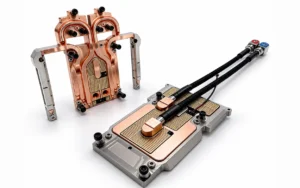
A cold plate, also known as cooling plate or liquid cold plate is a metal plate, often made from materials like stainless steel, aluminum or copper. These materials ensure efficient thermal conductivity and compatibility. The internal structure features channels or tubes that guide liquid cold plates through the device, allowing the coolant to absorb and remove heat directly from mounted components.
The base of a cold plate often includes a microchannel heat exchanger, while the top cover encloses fluid channels and integrates connectors for the cooling system. Joining methods such as brazing, welding, or diffusion bonding secure the assembly and prevent leaks. Manufacturers use processes like CNC machining, friction stir welding, stamping, and vacuum brazing to achieve precise construction and reliable performance.
| Category | Details |
|---|---|
| Materials | Aluminum, Copper, Stainless Steel. Compatibility is crucial to avoid galvanic corrosion. |
| Flow Path Options | Meso-channel, Parallel channel, Tube and/or manifold. |
| Manufacturing Processes | CNC machining, Friction stir welding, Stamping, CAB brazing, Vacuum brazing. |
Cold plates play a critical role in maintaining optimal operating temperatures for electronic systems. The design ensures efficient heat extraction and coolant flow, which is vital for system reliability. Cold plates are part of a larger cooling system that includes a pump and a heat exchanger.
How Does a Cold Plate Work?
Cold plates work by using coolants to transfer heat away from heat-producing components. When the cold plate comes into contact with these components, it absorbs the waste heat and carries it away through the internal flow channels. These channels are filled with coolant (typically a liquid), which flows through them, absorbing heat from the cold plate and transporting it to a heat exchanger or radiator for dissipation.
The efficiency of a cold plate depends on several factors, including the surface area of the flow channels, the type of coolant used, the liquid flow rate, and the material of the cold plate. By optimizing these factors, a cold plate can efficiently manage heat, ensuring the proper functioning of electronic systems and preventing overheating.
Heat Transfer Principles
Cold plate cooling technology relies on three main heat transfer mechanisms: conduction, convection, and radiation. Conduction moves heat through the solid cold plate material, while convection transfers heat from the cold plate surface to the circulating liquid. Radiation plays a minor role in cold plate cooling because temperature differences are usually small.
| Heat Transfer Mechanism | Description | Importance |
|---|---|---|
| Conduction | Transfer of heat through a solid material due to a temperature gradient. | Critical for heat transfer within the cold plate material. |
| Convection | Transfer of heat through the movement of fluids, often enhanced by forced circulation. | Essential for removing heat from the cold plate surface. |
| Radiation | Transfer of heat through electromagnetic waves. | Minimal contribution in cold plate applications due to small temperature differences. |
The cold plate material must have high thermal conductivity to maximize heat transfer. Copper and aluminum are popular choices because they transfer heat quickly and support high-performance cooling. The design of the cold plate ensures efficient heat dissipation and meets strict heat dissipation requirements.
- Higher thermal conductivity materials, such as copper, can dissipate heat more effectively, enhancing cooling efficiency.
- Materials like aluminum and composites also have varying thermal conductivity levels, which influence their effectiveness in cooling applications.
- The choice of material must balance thermal performance with other factors like weight and cost, impacting overall cooling efficiency.
Role of Coolants
Liquid cooling systems use different coolants to transfer heat away from the cold plate. The choice of coolant affects thermal performance, cooling efficiency, and system reliability. Ethylene glycol, propylene glycol, deionized water, and water-based coolants are common options in cold plate cooling.
| Coolant Type | Properties and Applications |
|---|---|
| Ethylene Glycol | Industrial standard, cost-effective, requires 20%-30% concentration for optimal performance. |
| Propylene Glycol | Similar to ethylene glycol but more expensive, used for safety in food applications. |
| Deionized Water | Excellent heat transfer, non-toxic, requires maintenance to prevent freezing and corrosion. |
| Water-based Coolant | Includes pure water and formulated liquids with additives to reduce corrosion and microbial growth. |
| Non-aqueous Coolant | Includes hydrocarbons and organosilicon, generally not used due to viscosity and moisture absorption issues. |
| Carbon Fluorine | Good electrical insulation, non-flammable, and inert, making it compatible with various materials. |
Deionized water offers excellent heat transfer and supports high-performance cooling, but it needs regular maintenance. Ethylene glycol provides reliable thermal performance and protects against freezing. Water-based coolants with additives help prevent corrosion and microbial growth, extending system life.
Performance Factors
Several factors determine the thermal performance of cold plate cooling systems. The heat flux, operating temperature range, coolant flow rate, and pressure drop all influence cooling efficiency and heat dissipation. Material selection and internal channel design also play key roles in optimizing thermal performance.
| Factor | Description |
|---|---|
| Heat Flux | Determines the plate’s cooling capacity, measured in W/cm². |
| Operating Temperature Range | Ensures thermal stability under varying conditions. |
| Coolant Flow Rate & Pressure Drop | Affects overall cooling efficiency, critical for optimal thermal performance. |
| Material Selection | Impacts heat transfer, weight, and corrosion resistance; common materials include aluminum and copper. |
| Internal Channel Design | Optimizes fluid flow for maximum heat transfer while minimizing pressure drop. |
| Coolant Type | Different coolants can affect thermal conductivity and efficiency. |
| Flow Optimization | Enhances cooling efficiency through advanced design techniques. |

Cold Plate Design
Materials
Selecting the right material is essential in cold plate design. Engineers often choose aluminum for its lightweight nature, cost-effectiveness, and corrosion resistance. Copper provides superior thermal conductivity and excellent temperature uniformity, making it ideal for demanding thermal management needs. Stainless steel offers exceptional corrosion resistance and high strength, suitable for harsh environments. The table below compares common materials used in cold plate construction:
| Material | Thermal Conductivity (W/m·K) | Key Properties |
|---|---|---|
| Aluminum | ~205 | Lightweight, corrosion-resistant, cost-effective |
| Copper | ~400 | Superior thermal conductivity, excellent temperature uniformity |
| Stainless Steel | N/A | Exceptional corrosion resistance, high strength |
Material choice impacts cost, durability, and manufacturability. Copper is more expensive and heavier than aluminum, but it extends lifespan due to its corrosion resistance. Aluminum is easier to machine and suits large-scale thermal management solutions.
Structure
Cold plate design relies on channel structure to achieve optimal thermal efficiency. Engineers use serpentine tube, manifold tube, mini channel, and micro channel configurations to direct coolant flow. These structures influence pressure drop, liquid flow path, and temperature uniformity. For example, T-shaped and Y-shaped channel arrangements create a more homogeneous water temperature distribution, enhancing heat transfer efficiency. Parallel flow paths provide uniform flow and lower thermal resistance, while increased rib height boosts convective heat transfer.
Designing a custom liquid cold plate involves balancing fluid stability, material compatibility, and weight. The structure must support the specific thermal management needs of the application.
Optimization
Optimization techniques play a critical role in cold plate design. Generative design and topology optimization help engineers distribute material efficiently and create unique flow configurations. Multi-objective optimization focuses on minimizing temperature rise and power dissipation, improving thermal efficiency. Computational fluid dynamics (CFD) modeling allows engineers to simulate pressure-flow characteristics and assess thermal performance under different scenarios.
Designing a custom liquid cold plate requires advanced algorithms and simulation tools to meet complex thermal management needs. These techniques ensure that thermal management solutions deliver reliable cooling and maximize thermal efficiency.
Types of Cold Plates
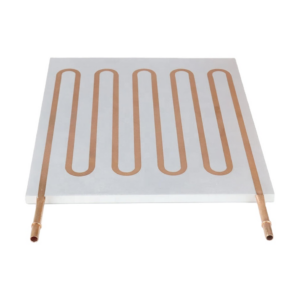
Tubed
Tubed cold plates use a metal base with embedded tubes that carry coolant. These designs suit moderate cooling needs in power electronics and industrial systems. Tubed cold plates offer reliable performance for applications where liquid-cooled cold plates are preferred over air-cooled cold plates.
- Metal tubes run through the plate, allowing coolant to flow and absorb heat.
- Tubed cold plates work well in systems that do not require extreme thermal management.
- Many engineers choose tubed cold plates for their simplicity and cost-effectiveness.
Brazed
Brazed cold plates feature stacked thin metal sheets joined by brazing. This process creates intricate channel designs that improve thermal performance. Brazed cold plates excel in high-performance applications such as power electronics and electric vehicle battery cooling.
- The brazing process forms strong, leak-proof joints between metal layers.
- Complex channel patterns maximize surface area for heat transfer.
- Brazed cold plates support demanding cooling requirements in advanced systems.
Machined Channel
Machined channel cold plates use CNC machining to create precise channels for coolant flow. These designs allow for customization based on specific cooling needs. Machined channel cold plates deliver high accuracy and flexibility for unique thermal management challenges.
- Engineers tailor channel shapes and sizes to optimize heat removal.
- Machined channel cold plates suit applications that require exact temperature control.
- These plates provide consistent performance for both liquid-cooled cold plates and air-cooled cold plates.
Custom Liquid Cold Plate
Custom liquid cold plate solutions address specialized requirements that standard designs cannot meet. Engineers develop custom cold plates for telecommunications, laser systems, data centers, and medical equipment. These custom liquid cold plate designs ensure optimal cooling and reliability in critical environments.
- Custom cold plates solve challenges related to pressure drop, surface temperature uniformity, and special shapes.
- Engineers select custom cold plates when cost limitations eliminate standard options.
- Custom liquid cold plate systems maintain peak efficiency in applications with unique thermal demands.
- Custom cold plates provide tailored solutions for high-frequency amplifiers, powerful lasers, and diagnostic machines.
- Custom liquid cold plate designs support uninterrupted communication and precise imaging.
- Custom cold plates offer flexibility for complex interface requirements.
- Custom liquid cold plate technology ensures reliability in environments where overheating can cause system failure.
- Custom cold plates deliver consistent cooling for advanced electronics and sensitive equipment.

Cold Plate vs Liquid Cooling vs Air Cooling: Benefits Comparison
Air cooling is one of the most common methods for thermal management. It uses fans or heat sinks to dissipate heat into the surrounding air.
Liquid cooling operates through a closed-loop system that includes a pump, reservoir, and heat exchanger. The coolant (such as water) circulates, absorbing heat from the components, and is then cooled before being recirculated.
Cold Plate refers a metal plate that is directly attached to heat-generating components, with coolant circulating through internal channels to absorb and transfer heat to a heat exchanger.
Each cooling method offers distinct benefits, making them suitable for different needs. Let’s explore their advantages.
Thermal Performance
- Cold Plate Cooling: Known for its superior thermal performance, cold plates offer efficient heat transfer due to direct contact with heat sources. This makes them ideal for dense configurations with high heat output.
- Liquid Cooling: Liquid cooling excels at heat transfer, performing much better than air cooling. It’s particularly beneficial for systems that require consistent low temperatures, like overclocked processors.
- Air Cooling: While it’s effective for lower heat loads, air cooling struggles with larger heat dissipation needs. Its performance is limited by ambient air conditions, making it less suitable for high-demand applications.
Noise and Reliability
- Cold Plate Cooling: One of the key benefits is its quiet operation, as it doesn’t rely on noisy fans. With fewer components, cold plates are more reliable and easier to maintain.
- Liquid Cooling: Though more efficient, liquid cooling systems can be prone to failures like leaks or pump malfunctions. They require regular maintenance to keep everything functioning smoothly.
- Air Cooling: Generally reliable, but fan failure or inadequate airflow can lead to overheating, especially under heavy loads.
Cost and Complexity
- Cold Plate Cooling: While it may involve higher initial costs due to custom designs, it’s simpler compared to full liquid cooling systems, making it a good choice for specialized, high-performance setups.
- Liquid Cooling: Liquid cooling systems are more complex and expensive, involving additional parts like pumps and reservoirs, and require precise installation to ensure proper function.
- Air Cooling: The most cost-effective option, with simple installation and minimal complexity, but may not handle high heat loads effectively.
Maintenance and Longevity
- Cold Plate Cooling: Maintenance is less frequent, mainly focused on ensuring coolant quality, resulting in a more reliable long-term solution.
- Liquid Cooling: Requires regular checks to ensure there are no leaks and that the system continues to operate efficiently.
- Air Cooling: Minimal maintenance is required, usually just cleaning dust from fans and heatsinks, though airflow should be maintained for optimal performance.
Applications of Cold Plates
Cold plates offer reliable and efficient cooling solutions across multiple industries. They prevent overheating, enhance performance, and extend the lifespan of critical devices.
Electronics and Data Centers
Cold Plate is a precision-engineered thermal management component for high-power electronics cooling. ToneCooling provides cold plate solutions validated for AI server, data center, EV battery, and power electronics applications.
Power electronics generate significant heat during operation. Cold plates efficiently transfer this heat to a liquid coolant, ensuring stable temperatures and preventing system failures. In data centers, cold plates provide substantial energy savings compared to traditional air cooling systems. This results in lower operational costs and contributes to sustainability goals by reducing electricity consumption.
Medical Devices
Cold plates are crucial in medical devices such as laboratory analyzers, imaging devices, and lasers, where precise temperature control is essential. In medical imaging systems, like MRI or CT scanners, cold plates prevent overheating, ensuring smooth operation for extended periods. Similarly, they maintain optimal conditions in laboratory analyzers, supporting accurate chemical reactions and test results.
Renewable Energy Systems
Cold plates manage heat efficiently in renewable energy systems, including solar inverters and wind turbines, protecting sensitive components and extending equipment lifespan. In solar power systems, inverters generate heat while converting DC to AC electricity. Cold plates cool these inverters, improving efficiency and reducing energy losses. Cold plates also regulate temperatures in wind turbine electronics and control systems.
Aerospace and Defense
Cold plates are vital in maintaining the performance of electronic systems in aerospace and defense applications, managing heat in systems like radars, control units, and power electronics to ensure reliable operation in extreme environments.
Ailitary application
Cold plates cool electronic systems in vehicles and aircraft, managing both cooling and heating needs. In aerospace, they support avionics and communication systems in high-altitude conditions, all while maintaining a lightweight design.
Choosing the Right Cold Plate
Needs Assessment
Selecting the right cold plate starts with a clear assessment of the application’s cooling needs. Engineers evaluate several factors to ensure the solution matches the system’s requirements. The table below outlines key considerations:
| Factor | Description |
|---|---|
| Matching Cooling Units | Ensure cooling units are suited to specific needs and conditions of the area requiring cooling. |
| Estimating Unit Size | Calculate the appropriate size of portable units to avoid inefficiency or inadequate cooling. |
| Technical Requirements | Assess power supply, voltage, and heat rejection methods for the portable cooling unit. |
| Space Constraints | Consider the physical dimensions, weight, and noise limits of the cooling units in the application. |
| Environmental Considerations | Evaluate any additional modifications needed for integrating the cooling unit into the specific space. |
A thorough needs assessment helps prevent underperformance and ensures reliable operation. Engineers also consider the environment and available space before making a final decision.
Compatibility
Compatibility between the cold plate and existing system components is essential for optimal performance. Engineers check several factors to ensure seamless integration:
| Factor | Description |
|---|---|
| Size and Shape | The dimensions of the cold plate must fit within the available space in the system. |
| Flow Rate and Pressure Drop | These parameters affect the cooling efficiency and overall performance of the system. |
| Coolant Compatibility | The cold plate must be compatible with the coolant used to ensure effective heat transfer. |
| Mounting Options | The method of installation should align with the design and maintenance needs of the system. |
Proper compatibility checks help avoid installation issues and maintain system efficiency. Engineers often review technical drawings and system specifications during this process.
Cost
While cold plate systems may require a higher initial investment than air cooling, they often deliver long-term savings. Enhanced energy efficiency, increased rack density, and lower maintenance costs contribute to a lower total cost of ownership over time. This makes cold plate solutions a smart choice for applications that demand reliable and efficient cooling.

Limitations of Cold Plate Cooling
While the combination of a cold plate and heat exchanger is effective in minimizing the size and weight of the electronics themselves, it’s important to consider the additional bulk, weight, and complexity introduced by the cold plate, piping or tubing, and typically one or more heat exchangers.
Depending on the scale and thermal load of the system, a decompression tank may also be necessary to accommodate pressure fluctuations caused by temperature changes in the fluid. As a result, what begins as a compact solution can quickly grow into a complex system when compared to more straightforward heat-sink-based approaches.
Using liquid coolant introduces the need for an array of components—tubes, pipes, joints, connectors, fittings, flare washers, and potentially even brazing. This added complexity raises the risk of leaks and corrosion, which can lead to serious damage in surrounding systems.
Although water is an excellent medium for heat transfer, it freezes at relatively high temperatures and boils at relatively low ones. Adding glycol can help extend these temperature thresholds but will also reduce the liquid’s thermal efficiency. Ammonia offers strong cooling properties but is highly corrosive and extremely hazardous—exposure to high concentrations can cause severe irritation, respiratory damage, blindness, or even death.
Furthermore, the effectiveness of cold plates and heat exchangers depends heavily on the smooth internal flow of coolant, making it crucial to prevent corrosion, blockages, and debris buildup in the flow channels. Many cold plates have sealed or internally embedded channels that are not serviceable, meaning any internal damage or clogging is permanent. Heat exchangers may be easier to service depending on their construction, but overall, the system requires routine inspection and maintenance—driving up operational costs and labor time.
Cold Plate Installation
Steps
Proper installation ensures the cold plate delivers optimal cooling performance. Technicians follow a series of steps to achieve a secure and efficient setup:
- Preparation
Inspect the cold plate and all components for damage. Gather necessary tools and review the installation manual. - Mounting
Position the cold plate on the designated surface. Secure it using recommended fasteners to prevent movement. - Connecting Fluid Lines
Attach inlet and outlet hoses to the cold plate connectors. Confirm tight seals to avoid leaks. - Coolant Filling
Fill the system with the chosen coolant. Monitor for air pockets and bleed the lines if needed. - System Testing
Power on the cooling system. Check for leaks and verify stable coolant flow. - Final Inspection
Inspect all connections and mounting points. Confirm the cold plate operates within specified temperature ranges.
Tips
- Use compatible fittings and hoses to prevent leaks.
- Apply thermal interface material between the cold plate and heat source for better heat transfer.
- Monitor coolant levels regularly after installation.
- Avoid over-tightening fasteners to prevent damage.
- Label fluid lines for easier maintenance and troubleshooting.
- Record installation details for future reference.
Maintenance and Care
Routine Care
Routine maintenance ensures that a cold plate system delivers reliable performance and extends its service life. Technicians should follow a regular schedule to keep the system running efficiently. Key maintenance tasks include:
- Monitor fluid quality by testing pH and inhibitor concentration every quarter.
- Inspect all seals for signs of wear and confirm proper drainage.
- Clean the cold plate surface and surrounding area using a gentle, non-corrosive cleaner to remove dust and dirt.
These steps help prevent corrosion, leaks, and blockages. Regular care also supports consistent cooling and protects sensitive electronics from overheating. Technicians should document each maintenance activity for future reference.
Troubleshooting
When issues arise, a systematic approach helps identify and resolve problems quickly. Common symptoms include reduced cooling efficiency, fluid leaks, or unusual noises from the system. Technicians can use the following checklist to troubleshoot:
| Symptom | Possible Cause | Recommended Action |
|---|---|---|
| Reduced cooling | Low coolant level or flow | Check fluid level and pump |
| Fluid leaks | Worn seals or loose fittings | Inspect and replace as needed |
| Unusual noises | Air in the system or blockage | Bleed air and clear obstructions |
If the cold plate does not maintain the desired temperature, technicians should verify coolant flow and inspect for blockages. Addressing minor issues early prevents larger system failures. Routine troubleshooting ensures the cooling system operates at peak efficiency.
Conclusion
A cold plate offers efficient cooling for electronics in industries such as automotive, medical, and aerospace. This guide highlights the importance of proper selection, design, and routine maintenance to achieve reliable performance. Readers can explore different types of cold plates to meet their unique cooling needs and should consult experts for further information.
For industry standards and best practices, refer to ASHRAE thermal guidelines.
Frequently Asked Questions
Does ToneCooling offer OEM and ODM services?
Yes. ToneCooling provides full OEM and ODM services including custom design, prototyping, thermal simulation, and volume production. We serve customers in North America, Europe, and Asia-Pacific with engineering support and samples within 6–8 weeks.
What materials are used in ToneCooling liquid cold plates?
ToneCooling manufactures cold plates in aluminum (6061/6063), copper (C1100/C1020), and stainless steel. Aluminum FSW cold plates are ideal for high-volume EV and industrial applications, while copper brazed cold plates provide maximum thermal conductivity (398 W/m·K) for high heat flux electronics.
What is the typical lead time for custom cold plates?
Prototype samples are delivered within 6–8 weeks. Production orders typically ship within 4–6 weeks after sample approval. ToneCooling responds to all quote requests within 24 business hours.
Get a Custom Thermal Solution from ToneCooling
ToneCooling is a professional liquid cooling solution provider specializing in custom cold plates, AIO coolers, and advanced thermal management systems. With ISO 9001:2015 certified manufacturing, we deliver prototype samples within 6–8 weeks. Contact ToneCooling today for a free consultation and quote — we respond within 24 business hours.
Need a Custom Liquid Cold Plate?
ToneCooling engineers design thermal solutions for your specific requirements. Get an engineering RFQ review based on your uploaded requirements.
Why Choose ToneCooling for Semiconductor Test Fixture Cold Plate
Engineering review and prototype planning are based on the project requirements. Custom prototype lead time is normally 6–8 weeks after drawing approval and order confirmation; confirm the production schedule in the quotation.
Need a Custom Liquid Cold Plate?
ToneCooling engineers design thermal solutions for your requirements. Response within 24-48 hours.
Last Updated: 2026-04-08
Related articles




.jpg.webp)


