Cold plates are used across three key areas: data centers for AI GPUs and CPUs, electric vehicles for batteries and power electronics, and energy storage systems for battery racks. ToneCooling designs and builds custom cold plates for all three.
For an overview of designs and standard kits, see our liquid cold plates page.
As the demand for efficient heat dissipation continues to grow, cold plate technology has become a core solution for thermal management in electronic devices. Different types of cold plates, due to variations in their structure, materials, and manufacturing processes, are suitable for various high-power scenarios. This article provides an in-depth analysis of three mainstream cold plate technologies—Embedded Cold Plates, Computing Cold Plates, and Power Cold Plates—with reference to schematic diagrams and industry applications.
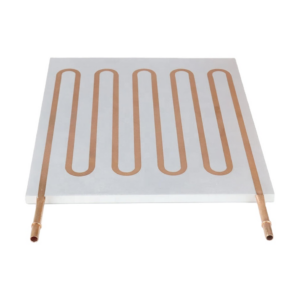
❏ Embedded Cold Plates / Tubing-Embedded Cold Plates
These cold plates feature a “metal base plate + embedded copper tube” structure, where copper tubes are fully embedded into aluminum or copper plates through brazing or pressing processes. Their characteristics include:
📊 Typical applications include: thermal management of power battery packs, industrial frequency converters, and server cabinet door cooling.
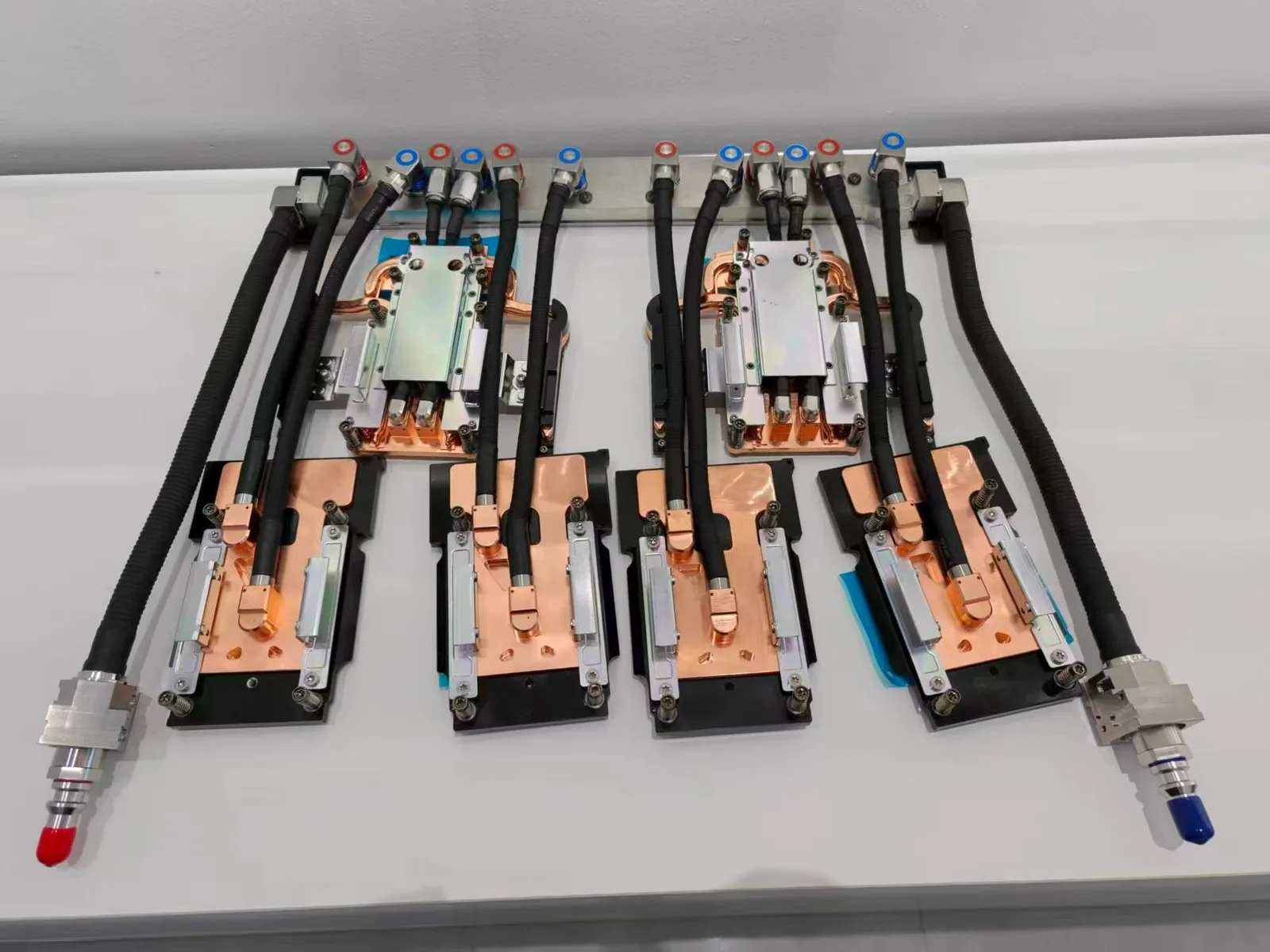
❏ Computing Cold Plates / Server Cold Plates
Designed specifically for high-performance computing chips (e.g., CPUs, GPUs) to handle extreme heat flux densities (up to hundreds of W/cm²). Their core features include:
🔹 Main applications: Data centers, AI training servers, supercomputing nodes, and cryptocurrency mining machines.
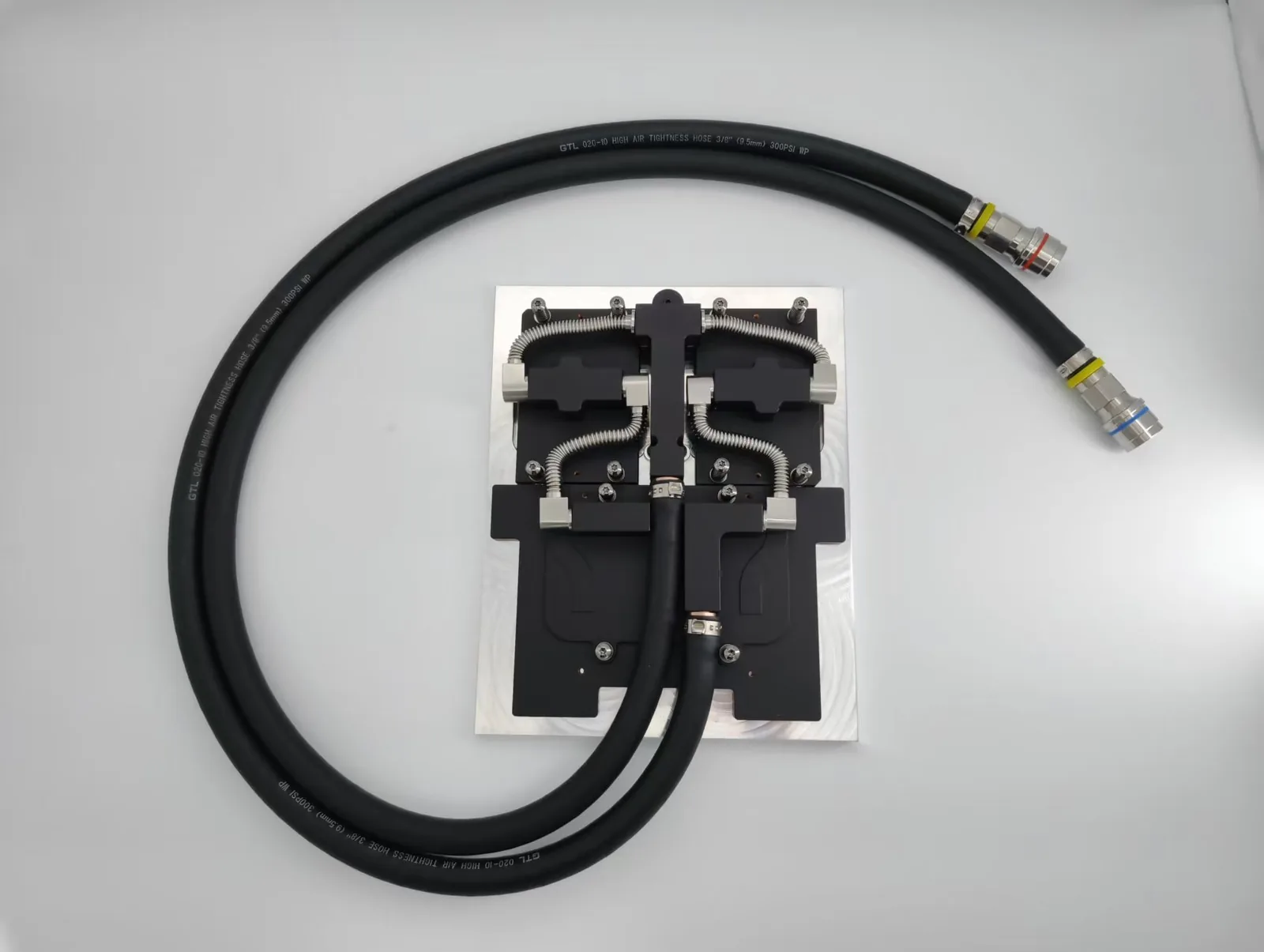
❏ Power Cold Plates
Designed for power electronic devices such as IGBTs and SiC MOSFETs, emphasizing high-power heat dissipation and electrical safety:
⚡ Typical scenarios: New energy vehicle electronic controls, photovoltaic inverters, industrial frequency converters, and UPS systems.
📈 Comparative Summary of the Three Cold Plate Types
| Feature | Embedded Cold Plates | Computing Cold Plates | Power Cold Plates |
|---|---|---|---|
| Core Objective | Cost & Reliability Balance | Extreme Heat Dissipation | High-Power Cooling & Insulation Safety |
| Cooling Target | Batteries/Industrial Equipment | CPU/GPU | IGBT/MOSFET |
| Internal Structure | Embedded Copper Tubes | Microchannels/Pin-Fins | Serpentine/Parallel Flow Paths |
| Typical Process | Brazing/Pressing | Vacuum Brazing | Vacuum Brazing/Friction Stir Welding |
| Material | Aluminum Plate + Copper Tube | Copper Alloy | Aluminum Alloy + Insulation Treatment |
🌟 Conclusion
Cold plate technology continues to drive the development of high-power electronic devices. Whether in green energy, industrial drives, artificial intelligence, or cloud computing, efficient thermal management solutions are the cornerstone of system reliability. Understanding the characteristics and applicable scenarios of different cold plates helps us make more precise decisions in design and selection.
Feel free to share your practical experiences or questions about cold plate technology in the comments!
#ColdPlateTechnology #ThermalManagement #DataCenters #NewEnergy #PowerElectronics #HeatDissipation #SmartManufacturing #EngineeringCommunity


*********************************************
Unleash Next-Level Performance with Cold-Plate Tech.
Stop letting thermal throttling hold you back. Our advanced cooling solution delivers superior thermal management for unprecedented efficiency and reliability. Power Up. Cool Down.
For industry standards and best practices, refer to ASHRAE thermal guidelines.
Frequently Asked Questions
Does ToneCooling offer OEM and ODM services?
Yes. ToneCooling provides full OEM and ODM services including custom design, prototyping, thermal simulation, and volume production. We serve customers in North America, Europe, and Asia-Pacific with engineering support and samples within 4–6 weeks.
What materials are used in ToneCooling liquid cold plates?
ToneCooling manufactures cold plates in aluminum (6061/6063), copper (C1100/C1020), and stainless steel. Aluminum FSW cold plates are ideal for high-volume EV and industrial applications, while copper cold plates provide the highest thermal conductivity for high heat flux electronics.
What is the typical lead time for custom cold plates?
Prototype samples are delivered within 4–6 weeks. Production orders typically ship within 6–8 weeks after sample approval. An engineer reviews every RFQ and replies by email with next steps.
Get a Custom Thermal Solution from ToneCooling
ToneCooling is a professional liquid cooling solution provider specializing in custom cold plates, AIO coolers, and advanced thermal management systems. With ISO 9001 quality management and our own manufacturing facility in Huizhou, China, we deliver prototype samples typically within 4–6 weeks. Contact ToneCooling today for a free consultation and quote. An engineer reviews every RFQ and replies by email with next steps.
For industry standards and best practices, refer to ASHRAE thermal guidelines.
Get a Custom Thermal Solution from ToneCooling
ToneCooling is a professional liquid cooling solution provider specializing in custom cold plates, AIO coolers, and advanced thermal management systems. With ISO 9001 quality management and our own manufacturing facility in Huizhou, China, we deliver prototype samples typically within 4–6 weeks. Contact ToneCooling today for a free consultation and quote. An engineer reviews every RFQ and replies by email with next steps.
Why Choose ToneCooling for Data Center Liquid Cold Plate
Engineering review and prototype planning are based on the project requirements. Custom prototype lead time is normally 4–6 weeks after drawing approval and order confirmation; confirm the production schedule in the quotation.
Building AI servers? See our standard GB300 4G+2C cold plate kit and GB200 cold plate kit, both supplied to published datasheets.
Need a Custom Liquid Cold Plate?
ToneCooling engineers review your drawings and requirements and reply by email with next steps.
Last updated: 2026-10-02
References: ISO 9001