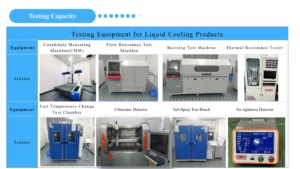
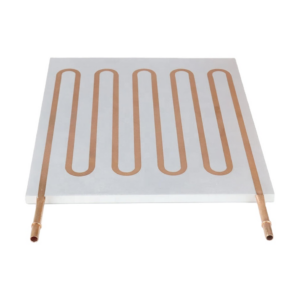
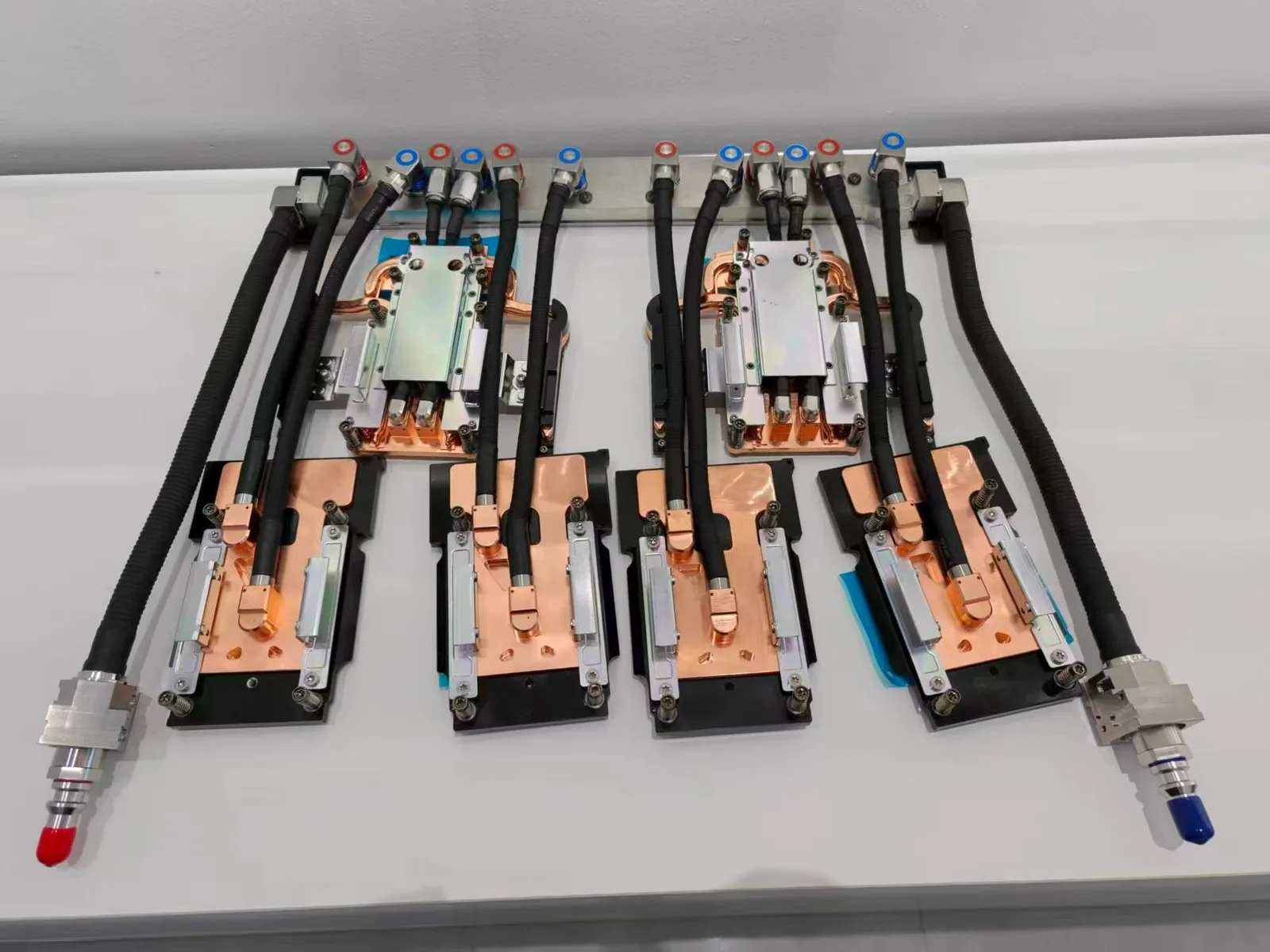
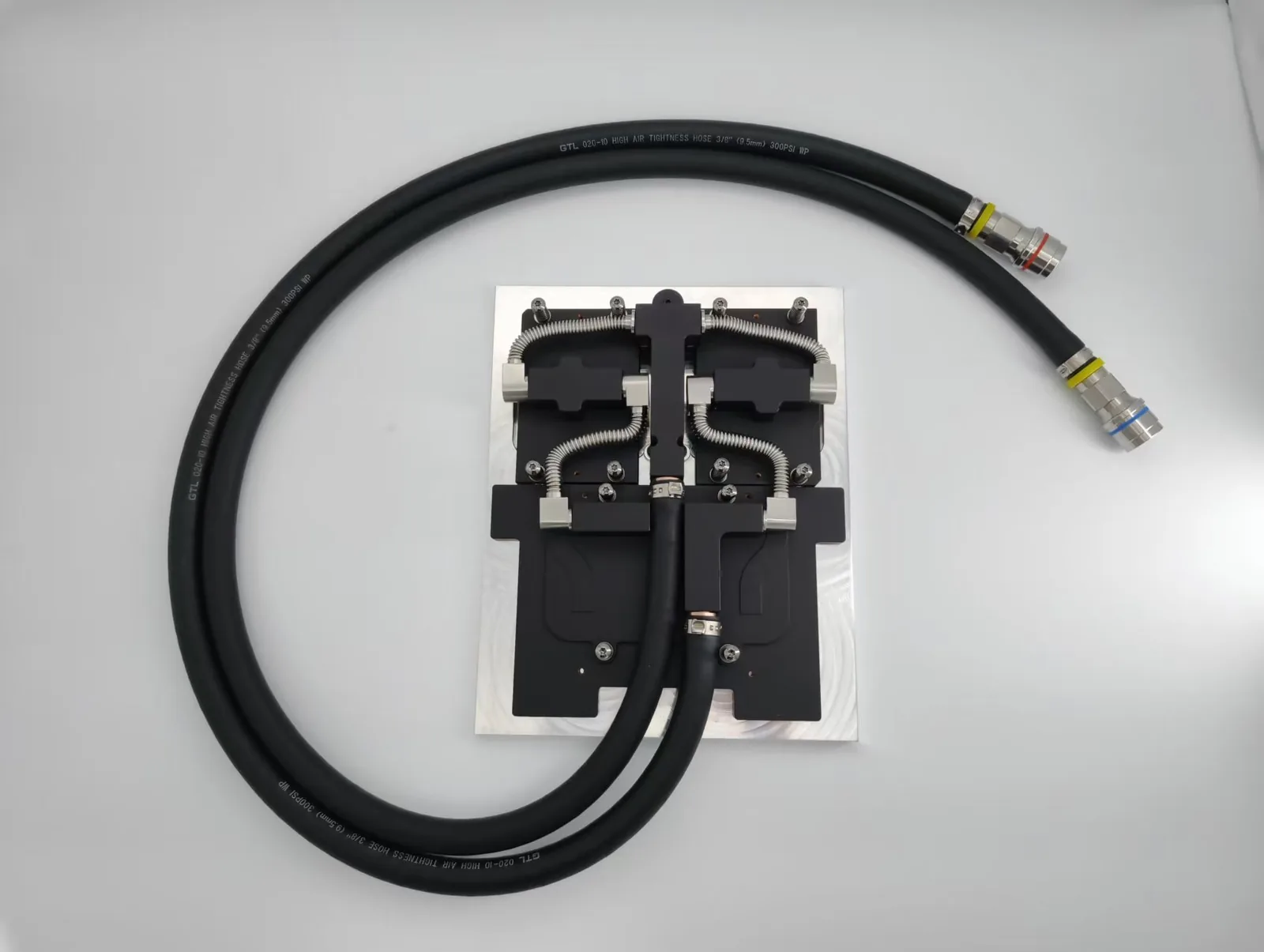
The main liquid cold plate types are tubed, machined, brazed fin, friction stir welded and micro-channel plates; they differ in heat flux capability, pressure drop, size and cost. ToneCooling builds each type and recommends one during DFM review.
Effective thermal management is critical for electronics, automotive systems, medical devices, and industrial machinery. Excess heat can reduce performance, shorten component lifespan, and increase maintenance costs. Liquid cold plates offer a reliable solution by efficiently transferring heat from high-power components to a circulating coolant.
Need a standard kit or a custom design? See our liquid cold plate range, including GB300, GB200, H200 and H100 kits with downloadable datasheets.
In this article, we compare different types of liquid cold plates—embedded tube, brazed, extruded, bonded fin, hybrid, and microchannel—exploring their materials, designs, performance, and applications. Readers will gain a clear understanding of which cold plate suits their system requirements, cooling demands, and environmental conditions.

Overview
Embedded Tube
Embedded tube liquid cold plates use a metal base with tubes set inside. These tubes carry coolant through the plate, allowing heat to move away from hot components. This design works well for moderate cooling needs in power electronics and industrial systems.
Brazed
Stamped and brazed liquid cold plates feature stacked thin metal sheets joined together by brazing. The process creates intricate channel designs that improve thermal performance. Stamped and brazed liquid cold plates often serve high-performance applications, such as power electronics and electric vehicle battery cooling.
Extruded
Extruded liquid cold plates use aluminum or copper shaped with internal channels. The extrusion process forms straight or serpentine channels that guide coolant efficiently. Extruded liquid cold plates offer good thermal conductivity and lower costs, making them popular for data centers, servers, and medium-demand cooling.
Bonded Fin
Bonded fin liquid cold plates combine a base plate with fins attached to increase surface area. The fins help transfer heat from the base to the coolant flowing through the channels. This type provides efficient heat dissipation in power electronics and renewable energy systems.
Hybrid
Hybrid liquid cold plates blend different cooling technologies in one unit. Designers can combine features like embedded tubes and bonded fins to meet unique cooling needs. Hybrid plates work well in versatile applications that require custom solutions.
Microchannel
Microchannel liquid cold plates contain many tiny channels for coolant flow. The small size of each channel creates a large surface area, which boosts heat transfer. Microchannel plates handle high heat flux in laser systems, medical equipment, and advanced electronics.
Note: The choice of liquid cold plate type depends on the application, cooling demand, and available space. Each design uses channels in a unique way to manage heat.
Materials and Construction
Selecting the right materials for liquid cold plates is essential for achieving optimal thermal performance and durability. Each material offers unique thermal properties, cost factors, and application benefits. The following table compares the thermal conductivity of common materials used in liquid cold plates:
| Material | Thermal Conductivity (W/m·K) | Best For |
|---|---|---|
| Aluminum (Al) | ~205 | General purpose, weight-sensitive, budget-friendly |
| Copper (Cu) | ~400 | High heat flux, superior thermal performance |
| Stainless Steel (SS) | 15-45 | Corrosive environments, high pressure |
| Composites | Varies (can be very high) | Specialized, extreme weight reduction, future applications |
Aluminum
Aluminum stands out as a popular choice for liquid cold plate construction. This material provides a balance between thermal conductivity and cost. The table below highlights the main advantages and disadvantages of aluminum:
| Advantages | Disadvantages |
|---|---|
| Lightweight nature | Not as thermally conductive as copper |
| Cost-effective | Limitations in high-temperature applications |
Aluminum offers good thermal performance for most general applications. Manufacturers often select aluminum for its ease of fabrication and lower cost. This material works well in weight-sensitive and budget-friendly designs.
Copper
Copper delivers the highest thermal conductivity among common materials for liquid cold plates. This property allows copper to transfer heat more efficiently than aluminum. Copper also provides superior corrosion resistance, especially in harsh environments.
- Copper is the most expensive material for liquid cold plates.
- It excels in high heat dissipation applications due to its excellent thermal properties.
- Copper plates last longer in demanding thermal management systems.
Copper’s high cost limits its use to applications where maximum thermal performance is critical. Designers often choose copper for power electronics and advanced cooling systems.
Stainless Steel
Stainless steel offers moderate thermal conductivity but excels in corrosion resistance. This material is common in medical devices and chemical processing equipment. Stainless steel plates meet strict sanitization and durability requirements.
Designers must consider trade-offs with stainless steel, such as pressure drop and flow stability. Stainless steel costs more than aluminum but less than copper. It suits environments where corrosion and mechanical strength are priorities.
Composite Materials
Composite materials provide new options for liquid cold plate design. These materials can achieve high thermal conductivity and reduce weight. Engineers can match the thermal expansion properties of composites to specific applications.
Composites allow for greater design flexibility and improved temperature distribution. Manufacturers can strategically place high-conductivity materials within the composite structure. This approach leads to lighter, more adaptable thermal management solutions.
Tip: Choosing the right materials for liquid cold plates depends on the required thermal performance, cost, and application environment. Each material brings distinct advantages and trade-offs for thermal management systems.

Benefits and Trade-Offs
Cost-Effectiveness
Cost-effectiveness is one of the main benefits of choosing the right liquid cold plate. Aluminum cold plates offer lower material costs and easier manufacturing, making them more affordable than copper options. The primary cost drivers include thermal performance requirements, annual demand, machining time, additional processing steps, surface roughness, flatness, hardness, surface topography, mounting features, and liquid connections specifications.
- Aluminum cold plates provide budget-friendly thermal management solutions.
- Vacuum-brazed cold plates deliver superior thermal performance but require higher manufacturing costs.
- Early involvement of manufacturers in the design process helps identify cost drivers and leads to more cost-effective designs.
Investing in liquid cold plates may require a higher initial investment compared to traditional cooling methods. Industries with continuous operations see significant long-term savings due to improved cooling efficiency and reduced power consumption. These financial benefits often offset the upfront costs over the lifecycle of the system.
Thermal Performance
Thermal performance is a critical factor in evaluating the benefits and trade-offs of liquid cold plates. Different designs impact the maximum heat dissipation capacity and cooling efficiency. The table below compares several design features and their effects on heat dissipation:
| Design Type | Impact on Heat Dissipation |
|---|---|
| Single in Single out | Standard configuration with basic heat transfer. |
| Single in Multiple out | Higher temperature uniformity observed. |
| Five-channel layout | Reduced maximum temperature by up to 26 °C. |
| Two-channel design | Less effective cooling compared to five-channel. |
Design features such as channel number, layout, and coolant inlet temperature influence cooling efficiency and superior thermal performance. More channels and S-shaped layouts improve heat dissipation and temperature uniformity. The ideal operating temperature range for liquid cold plates is 20–40 °C, with a recommended temperature difference of less than 5 °C.
Microchannel and pin-fin geometries enhance cooling efficiency and heat transfer. Composite and hybrid designs offer superior thermal performance for demanding applications. These features allow engineers to optimize thermal management solutions for specific needs.
Durability
Durability is a key benefit for many thermal management solutions. Stainless steel cold plates excel in corrosive environments and high-pressure applications. Copper plates last longer in demanding systems due to their superior thermal performance and resistance to wear.
- Surface features such as roughness, flatness, and hardness affect durability and manufacturing costs.
- Composite materials can improve durability while reducing weight.
- Hybrid designs combine the benefits of multiple materials for enhanced longevity.
Durable liquid cold plates reduce maintenance needs and extend system lifespan. This reliability supports efficient cooling and consistent heat dissipation over time.
Weight and Design Flexibility
Weight and design flexibility are important trade-offs in selecting liquid cold plates. Copper offers high thermal conductivity but increases system weight and structural requirements. Aluminum provides a lighter alternative with good cooling efficiency.
- Advanced designs use composite materials or coatings to reduce weight while maintaining superior thermal performance.
- Hybrid metal-polymer cold plates achieve high cooling efficiency and lower weight, which is essential for system integration.
- Microchannel and pin-fin features enhance heat dissipation without adding bulk.
The table below highlights the advantages of composite and hybrid designs:
| Advantage | Description |
|---|---|
| Improved thermal performance | Hybrid systems provide effective thermal management for lithium-ion batteries. |
| Reduced weight | Composite materials lead to lighter designs compared to traditional metal cold plates. |
| Enhanced design flexibility | The use of composites allows for more versatile shapes and configurations in cooling systems. |
Design versatility and design freedom allow engineers to create custom thermal management solutions. These features support efficient system integration and optimal cooling efficiency for a wide range of applications.

Liquid Cold Plate Performance Comparison
Heat Transfer Efficiency
Engineers compare liquid cold plate designs by measuring heat transfer efficiency. Microchannel plates stand out because their small channels and large surface area boost convective transfer, leading to higher heat fluxes and better cooling. Manifolds and flow straighteners also help by balancing flow rates and reducing turbulence, which improves transfer performance.
- Experimental testing measures transfer rates and fluid flow under controlled conditions.
- Computational Fluid Dynamics (CFD) models show flow patterns and temperature distribution for each design.
- Performance metrics like thermal resistance and overall transfer coefficient help compare different liquid cold plates.
Pressure and Flow
Pressure drop and flow rate affect the performance and suitability of each liquid cold plate design. The table below shows typical characteristics for common types:
| Type of Cold Plate | Pressure Drop Characteristics | Flow Rate Characteristics |
|---|---|---|
| Copper Tube Cold Plates | High pressure drop | High flow rates |
| Machined Cold Plates | Low pressure drop | Low flow rates |
| Micro-Channel Cold Plates | Very high pressure drop | Low flow rates |
| Pressed Tube Cold Plates | Moderate pressure drop | High flow rates |
Microchannel plates use many small channels for coolant flow. These plates provide a large surface area for transfer, resulting in low thermal resistance. Typical flow rates range from 0.5 to 2.5 liters per minute with low pressure drops.
Reliability
Reliability plays a key role in thermal management and long-term system performance. The table below compares reliability and thermal performance for popular liquid cold plate designs:
| Type of Cold Plate | Thermal Performance | Reliability | Notes |
|---|---|---|---|
| Embedded Tube | Good thermal performance | Easy to manufacture | Used in electronics and industrial cooling |
| Brazed | High thermal efficiency | Moderate reliability | Suitable for high-performance applications |
| Extruded | Moderate thermal performance | High reliability | Cost-effective for various applications |
| Microchannel | Very low thermal resistance | High reliability | Ideal for high heat flux at low flow rates |
Microchannel cold plates are compact and lightweight, making them suitable for mobile and airborne electronics. Extruded designs offer high reliability and cost-effectiveness for many cooling needs. Brazed plates deliver strong transfer performance but may have moderate reliability in demanding environments.
Tip: Selecting the right liquid cold plate design depends on the balance between transfer efficiency, pressure and flow characteristics, and reliability for each application.
Cooling Applications
Electronics
Liquid cold plates play a vital role in electronics by managing heat from high-power components. They offer a higher heat transfer coefficient than air cooling, making them effective for both single-phase and two-phase applications. These plates handle the thermal demands of modern devices, such as lasers, fuel cells, battery coolers, motor drives, and avionics.
Liquid cold plates provide localized cooling by moving heat from the device to a liquid, which then flows to a heat exchanger. This process keeps sensitive electronics at safe temperatures and improves performance in high-performance applications.
| Type of Liquid Cold Plate | Applications |
|---|---|
| Stamped Liquid Cold Plates | High-volume, cost-effective solutions |
| CNC-Machined Liquid Cold Plates | Precision and customization for specific needs |
| Embedded Round Tube Cold Plates | Compact designs with limited space |
| Flat Tube Manifold Cold Plates | Efficient cooling for high-power density systems |
Coolants used in these systems have good thermo-physical properties, low freezing points, high boiling points, chemical stability, and non-corrosiveness.
Medical Devices
Medical devices require precise thermal management to protect sensitive components. Liquid cold plates efficiently dissipate heat from high-power electronics, ensuring optimal operation even in demanding conditions. Their compact design supports lightweight and portable devices, which is important for handheld diagnostic tools and surgical robots.
These plates operate silently, creating a quiet clinical environment. Advanced sensors help maintain precise temperatures, which is crucial for lasers and imaging equipment. Corrosion-resistant materials increase durability and reliability, while energy efficiency reduces operational costs.
Automotive and Industrial
Automotive and industrial systems face unique cooling challenges. Space constraints often require optimized layouts and custom-shaped heat exchangers. Weight is critical in mobile applications, so engineers use lightweight materials and innovative designs.
- Space constraints demand compact solutions.
- Weight considerations drive the use of lighter materials.
- Effective heat connection requires high-performance materials and proper mounting.
- Cost management balances performance with budget.
- Maintenance and reliability depend on durable materials and easy cleaning features.
Cooling batteries in electric vehicles and industrial machinery ensures safety and extends component life. High-performance applications in these sectors rely on liquid cold plates for efficient heat removal and consistent performance.

Choosing the Right Liquid Cold Plate
Application Needs
Selecting the right liquid cold plate starts with understanding the specific cooling demands of the system. Engineers must consider the type of heat generated, the required temperature limits, and the desired performance. Liquid cold plates transfer heat from components and help maintain safe operating temperatures. They support optimal performance and extend the lifespan of sensitive equipment. Matching the cold plate to application-specific requirements ensures reliable thermal management.
Volume and Production
Production volume plays a major role in the cost and selection of cold plate types. Stamped liquid cold plates offer high production efficiency and lower average costs, especially for medium or small-sized plates. The table below compares different manufacturing methods:
| Type of Liquid Cold Plate | Average Cost | Production Efficiency |
|---|---|---|
| Machining Cooling Plates | Higher | Lower |
| Extrusion Cooling Plates | Higher | Lower |
Stamped plates require only a soft mold, making them ideal for large production runs. Machined and extruded plates suit lower volumes or custom designs but come with higher costs.
Environmental Factors
Environmental conditions can affect the durability and efficiency of a liquid cold plate. Dust, debris, and extreme temperatures may reduce cooling performance and shorten lifespan. Erosion-corrosion often occurs in areas where fluid flow changes direction, such as pipe bends, and can remove protective films from metal surfaces.
The choice of coolant also matters. Coolants must have high thermal conductivity, low viscosity, and stability under temperature extremes. Selecting the right coolant and protecting the cold plate from harsh environments will help maintain system reliability.
Before choosing a liquid cold plate, ask these key questions:
- What is the maximum temperature of the fluid leaving the cold plate?
- What is the required normalized thermal resistance?
- How does thermal resistance vary with area?
- Is the coolant compatible with the cold plate’s internal metals?
Conclusion
Choosing the right liquid cold plate depends on balancing thermal performance, durability, weight, cost, and design flexibility. Embedded tube and extruded plates offer reliability and cost-effectiveness, while brazed and microchannel designs excel in high heat flux applications. Aluminum provides lightweight, budget-friendly solutions, whereas copper delivers superior thermal performance. Stainless steel and composites offer durability and specialized benefits.
Understanding these factors ensures efficient heat management across electronics, automotive, medical, and industrial systems. For tailored solutions or expert guidance on selecting the best liquid cold plate for your application, contact a trusted thermal management supplier today.
For industry standards and best practices, refer to ASHRAE thermal guidelines.
Frequently Asked Questions
Does ToneCooling offer OEM and ODM services?
Yes. ToneCooling provides full OEM and ODM services including custom design, prototyping, thermal simulation, and volume production. We serve customers in North America, Europe, and Asia-Pacific with engineering support and samples within 4–6 weeks.
What materials are used in ToneCooling liquid cold plates?
ToneCooling manufactures cold plates in aluminum (6061/6063), copper (C1100/C1020), and stainless steel. Aluminum FSW cold plates are ideal for high-volume EV and industrial applications, while copper cold plates provide the highest thermal conductivity for high heat flux electronics.
What is the typical lead time for custom cold plates?
Prototype samples are delivered within 4–6 weeks. Production orders typically ship within 6–8 weeks after sample approval. An engineer reviews every RFQ and replies by email with next steps.
Get a Custom Thermal Solution from ToneCooling
ToneCooling is a professional liquid cooling solution provider specializing in custom cold plates, AIO coolers, and advanced thermal management systems. With ISO 9001 quality management and our own manufacturing facility in Huizhou, China, we deliver prototype samples typically within 4–6 weeks. Contact ToneCooling today for a free consultation and quote. An engineer reviews every RFQ and replies by email with next steps.
Why Choose ToneCooling for Semiconductor Test Fixture Cold Plate
Engineering review and prototype planning are based on the project requirements. Custom prototype lead time is normally 4–6 weeks after drawing approval and order confirmation; confirm the production schedule in the quotation.
Building AI servers? See our standard GB300 4G+2C cold plate kit and GB200 cold plate kit, both supplied to published datasheets.
Need a Custom Liquid Cold Plate?
ToneCooling engineers review your drawings and requirements and reply by email with next steps.
Last updated: 2026-10-02