What Is Liquid Cold Plate Brands High?
This guide on Top 5 liquid cold provides key insights for engineers and procurement teams. High-performance electronics, electric vehicles, and medical systems generate extreme amounts of heat that air cooling alone cannot manage. Without efficient thermal solutions, these devices risk reduced performance, shorter lifespans, or even failure. Liquid cold plates have become a critical technology for industries that demand precise, reliable heat management.
This article explores the top 5 liquid cold plate brands, highlighting their strengths, innovations, and product offerings. By the end, you’ll have a clear view of which suppliers lead the market and how they can support your thermal management needs.

Liquid Cold Plate Overview — Top 5 liquid cold
What Is a Liquid Cold Plate? — Top 5 liquid cold
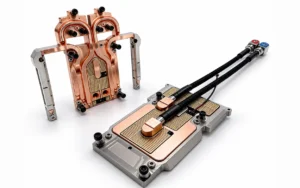
A liquid cold plate is a device that transfers heat away from high-power components using a circulating coolant. This technology forms the core of many liquid cooling systems and plays a vital role in thermal management. Engineers design liquid cold plates with features like surface flatness and low thermal resistance to maximize heat transfer.
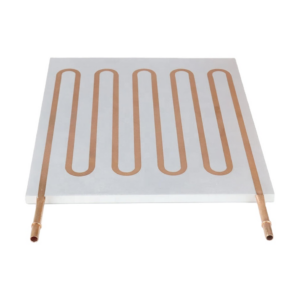
- Liquid cold plates use internal channels or copper tubes embedded in aluminum to guide coolant flow.
- The coolant, often water or a water-alcohol mix, absorbs heat from electronics or batteries.
- These plates must handle high heat dissipation and remain reliable under vibration and temperature changes.
- Lightweight construction helps maintain energy density, especially in battery packs.
Liquid cooling solutions offer better performance than air cooling, especially for demanding applications. The effectiveness of a liquid cold plate depends on its materials and the quality of thermal interface materials. Proper design ensures stable operation and extends the lifespan of sensitive electronics.
Key Applications
Liquid cold plates support a wide range of applications across several industries. Their ability to manage heat efficiently makes them essential in modern temperature regulation technologies.
| Industry | Primary Applications |
|---|---|
| Electronics | Cooling CPUs, GPUs, and power electronics for reliability. |
| Aerospace | Managing thermal loads in avionics and power systems. |
| Automotive | Battery thermal management in electric vehicles. |
| Renewable Energy | Cooling inverters and components in solar power systems. |
| High-Performance Computing | Cooling data centers, supercomputers, and servers. |
| Medical Equipment | Precise temperature control in MRI and laser devices. |
- High-performance computing relies on liquid cooling systems for stable operation.
- Electric vehicles use liquid cold plates to cool batteries and power electronics.
- Aerospace and medical equipment require advanced thermal solutions for safety and accuracy.
Liquid cold plates enable advanced temperature regulation technologies and support critical thermal management solutions. Their role in automotive, electronics, and renewable energy applications continues to grow as devices become more powerful.
Why High-Performance Cooling Solutions Matter
Demands in Modern Electronics
Modern electronics require advanced cooling solutions to support high-performance applications. Devices such as servers, electric vehicles, and medical devices and lasers generate significant heat during operation. Engineers rely on liquid cooling to maintain safe temperatures and prevent failures in high-density cooling applications.
High-performance applications demand efficient thermal management to ensure reliability and extend device lifespan.
The market for electronics cooling continues to grow as technology advances. The following table shows projected growth rates for high-performance cooling solutions in electronics:
| Source | Projected CAGR | Forecast Period |
|---|---|---|
| New Electronic Cooling Technology Market | 12.4% | 2023 to 2030 |
| New Electronic Cooling Technology Market Insights | 8.5% | Through 2028 |
| Thermal Management Systems Industry | 7% | 2023 to 2028 |
Liquid cooling solutions play a vital role in data center cooling, automotive and aerospace applications, and other high-performance applications. These systems enable efficient heat transfer, lower operating temperatures, and reduce power consumption. Reliable cooling solutions help prevent thermal-related failures and support demanding applications.
- Liquid cold plates enable efficient heat transfer, leading to lower operating temperatures and reduced power consumption.
- They are crucial in high-performance computing systems, electric vehicles, and laser systems for effective thermal management.
- Maintaining lower temperatures enhances device reliability and lifespan, preventing thermal-related failures.
Benefits Over Air Cooling
Liquid cooling systems offer several advantages over traditional air cooling methods. The following table compares heat dissipation efficiency and performance in extreme conditions:
| Cooling System | Heat Dissipation Efficiency | Performance in Extreme Conditions |
|---|---|---|
| Liquid Cooling | More effective due to higher thermal conductivity | Maintains stable temperatures even under extreme heat |
| Air Cooling | Less efficient, struggles under high thermal loads | Effective in moderate conditions but loses efficiency in high ambient temperatures |
Liquid cooling provides superior performance for high-performance applications. These systems maintain stable temperatures in electronics cooling, even when devices operate under heavy loads. Engineers choose liquid cooling for applications that require precise temperature control, such as medical devices and lasers.
Liquid cooling systems support high-density cooling applications and deliver consistent results in automotive and aerospace applications. The technology enables reliable operation in environments where air cooling cannot keep up. High-performance applications benefit from the efficiency and stability of liquid cooling solutions.
Criteria for Best Liquid Cold Plate Manufacturer
Selecting the best liquid cold plate manufacturer requires a focus on several key criteria. These include performance and efficiency, innovation and technology, and reliability and support. Each factor plays a vital role in ensuring quality and performance for demanding applications.
Performance and Efficiency
Performance and efficiency determine how well a liquid cold plate manages heat in real-world applications. Manufacturers use specific metrics to evaluate quality and performance. The table below highlights the most important metrics:
| Metric | Description |
|---|---|
| Thermal Resistance (Rth) | Indicates how effectively the cold plate transfers heat away from the heat source. Lower values mean better performance. |
| Flow Rate | Represents the coolant circulation capacity, affecting heat removal capability. Higher flow rates improve dissipation but may increase pressure drop. |
| Pressure Drop | The resistance to flow within the system, which can impact pump power requirements and overall efficiency. |
| Heat Transfer Coefficient | Quantifies the heat transfer efficiency of the cold plate, essential for assessing thermal management. |
Efficient heat dissipation supports high-performance applications in automotive, electronics, and renewable energy. Quality liquid cooling systems deliver stable operation and extend equipment lifespan.
Innovation and Technology
Innovation drives the development of advanced liquid cooling solutions. Leading manufacturers adopt new technologies to improve quality and performance. The table below shows common innovation strategies:
| Innovation Strategy | Description |
|---|---|
| Integrated Microchannel Cold Plates | Adoption of additive manufacturing for customized heat exchanger geometries |
| Dielectric Coolant Circuits | Integration to optimize thermal performance in high-power CPU applications |
| Leak Detection Sensors | Implementation in liquid cold plate designs for enhanced reliability |
| Hybrid Cooling Solutions | Development combining direct-to-chip cold plates with airflow management |
| Partnerships | Collaborations between data center operators and cold plate OEMs for next-gen thermal solutions |
| Eco-friendly Materials | Shift toward biodegradable coolants and sustainable materials in manufacturing |
| AI-driven Systems | Emergence of systems for real-time optimization of liquid cold plate performance |
These innovations help suppliers meet the needs of modern applications. Quality improvements in liquid cooling systems support efficient thermal management solutions.
Reliability and Support
Reliability and customer support are essential for long-term success in thermal management. Reliable suppliers offer strong warranties, technical support, and consistent product quality. Quality support ensures that liquid cooling solutions perform well in all applications. Reliable suppliers help customers maintain their liquid cooling system and address any issues quickly.
Manufacturers must also consider size, weight, installation, maintenance, and fluid compatibility. These factors affect how well liquid cold plates fit into different applications and environments. Quality and performance remain the top priorities for any thermal management project.

Top Liquid Cold Plate Suppliers
ToneCooling
Liquid Cold Plate Brands High is a high-performance thermal management solution engineered by ToneCooling for demanding applications.
ToneCooling leads the market with advanced liquid cooling solutions for power electronics and computing. The company provides a wide range of innovative cold plates, including including tubed-in, vacuum-brazed, and friction stir welded FSW. GPU/CPU and IGBT cold plates. We are currently developing cooling solutions specifically for NVIDIA GPUs such as H100 and RTX 5090, supported by in-house R&D, existing mold production, or custom design capabilities.
ToneCooling is committed to next-generation solutions for demanding environments. Our liquid cooling products are available in both standard and customized options, ensuring customers benefit from fast innovation and dependable performance.
Wakefield Thermal
Wakefield Thermal stands out among cold plate suppliers with a broad selection of liquid cooling solutions. Their products minimize heat resistance and maximize heat dissipation. Wakefield Thermal provides extensive customization, which gives them a strong advantage in the market.
The company engineers each liquid cold plate for high-performance electronics. Customers can select tailored solutions for unique requirements. Wakefield Thermal’s commitment to quality and innovation sets them apart from other cold plate suppliers.
Columbia-Staver
Columbia-Staver has a reputation for strong engineering capabilities. The company specializes in customized thermal management solutions for specialized applications. Columbia-Staver maintains a competitive presence among leading cold plate suppliers.
- Focuses on engineering expertise.
- Delivers custom solutions for unique thermal challenges.
- Serves specialized industries with advanced liquid cold plates.
Columbia-Staver supports customers who need tailored designs and reliable performance. Their approach ensures each project receives careful attention and technical support.
Atherm
Atherm provides reliable liquid cold plates for a variety of industries. The company emphasizes quality and consistency in every product. Customers value Atherm’s ability to deliver both standard and custom solutions.
Atherm manages lead times efficiently for both samples and mass production. They adapt to changing market conditions by partnering with regional fabricators. This strategy helps them meet demand and control costs.
Darrah Electric
Darrah Electric ranks among the top cold plate suppliers for reliability and customer support. The company offers a range of liquid cold plates designed for high-performance cooling. Customers appreciate Darrah Electric’s focus on quality and technical assistance.
Darrah Electric uses dual-sourcing strategies to manage supply chain risks. Their products support demanding applications in electronics and power systems. The company continues to invest in domestic production to improve delivery and cost efficiency.
How to Choose the Right Liquid Cold Plate
Assessing Your Cooling Needs
Selecting the right cooling solutions starts with understanding the specific requirements of your application. Users should consider installation changes, especially when upgrading existing systems. Clean fluids help maintain efficient cooling, while contamination can cause failures.
Commissioning ensures the system works as intended. Fluid management requires regular monitoring and adjustment of coolant chemistry. Recurring services help detect issues early and keep systems running smoothly.
Spare parts availability reduces downtime. Digital asset monitoring supports optimal performance, especially in high-density environments.
- Installation changes
- Cleanliness of fluids
- Commissioning and verification
- Fluid management
- Recurring maintenance services
- Spare parts availability
- Digital asset monitoring
Comparing Features and Support
Comparing features and support among cold plate suppliers helps users find the best fit for their needs. The table below shows how suppliers may differ in their offerings:
| Feature/Support | Example Supplier |
|---|---|
| Custom Solutions | Tailored cooling solutions for specific needs |
| Expert Support | Installation guidance and technical assistance |
| Reliable After-Sales | Maintenance, troubleshooting, and consulting |
| Pricing | Competitive pricing from direct manufacturers |
Users should look for suppliers that offer custom-engineered solutions and strong technical support. Reliable after-sales service ensures long-term satisfaction and system reliability.
Tip: Always check if the supplier provides clear installation guidance and ongoing maintenance support.
Budget and Customization
Budget and customization play a major role in choosing cooling solutions. Customization options affect both cost and performance. Materials, surface roughness, flatness, and design requirements can change manufacturing costs and thermal efficiency.
Surface roughness has little impact on thermal performance but can increase costs due to complex machining. Surface flatness is crucial for thermal management; tighter specifications lead to higher costs. Different cold plate technologies offer improved performance but may raise expenses.
A typical machined cold plate has a surface finish of 32-64 µin, which suits most applications. Reducing roughness to 16 µin requires slower machining and more rigid fixturing, increasing costs. Exceeding the standard flatness specification of 0.001 inch/inch adds complexity and expense.
- Customization options impact cost and performance.
- Materials and design requirements change manufacturing costs.
- Tighter flatness specifications improve thermal solutions but increase expenses.
Users face challenges such as high initial investment, complex installation, risk of leaks, and compatibility issues with older systems. Lack of standardization and regulatory hurdles can also complicate integration. Careful planning helps users match their cooling needs with the right supplier and thermal management solutions.

Conclusion
Liquid cold plates are at the center of modern cooling technology, enabling efficient heat transfer in electronics, automotive, aerospace, and renewable energy applications. The top suppliers—ToneCooling, Wakefield Thermal, Columbia-Staver, Atherm, and Darrah Electric—each bring unique strengths in customization, innovation, and reliability.
Choosing the right partner depends on your application requirements, budget, and long-term support needs. If you’re evaluating liquid cooling solutions, start by defining your performance goals and comparing supplier capabilities. To discuss tailored options for your project, reach out to a trusted manufacturer and explore how advanced liquid cold plates can extend the life and efficiency of your systems.
Frequently Asked Questions
Does ToneCooling offer OEM and ODM services?
Yes. ToneCooling provides full OEM and ODM services including custom design, prototyping, thermal simulation, and volume production. We serve customers in North America, Europe, and Asia-Pacific with engineering support and samples within 2–4 weeks.
What materials are used in ToneCooling liquid cold plates?
ToneCooling manufactures cold plates in aluminum (6061/6063), copper (C1100/C1020), and stainless steel. Aluminum FSW cold plates are ideal for high-volume EV and industrial applications, while copper brazed cold plates provide maximum thermal conductivity (398 W/m·K) for high heat flux electronics.
What is the typical lead time for custom cold plates?
Prototype samples are delivered within 2–4 weeks. Production orders typically ship within 4–6 weeks after sample approval. ToneCooling responds to all quote requests within 24 business hours.
Get a Custom Thermal Solution from ToneCooling
ToneCooling is a professional liquid cooling solution provider specializing in custom cold plates, AIO coolers, and advanced thermal management systems. With ISO 9001:2015 certified manufacturing, we deliver prototype samples within 2–4 weeks. Contact ToneCooling today for a free consultation and quote — we respond within 24 business hours.
Frequently Asked Questions
Does ToneCooling offer OEM and ODM services?
Yes. ToneCooling provides full OEM and ODM services including custom design, prototyping, thermal simulation, and volume production. We serve customers in North America, Europe, and Asia-Pacific with engineering support and samples within 2–4 weeks.
What materials are used in ToneCooling liquid cold plates?
ToneCooling manufactures cold plates in aluminum (6061/6063), copper (C1100/C1020), and stainless steel. Aluminum FSW cold plates are ideal for high-volume EV and industrial applications, while copper brazed cold plates provide maximum thermal conductivity (398 W/m·K) for high heat flux electronics.
What is the typical lead time for custom cold plates?
Prototype samples are delivered within 2–4 weeks. Production orders typically ship within 4–6 weeks after sample approval. ToneCooling responds to all quote requests within 24 business hours.
Get a Custom Thermal Solution from ToneCooling
ToneCooling is a professional liquid cooling solution provider specializing in custom cold plates, AIO coolers, and advanced thermal management systems. With ISO 9001:2015 certified manufacturing, we deliver prototype samples within 2–4 weeks. Contact ToneCooling today for a free consultation and quote — we respond within 24 business hours.
References: ASHRAE thermal standards, Wikipedia: Heat Sink Technology
Need a Custom Liquid Cold Plate?
ToneCooling engineers design thermal solutions for your specific requirements. Get an engineering RFQ review based on your uploaded requirements.
Top Liquid Cold Plate Brands is a critical component in modern thermal management. ToneCooling engineers this solution for AI servers, data centers, EV batteries, and power electronics requiring high-performance liquid cooling.
Top Liquid Cold Plate Brands: Key Specifications
When evaluating top liquid cold plate brands, engineers consider thermal resistance, pressure drop, flow rate, and material compatibility. ToneCooling provides detailed specs for every top liquid cold plate brands design, backed by CFD simulation and testing.
Why Choose ToneCooling for Top Liquid Cold Plate Brands
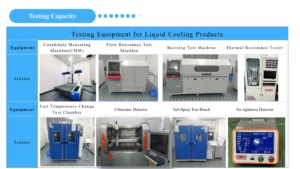
ToneCooling has manufactured over 50,000 top liquid cold plate brands units for global OEM customers. Our top liquid cold plate brands production features vacuum brazing furnaces below 10⁻⁴ mbar, FSW machines with ≤0.02mm flatness, and helium leak detection at 10⁻⁸ mbar·L/s. Every top liquid cold plate brands undergoes 100% pressure testing at 25 bar.
Our engineering team provides free top liquid cold plate brands design consultation, CFD simulation, and rapid prototyping in 7-14 days. Production top liquid cold plate brands orders ship in 4-6 weeks under ISO 9001:2015 quality management.
Need a Custom Liquid Cold Plate?
ToneCooling engineers design thermal solutions for your requirements. Response within 24-48 hours.
Last Updated: 2026-04-08
DR Kevin, Thermal Engineer, ToneCooling