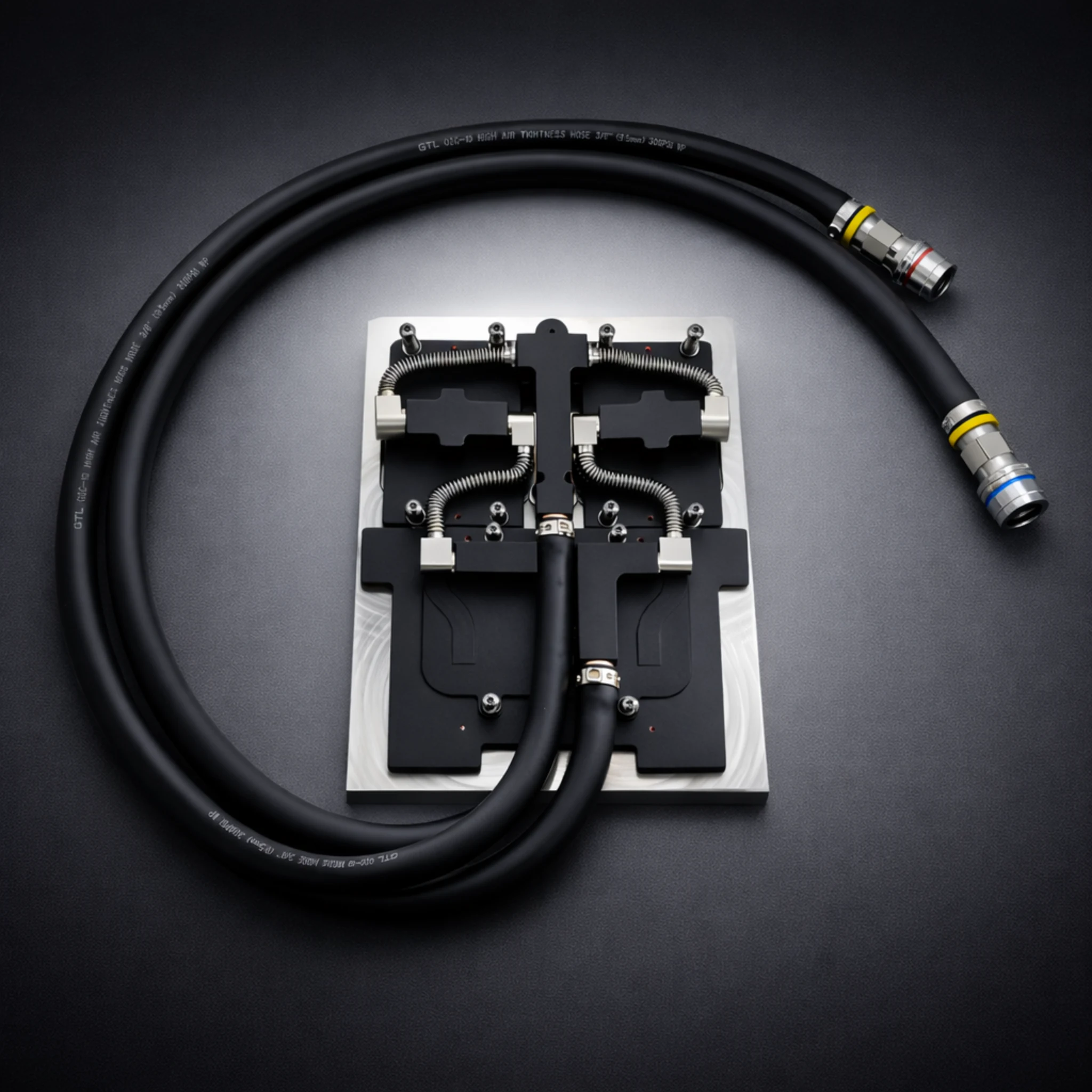
Comparing Liquid Cold Plate Manufacturers is a high-performance thermal management solution engineered by ToneCooling for demanding applications.
This comprehensive guide covers comparing liquid cold plate solutions for industrial and OEM applications. ToneCooling provides expert insights on comparing liquid cold plate technology and implementation.
Choosing the right Liquid Cold Plate Manufacturers is critical for industries that depend on precise thermal management. With the global market growing from USD 1.2 billion in 2023 to nearly USD 2.7 billion by 2032, companies face a wide range of manufacturers offering standard and custom solutions with varying technologies, quality levels, and engineering capabilities.
This article explores key differences among manufacturers worldwide, covering quality standards, technological innovations, customization options, pricing, and global support. By the end, you’ll understand how to evaluate manufacturers effectively and select partners that align with your system requirements and performance goals.

What Is Comparing Liquid Cold Plate Manufacturers?
Liquid cold plates serve many industries that need advanced thermal management solutions. The table below shows how different sectors use these systems and their specific thermal needs:
| Industry Sector | Specific Thermal Management Requirements |
|---|---|
| Data centers and servers | Cooling high-density server racks |
| Electric vehicles | Battery thermal management |
| Medical equipment | MRI machines and diagnostic devices |
| Industrial power supplies | Inverters and power conversion |
| Renewable energy | Solar inverters and wind power converters |
| Military and aerospace | Radar systems and communication equipment |
| Laser systems | Diode laser cooling and optical equipment |
Automotive
The automotive industry relies on liquid cold plates for battery and power electronics cooling. Electric vehicles need efficient thermal management solutions to keep batteries and power modules at safe temperatures. Recent trends show a shift toward microchannel and two-phase cooling designs, which improve thermal performance and reliability.
Data Centers
Data centers use liquid cold plates to cool high-density server racks. These systems provide direct-to-chip cooling, which increases heat transfer efficiency and supports better computational performance. Liquid cooling systems also use less energy than air cooling, making them a preferred thermal management solution for modern data centers.
Liquid cold plates help maintain optimal processor temperatures, preventing overheating and performance drops.
Medical Devices
Medical devices require precise thermal management solutions to ensure stable operation. Liquid cold plates offer superior thermal conductivity, compact design, and extended component lifespan. Leading manufacturers in this sector provide custom solutions for MRI machines and diagnostic equipment, focusing on stable performance and icing prevention.
| Requirement | Description |
|---|---|
| Superior Thermal Conductivity | Essential for effective heat transfer in medical devices. |
| Compact Design | Allows for integration into space-constrained medical applications. |
| Extended Component Lifespan | Prevents overheating, enhancing durability of medical devices. |
| Stable Performance | Maintains consistent operating temperatures, crucial for medical precision. |
| Icing Prevention | Utilizes special mixtures to avoid freezing in low-temperature conditions. |
Power Electronics
Power electronics in industrial settings depend on liquid cold plates for efficient heat removal. These plates use microchannels to direct coolant across critical components, removing heat faster than air-cooled systems. By keeping temperatures within safe limits, they improve the reliability and efficiency of thermal management solutions in power conversion and renewable energy systems.
Why Reliable Manufacturers Matter
Reliable liquid cold plate manufacturers play a critical role in thermal management solutions. They help companies maintain high performance and reduce unexpected downtime. When a manufacturer delivers consistent quality, systems run smoothly and avoid costly interruptions.
| Key Aspect | Description |
|---|---|
| Uptime Improvement | Integrating operational technology and IT boosts uptime and affects Overall Equipment Effectiveness (OEE). |
| Cost Efficiency | Unified data helps reduce scrap and waste, leading to better revenue streams. |
| Competitive Edge | Manufacturers leveraging data gain resilience and improve their bottom line. |
A dependable manufacturer reduces wear on components and extends system life. They enhance safety and preserve throughput. Proactive planning becomes possible, which improves overall performance.
Manufacturers who focus on reliability offer several benefits:
- Reduced downtime
- Extended asset life
- Optimized maintenance scheduling
- Total value exceeding technology costs by 3-5x over equipment lifecycles
High performance depends on the ability to keep systems running at peak efficiency. Reliable manufacturers ensure that thermal management solutions deliver consistent performance over time. This consistency protects investments and supports long-term growth.
Companies that choose reliable partners see better performance in their operations. They experience fewer failures and maintain higher productivity. The right manufacturer helps maximize performance and minimize risks.
Tip: Selecting a reliable manufacturer leads to better performance, lower costs, and improved system uptime.

Comparison Criteria
Selecting the right liquid cold plate manufacturer depends on several key criteria. These factors help companies achieve efficient thermal management and maximize heat transfer efficiency in their systems. Each criterion plays a unique role in ensuring reliable thermal performance and long-term value.
Quality
Quality stands as the foundation for any successful thermal management solution. Manufacturers with a strong track record deliver products that meet strict industry standards and certifications. They use rigorous testing to ensure thermal performance, structural integrity, and fluid tightness. Quality control processes and expertise in thermal management help prevent failures and extend equipment life. Procurement teams often place quality at the top of their list because it directly affects system reliability and uptime.
High-quality manufacturing leads to fewer defects and better heat transfer efficiency.
Technology
Advanced technology drives improvements in heat transfer efficiency and efficient thermal management. Leading manufacturers use 3D modeling, CFD tools, and AI optimization to design cold plates that handle high heat loads. New manufacturing methods, like 3D printing, allow for complex geometries and improved cooling. Features such as fluid control, corrosion-resistant coatings, and sustainable production methods further enhance thermal performance. These advancements help companies address the growing demands of high-power electronics and data centers.
Customization
Customization ensures that each cold plate fits the unique needs of a system. Off-the-shelf solutions often fail to provide the right flow or fit, which can limit heat transfer efficiency. Top manufacturers analyze cooling requirements, create thermal maps, and optimize flow paths for each application. They consider factors like size, shape, and heat source location to deliver efficient thermal management. Custom designs help companies achieve the best possible thermal performance for their specific challenges.
Pricing
Pricing varies based on several factors, including material choice, manufacturing process, and annual demand. Aluminum and copper offer different levels of heat transfer efficiency and cost. Other factors, such as surface characteristics and installation needs, also influence price. Companies must balance cost with the need for efficient thermal management and reliable performance. Comparing pricing helps buyers find the best value without sacrificing quality.
Global Support
Global support networks play a vital role in customer satisfaction and project success. Manufacturers with strong support can handle large orders, deliver on time, and respond quickly to customer needs. Their engineering expertise and attention to detail help solve complex thermal management problems. Reliable support ensures that companies maintain heat transfer efficiency and efficient thermal management throughout the product lifecycle.
Responsive support teams help companies avoid delays and keep projects on track.
Top 5 Liquid Cold Plate Manufacturers
Boyd Corporation
Boyd has patented Hi-Contact™ liquid cold plates with copper or stainless steel tubing mechanically interlocked into aluminum plates. Their cold plates are designed for low to medium power density applications with optimized tube-to-plate contact for superior thermal performance. Boyd also provides stamped, machined, and brazed cold plate construction with rigorous leak testing. Their products serve electric vehicle batteries, power conversion, semiconductor cooling, AI/cloud computing, and industrial equipment cooling.
Columbia-Staver
Columbia-Staver manufactures a wide range of liquid cold plates including serpentine tube-in-plate designs, friction stir welded plates, vacuum brazed and dip brazed cold plates. Their epoxy-bonded multi-layer cold plates are also used for prototypes and low volume production. The company focuses on customizing internal flow to maximize performance and minimize resistance. They serve high power electronics needing compact, effective thermal management solutions.
ToneCooling
ToneCooling is a manufacturer specializing in custom liquid cold plates designed for efficient GPU, CPU, and power electronics cooling. They partners with top industry brands like Intel and NVIDIA and emphasizes precise thermal management through collaboration with customers on design and optimization. They use high-quality aluminum alloys and copper materials to ensure excellent thermal conductivity.
ToneCooling supports OEM/ODM custom designs, tailored to specific size, shape, and performance needs, with fast manufacturing turnaround and competitive pricing. Their products include tubed cold plates, GPU/CPU cold plates, IGBT cold plates, brazed cold plates, FSW cold plates, suitable for applications in data centers, communications, power electronics, and more. They offer expert technical support, after-sales service, and adopt secure, shock-absorbing packaging for product safety.
Cooltech
Cooltech designs and manufactures cost-effective all-aluminum liquid cold plates that use friction stir welding for strong, leak-free assemblies. They focus on Rth values around 25-30 °C/kW and serve various applications requiring efficient thermal management.
Setrab
Setrab produces battery cooling plates with designs like extruded tubes and stamped plates with internal channels for coolant flow. They provide customizable sizes and performance options for electric vehicle batteries and fuel cell thermal management.
Motivair
Motivair offers dynamic cold plates designed specifically for high-performance computing and AI data centers. Their patented designs avoid traditional skived microchannels to reduce contamination risk while delivering up to 100 watts thermal performance per processor. Their technology is used in Top500 supercomputers.
Mikros Technologies
Mikros specializes in microchannel liquid cold plates with patented Normal Flow™ microchannels that offer ultra-low thermal resistance and high heat flux dissipation capabilities above 1000 W/cm². They serve markets including HPC, renewable energy, and electric vehicles.
Kingka Tech
Kingka Tech is a professional Chinese manufacturer of custom liquid cold plates optimized for new energy vehicles, electric motors, lasers, and power electronic cooling. They utilize tube cold plate designs and friction stir welding for efficient heat transfer and structural integrity.
OEM and ODM Services Explained
Manufacturers of liquid cooling plates often provide both OEM and ODM services. These services help customers get products that fit their unique needs. Many companies offer custom solutions for different industries, such as automotive, data centers, and medical devices.
The terms OEM and ODM describe two different ways a manufacturer can work with a client. OEM stands for Original Equipment Manufacturer. In this model, the manufacturer produces liquid cold plates based on the client’s design and specifications. ODM stands for Original Design Manufacturer. Here, the manufacturer designs and produces the product, sometimes with input from the client.
The table below shows the main differences between OEM and ODM services:
| Service Type | Who Designs? | Who Manufactures? | Customization Level | Quality Standards |
|---|---|---|---|---|
| OEM | Customer | Manufacturer | High | Strict |
| ODM | Manufacturer | Manufacturer | Moderate to High | Strict |
Note: Both OEM and ODM services follow strict quality standards to ensure reliable performance.
OEM services allow customers to control every detail of the liquid cold plate. They can choose materials, shapes, and cooling features. This approach works well for companies with specific technical needs.
ODM services suit customers who want a ready-made solution. The manufacturer uses its own designs but can adjust them to meet the client’s requirements. This option saves time and often reduces costs.
Many liquid cold plate manufacturers offer both OEM and ODM services. They use advanced production methods and quality checks. These companies can supply custom products for many sectors, including power electronics and renewable energy.
Customers benefit from these services by getting products that match their needs. They also receive support from experienced engineers. This partnership helps companies improve thermal management and stay competitive.
Tip: Choosing the right service depends on how much control a company wants over the design and production process.

Pricing and Value
Cost Comparison
Liquid cold plate pricing varies by region and product complexity. Manufacturers in North America, Europe, and other global markets set prices based on material, design, and production scale. Hybrid cooling solutions often cost more due to advanced features. These systems support high-performance applications in data centers and electric vehicles. Companies choose hybrid designs to improve energy efficiency and meet strict thermal demands.
Hybrid liquid cold plates may include extra machining for surface flatness or special mounting features. These additions raise costs but deliver better results for high-performance applications. Buyers should compare prices and features to find the best fit for their needs.
Value Proposition
Top manufacturers add value through advanced engineering and custom features. The table below lists common value-added features and their impact on cost.
| Feature | Description | Cost Implication |
|---|---|---|
| Surface Roughness | Smoother surfaces improve contact but increase machining costs. | Higher machining costs for finer finishes. |
| Surface Flatness | Better flatness boosts thermal performance and raises costs. | Costs increase with tighter specs. |
| Surface Topography | Complex shapes help hybrid systems but require more material and time. | Higher raw material and machining costs. |
| Hardness | Heat treatment increases strength for high-performance applications. | Additional costs for heat treatment. |
| Mounting Features | Extra holes support hybrid setups but add machining complexity. | Each hole can add significant cost. |
Hybrid liquid cold plates offer strong value for high-performance applications. These products support energy efficiency by reducing heat and improving system reliability. Many buyers accept higher prices for hybrid solutions because they deliver better results in demanding environments.
Tip: Investing in hybrid liquid cold plates can boost energy efficiency and extend the life of high-performance applications.
Customer Support
Service Quality
Service quality stands as a key factor when comparing liquid cold plate manufacturers. Top companies provide clear communication and fast response times. They offer technical support that helps customers solve problems quickly.
Many manufacturers train their support teams to handle complex questions. These teams guide clients through installation and troubleshooting. Good service reduces downtime and keeps systems running smoothly.
Customers value support that is both knowledgeable and easy to reach. Reliable service builds trust and long-term partnerships.
Global Reach
Liquid cold plate manufacturers with global reach can serve clients in many countries. They use several strategies to improve their support and logistics:
- They focus on innovation to offer better products.
- They form partnerships to strengthen logistics and support worldwide.
- They invest in research and development for advanced and sustainable solutions.
- They engage in mergers and acquisitions to expand their market presence.
- They provide integrated solutions and adapt to changing customer needs.
A strong global network allows companies to deliver products on time. It also helps them respond to local market demands. This approach ensures that customers receive consistent support, no matter where they operate.
A manufacturer with global reach can help clients grow and compete in international markets.
Conclusion
Realibe liquid cold plate manufacturer requires assessing quality, technology, customization, pricing, and support. Leading suppliers worldwide offer advanced solutions for automotive, data center, medical, and power electronics applications. Reliable manufacturers ensure consistent performance, efficient thermal management, and long-term value.
To make informed decisions, request certification evidence, consider OEM/ODM options, and evaluate global support capabilities. Take action now by comparing suppliers against your specific application needs and securing a partner who delivers both performance and reliability.
For industry standards and best practices, refer to ASHRAE thermal guidelines.
Frequently Asked Questions
Does ToneCooling offer OEM and ODM services?
Yes. ToneCooling provides full OEM and ODM services including custom design, prototyping, thermal simulation, and volume production. We serve customers in North America, Europe, and Asia-Pacific with engineering support and samples within 2–4 weeks.
What materials are used in ToneCooling liquid cold plates?
ToneCooling manufactures cold plates in aluminum (6061/6063), copper (C1100/C1020), and stainless steel. Aluminum FSW cold plates are ideal for high-volume EV and industrial applications, while copper brazed cold plates provide maximum thermal conductivity (398 W/m·K) for high heat flux electronics.
What is the typical lead time for custom cold plates?
Prototype samples are delivered within 2–4 weeks. Production orders typically ship within 4–6 weeks after sample approval. ToneCooling responds to all quote requests within 24 business hours.
Get a Custom Thermal Solution from ToneCooling
ToneCooling is a professional liquid cooling solution provider specializing in custom cold plates, AIO coolers, and advanced thermal management systems. With ISO 9001:2015 certified manufacturing, we deliver prototype samples within 2–4 weeks. Contact ToneCooling today for a free consultation and quote — we respond within 24 business hours.
For industry standards and best practices, refer to ASHRAE thermal guidelines.
Frequently Asked Questions
Does ToneCooling offer OEM and ODM services?
Yes. ToneCooling provides full OEM and ODM services including custom design, prototyping, thermal simulation, and volume production. We serve customers in North America, Europe, and Asia-Pacific with engineering support and samples within 2–4 weeks.
What materials are used in ToneCooling liquid cold plates?
ToneCooling manufactures cold plates in aluminum (6061/6063), copper (C1100/C1020), and stainless steel. Aluminum FSW cold plates are ideal for high-volume EV and industrial applications, while copper brazed cold plates provide maximum thermal conductivity (398 W/m·K) for high heat flux electronics.
What is the typical lead time for custom cold plates?
Prototype samples are delivered within 2–4 weeks. Production orders typically ship within 4–6 weeks after sample approval. ToneCooling responds to all quote requests within 24 business hours.
Get a Custom Thermal Solution from ToneCooling
ToneCooling is a professional liquid cooling solution provider specializing in custom cold plates, AIO coolers, and advanced thermal management systems. With ISO 9001:2015 certified manufacturing, we deliver prototype samples within 2–4 weeks. Contact ToneCooling today for a free consultation and quote — we respond within 24 business hours.
Need a Custom Liquid Cold Plate?
ToneCooling engineers design thermal solutions for your specific requirements. Get an engineering RFQ review based on your uploaded requirements.
Last Updated: 2026-04-08
DR Kevin, Thermal Engineer, ToneCooling
References: ISO 9001