This article provides a comprehensive overview of cold plate testing and validation procedures, including helium leak testing, thermal performance characterization, pressure drop measurement, and accelerated life testing. Engineers will find practical guidelines for setting acceptance criteria, interpreting test data, and ensuring cold plate reliability across automotive, data center, and industrial applications.
Cold plates are validated with leak and pressure tests on every unit plus thermal and pressure-drop tests on samples, so that each plate is sealed and performs as designed. ToneCooling tests cold plates before shipment and provides test records with the RFQ on request.
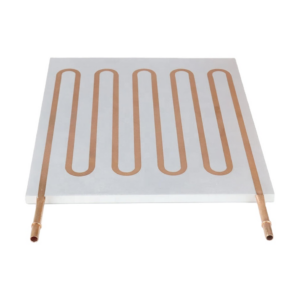
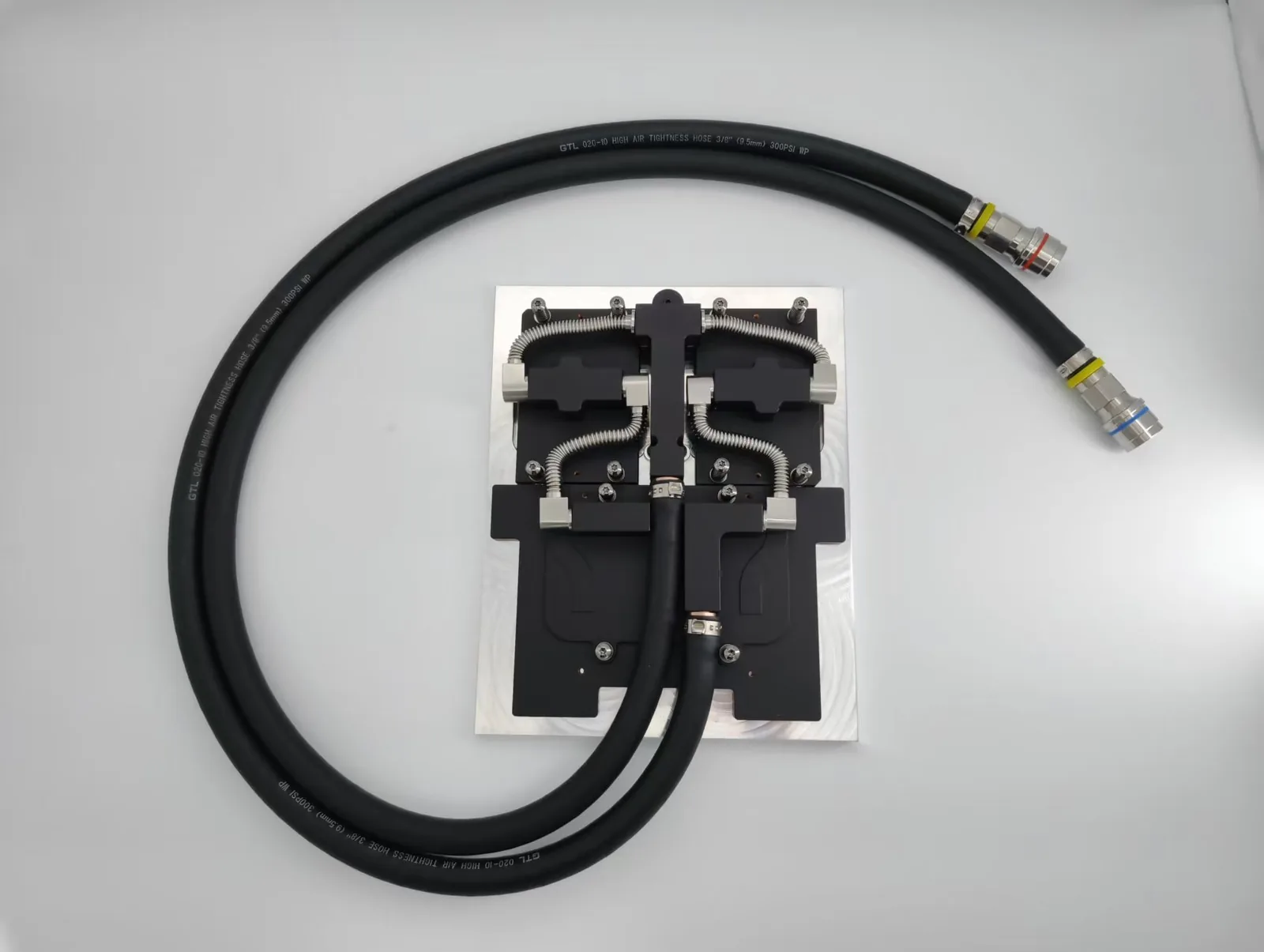
This article provides a comprehensive overview of cold plate testing and validation procedures, including helium leak testing, thermal performance characterization, pressure drop measurement, and accelerated life testing. Engineers will find practical guidelines for setting acceptance criteria, interpreting test data, and ensuring cold plate reliability across automotive, data center, and industrial applications. For an overview of designs and standard kits, see our liquid cold plates page.

Thermal testing and validation transforms a cold plate design from an engineering simulation into a production-qualified product — with standardized test protocols measuring thermal resistance, pressure drop, leak rate, burst pressure, and fatigue life to verify that every unit meets the specifications required for deployment in AI data centers, EV battery packs, and power electronics systems.
Without rigorous validation, even a well-designed cold plate can fail in the field due to manufacturing variability, material inconsistencies, or operating conditions outside the design envelope. ToneCooling’s testing laboratory provides comprehensive validation from prototype through production, ensuring every cold plate performs as specified.
Cold Plate Testing Categories
Cold plate validation encompasses four categories of testing, each addressing different performance and reliability aspects:
| Test Category | Tests Included | Purpose | When Performed |
|---|---|---|---|
| Leak Integrity | Helium leak, pressure decay | Verify zero coolant loss | 100% production |
| Hydraulic Performance | Pressure drop vs. flow, flow distribution | Verify pump compatibility | 100% production + first article |
| Thermal Performance | Thermal resistance, temperature uniformity | Verify cooling capability | First article + periodic |
| Reliability | Burst, fatigue, vibration, corrosion | Verify lifetime performance | First article + qualification |
Helium Leak Testing
Helium leak testing is the most sensitive production leak detection method available, capable of detecting defects as small as 1 μm in brazed joints or weld seams.
Method: The cold plate’s internal channels are evacuated and connected to a helium mass spectrometer. Helium tracer gas is sprayed over the external surfaces. Any helium that penetrates through a defect is detected by the spectrometer, which quantifies the leak rate in mbar·L/s.
Acceptance Criteria: ToneCooling’s standard acceptance criterion is <1×10⁻⁶ mbar·L/s, which ensures zero practical coolant loss over the product’s lifetime. For aerospace and medical applications, tighter criteria of <1×10⁻⁸ mbar·L/s can be specified.
Production Implementation: 100% of ToneCooling’s production cold plates undergo helium leak testing. The test is automated with results logged and linked to the unit’s serial number for full traceability.
Pressure Drop and Flow Testing
Pressure drop testing verifies that the cold plate’s hydraulic resistance matches the design specification, ensuring compatibility with the system’s CDU pump and flow budget.
Test Setup: Treated water or calibrated test fluid is pumped through the cold plate at controlled flow rates while differential pressure is measured between inlet and outlet. The pressure drop vs. flow rate curve (ΔP-Q curve) is generated across the full operating range.
Typical Protocol: Measure pressure drop at 5 flow rates spanning 50–150% of design flow. Plot ΔP-Q curve and verify it falls within the specification band (typically ±10% of design target). For multi-port cold plates, measure flow distribution across all ports to verify balance.
For example, ToneCooling’s NVIDIA GB200 cold plate is rated at 35 ± 5 kPa at 2.5 L/min per its datasheet, and the AMD SP5 cold plate at <3 kPa at 1 LPM.
Thermal Performance Testing
Thermal testing directly measures the cold plate’s ability to remove heat from the target component.
Test Setup: A calibrated heat source (ceramic heater or resistive film heater) simulates the component’s heat output. Thermocouples or RTDs measure temperatures at the heat source surface, cold plate surface, coolant inlet, and coolant outlet. A controlled coolant supply maintains flow rate and inlet temperature at specified setpoints.
Key Metrics:
Thermal Resistance (Rth): Rth = (T_heater – T_coolant_inlet) / Q, where Q is the heat load in watts. Lower Rth means better thermal performance.
Temperature Uniformity: Maximum temperature difference across the cold plate surface under load. Critical for battery cooling plates (target ±2°C) and multi-die GPU modules (target ±3°C).
Thermal Response Time: Time to reach steady-state temperature after load step change. Important for applications with rapid load transients (fast charging, GPU boost cycles).
Burst Pressure Testing
Burst testing determines the maximum pressure the cold plate can withstand before structural failure, providing a safety margin above the operating pressure.
Protocol: Pressurize the cold plate with water at a controlled ramp rate (typically 100 kPa/min) while monitoring for leaks or deformation. Continue until failure. Record the burst pressure and failure mode (joint failure, base material failure, fitting failure).
Acceptance Criteria: Burst pressure must exceed 3× operating pressure. For a cold plate rated at 0.6 MPa operating, burst must exceed 1.8 MPa. ToneCooling’s vacuum-brazed cold plates typically achieve 4–5× operating pressure burst margins.
Accelerated Life Testing
Accelerated life testing validates long-term reliability by subjecting cold plates to conditions more severe than normal operation:
Thermal Cycling: Repeated temperature cycles between -40°C and +85°C (or application-specific range) at 2–4 cycles per hour. 1,000 cycles minimum for automotive applications, 500 cycles for data center applications. Test verifies joint integrity, TIM stability, and dimensional stability.
Pressure Cycling: Repeated pressurization from 0 to maximum operating pressure at 1–2 Hz for 100,000+ cycles. Verifies fatigue resistance of joints, fittings, and base material.
Vibration Testing: Per relevant standards (ISO 16750 for automotive, Telcordia GR-63 for telecom). Random vibration profiles simulate transportation and operational vibration environments. Test verifies that joints, fittings, and mounting features maintain integrity.
Corrosion Testing: Extended exposure to operational coolant at elevated temperature (60–80°C) for 1,000+ hours. Coolant samples are analyzed for dissolved metals to verify corrosion rate is within acceptable limits (<10 ppm/year for copper, <5 ppm/year for aluminum).
ToneCooling Testing Laboratory
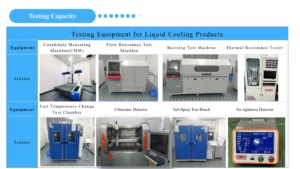
ToneCooling’s in-house testing laboratory is equipped with:
Helium mass spectrometer leak detectors, automated flow test benches, thermal performance test stations with constant temperature/humidity/flow control, burst test rigs rated to 10 MPa, CMM dimensional inspection with ±2 μm accuracy, and metallographic preparation and microscopy for joint quality analysis.
All test equipment is calibrated annually with traceability to national standards. Test results are digitally recorded and archived for the product’s warranty period.
Frequently Asked Questions
What testing is performed on every production unit?
Every ToneCooling cold plate undergoes helium leak testing and flow resistance testing as standard production tests. Visual inspection and dimensional spot checks are also performed on every unit. Thermal performance testing and destructive tests are performed on first article samples and periodically during production runs.
Can customers witness testing at ToneCooling’s facility?
Yes. ToneCooling welcomes customer visits to our testing laboratory for first article inspection, production audit, and test witnessing. We provide full test reports with raw data for all validation and qualification activities.
What test reports do you provide with each shipment?
Standard shipment documentation includes helium leak test certificate (pass/fail per unit), flow resistance test data, material certificates, and dimensional inspection report. Additional test data (thermal performance, burst test, life test) is provided for qualification programs.
How do you handle test failures?
Units that fail any production test are quarantined and subjected to root cause analysis. If the defect is repairable (e.g., a fitting seal issue), the unit is reworked and retested. If not repairable (e.g., braze joint defect), the unit is scrapped. All failures are logged in our quality system for trend analysis and corrective action.
Related Articles
- Cold Plate Manufacturing Process: Complete Guide (Pillar)
- Vacuum Brazing for Cold Plates
- Custom Liquid Cold Plates: Engineering Guide
For industry standards and best practices, refer to ASHRAE thermal guidelines.
Get a Custom Thermal Solution from ToneCooling
ToneCooling is a professional liquid cooling solution provider specializing in custom cold plates, AIO coolers, and advanced thermal management systems. With ISO 9001 quality management and our own manufacturing facility in Huizhou, China, we deliver prototype samples typically within 4–6 weeks. Contact ToneCooling today for a free consultation and quote. An engineer reviews every RFQ and replies by email with next steps.
Industry References & Standards
Why Choose ToneCooling for Cold Plate Thermal Testing Validation
Engineering review and prototype planning are based on the project requirements. Custom prototype lead time is normally 4–6 weeks after drawing approval and order confirmation; confirm the production schedule in the quotation.
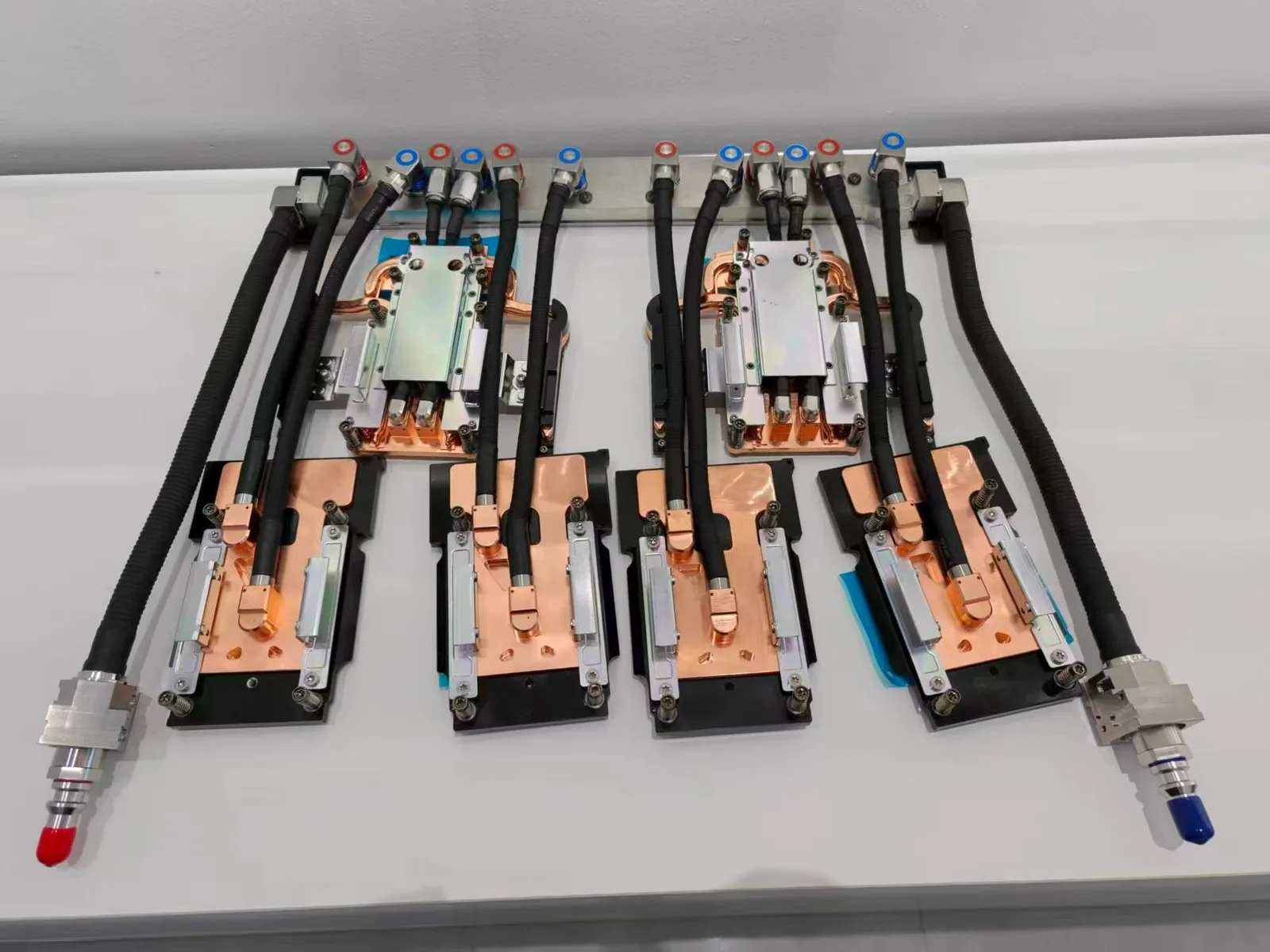
Building AI servers? See our standard GB300 4G+2C cold plate kit and GB200 cold plate kit, both supplied to published datasheets.
Need a Custom Liquid Cold Plate?
ToneCooling engineers review your drawings and requirements and reply by email with next steps.
Last updated: 2026-10-02
Frequently Asked Questions
What tests are required to validate cold plate thermal performance?
Cold plate thermal validation includes thermal resistance measurement (junction-to-coolant), pressure drop characterization across the operating flow range, temperature uniformity mapping under representative heat loads, and transient thermal response testing. Results are compared against CFD predictions to verify design compliance.
How is helium leak testing performed on cold plates?
Helium leak testing uses a mass spectrometer detector with the cold plate pressurized internally with helium gas. The test detects leak rates as small as 1e-9 atm cc/sec, identifying micro-cracks or braze joint defects invisible to pressure decay testing. This is the industry standard for automotive, aerospace, and data center cold plate qualification.
What acceptance criteria should engineers set for cold plate testing?
Typical acceptance criteria include thermal resistance within plus or minus 10% of design specification, zero helium leaks above 1e-8 atm cc/sec, pressure drop within 15% of CFD prediction at rated flow, and burst pressure exceeding 4x maximum operating pressure. Criteria should be documented in a product specification before production.