

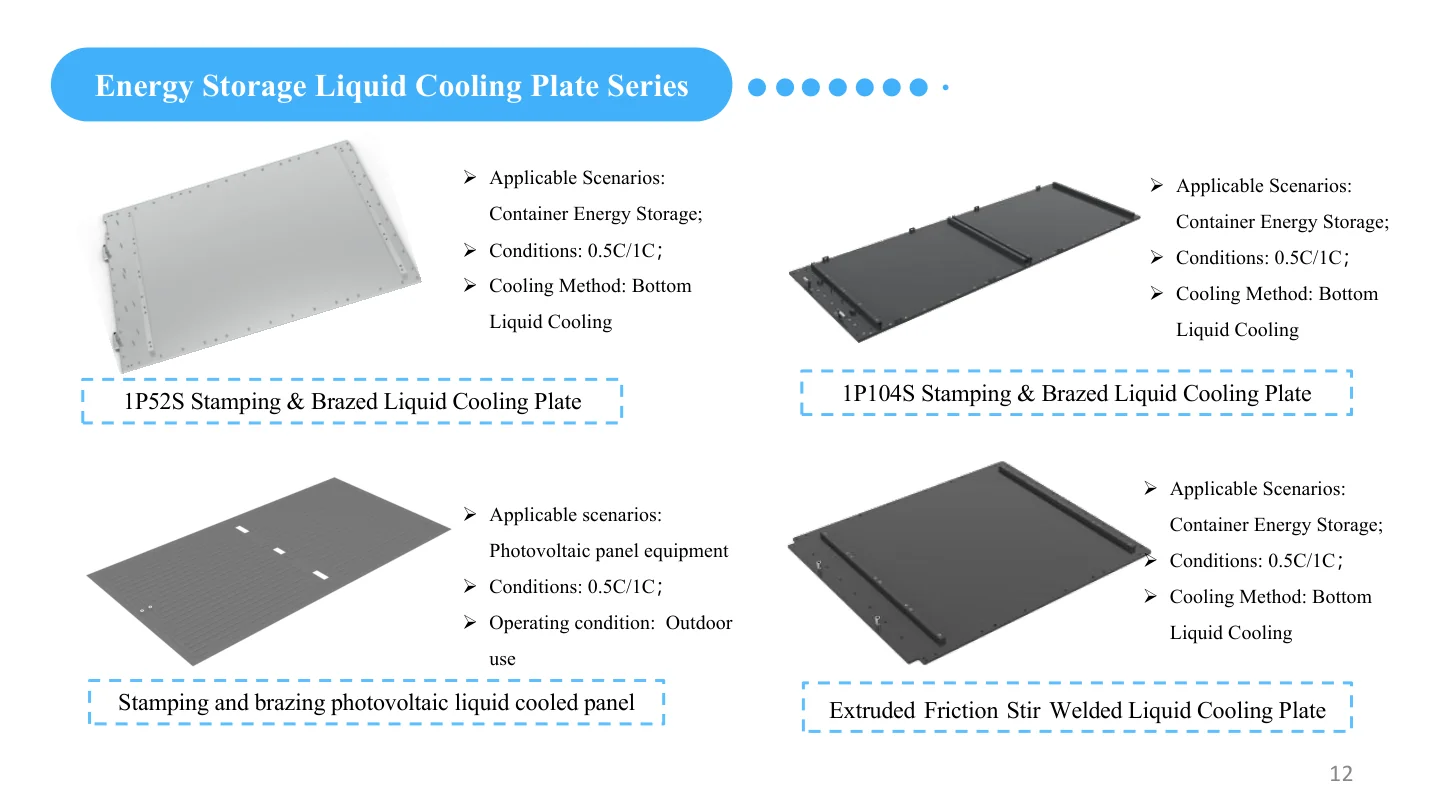
A custom liquid cold plate is a precision-engineered heat exchanger that transfers thermal energy from high-power electronic components to circulating liquid coolant. Unlike off-the-shelf heat sinks, custom cold plates are designed to match your exact thermal profile — TDP budget, mechanical envelope, mounting interface, pressure drop limit, and coolant chemistry — delivering 10–25× better heat transfer coefficients than forced-air solutions. At ToneCooling, we manufacture custom liquid cold plates using friction stir welding (FSW), vacuum brazing, and CNC-machined channels for applications spanning data center GPU cooling, EV battery thermal management, IGBT power modules, and defense electronics.
“For any component dissipating above 150 W/cm², a custom liquid cold plate is no longer optional — it’s the only path to maintaining junction temperatures below the manufacturer’s reliability threshold.”
— Dr. Kelvin Chen, Chief Thermal Engineer, ToneCooling
What Is Custom Liquid Cold Plate?
Liquid cooling delivers 3,500× greater volumetric heat capacity than air, making it the definitive solution for modern high-density electronics. As chip power densities climb — NVIDIA’s GB200 generates over 2,700 W per module, and next-generation ASICs push toward 3,000 W+ — forced-air cooling simply cannot maintain safe junction temperatures without impractical fan speeds and duct sizes.

Key advantages of custom liquid cold plates over air-cooled heat sinks include higher thermal conductivity (water’s volumetric heat capacity is roughly 3,500× that of air), dramatically smaller form factors (typically 30–50% volume reduction), lower acoustic noise (no high-speed fans), and the ability to maintain tighter junction temperature control across large surface areas — essential for battery cell uniformity in EV packs. Water-glycol mixtures at just 1–2 L/min can remove over 500 W from a single cold plate, a feat requiring massive fin arrays and high-CFM blowers with air cooling.
Key Industries and Applications
Custom liquid cold plates serve four major growth sectors, each with distinct thermal and mechanical requirements.
Data centers and AI computing rely on direct-to-chip cold plates to cool GPU and ASIC accelerators where 70–75% of server heat can be captured at the chip level. Electric vehicle thermal management requires battery cooling plates that maintain cell temperatures within a 20–40°C window with ±2°C uniformity. Power electronics including IGBT modules, SiC/GaN converters, and solar inverters demand cold plates rated for extreme temperature cycling (thousands of on/off cycles per day). And defense and RF systems need ruggedized cold plates meeting MIL-STD requirements under harsh operating conditions.
The Custom Cold Plate Design Process
Every effective custom cold plate begins with thermal mapping — defining the heat source locations, power dissipation per component, and acceptable junction temperatures. This data drives the initial flow channel concept.

Next comes channel layout design, balancing thermal resistance against pressure drop. Serpentine channels offer simplicity and even distribution; multi-pass parallel configurations reduce pressure drop at the expense of slightly less uniform temperatures. Advanced approaches like topology-optimized channels use computational methods to generate bionic-inspired flow paths that outperform conventional geometries by 15–25% in thermal resistance.
Key design parameters include channel width and depth (typical range: 1–5 mm width, 2–10 mm depth), fin pitch and height for brazed-fin configurations, inlet/outlet port positioning relative to heat sources, and the number of flow passes. Microchannel designs (channel width below 1 mm) achieve exceptional thermal performance but require careful filtration and higher-pressure coolant loops.
Materials Selection: Aluminum vs. Copper Cold Plates
Aluminum (6061-T6 or 3003) is the default choice for approximately 75% of custom cold plate applications due to its favorable strength-to-weight ratio, excellent machinability, and lower cost. Aluminum cold plates typically achieve thermal conductivity of 167 W/m·K and are ideal for data centers, EV batteries, and general industrial cooling.
Choose copper (C110 or C101) when heat flux exceeds 100 W/cm², when CTE matching with substrates is critical (power electronics), or when maximum thermal conductivity (385 W/m·K) justifies the higher material cost. ToneCooling’s TLP-bonded copper cold plates are specifically designed for IGBT and power electronics applications requiring long-term reliability under aggressive thermal cycling.
Flow Channel Optimization
Channel design is where cold plate engineering becomes both art and science. The fundamental tradeoff is thermal resistance versus pressure drop: narrower, more numerous channels improve heat transfer but increase the pump power required.
Key design parameters include channel width and depth (typical range: 1–5 mm width, 2–10 mm depth), fin pitch and height for brazed-fin configurations, inlet/outlet port positioning relative to heat sources, and the number of flow passes. For parallel-channel manifold designs, proper flow balancing is critical — maldistribution above 10% between channels can create local hot spots that negate the benefits of liquid cooling entirely.
Advanced Manufacturing Methods
Friction Stir Welding (FSW)

Friction stir welding has transformed cold plate manufacturing over the past decade. This solid-state joining process uses a rotating tool to plasticize and merge aluminum workpieces without melting, producing joints that retain 95%+ of base material strength with zero porosity. A typical 300 × 400 mm cold plate can be FSW-sealed in under 10 minutes.
For cold plate production, FSW enables welding of cover plates over CNC-machined flow channels in minutes rather than hours. The process eliminates brazing flux contamination, requires no vacuum furnace infrastructure, and produces repeatable, leak-free seals at significantly lower cost than vacuum brazing — often 50–70% less expensive for medium-to-large plate sizes. ToneCooling operates multiple FSW production lines capable of welding plates up to 1,200 mm in length.
Vacuum Brazing
Vacuum brazing remains the gold standard for cold plates requiring internal fin structures. In this process, precision-stamped aluminum or copper fins are assembled between plates, loaded into a vacuum furnace, and brazed at temperatures around 600°C (aluminum) or 800°C (copper) using filler alloys that flow by capillary action. The result is a monolithic structure with hundreds of internal fins providing enormous surface area for heat transfer.
Vacuum-brazed cold plates routinely achieve thermal resistances below 0.02°C·cm²/W, making them ideal for high-power-density applications. The process also allows complex multi-layer configurations and integrated manifolds.
CNC Machining + TLP Bonding
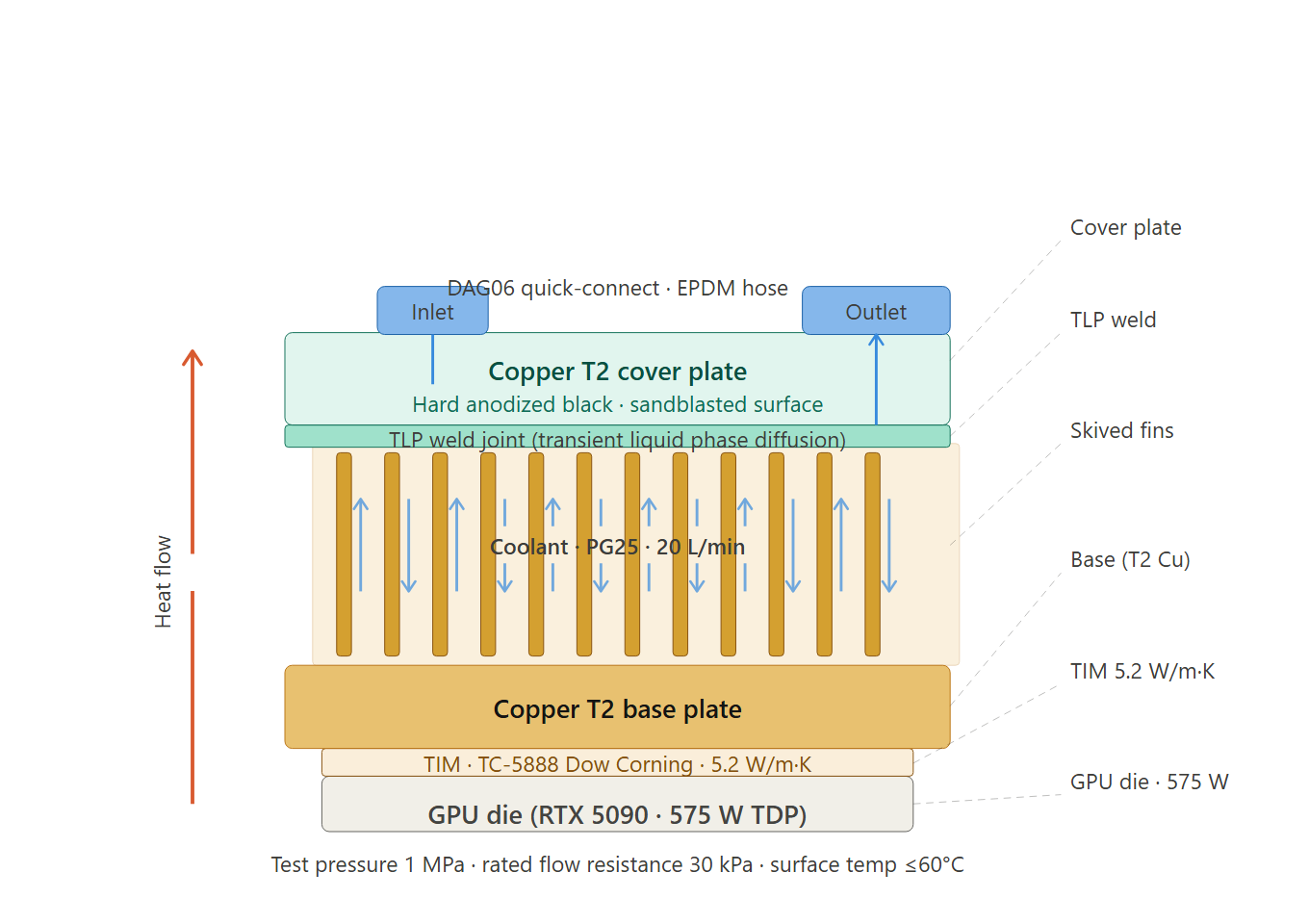
For copper cold plates serving power electronics, CNC machining combined with transient liquid phase (TLP) bonding delivers the ultimate thermal performance. TLP creates a bond joint with a melting point higher than the original process temperature — meaning the joint won’t re-melt during subsequent thermal cycling. This is critical for IGBT modules and SiC devices that experience thousands of power cycles per day.
Application-Specific Solutions
EV Battery Cold Plates
Electric vehicle battery packs present a unique thermal management challenge: large surface areas, strict weight budgets, and the critical requirement to maintain cell-to-cell temperature uniformity within ±2–3°C across the entire pack. Custom EV battery cold plates typically use aluminum construction with serpentine or multi-pass channels positioned between cell modules, with plate lengths often reaching 1–2 meters.
Data Center and Direct-to-Chip Cooling

The AI infrastructure buildout has made direct-to-chip liquid cooling a necessity rather than a luxury. Modern GPU accelerators dissipate 700–1,000 W per chip, with next-generation modules pushing past 2,700 W. Direct-to-chip cold plates mount directly on the processor package, capturing 70–75% of server heat at the source — reducing total data center cooling energy by 30–40% compared to traditional air cooling.
Power Electronics Cooling
IGBT modules, SiC/GaN power devices, and industrial converters generate extreme heat flux concentrated in small areas — often 100–200 W/cm² at the die level. Cold plates for these applications must handle rapid thermal cycling without fatigue failure at solder or braze joints. Copper construction dominates this segment due to the CTE match with common substrate materials.
From Concept to Production: Working with ToneCooling
Our engineering process is structured to move OEM projects from initial concept to qualified production efficiently. Here is our proven 5-step workflow:
Step 1: Requirements Review — Share your thermal requirements (TDP, target junction temperature), mechanical constraints (envelope, mounting), and coolant specifications. A STEP/PDF file with your system layout accelerates this step. Contact our engineering team to start.
Step 2: Concept Design & CFD Simulation — Our thermal engineers generate 2–3 channel layout options with CFD-validated performance predictions within 3–5 business days.
Step 3: Prototype Manufacturing — First prototypes ship within 4–6 weeks from design approval. Our in-house FSW, CNC, and brazing capabilities eliminate outsourcing delays.
Step 4: Validation Testing — We perform leak testing (helium or pressure decay), thermal performance verification, and pressure drop measurement on every prototype.
Step 5: Production Ramp — Once validated, we scale to volume production with full traceability under our ISO 9001 quality system. Minimum order quantity starts at just 5 pieces.
How to Choose the Right Cold Plate Manufacturer
Selecting a cold plate manufacturer requires evaluating in-house capabilities, quality certifications, and engineering depth. Look for manufacturers that offer multiple joining technologies (FSW, brazing, TLP), in-house CNC machining, and thermal simulation support — this combination ensures design flexibility and faster iteration. ISO 9001 certification is essential for production traceability. ToneCooling meets all these criteria with vertically integrated manufacturing at our Huizhou, Guangdong facility.
| Parameter | ToneCooling Specification |
|---|---|
| Material | Copper T2 / 6061 aluminum |
| Welding method | Transient liquid phase diffusion welding |
| Test pressure | 1 MPa (helium leak + nitrogen hold) |
| Working medium | PG25 (25% propylene glycol) |
| Custom design | Yes — DXF/STEP input accepted |
Frequently Asked Questions
What is the difference between a cold plate and a heat sink?
A heat sink uses air (natural or forced convection) to dissipate heat through extended surface area (fins). A cold plate uses circulating liquid coolant through internal channels to absorb and transport heat. Cold plates achieve 10–25× better heat transfer coefficients than air-cooled heat sinks, making them essential for high-power applications above 20–30 W/cm².
How do I choose between aluminum and copper cold plates?
Choose aluminum for most applications where cost, weight, and corrosion resistance matter — data centers, EV batteries, and general industrial cooling. Choose copper when heat flux exceeds 100 W/cm², when CTE matching with substrates is critical (power electronics), or when maximum thermal conductivity justifies the higher material cost.
What is Friction Stir Welding and why is it preferred for cold plates?
Friction Stir Welding is a solid-state joining process that produces leak-free, high-strength seals without melting the base material. It’s preferred for cold plates because it eliminates brazing flux contamination, achieves 95%+ base material strength at the joint, processes faster than vacuum brazing, and costs significantly less for medium-to-large plates.
How long does it take to get a custom cold plate prototype?
At ToneCooling, prototype cold plates typically ship within 4–6 weeks from design approval. Initial thermal design proposals are delivered within 24 hours of receiving your requirements. Rush prototypes can be accommodated on a case-by-case basis.
What coolants are compatible with aluminum cold plates?
Aluminum cold plates are compatible with deionized water, water-glycol mixtures (most common: 50/50 ethylene glycol), and dielectric fluids. Avoid untreated tap water (mineral deposits and galvanic corrosion risk) and coolants containing chlorides or sulfates. Always verify coolant chemistry compatibility with your system materials.
What is the minimum order quantity for custom cold plates?
ToneCooling accepts orders starting at 5 pieces for custom cold plates. This low MOQ allows OEM engineers to validate designs in real system testing before committing to production volumes.
How does a liquid cold plate work?
A liquid cold plate works by circulating coolant (typically water-glycol) through internal channels machined or formed into a metal plate. Heat-generating components are mounted on the plate surface. Thermal energy conducts through the plate wall into the coolant, which carries it away to an external heat rejection system (radiator, CDU, or chiller). The continuous coolant flow maintains stable component temperatures even under varying power loads.
What is the cost of a custom liquid cold plate?
Custom liquid cold plate costs vary widely based on material (aluminum vs. copper), size, channel complexity, joining method, and volume. Typical ranges: aluminum FSW plates start around $50–150 per unit at production volumes; vacuum-brazed plates with internal fins range $100–400; copper TLP-bonded plates for power electronics may reach $200–800. Contact ToneCooling for a project-specific quotation.
Can cold plates be used for battery thermal management?
Yes — cold plates are the dominant thermal management solution for EV battery packs and energy storage systems (BESS). They maintain cell-to-cell temperature uniformity within ±2–3°C, which is critical for battery longevity, safety, and consistent performance. Aluminum construction with serpentine or multi-pass channels is the most common configuration for battery cold plates.
Related Articles
- FSW vs Brazing vs Welding: Liquid Cold Plate Joining Comparison
- Direct-to-Chip Liquid Cold Plate for GPU/CPU: Integration & ΔP Budget Guide
- IGBT Liquid Cold Plate Design Notes: Flatness, Pitch & Leak Testing
- Microchannel Liquid Cold Plate Design Guide
- Cold Plate Manifold Flow Balancing: Parallel Channel Design Guide
Last updated: March 2026
Custom Liquid Cold Plate is a high-performance thermal management solution engineered by ToneCooling for demanding applications.
For industry standards and best practices, refer to ASHRAE thermal guidelines.
Get a Custom Thermal Solution from ToneCooling
ToneCooling is a professional liquid cooling solution provider specializing in custom cold plates, AIO coolers, and advanced thermal management systems. With ISO 9001:2015 certified manufacturing, we deliver prototype samples within 2–4 weeks. Contact ToneCooling today for a free consultation and quote — we respond within 24 business hours.
Industry References & Standards
Need a Custom Liquid Cold Plate?
ToneCooling engineers design thermal solutions for your specific requirements. Get a detailed response within 24-48 hours.
Oem Liquid Cold Plate Manufacturer is a critical component in modern thermal management. ToneCooling engineers this solution for AI servers, data centers, EV batteries, and power electronics requiring high-performance liquid cooling.
Oem Liquid Cold Plate Manufacturer: Key Specifications
When evaluating oem liquid cold plate manufacturer, engineers consider thermal resistance, pressure drop, flow rate, and material compatibility. ToneCooling provides detailed specs for every oem liquid cold plate manufacturer design, backed by CFD simulation and testing.
Why Choose ToneCooling for Oem Liquid Cold Plate Manufacturer
ToneCooling has manufactured over 50,000 oem liquid cold plate manufacturer units for global OEM customers. Our oem liquid cold plate manufacturer production features vacuum brazing furnaces below 10⁻⁴ mbar, FSW machines with ≤0.02mm flatness, and helium leak detection at 10⁻⁸ mbar·L/s. Every oem liquid cold plate manufacturer undergoes 100% pressure testing at 25 bar.
Our engineering team provides free oem liquid cold plate manufacturer design consultation, CFD simulation, and rapid prototyping in 7-14 days. Production oem liquid cold plate manufacturer orders ship in 4-6 weeks under ISO 9001:2015 quality management.
Need a Custom Liquid Cold Plate?
ToneCooling engineers design thermal solutions for your requirements. Response within 24-48 hours.
Need a Custom Liquid Cold Plate?
Tell us your thermal requirements. Engineering team responds within 48 hours with design proposal and quotation.
Request a Quote →MOQ 5 pcs • Prototype 7-15 days • ISO 9001 Certified