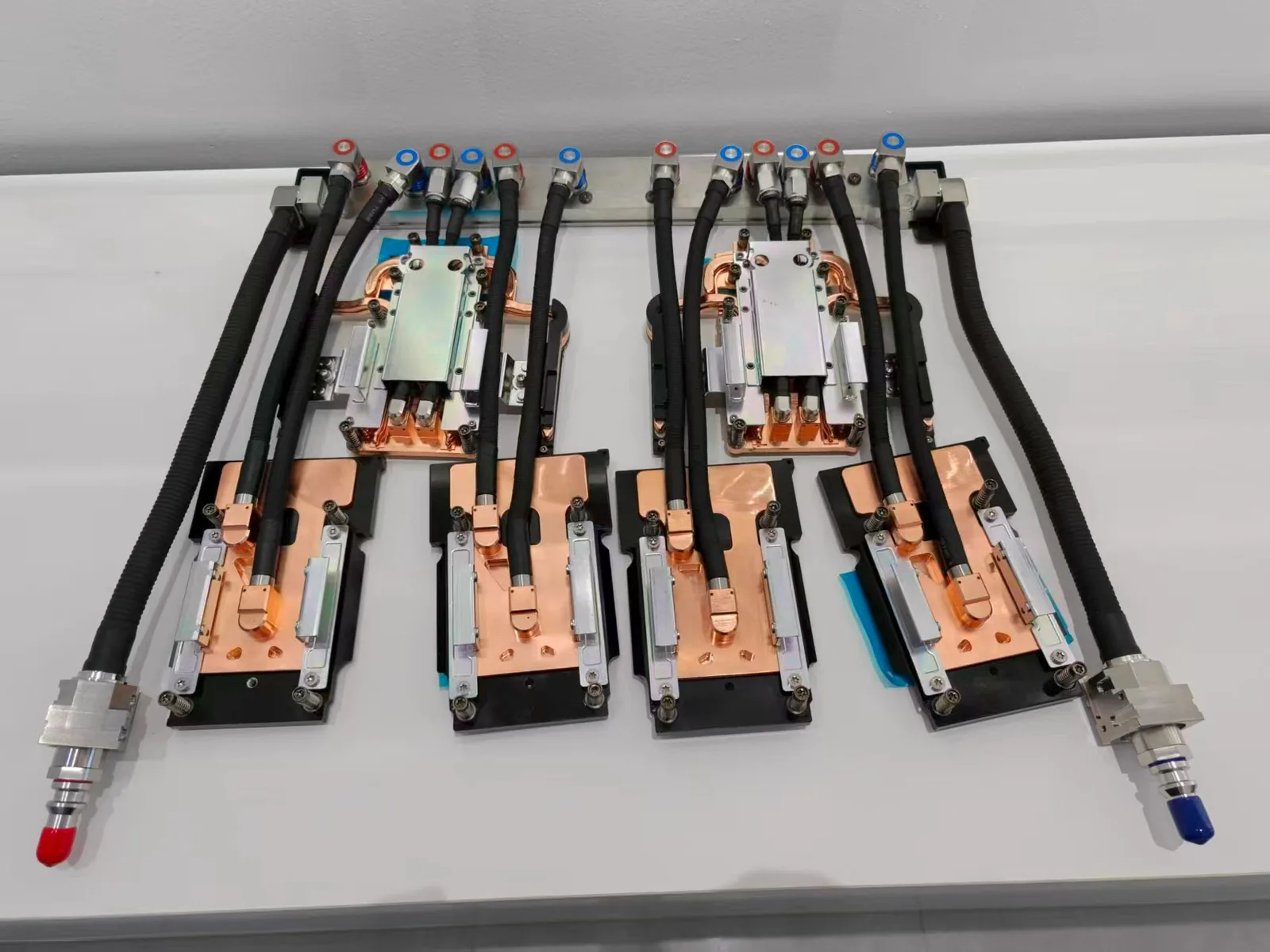
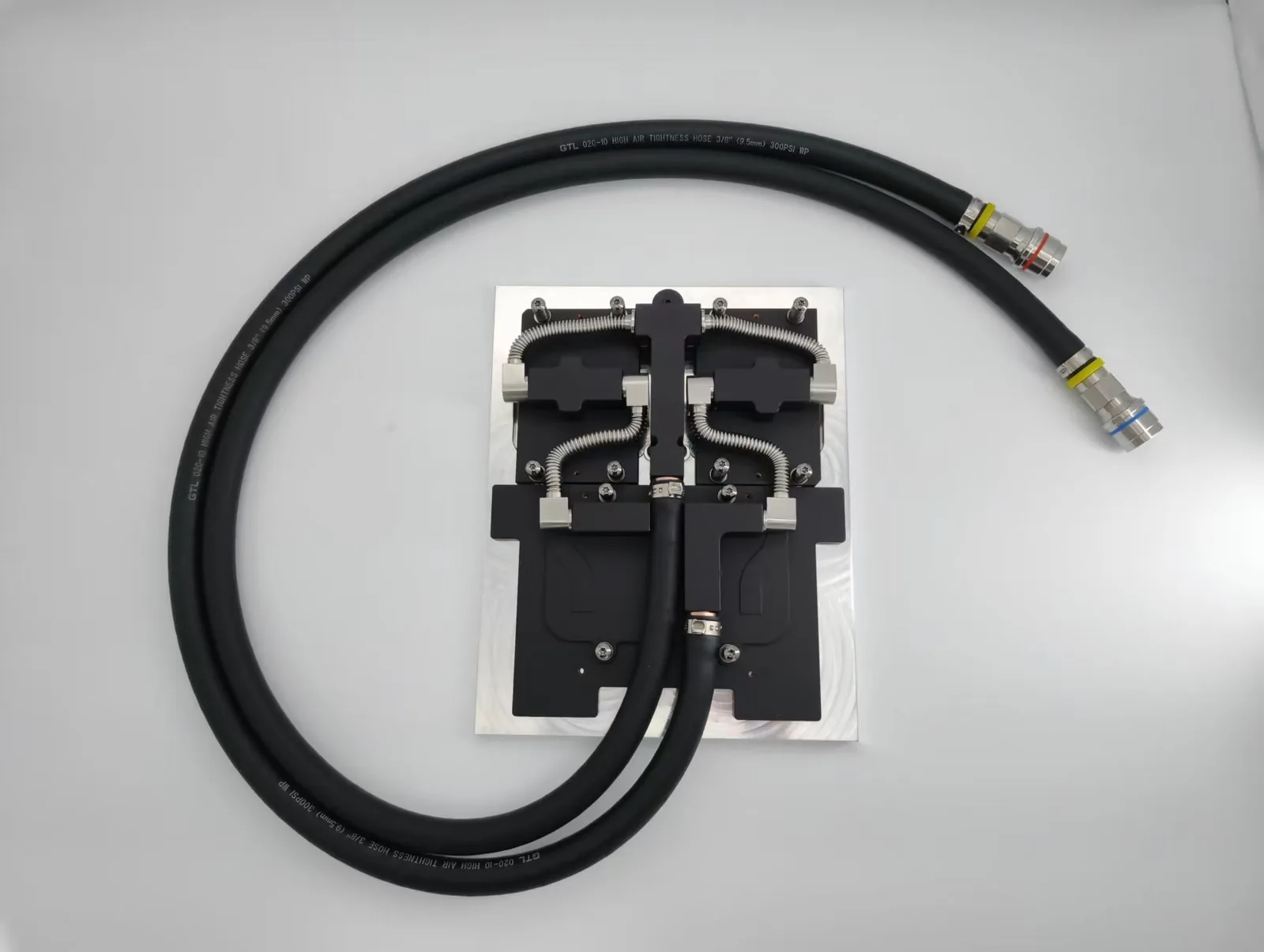
Intel Eagle Stream servers with high-TDP Xeon processors use liquid cold plates when air cooling cannot hold CPU temperatures; ToneCooling’s dual-CPU reference design handles 700 W per CPU. Each server cold plate is built to the customer’s board and coolant loop.
For an overview of designs and standard kits, see our liquid cold plates page.
When your servers experience performance throttling due to CPU overheating, traditional air cooling can no longer meet the high-power demands of the Eagle Stream platform. Our liquid cold plate, specifically designed for the Intel Eagle Stream platform, achieves stable heat dissipation of 350W per CPU, totaling 700W, through TLP welding process and optimized flow channel design, ensuring CPU die temperature <53°C and providing reliable thermal protection for high-performance servers.


Is Your Server Facing These Thermal Challenges?
- 🔥 High CPU Temperatures – Traditional cooling solutions cannot meet the 700W thermal demand of the Eagle Stream platform
- 🔥 Frequent Performance Throttling – Inadequate cooling prevents full utilization of computing performance
- 🔥 Temperature Imbalance – Large temperature differences between dual CPUs affect system stability
- 🔥 Reliability Concerns – High-temperature operation shortens equipment service life
If these issues are affecting your business, continue reading to learn about our professional solution
Intel Eagle Stream Liquid Cold Plate: Redefining Server Cooling Standards
Core Technical Advantages
Traditional Solution Pain Points | Our Solution |
|---|---|
❌ Insufficient cooling capacity | ✅ Total 700W Heat Dissipation – Perfectly supports 350W per CPU |
❌ Inaccurate temperature control | ✅ Precise Temperature Control – CPU die<53°C, HBM die<51°C |
❌ Poor process reliability | ✅ TLP Welding – Zero leakage risk, long-term stable operation |
❌ Poor temperature uniformity | ✅ Excellent Temperature Uniformity – Dual CPU temperature difference<2°C |
Key Performance Parameters
- Cooling Capacity: 350W per CPU, total 700W
- Temperature Control: CPU die<53°C, HBM die<51°C
- Temperature Uniformity: Dual CPU temperature difference<2°C
- Fluid Performance: 16kPa@1LPM flow resistance, 1-1.25LPM flow range
- Structural Dimensions: 118×78×10mm compact design
- Materials & Process: Copper alloy substrate, TLP welding, 25% propylene glycol solution
Design Specifications Detailed
- Inlet Temperature: Maintains excellent cooling performance even at 40°C operating condition
- Flow Optimization: 1-1.25LPM optimal flow range, balancing cooling and energy consumption
- Compact Design: 118×78×10mm dimensions, perfectly adapt to server space constraints
Answers to Customers’ Most Concerned Technical Questions (FAQ)
Q1: How does this liquid cold plate ensure the temperature difference between dual CPUs is controlled within 2°C?
A: Guaranteed through three major technologies:
- Symmetrical Flow Channel Design: Ensures completely consistent flow distribution to dual CPUs
- Optimized Thermal Distribution: Precisely calculated flow channel layout achieves uniform heat dissipation
- Advanced Welding Process: TLP welding ensures consistent interface thermal resistance
Q2: What are the special advantages of TLP welding process in server liquid cooling applications?
A: TLP welding compared to traditional processes offers:
- Higher Reliability: Metallurgical bonding, eliminates leakage risk
- Lower Thermal Resistance: Improves heat dissipation efficiency by 5-8%
- Longer Lifespan: Withstands thermal cycling, service life exceeds 8 years
Q3: How to ensure CPU temperature does not exceed limits with 40°C inlet water temperature?
A: Achieved through:
- Efficient Heat Exchange Design: Optimized fin structure and flow channel layout
- Material Advantages: Copper alloy substrate provides excellent thermal conductivity
- Process Precision: TLP welding ensures minimal interface thermal resistance
Q4: Does it support other brands of server platforms?
A: We provide:
- Customization Services: Tailor-made for different server platforms
- Rapid Response: New platform liquid cold plate development cycle only 4-6 weeks
- Compatibility Assurance: Professional team provides compatibility verification

For industry standards and best practices, refer to Intel Platform.
Overview
Does ToneCooling offer OEM and ODM services?
Yes. ToneCooling provides full OEM and ODM services including custom design, prototyping, thermal simulation, and volume production. We serve customers in North America, Europe, and Asia-Pacific with engineering support and samples within 4–6 weeks.
What materials are used in ToneCooling liquid cold plates?
ToneCooling manufactures cold plates in aluminum (6061/6063), copper (C1100/C1020), and stainless steel. Aluminum FSW cold plates are ideal for high-volume EV and industrial applications, while copper cold plates provide the highest thermal conductivity for high heat flux electronics.
What is the typical lead time for custom cold plates?
Prototype samples are delivered within 4–6 weeks. Production orders typically ship within 6–8 weeks after sample approval. An engineer reviews every RFQ and replies by email with next steps.
Get a Custom Thermal Solution from ToneCooling
ToneCooling is a professional liquid cooling solution provider specializing in custom cold plates, AIO coolers, and advanced thermal management systems. With ISO 9001 quality management and our own manufacturing facility in Huizhou, China, we deliver prototype samples typically within 4–6 weeks. Contact ToneCooling today for a free consultation and quote. An engineer reviews every RFQ and replies by email with next steps.
Industry References & Standards
Why Choose ToneCooling for Intel Eagle Stream Liquid Cold Plate
Engineering review and prototype planning are based on the project requirements. Custom prototype lead time is normally 4–6 weeks after drawing approval and order confirmation; confirm the production schedule in the quotation.
Need a Custom Liquid Cold Plate?
ToneCooling engineers review your drawings and requirements and reply by email with next steps.
Last updated: 2026-10-02