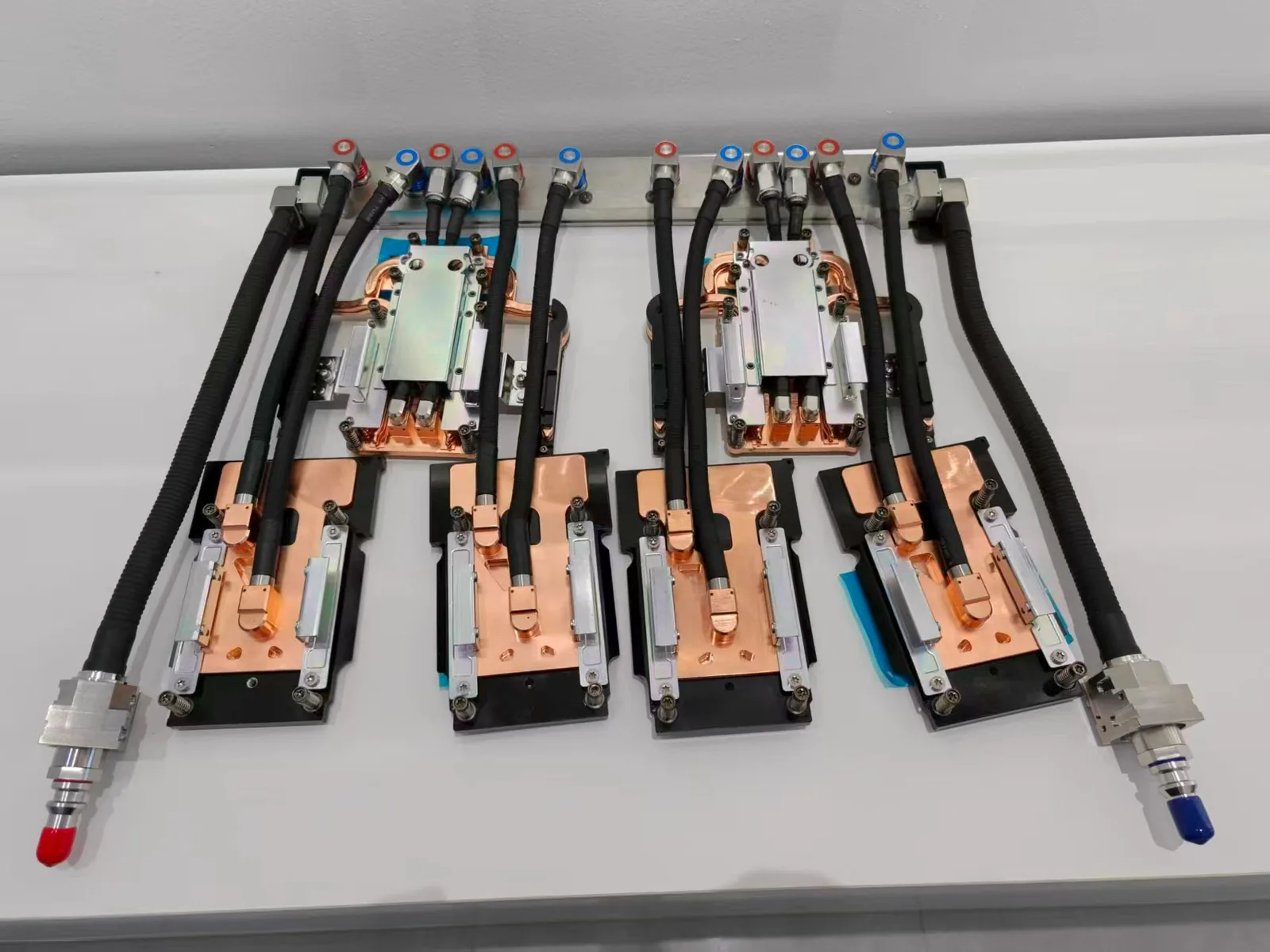
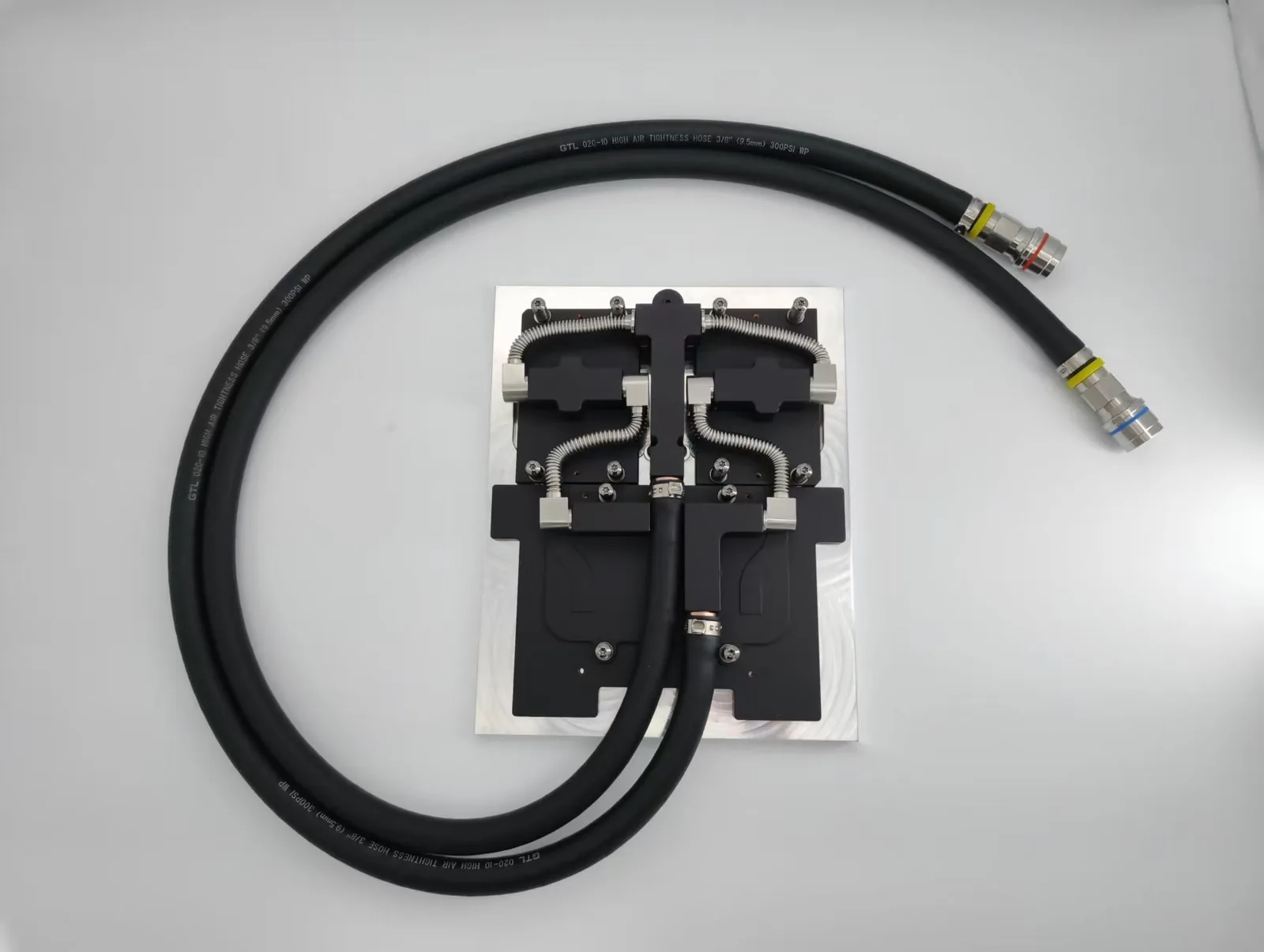
A dual-channel cold plate for Intel Eagle Stream servers uses two independent coolant paths, so the CPUs stay cooled if one path is interrupted. ToneCooling designs fault-tolerant custom server cold plates; our Eagle Stream reference designs cover dual CPUs from 350 W to 700 W each.
For an overview of designs and standard kits, see our liquid cold plates page.
When server liquid cooling systems face single-channel failure risks, traditional solutions mean system downtime. Our dual-channel liquid cold plate specifically designed for the Intel Eagle Stream platform, through innovative independent dual-channel design, ensures CPU die temperature <53°C even during single-channel operation, providing unprecedented cooling reliability for critical business operations.

Is Your Critical Business Server Facing These Risks?
- ⚠️ Single Point of Failure Risk – Traditional single-channel cold plate failures cause system overheating and downtime
- ⚠️ High Maintenance Costs – Liquid cooling system maintenance requires shutdown, affecting business continuity
- ⚠️ Insufficient Cooling Redundancy – Lack of backup cooling capability raises system reliability concerns
- ⚠️ Unstable Temperature Control – CPU temperatures may exceed limits during flow fluctuations
If these risks concern you, continue reading about our revolutionary solution
Intel Eagle Stream Dual-Channel Liquid Cold Plate: Redefining Server Cooling Reliability
Core Technological Breakthrough
Traditional Single-Channel Cold Plate | Our Dual-Channel Solution |
|---|---|
❌ Single point of failure risk | ✅ Dual Protection – Independent dual channels, single-channel failure doesn’t affect cooling |
❌ Maintenance requires shutdown | ✅ Online Maintenance – System continues running during single-channel maintenance |
❌ Lack of redundancy design | ✅ Complete Redundancy – Either channel independently meets full cooling requirements |
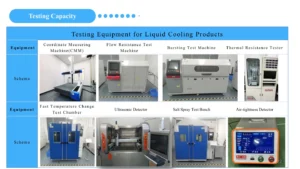
❌ Limited reliability | ✅ Ultimate Reliability – TLP welding, zero leakage risk |
Key Performance Parameters
- Cooling Capacity: 350W per CPU, total 700W
- Redundant Design: Single-channel operation still ensures CPU die<53°C
- Flow Resistance: 6kPa@1LPM ultra-low flow resistance
- Structural Dimensions: 118×78×16.5mm optimized space design
- Materials & Process: Copper alloy substrate, TLP welding, 25% propylene glycol solution
- Operating Conditions: 40°C inlet temperature, 1LPM flow rate
Unique Design Value
- Dual Independent Channels: Two physically isolated cooling systems
- Smart Flow Distribution: Automatically balances dual-channel flow, optimizing cooling efficiency
- Automatic Failure Switching: Automatically adjusts flow distribution upon channel failure detection
Answers to Customers’ Most Concerned Technical Questions (FAQ)
Q1: How does the dual-channel design ensure cooling protection during single-channel failure?
A: Through triple technical guarantees:
- Independent Channel Design: Physically isolated dual channels, failures don’t affect each other
- Excess Cooling Capacity: Single-channel design margin sufficient to handle full cooling load
- Intelligent Temperature Control Algorithm: Real-time monitoring and flow distribution adjustment
Q2: What is the practical significance of 6kPa@1LPM ultra-low flow resistance?
A: Ultra-low flow resistance means:
- Lower Pumping Power: Reduces overall system energy consumption
- Higher System Compatibility: Adapts to more existing cooling systems
- More Stable Flow: Reduces system pressure fluctuations
Q3: What special advantages does TLP welding process offer in dual-channel design?
A: TLP welding ensures:
- Zero Leakage Risk: Metallurgical bonding, prevents cross-leakage between channels
- Long-Term Reliability: Withstands thermal cycling, service life exceeds 8 years
- Excellent Consistency: Ensures highly consistent cooling performance between channels
Q4: Will this design increase system complexity?
A: On the contrary, our design offers:
- Standardized Interfaces: Completely consistent installation with single-channel cold plates
- Intelligent Control: Automatic failure detection and flow adjustment, no manual intervention needed
- Simplified Maintenance: Modular design, easier maintenance
Q5: How to calculate ROI for investing in dual-channel liquid cold plates?
A: From a Total Cost of Ownership perspective:
- Avoid Downtime Losses: Single-channel failure doesn’t require shutdown, ensures business continuity
- Reduce Maintenance Costs: Online maintenance reduces service interruption time
- Enhance System Value: High reliability improves overall product competitiveness
- Typical ROI: Recovers additional investment in 12-18 months
For industry standards and best practices, refer to Intel Platform.
Frequently Asked Questions
What is a dual-channel cold plate?
A dual-channel cold plate has two independent coolant paths through the same plate, each with its own inlet and outlet, so the chip stays cooled if one path loses flow. It is used where a single coolant path would be a single point of failure.
Why use a dual-channel cold plate on Intel Eagle Stream servers?
A dual-channel cold plate gives Intel Eagle Stream servers fault-tolerant cooling for high-power Xeon CPUs running critical workloads. If one loop needs maintenance or fails, the second loop keeps removing heat, reducing the risk of throttling or unplanned shutdown.
Does a dual-channel cold plate increase pressure drop?
A dual-channel cold plate does not necessarily increase pressure drop, because coolant is split between two paths; the actual value depends on channel geometry and the flow rate in each path. It is verified with CFD simulation and flow testing for each design.
Can ToneCooling build a custom dual-channel cold plate for my server platform?
Yes. ToneCooling designs custom dual-channel and single-channel server liquid cold plates for Intel and AMD platforms; these are made to order, with performance confirmed at quotation. An engineer reviews every RFQ and replies by email with next steps.
Get a Custom Thermal Solution from ToneCooling
ToneCooling is a professional liquid cooling solution provider specializing in custom cold plates, AIO coolers, and advanced thermal management systems. With ISO 9001 quality management and our own manufacturing facility in Huizhou, China, we deliver prototype samples typically within 4–6 weeks. Contact ToneCooling today for a free consultation and quote. An engineer reviews every RFQ and replies by email with next steps.
Industry References & Standards
Why Choose ToneCooling for Intel Eagle Stream Liquid Cold Plate
Engineering review and prototype planning are based on the project requirements. Custom prototype lead time is normally 4–6 weeks after drawing approval and order confirmation; confirm the production schedule in the quotation.
Need a Custom Liquid Cold Plate?
ToneCooling engineers review your drawings and requirements and reply by email with next steps.
Last updated: 2026-10-02