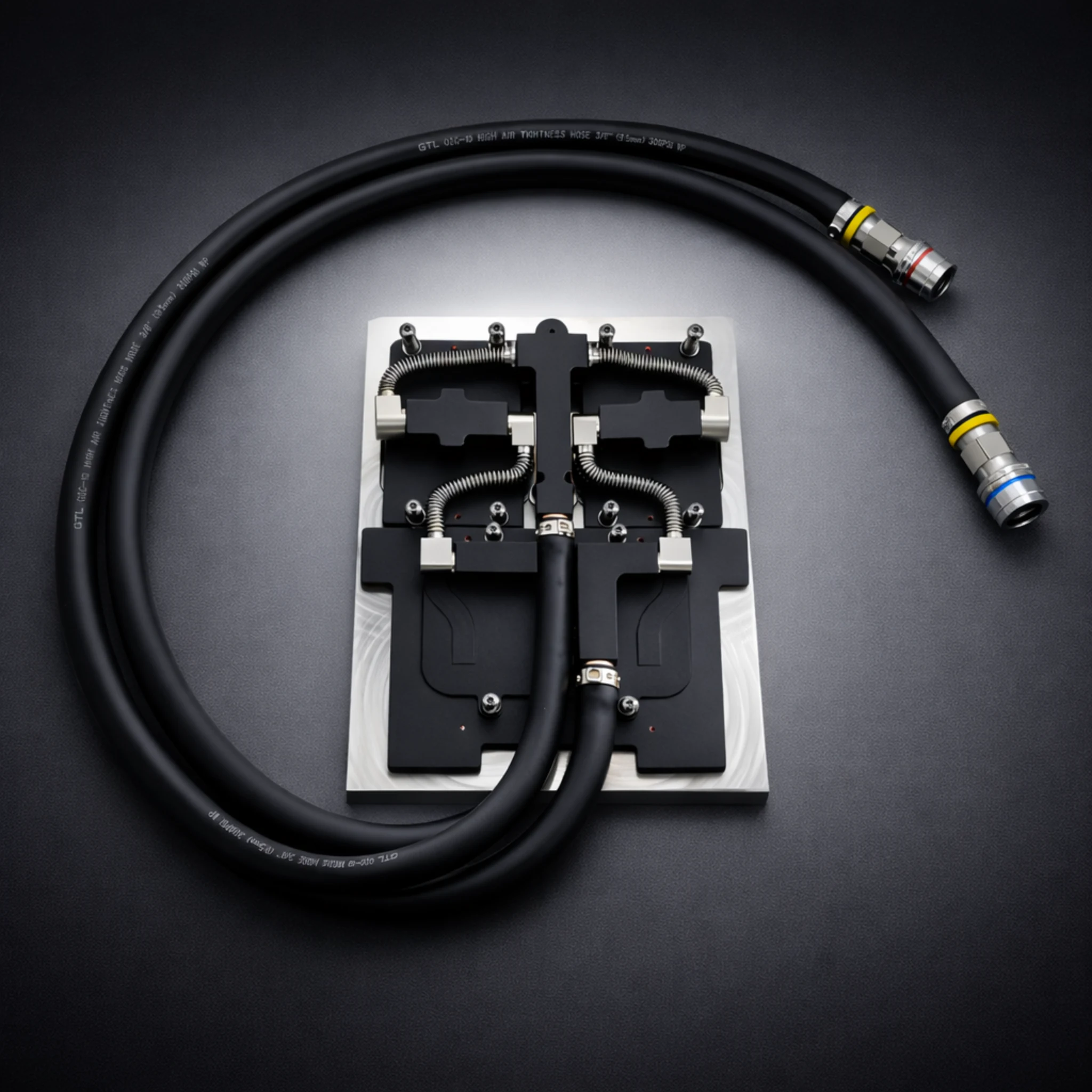
This article examines how direct liquid cooling (DLC) technology improves Power Usage Effectiveness (PUE) in data centers hosting high-density AI and HPC workloads. Topics include cold plate versus immersion cooling comparisons, facility water integration, heat reuse strategies, and real-world PUE benchmarks. ToneCooling provides engineering guidance for deploying liquid cooling infrastructure at scale.
Data center liquid cooling is a critical component in modern thermal management systems. ToneCooling specializes in custom data center liquid cooling solutions for OEM and industrial applications. This article covers key aspects of data center liquid cooling technology, design considerations, and manufacturing processes.
Data center liquid cooling Overview
As a leading manufacturer of data center liquid cooling products, ToneCooling offers comprehensive engineering support for data center liquid cooling projects. Our data center liquid cooling solutions are designed for maximum thermal performance, reliability, and cost-effectiveness in demanding applications.
This guide on Data center pue optimization liquid cooling provides key insights for engineers and procurement teams. This comprehensive guide covers data center pue optimization solutions for industrial and OEM applications. ToneCooling provides expert insights on data center pue optimization technology and implementation.
This article examines how direct liquid cooling (DLC) technology improves Power Usage Effectiveness (PUE) in data centers hosting high-density AI and HPC workloads. Topics include cold plate versus immersion cooling comparisons, facility water integration, heat reuse strategies, and real-world PUE benchmarks. ToneCooling provides engineering guidance for deploying liquid cooling infrastructure at scale.
For industry standards and best practices, refer to ASHRAE.
| Parameter | ToneCooling Specification |
|---|---|
| Material | Copper T2 / 6061 aluminum |
| Welding method | Transient liquid phase diffusion welding |
| Test pressure | 1 MPa (helium leak + nitrogen hold) |
| Working medium | PG25 (25% propylene glycol) |
| Custom design | Yes — DXF/STEP input accepted |
Frequently Asked Questions — Data center pue optimization liquid cooling
Does ToneCooling offer OEM and ODM services? — Data center pue optimization liquid cooling
Yes. ToneCooling provides full OEM and ODM services including custom design, prototyping, thermal simulation, and volume production. We serve customers in North America, Europe, and Asia-Pacific with engineering support and samples within 2–4 weeks.
What materials are used in ToneCooling liquid cold plates? — Data center pue optimization liquid cooling
ToneCooling manufactures cold plates in aluminum (6061/6063), copper (C1100/C1020), and stainless steel. Aluminum FSW cold plates are ideal for high-volume EV and industrial applications, while copper brazed cold plates provide maximum thermal conductivity (398 W/m·K) for high heat flux electronics.
What is the typical lead time for custom cold plates?
Prototype samples are delivered within 2–4 weeks. Production orders typically ship within 4–6 weeks after sample approval. ToneCooling responds to all quote requests within 24 business hours.
Get a Custom Thermal Solution from ToneCooling
ToneCooling is a professional liquid cooling solution provider specializing in custom cold plates, AIO coolers, and advanced thermal management systems. With ISO 9001:2015 certified manufacturing, we deliver prototype samples within 2–4 weeks. Contact ToneCooling today for a free consultation and quote — we respond within 24 business hours.
About ToneCooling
ToneCooling is a professional OEM manufacturer specializing in custom liquid cooling solutions, cold plates, and thermal management systems. With over 10 years of experience serving global OEM customers, we deliver high-performance cooling solutions for servers, data centers, electric vehicles, energy storage systems, and industrial applications. Our engineering team provides end-to-end support from thermal simulation and design optimization to prototype development and mass production. All products are manufactured in our ISO-certified facilities with rigorous quality control. Contact ToneCooling for custom cooling solutions tailored to your project requirements.
Why Choose ToneCooling for Data center liquid cooling
ToneCooling provides professional data center liquid cooling solutions with custom designs, fast prototyping, and competitive OEM pricing. Our data center liquid cooling products serve data center, EV, industrial, and semiconductor applications worldwide.
Contact ToneCooling for custom data center liquid cooling solutions. Visit tonecooling.com or email info@tonecooling.com. US: +1 (832) 720-7542. Response within 24 business hours.
Industry References & Standards
Need a Custom Liquid Cold Plate?
Data Center Pue Optimization Liquid is a high-performance thermal management solution engineered by ToneCooling for demanding applications.
ToneCooling engineers design thermal solutions for your specific requirements. Get an engineering RFQ review based on your uploaded requirements.
Data Center Pue Liquid Cooling Optimization is a critical component in modern thermal management. ToneCooling engineers this solution for AI servers, data centers, EV batteries, and power electronics requiring high-performance liquid cooling.
Data Center Pue Liquid Cooling Optimization: Key Specifications
When evaluating data center pue liquid cooling optimization, engineers consider thermal resistance, pressure drop, flow rate, and material compatibility. ToneCooling provides detailed specs for every data center pue liquid cooling optimization design, backed by CFD simulation and testing.
Why Choose ToneCooling for Data Center Pue Liquid Cooling Optimization
ToneCooling has manufactured over 50,000 data center pue liquid cooling optimization units for global OEM customers. Our data center pue liquid cooling optimization production features vacuum brazing furnaces below 10⁻⁴ mbar, FSW machines with ≤0.02mm flatness, and helium leak detection at 10⁻⁸ mbar·L/s. Every data center pue liquid cooling optimization undergoes 100% pressure testing at 25 bar.
Our engineering team provides free data center pue liquid cooling optimization design consultation, CFD simulation, and rapid prototyping in 7-14 days. Production data center pue liquid cooling optimization orders ship in 4-6 weeks under ISO 9001:2015 quality management.
Need a Custom Liquid Cold Plate?
ToneCooling engineers design thermal solutions for your requirements. Response within 24-48 hours.
Last Updated: 2026-04-08
DR Kevin, Thermal Engineer, ToneCooling
Frequently Asked Questions
How does liquid cooling improve data center PUE?
Direct liquid cooling (DLC) reduces PUE by eliminating energy-intensive CRAC/CRAH units and enabling higher coolant temperatures (35-45C) suitable for free cooling or heat reuse. Facilities using RDHx typically achieve PUE of 1.2-1.3, while full direct-to-chip deployments can reach PUE below 1.10, compared to 1.5-1.8 for traditional air-cooled data centers.
What is the difference between cold plate cooling and immersion cooling for data centers?
Cold plate (direct-to-chip) cooling targets specific high-heat components like GPUs and CPUs using server-mounted cold plates connected to facility water. Immersion cooling submerges entire servers in dielectric fluid. Cold plates integrate with existing infrastructure more easily while immersion handles higher total rack densities but requires specialized tanks and fluids.
Can liquid cooling be retrofitted into existing air-cooled data centers?
Yes, rear-door heat exchangers (RDHx) and in-row cooling units can be deployed without major facility modifications. Direct-to-chip cold plate solutions require adding coolant distribution units (CDUs) and manifold piping but work within existing rack and row layouts. ToneCooling provides engineering assessment for hybrid liquid/air cooling retrofits.