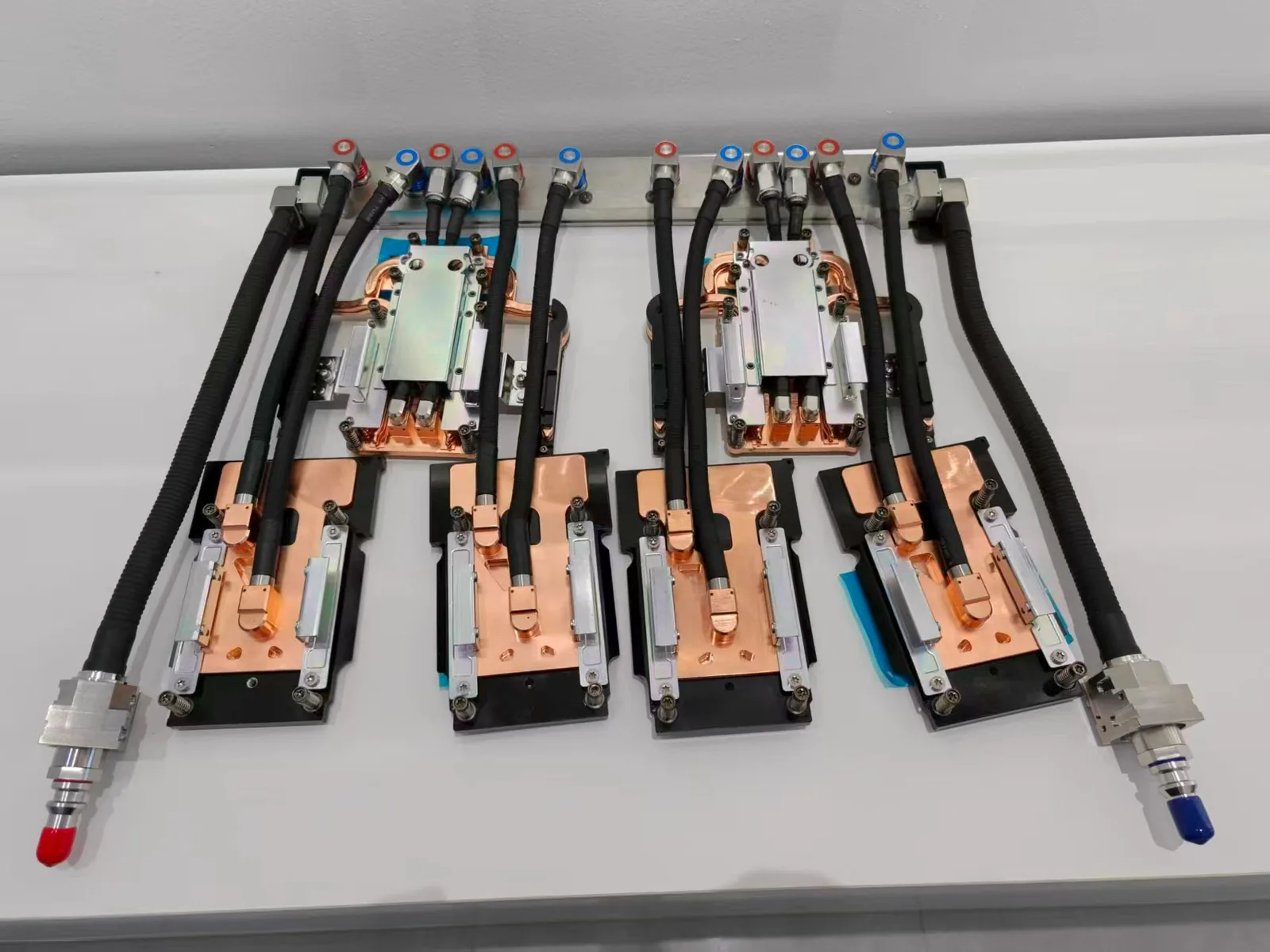
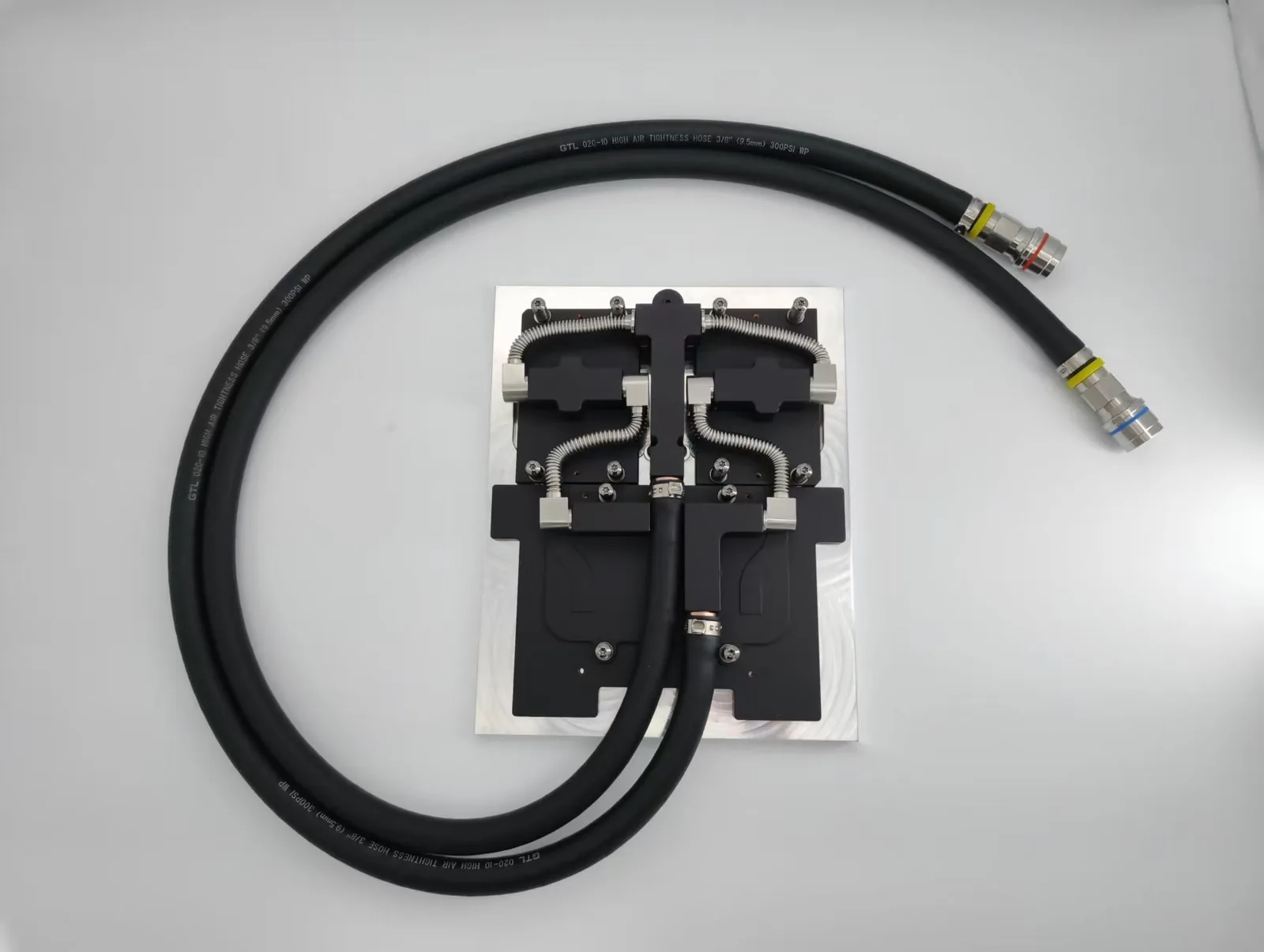
A high-power air cooling plate can still cool 10 kW IGBT modules in wind converters when the fin design, airflow and base spreading are optimized, avoiding a liquid loop. ToneCooling designs air and liquid cooling plates for power converters.
For an overview of designs and standard kits, see our liquid cold plates page.

Is Your Wind Turbine Converter Facing These Cooling Pain Points?
- ✅ IGBT temperature consistently exceeds limits – Chip temperatures reach 161.8°C, far above the 135°C safety threshold.
- ✅ Severe power generation efficiency loss – Derating operation due to overheating significantly reduces electricity output.
- ✅ Sharp decrease in equipment lifespan – Long-term high-temperature operation causes premature IGBT failure.
- ✅ Rising maintenance costs – Frequent replacement of damaged modules and continuous downtime losses.
If you identify with any of the above issues, you need to keep reading —
The New Generation Wind Cooling Plate Solution: A Technical Breakthrough from “Overheat Alarm” to “Cool Operation”
Core Technical Advantages Comparison Table
Traditional Solution Pain Points | Our Solution |
|---|---|
❌ IGBT temperature severely at 161.8°C | ✅ Precise Temperature Control – Ensures chip temperature remains stable within a safe range. |
❌ Ineffective dissipation of 10kW heat load | ✅ 10,728W Dissipation Capacity – Designed specifically for 12 IGBT modules. |
❌ High system flow resistance and energy consumption | ✅ Efficient Fluid Design – Only 0.63bar flow resistance, 20L/min flow rate. |
❌ Poor adaptability and compatibility | ✅ Flexible Customization – Adapts to various IGBT layouts and converter structures. |
Key Performance Parameters
- Heat Dissipation Capacity: 10,728W total heat load (529W + 365W) × 12 IGBTs
- Operating Conditions: 50°C inlet water temperature, 53% Ethylene Glycol solution
- Fluid Performance: 20L/min flow rate, 0.63±0.05bar ultra-low flow resistance
- Structural Dimensions: 636×378×16mm compact design
Answers to Top 5 Customer Concerns (FAQ)
Q1: How can I determine if my wind power project needs this high-power liquid cooling solution?
A: Upgrading is strongly recommended when:
- Measured IGBT temperature consistently exceeds the 135°C safety limit.
- The converter frequently triggers derating protection due to temperature issues.
- Planning to develop or upgrade converters rated above 6MW.
- Pursuing higher system reliability and longer equipment lifespan.
Q2: What are the specific advantages of using a 53% Ethylene Glycol solution?
A: This is the standard choice in the wind industry, offering excellent anti-freeze performance (adapts to low-temperature environments), anti-corrosion properties (protects system components), and thermal stability (ensures long-term reliable operation).
Q3: What is the practical value of the low 0.63bar flow resistance design?
A: Low flow resistance means reduced pumping power requirements, directly lowering system energy consumption while also reducing pressure demands on the piping system, enhancing overall reliability.
Q4: Can it be adapted to our specific IGBT brand and layout?
A: Absolutely. We provide fully customized services, offering targeted optimization design based on the IGBT model, quantity, installation method, and the internal space of your converter.

For industry standards and best practices, refer to ASHRAE thermal guidelines.
Overview
Does ToneCooling offer OEM and ODM services?
Yes. ToneCooling provides full OEM and ODM services including custom design, prototyping, thermal simulation, and volume production. We serve customers in North America, Europe, and Asia-Pacific with engineering support and samples within 4–6 weeks.
What materials are used in ToneCooling liquid cold plates?
ToneCooling manufactures cold plates in aluminum (6061/6063), copper (C1100/C1020), and stainless steel. Aluminum FSW cold plates are ideal for high-volume EV and industrial applications, while copper cold plates provide the highest thermal conductivity for high heat flux electronics.
What is the typical lead time for custom cold plates?
Prototype samples are delivered within 4–6 weeks. Production orders typically ship within 6–8 weeks after sample approval. An engineer reviews every RFQ and replies by email with next steps.
Get a Custom Thermal Solution from ToneCooling
ToneCooling is a professional liquid cooling solution provider specializing in custom cold plates, AIO coolers, and advanced thermal management systems. With ISO 9001 quality management and our own manufacturing facility in Huizhou, China, we deliver prototype samples typically within 4–6 weeks. Contact ToneCooling today for a free consultation and quote. An engineer reviews every RFQ and replies by email with next steps.
Industry References & Standards
Why Choose ToneCooling for IGBT Liquid Cold Plate
Engineering review and prototype planning are based on the project requirements. Custom prototype lead time is normally 4–6 weeks after drawing approval and order confirmation; confirm the production schedule in the quotation.
Need a Custom Liquid Cold Plate?
ToneCooling engineers review your drawings and requirements and reply by email with next steps.
Last updated: 2026-10-02