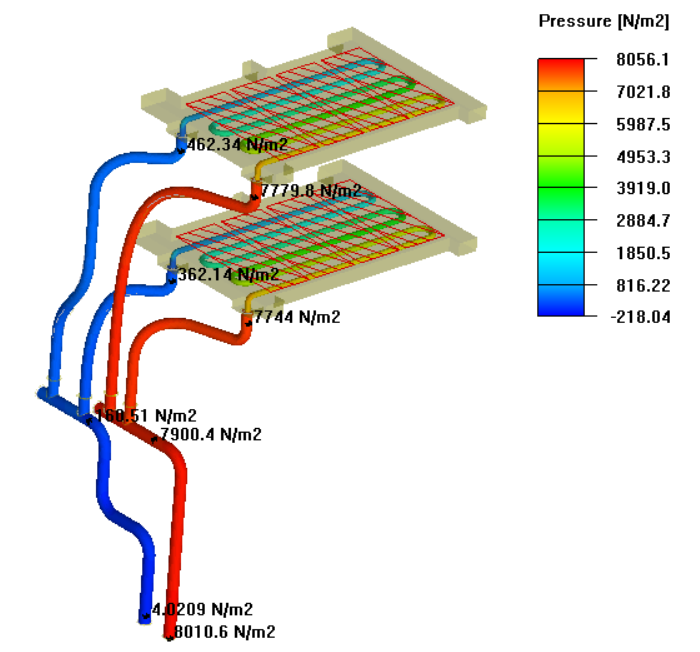


Cold Plate Immersion Liquid Cooling is a high-performance thermal management solution engineered by ToneCooling for demanding applications.
Meta: This article deeply compares cold plate liquid cooling and immersion cooling — covering working principles, cooling efficiency, cost, maintenance, coolant choices, hybrid strategies and selection guidance for AI-era data centers.
What Is Cold Plate Immersion Liquid Cooling?
Modern data centers are under pressure. AI training clusters, dense GPU servers, and persistent inferencing workloads have driven per-socket power well beyond levels where conventional air cooling is effective. When processors consistently draw hundreds to thousands of watts, fans and CRAC units alone cannot prevent throttling, increased latency and reduced hardware life. That reality forces operators to make a strategic choice once they commit to liquid cooling:
Should they adopt cold plate liquid cooling (direct-to-chip) that targets hotspots precisely, or shift to immersion cooling which submerges servers for whole-system thermal uniformity?
This guide untangles both approaches. It compares the two technologies across physical principles, efficiency, cost, deployment complexity and operational considerations — providing a practical selection framework for data center architects, operators, and procurement teams.
Technical Principles: Indirect Contact vs Direct Immersion — Cold plate liquid cooling
Cold Plate Liquid Cooling: Precision, Targeted Heat Extraction

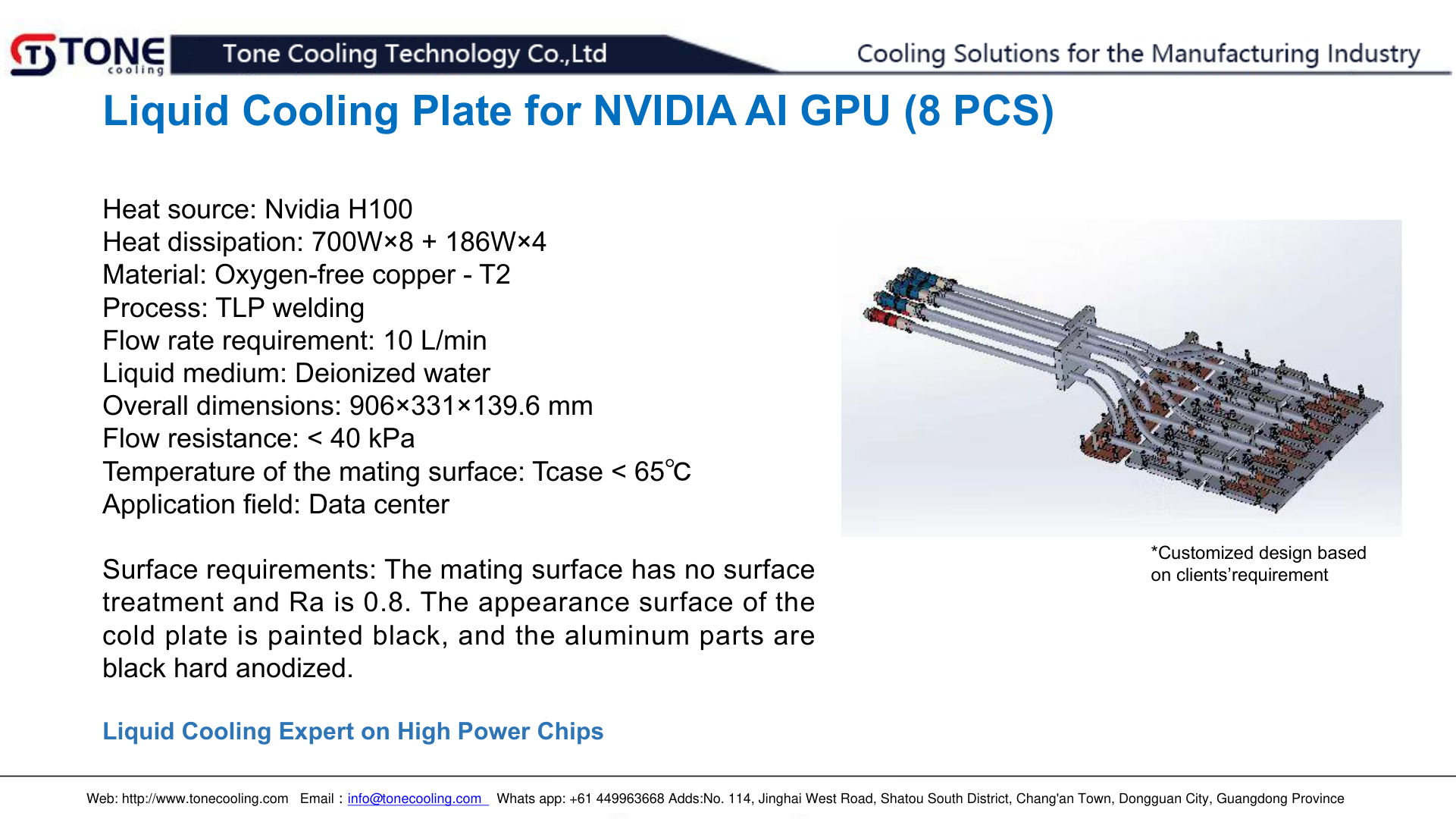
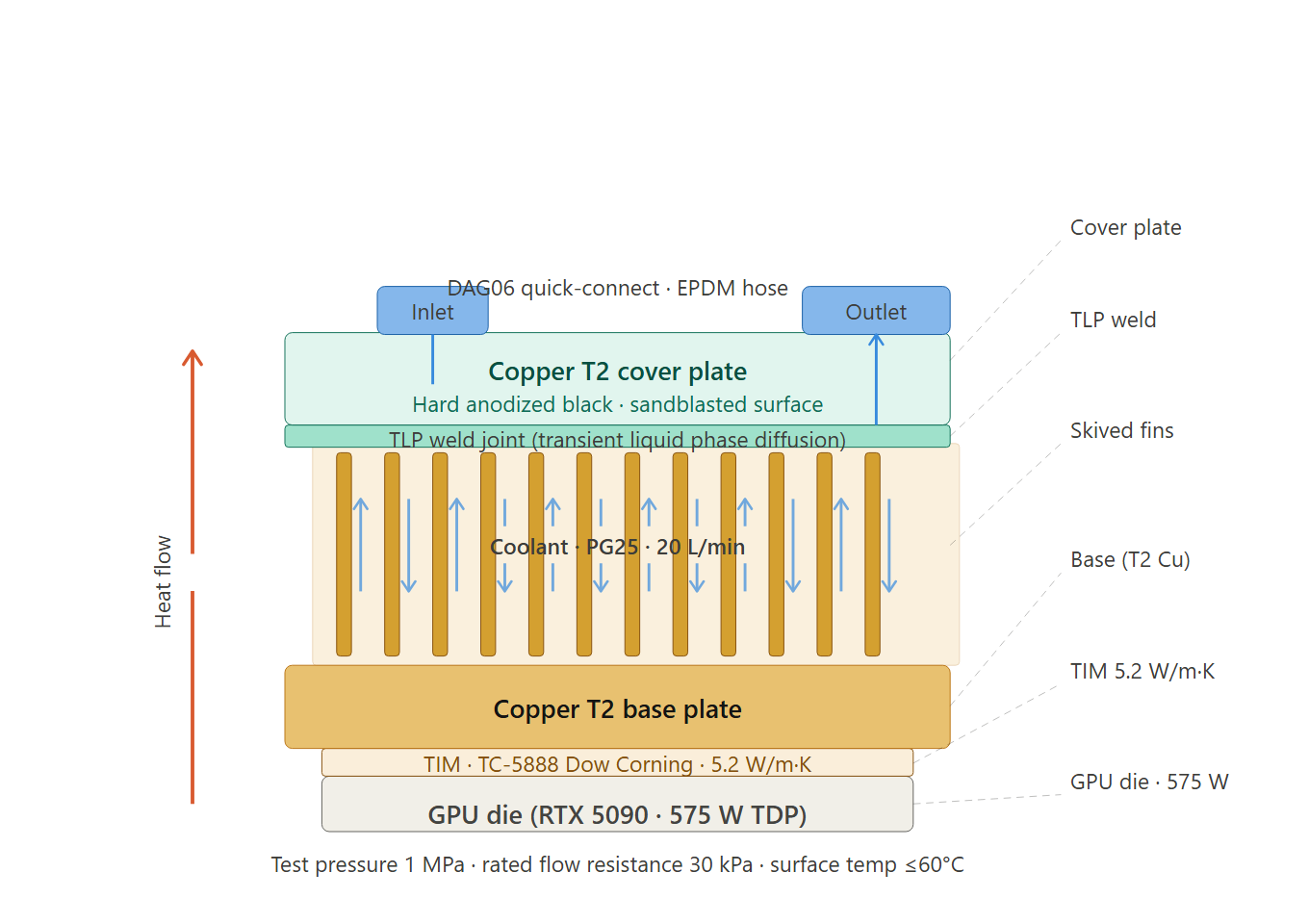
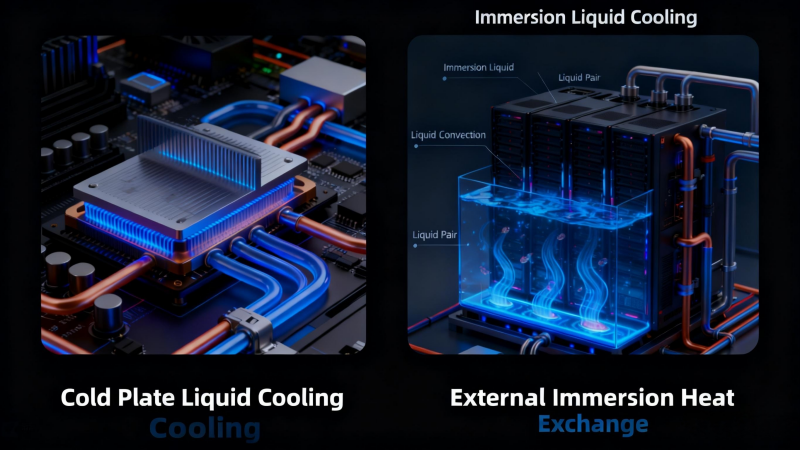
Cold plate liquid cooling (often called direct-to-chip cooling) uses engineered metal plates thermally bonded to high-heat components (CPUs, GPUs, VRMs). These plates contain internal channels that route coolant across high-flux regions. The warmed fluid is pumped to a Cooling Distribution Unit (CDU) or rack-level heat exchanger where heat is rejected to a central plant, dry cooler, or cooling tower.
Core components: liquid cold plate, quick-disconnect fittings, pump, CDU (coolant conditioning and distribution), piping and external heat exchanger.
Analogy: like attaching a precision heat patch to the hottest chip areas and circulating coolant to carry heat away.
Immersion Cooling: Whole-System Submersion for Omnidirectional Heat Removal — Cold plate liquid cooling

Immersion cooling places entire server boards or complete servers into dielectric fluids. There are two primary immersion modalities:
- Single-phase immersion: coolant remains liquid; circulation and exchangers move heat away.
- Two-phase immersion: coolant boils at hotspots, vapor rises, condenses in a heat exchanger and returns as liquid — leveraging phase change for extreme heat transfer.
Core components: immersion tanks, dielectric coolant (mineral oil, synthetic esters or fluorinated fluids), pumps/condensers (in two-phase), and tank infrastructure (containment, handling rigs).
Analogy: like bathing entire servers in a temperature-stable, heat-absorbing bath — eliminating essentially all air-side thermal resistance.
Eight Dimensions That Decide Your Choice
| Dimension | Cold Plate Liquid Cooling | Immersion Cooling |
|---|---|---|
| Cooling efficiency | High — directly targets hotspots | Very high — whole-system cooling; two-phase offers exceptional heat transfer |
| Deployment & retrofit difficulty | Medium — server modifications required but incremental rollout possible | High — tanking, floor loading, containment and purpose-built hardware often required |
| Compatibility | Medium-high — works with many server platforms via adapter kits | Low — typically requires specially designed servers or validated conversions |
| System complexity | Moderate — CDU and piping topology; familiar operational model | High — tank management, fluid handling, two-phase control and vacuum/condensation systems (if used) |
| PUE potential | ~1.1 – 1.2 achievable at rack level | ~1.02 – 1.1 in ideal cases, especially with two-phase and free cooling |
| Maintenance | Familiar — component swap with quick-disconnects; leak protocols required | New workflows — “recovering” servers from tanks; cleaner internals but different handling |
| Initial cost | Relatively lower — modular, phased upgrades possible | Very high — tanks, fluid inventory, custom hardware and facility changes |
| Long-term TCO | Good ROI often in 2–4 years for dense AI workloads | Excellent energy ROI long-term but requires longer payback horizon |
High-level takeaway: Cold plate solutions balance performance, cost and retrofitability — making them the pragmatic choice for many operators today. Immersion unlocks the highest thermal ceiling and lowest PUE in the long run, but with materially larger upfront and operational shifts.
Why Immersion Often Outperforms Cold Plates Thermally
Contact resistance and heat path simplification
Cold plates require heat to traverse several layers: chip junction → TIM → cold plate material → channel wall → coolant. Each interface adds thermal resistance. Immersion removes many interfaces by placing liquid in direct contact with components (or using boiling in two-phase), drastically reducing thermal resistance and enabling superior local heat extraction.
Two-phase advantage
In two-phase immersion, latent heat during vaporization absorbs large energy at near-constant temperature, creating very high effective heat transfer coefficients. This is why two-phase systems can handle extreme localized fluxes without increasing coolant flow or pump power.
Energy and PUE — The True Cost Story
Both technologies dramatically reduce the reliance on air handlers, fans, and chillers. The primary energy consumers shift to pump power for coolant movement and to peripheral equipment (CDU, condensers). Because liquids have much higher heat capacity, pump power is a fraction of the moving-air energy required for equivalent heat removal.
Practical outcomes: many cold plate projects cut cooling OPEX by 30–60% depending on climate and baseline PUE. Immersion projects, when optimally engineered, can push facility PUE toward the 1.02–1.1 band, especially when paired with efficient heat rejection and free cooling strategies.
Cost Structure — Where the Money Goes
Cold Plate Liquid Cooling
- Cold plates and mounting hardware
- CDU and piping infrastructure
- Server retrofits or custom cold-plate equipped platforms
- Installation labor and incremental commissioning
Immersion Cooling
- Large tanks/containment systems and handling equipment
- Dielectric fluid inventory (often expensive for fluorinated fluids)
- Custom or validated server hardware and ingress/egress systems
- Significant facility upgrade costs (floor loading, spill containment)
Although immersion’s long-term energy savings can be compelling, the initial capital burden and operational model change are major decision drivers.
Maintenance and Operational Workflows
Cold Plate Day-to-Day
Replacing a failed drive or a DIMM in a cold-plate rack typically follows established workflows: isolate the branch, drain/close quick disconnects as necessary, remove the server module and swap components, then reconnect and recommission. Modern quick-connect fittings and redundant CDU designs make this predictable and low-risk when best practices are followed.
Immersion Handling
Maintenance in immersion environments involves physically lifting the server from the bath, rinsing or allowing drainage depending on fluid, performing work in controlled environments and then re-immersing. While this is a new skill set for many ops teams, immersion eliminates fan and dust issues inside the server and can lead to fewer internals failures over time.
Leak & Safety Considerations
Leak risks with cold plates are mitigated with high-quality quick-connects, double containment and an active leak detection and automated isolation system. Immersion fluids are dielectric, but environmental safety, spill containment and fluid disposal/recycling policies must be clearly defined.
Cooling Fluids: The Blood of the System
Key fluid attributes
Important fluid properties include thermal conductivity, specific heat, viscosity, dielectric strength, GWP (global warming potential), flammability and chemical compatibility with materials and seals.
Cold Plate Fluids
Common choices: deionized water, water-glycol mixtures, and engineered low-conductivity coolants for sensitive electronics. Water provides the best thermal performance but requires strict material compatibility, corrosion control and conductivity management.

Immersion Fluids
Single-phase immersion typically uses mineral oils or high-performance synthetic esters; two-phase systems frequently use engineered fluorinated fluids with low boiling points and excellent dielectric properties. Immersion fluids are typically much more expensive and require tailored handling and disposal processes.
Design tradeoff: fluid selection directly constrains system thermal limits, safety procedures and long-term operating cost.

Hybrid Strategies & Innovation — Best of Both Worlds?
Hybrid data centers deploy both cold plate and immersion racks to match workload profiles. For example, CPU-intensive workloads and lightly threaded services might remain on cold-plate racks, while ultra-dense GPU training clusters move to immersion for peak efficiency. This phased or mixed approach eases migration risk and spreads capital expenditure across timelines.
Technology Frontiers
- Advanced microchannel cold plates produced via additive manufacturing (3D printing).
- AI-driven thermal controls that tune flow and pump setpoints in real time.
- Lower-GWP immersion fluids and closed-loop fluid recycling systems.
- Robotic handling for immersion server retrieval and servicing.
Which Technology Is Right for AI Servers — Short-Term vs Long-Term View
AI infrastructure teams must weigh immediate operational needs, budget cycles and long-term scalability:
- Short-term & retrofits: Cold plate liquid cooling is the practical choice — it delivers high performance, can be rolled out incrementally, and integrates with existing facility plants.
- Long-term & greenfield builds: Immersion cooling is a strategic bet for operators seeking the absolute thermal ceiling and lowest PUE, provided they can absorb higher up-front investments and operational changes.
In practice: many hyperscalers and cloud providers deploy both styles in different parts of their footprint depending on workload and density targets.
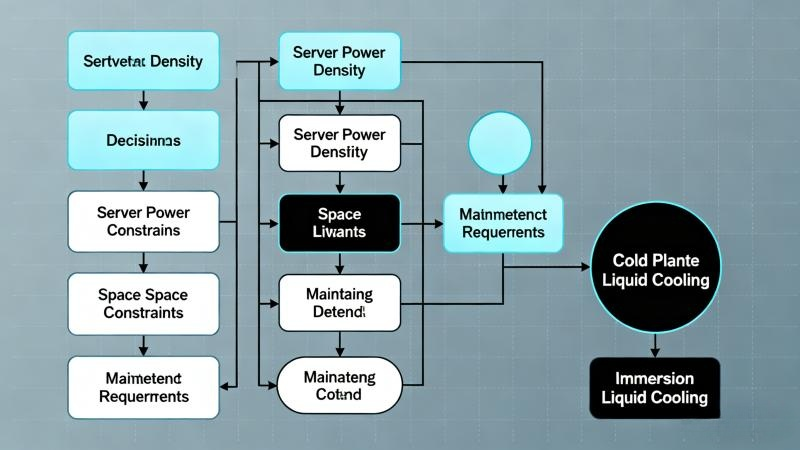
Decision Framework — How to Choose in Three Steps
- Assess workload density and power per socket: if sustained per-socket power is < ~700–1000W and you need phased rollout, start with cold plates.
- Evaluate facility constraints: do you have headroom for floor loading, spill containment and secondary systems required for immersion?
- Perform TCO modeling: include capital, energy, expected compute uplift and payback period; pick the option that meets your ROI and operational risk profile.
If undecided, pilot a cold plate deployment and reserve modular space and interfaces for future immersion expansion.
FAQ
Q1: If I pull a server out of an immersion tank, can I power it directly while wet?
No — despite many immersion fluids being dielectric, best practice is to follow the vendor’s re-immersion and drying procedures. For single-phase oils, gentle drainage and handling are required; two-phase condensate management follows vendor guidance. Never attempt to power a wet board unless explicitly validated by the fluid vendor and OEM.
Q2: How often must I replace coolant?
Cold plate loops using deionized water typically require water quality monitoring and conditioning every 1–2 years. Engineered immersion fluids can have much longer service windows (several years), but regular testing for contamination and dielectric properties is essential.
Q3: Is there a “dry-run” risk in two-phase systems (i.e., boiling off fluid)?
Two-phase systems are designed with conservative heat flux margins and condensers sized to handle expected loads. A properly engineered system with redundant condensers and controls prevents “dry-out.” However, poor design or failed condensers can expose risk — rigorous commissioning and monitoring are mandatory.
Q4: How real is leak risk in cold plate systems?
Leak risk is real but manageable. Using quality quick connects, pressure testing, double containment, leak sensors and well-defined isolation procedures reduces residual risk to acceptable data center thresholds.
Conclusion — Short Term: Cold Plate. Long Term: Immersion. But Both Are Strategic.
Cold plate liquid cooling provides a balanced, practical approach for today’s AI workloads: strong cooling performance, staged deployment, and familiar operational models. Immersion cooling offers the ultimate thermal ceiling and the lowest achievable PUE, at the cost of a more radical operational model and higher upfront capital. The right choice depends on your facility constraints, workload density, budget horizon and appetite for operational transformation.
For many organizations the most prudent roadmap is a staged approach: pilot cold plates to gain density and energy improvements now while evaluating immersion for future ultra-dense clusters.
Contact Tone Cooling for Custom Liquid Cooling Solutions
Tone Cooling Technology Co., Ltd. (est. 2004) specializes in custom liquid cold plate solutions for high-power, high-heat-flux chips used in data centers, GPUs, power electronics and 5G systems. With patented processes such as vacuum brazing, friction stir welding and transient liquid phase diffusion bonding, Tone Cooling delivers high-performance, leak-tight cold plates and end-to-end cooling system design. Our R&D team — including PhDs and senior thermal engineers — can help you evaluate cold plate and immersion strategies, model PUE and ROI, and design a phased deployment tailored to your needs.
Visit: https://tonecooling.com to request a consultation and pilot program.
For industry standards and best practices, refer to ASHRAE thermal guidelines.
Frequently Asked Questions
Does ToneCooling offer OEM and ODM services?
Yes. ToneCooling provides full OEM and ODM services including custom design, prototyping, thermal simulation, and volume production. We serve customers in North America, Europe, and Asia-Pacific with engineering support and samples within 2–4 weeks.
What materials are used in ToneCooling liquid cold plates?
ToneCooling manufactures cold plates in aluminum (6061/6063), copper (C1100/C1020), and stainless steel. Aluminum FSW cold plates are ideal for high-volume EV and industrial applications, while copper brazed cold plates provide maximum thermal conductivity (398 W/m·K) for high heat flux electronics.
What is the typical lead time for custom cold plates?
Prototype samples are delivered within 2–4 weeks. Production orders typically ship within 4–6 weeks after sample approval. ToneCooling responds to all quote requests within 24 business hours.
Get a Custom Thermal Solution from ToneCooling
ToneCooling is a professional liquid cooling solution provider specializing in custom cold plates, AIO coolers, and advanced thermal management systems. With ISO 9001:2015 certified manufacturing, we deliver prototype samples within 2–4 weeks. Contact ToneCooling today for a free consultation and quote — we respond within 24 business hours.
Related ToneCooling Resources
- Liquid Cold Plates Product Line
- Request a Custom Cold Plate Quote
- Technical Resources & Design Guides
Industry References & Standards
Need a Custom Liquid Cold Plate?
ToneCooling engineers design thermal solutions for your specific requirements. Get a detailed response within 24-48 hours.
Last Updated: 2026-04-08
DR Kevin, Thermal Engineer, ToneCooling
Need a Custom Liquid Cold Plate?
Tell us your thermal requirements. Engineering team responds within 48 hours with design proposal and quotation.
Request a Quote →MOQ 5 pcs • Prototype 7-15 days • ISO 9001 Certified