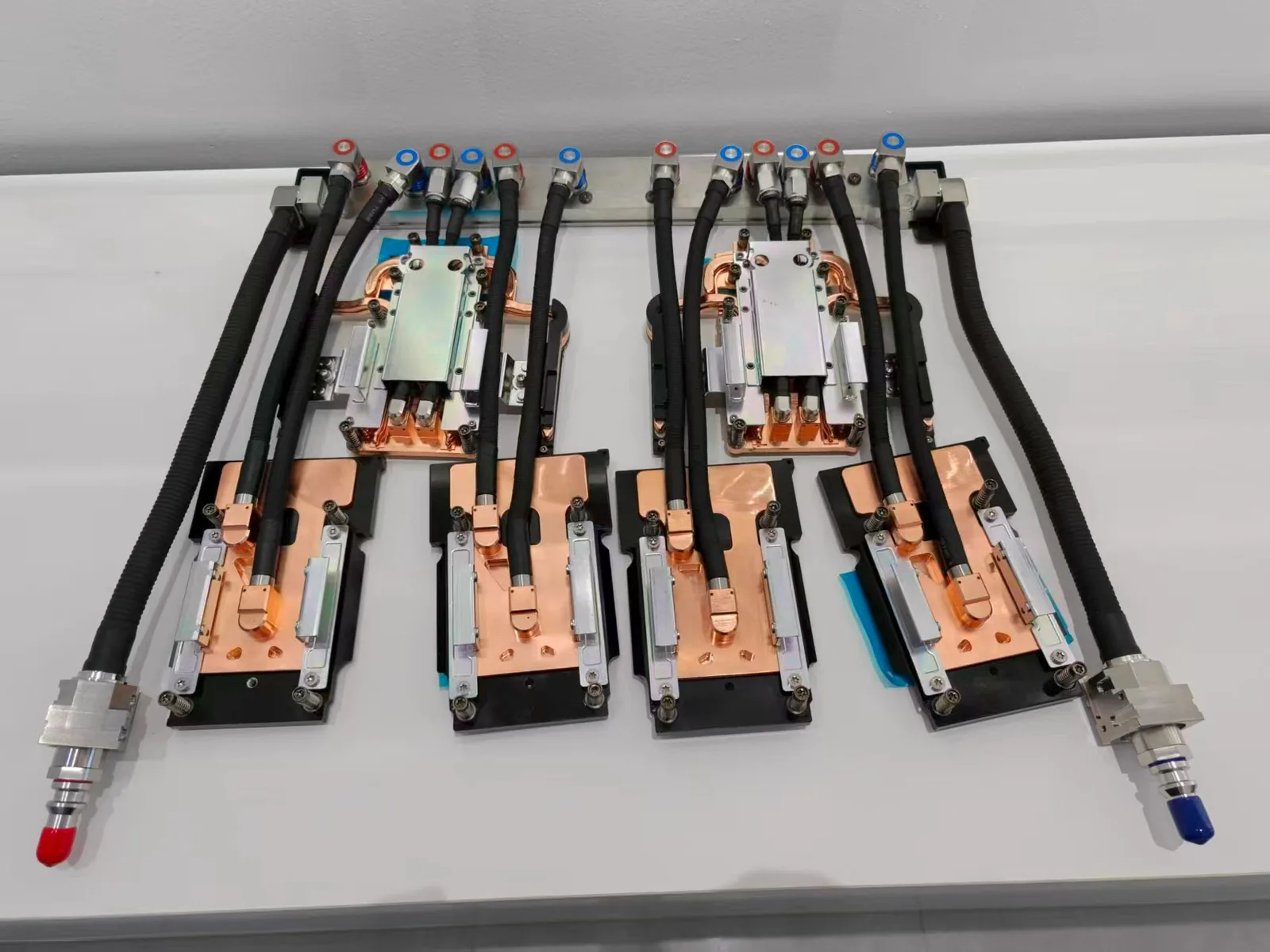
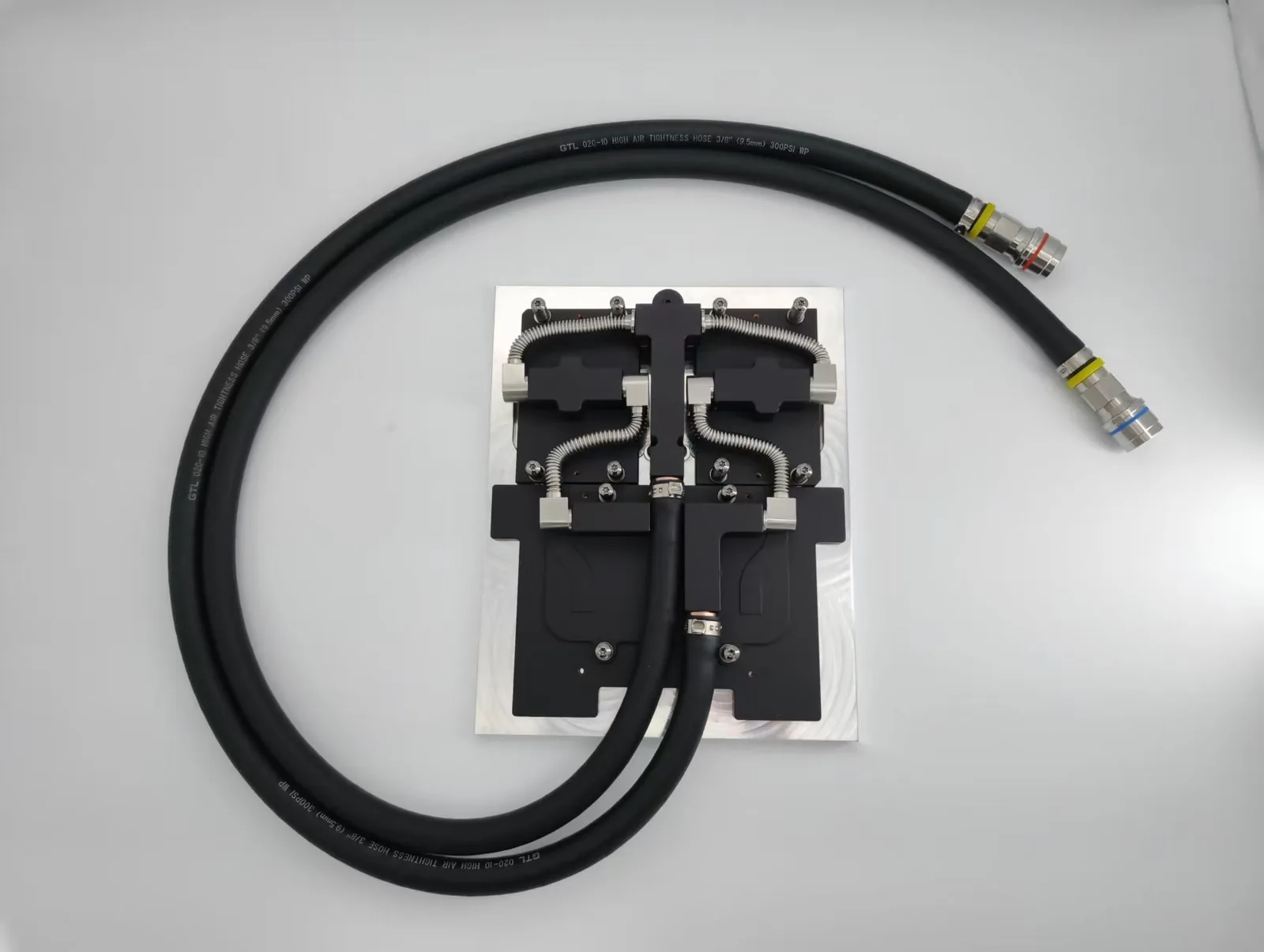
Requesting a custom liquid cold plate quote shouldn’t be complicated — but submitting an incomplete RFQ is the #1 reason engineers wait days (or weeks) for pricing that could arrive. Whether you’re cooling an NVIDIA GB200 GPU, an IGBT power module, or an EV battery pack, here’s exactly what to prepare before you contact a manufacturer.
Overview
Cold plate manufacturers quote based on six technical inputs. When any of these are missing, the quote process stalls while the engineering team sends clarification emails back and forth. A complete RFQ submitted to ToneCooling gets a formal quotation. An incomplete one waits for clarification rounds.
The 6 Technical Inputs Every Cold Plate RFQ Needs
1. Thermal Design Power (TDP) or Heat Load
This is the total heat the cold plate must remove, measured in watts. For a single NVIDIA GB200 module, that’s up to 1200W. For an IGBT inverter module, it could be 3kW–20kW. Without this number, no manufacturer can size the flow channels or select the right material.
2. Heat Flux Density (W/cm²)
Heat flux tells the manufacturer how concentrated the heat source is. A 300W chip on a 5cm × 5cm footprint has a heat flux of 12 W/cm². A 1200W GPU on 8cm × 6cm is 25 W/cm². Higher heat flux demands micro-channel or skived fin internal structures instead of simple gun-drilled passages.
3. Mechanical Envelope Drawing (2D or 3D)
The cold plate must fit your chassis. Provide a 2D drawing (PDF/DWG) or 3D model (STEP/IGES) showing:
- Overall dimensions (L × W × H)
- Mounting hole locations and thread sizes
- Inlet/outlet port positions and fitting type
- Keep-out zones for adjacent components
- Surface flatness requirement (typically <0.05mm for bare-die GPU contact)
4. Coolant Type and Inlet Temperature
Most data center cold plates use deionized water or 50/50 ethylene glycol-water (EGW). EV battery cold plates almost always use EGW. The coolant type affects corrosion protection requirements and thermal performance calculations. Specify inlet temperature — typically 35–45°C for data centers, 25–40°C for EV systems.
5. Flow Rate and Pressure Drop Budget
Your system’s CDU or pump determines how much flow rate the cold plate gets and how much pressure drop it can tolerate. Typical ranges:
- Data center GPU cold plates: 0.5–2.0 LPM, ΔP < 30 kPa
- IGBT cold plates: 2–8 LPM, ΔP < 50 kPa
- EV battery cold plates: 5–15 LPM, ΔP < 40 kPa
6. Annual Volume Estimate
Volume determines the manufacturing process. 5–50 pieces? CNC machined + vacuum brazed. 500–5000 pieces? Stamped + controlled atmosphere brazed (CAB). 10,000+? Die-cast or progressive stamped. Sharing your volume forecast lets the manufacturer quote the most cost-effective process.
Common RFQ Mistakes That Delay Your Quote
- No drawing attached — verbal descriptions of dimensions lead to multiple rounds of clarification
- Missing coolant specification — the manufacturer can’t select materials without knowing if you use DI water, EGW, or dielectric fluid
- No volume estimate — without quantity, the manufacturer doesn’t know whether to quote CNC or stamping
- “Just give me a ballpark” — cold plates are custom components; ballpark pricing without technical inputs is meaningless
What Happens After You Submit an RFQ to ToneCooling
When you submit a complete RFQ to ToneCooling, here’s the timeline:
- Engineering review: the team reviews your drawing and thermal requirements
- Quotation: Formal quotation with unit pricing, tooling cost (if applicable), and lead time
- If approved: CFD simulation (optional, included for orders >100 pcs)
- Prototype delivery: 4–6 weeks from PO confirmation
prototypes from 1 piece. Production volumes quoted per project. We manufacture vacuum-brazed, FSW, and stamped-brazed cold plates in copper (C1100, C1020) and aluminum (6061, 6063).
Ready to Get a Quote?
Prepare your 6 technical inputs and submit your RFQ. ToneCooling responds with a formal quotation.
Or email us directly: info@tonecooling.com | prototypes from 1 piece | Prototype: 4–6 weeks | ISO 9001 Certified
| Parameter | ToneCooling Specification |
|---|---|
| Material | Copper T2 / 6061 aluminum |
| Welding method | Transient liquid phase diffusion welding |
| Test pressure | 1 MPa (helium leak + nitrogen hold) |
| Working medium | PG25 (25% propylene glycol) |
| Custom design | Yes — DXF/STEP input accepted |
Frequently Asked Questions
What is the minimum order quantity for custom liquid cold plates?
prototypes from 1 piece for prototype orders. Production volumes quoted per project. There is no maximum order limit.
How fast can I get a quote for a custom cold plate?
If you submit a complete RFQ with all 6 technical inputs listed above, ToneCooling provides a formal quotation. Incomplete RFQs take longer because of clarification rounds.
Do you provide CFD thermal simulation before manufacturing?
Yes. ToneCooling provides CFD simulation for flow distribution and thermal performance validation. It’s included for orders above 100 pieces and available as a paid service for smaller quantities.
What file formats do you accept for drawings?
We accept STEP, IGES, SolidWorks (.sldprt/.sldasm), DWG, DXF, and PDF formats. 3D models are preferred for faster quoting.
Related ToneCooling Resources
Industry References & Standards
Why Choose ToneCooling for Custom Liquid Cold Plate Quote
Engineering review and prototype planning are based on the project requirements. Custom prototype lead time is normally 4–6 weeks after drawing approval and order confirmation; confirm the production schedule in the quotation.
Last Updated: 2026-04-08