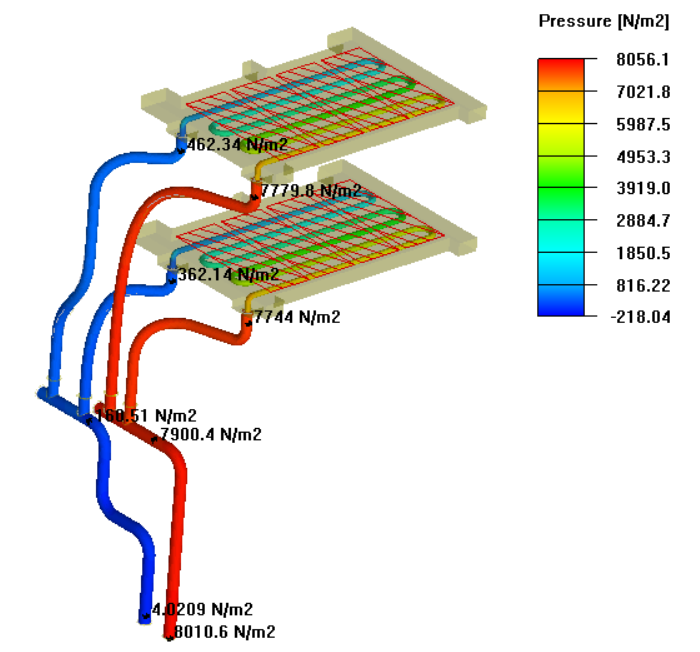


Laser projector liquid cooling is becoming essential as modern laser light sources push thermal loads beyond 240W. High-brightness laser projectors used in cinema, large-venue, and simulation applications generate intense heat that traditional air cooling cannot manage. In this article, we explain how laser projector liquid cooling works, why it outperforms air-based thermal management, and what OEM integrators should consider when selecting a cooling solution.
Why Laser Projectors Need Liquid Cooling
Laser projectors use high-power laser diodes or phosphor wheels as light sources, producing significant waste heat in a compact space. According to laser projector technology standards, effective thermal management is critical for maintaining optical performance. A typical 20,000+ lumen laser projector generates 240W to 270W of thermal load from the light engine alone. Air cooling struggles to dissipate this level of heat quietly and reliably, especially in enclosed chassis designs where airflow is restricted.
Laser projector liquid cooling solves this challenge by circulating coolant directly through cold plates attached to the laser modules. This approach delivers 3 to 5 times the heat transfer efficiency of air cooling, enabling projectors to run cooler, quieter, and with longer component life. For cinema and simulation applications where noise levels must stay below 30 dBA, liquid cooling is the only practical option for high-brightness laser projectors.
How Laser Projector Liquid Cooling Systems Work
A laser projector liquid cooling system typically uses an all-in-one (AIO) cooler configuration. The key components include a copper or aluminum cold plate mounted directly on the laser module, flexible tubing for coolant circulation, a pump (often integrated into the cold plate assembly), and one or two radiators with low-speed fans for heat rejection.

The coolant — usually a water-glycol mixture — absorbs heat from the laser diode array through the cold plate, then transfers it to the radiator where fans dissipate it into the surrounding air. This closed-loop design keeps the laser junction temperature within safe operating limits (typically below 65°C), which is critical for maintaining both brightness output and diode lifespan.
Key Advantages of Liquid Cooling Over Air Cooling for Laser Projectors
Laser projector liquid cooling offers several advantages that make it the preferred choice for high-performance projector designs. First, thermal efficiency: liquid cooling handles 240W+ thermal loads with ease, while air cooling becomes noisy and insufficient above 150W. Second, noise reduction: because liquid cooling uses low-RPM fans on radiators rather than high-speed blowers, system noise stays below 28 dBA — essential for cinema and conference environments.
Third, compact integration: AIO liquid cooler modules can be designed to fit within tight chassis constraints, with flexible tubing allowing the radiator to be positioned away from the laser module. Fourth, component longevity: by keeping laser diode temperatures 15–20°C lower than air cooling, liquid cooling extends diode lifespan by 30–50%, reducing maintenance costs for projector operators.
AIO Cooler Configurations for Laser Projectors
ToneCooling provides customized laser projection AIO cooler solutions designed specifically for high-brightness projector applications. Common configurations include single-radiator setups for projectors in the 150–200W thermal range and dual-radiator setups for 240W–270W loads.

Key design parameters for laser projector liquid cooling include cold plate material (copper for maximum thermal conductivity, aluminum for weight savings), pump flow rate (typically 0.5–1.5 L/min), radiator size and fan configuration, coolant type and fill volume, and tube routing for chassis integration. ToneCooling works with OEM projector manufacturers to customize each parameter based on the specific thermal load, chassis dimensions, and noise requirements of the application.
Design Considerations for OEM Integration
When selecting a laser projector liquid cooling solution, OEM integrators should evaluate several factors. Thermal capacity must match or exceed the laser module’s maximum thermal output with adequate safety margin. The cold plate interface must align precisely with the laser diode mounting pattern. Leak prevention is critical — all joints should use compression fittings or welded connections, and the system should pass 0.5 MPa pressure testing.
Vibration resistance matters for projectors used in simulation or mobile applications. The AIO cooler assembly must withstand operational vibration without developing fatigue cracks or loose fittings. Finally, serviceability — the cooling system should allow coolant refill or replacement without full projector disassembly.
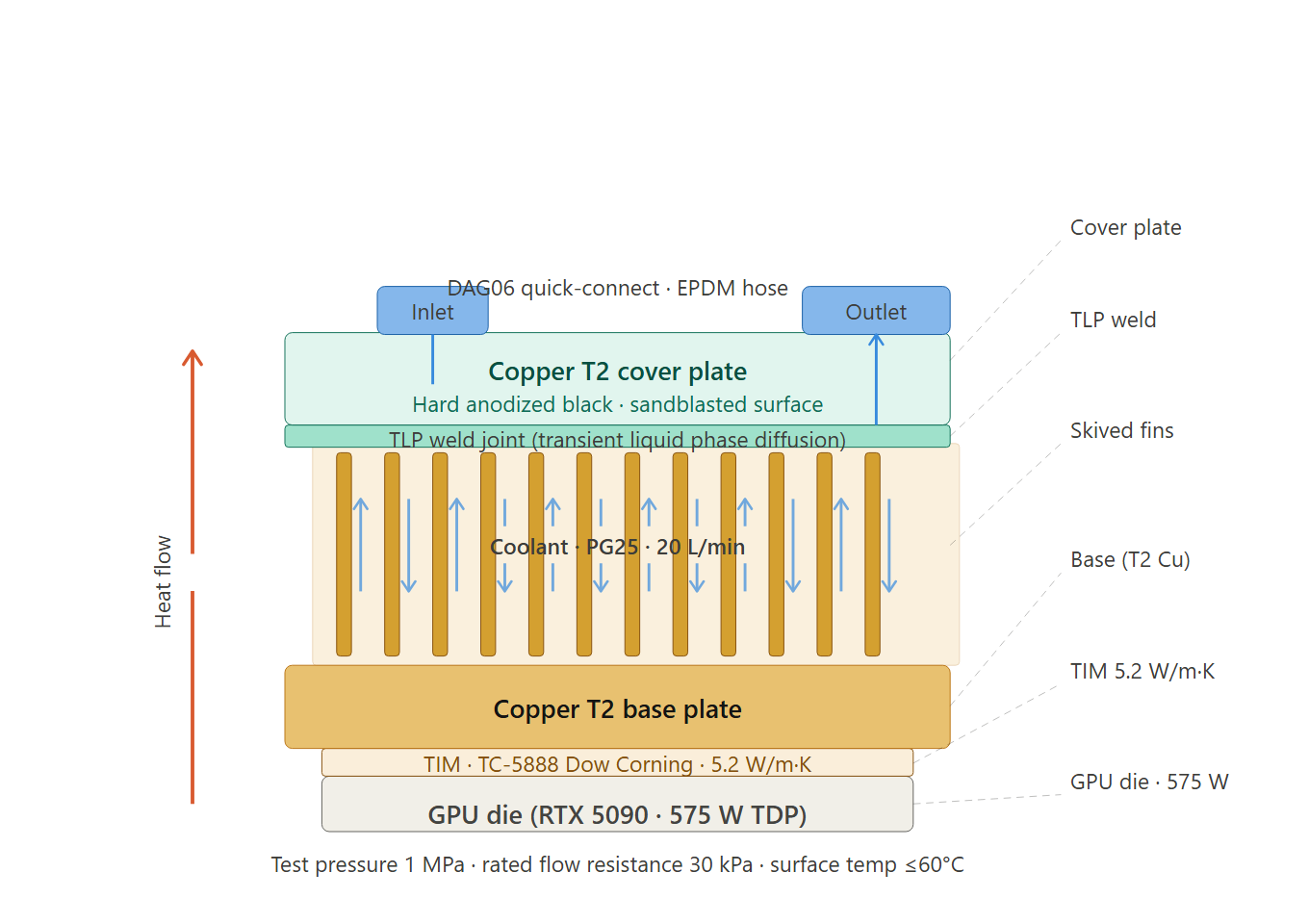
| Parameter | ToneCooling Specification |
|---|---|
| Material | Copper T2 / 6061 aluminum |
| Welding method | Transient liquid phase diffusion welding |
| Test pressure | 1 MPa (helium leak + nitrogen hold) |
| Working medium | PG25 (25% propylene glycol) |
| Custom design | Yes — DXF/STEP input accepted |
Frequently Asked Questions
What thermal load can a laser projector liquid cooling system handle?
Modern laser projector liquid cooling systems handle 150W to 300W of thermal load depending on configuration. Single-radiator AIO setups typically manage 150–200W, while dual-radiator configurations handle 240–300W. ToneCooling designs custom solutions matched to each projector’s specific thermal requirements.
Is liquid cooling quieter than air cooling for laser projectors?
Yes. Laser projector liquid cooling systems typically operate below 28 dBA, compared to 35–45 dBA for air-cooled systems at equivalent thermal loads. This makes liquid cooling the standard choice for cinema, conference, and simulation projectors where low noise is essential.
How long does a laser projector liquid cooling system last?
A well-designed laser projector liquid cooling system lasts 30,000 to 50,000 hours — matching or exceeding the laser diode lifespan. Key longevity factors include coolant quality, pump reliability, and seal integrity. ToneCooling AIO coolers are designed for maintenance-free operation throughout the projector’s rated service life.
Can laser projector liquid cooling be customized for different chassis sizes?
Absolutely. ToneCooling specializes in OEM-customized laser projector liquid cooling solutions. Cold plate dimensions, tube routing, radiator placement, and pump specifications are all tailored to fit the projector manufacturer’s chassis design and thermal targets. Contact our engineering team to discuss your project requirements.
Industry References & Standards
Need a Custom Liquid Cold Plate?
Laser Projector Liquid Cooling is a high-performance thermal management solution engineered by ToneCooling for demanding applications.
ToneCooling engineers design thermal solutions for your specific requirements. Get a detailed response within 24-48 hours.
Laser Liquid Cooling Cold Plate is a critical component in modern thermal management. ToneCooling engineers this solution for AI servers, data centers, EV batteries, and power electronics requiring high-performance liquid cooling.
Laser Liquid Cooling Cold Plate: Key Specifications
When evaluating laser liquid cooling cold plate, engineers consider thermal resistance, pressure drop, flow rate, and material compatibility. ToneCooling provides detailed specs for every laser liquid cooling cold plate design, backed by CFD simulation and testing.
Why Choose ToneCooling for Laser Liquid Cooling Cold Plate
ToneCooling has manufactured over 50,000 laser liquid cooling cold plate units for global OEM customers. Our laser liquid cooling cold plate production features vacuum brazing furnaces below 10⁻⁴ mbar, FSW machines with ≤0.02mm flatness, and helium leak detection at 10⁻⁸ mbar·L/s. Every laser liquid cooling cold plate undergoes 100% pressure testing at 25 bar.
Our engineering team provides free laser liquid cooling cold plate design consultation, CFD simulation, and rapid prototyping in 7-14 days. Production laser liquid cooling cold plate orders ship in 4-6 weeks under ISO 9001:2015 quality management.
Need a Custom Liquid Cold Plate?
ToneCooling engineers design thermal solutions for your requirements. Response within 24-48 hours.
Last Updated: 2026-04-08
DR Kevin, Thermal Engineer, ToneCooling
Need a Custom Liquid Cold Plate?
Tell us your thermal requirements. Engineering team responds within 48 hours with design proposal and quotation.
Request a Quote →MOQ 5 pcs • Prototype 7-15 days • ISO 9001 Certified