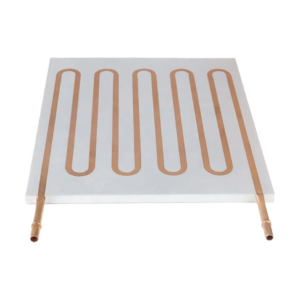
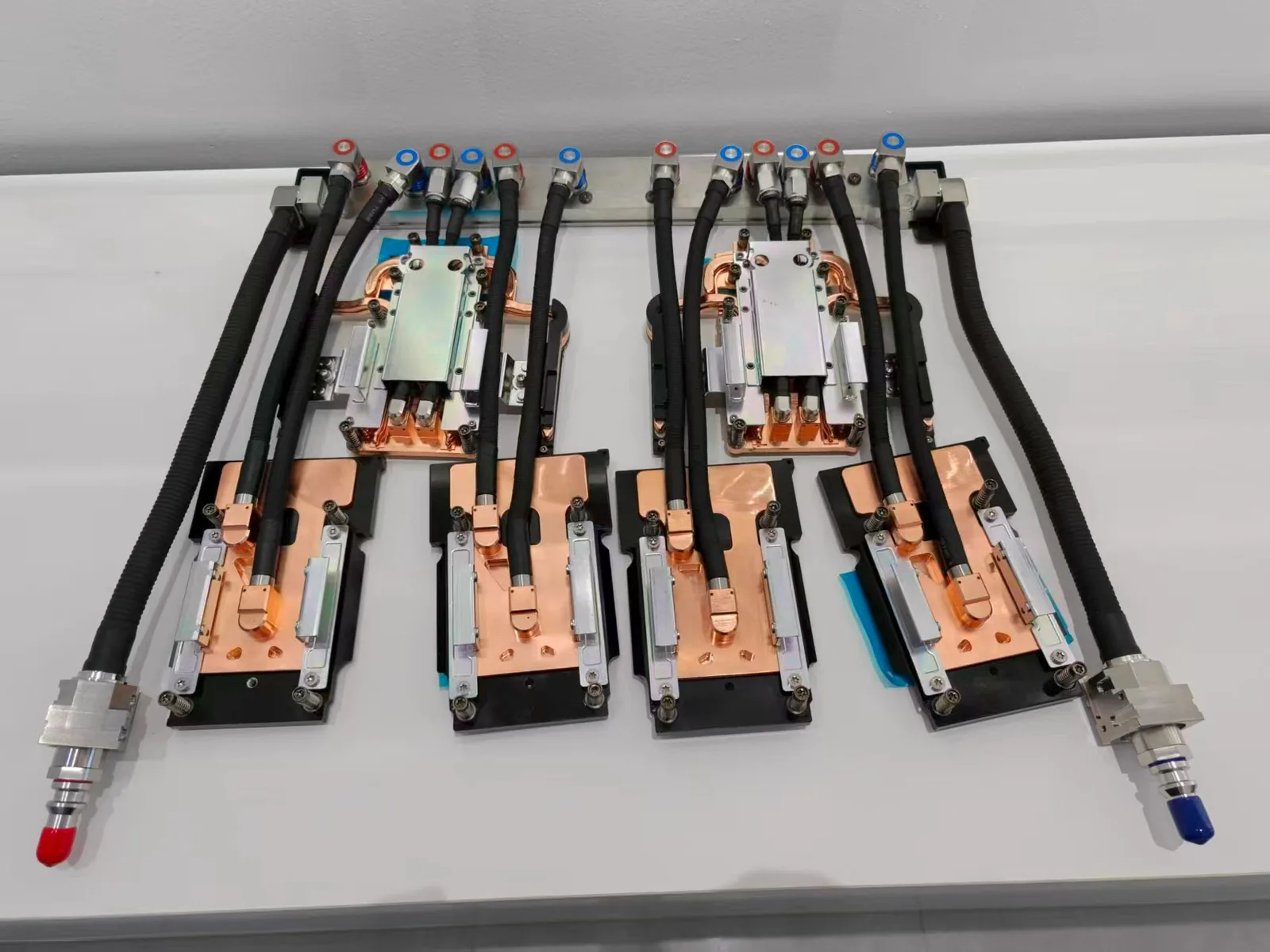
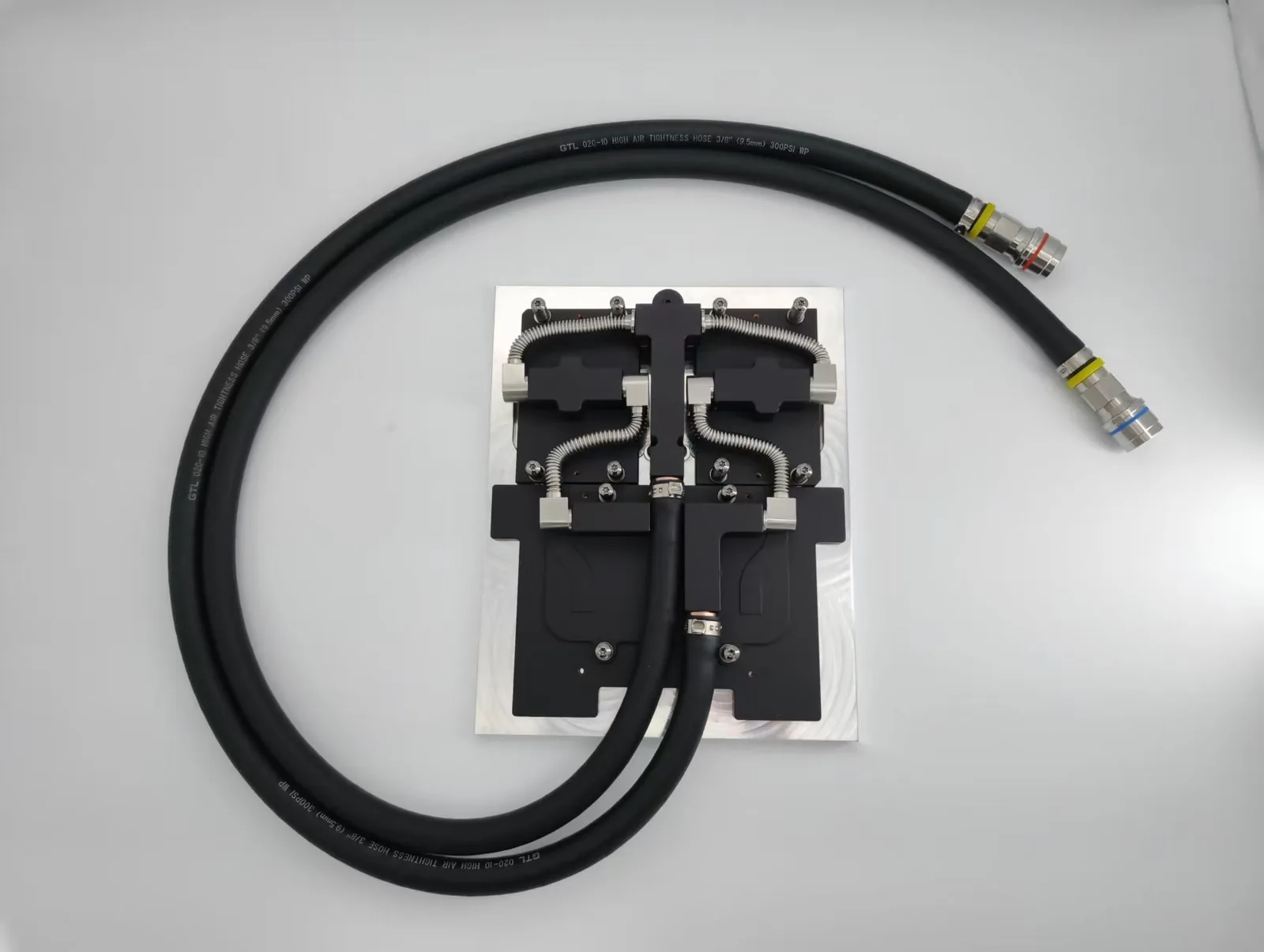
Intel LGA4677 and AMD SP5 server processors need different cold plates because their sockets, heat spreader sizes and mounting patterns differ, even when their power is similar. ToneCooling designs custom cold plates for both, matched to each board and coolant loop.
LGA4677 thermal management and SP5 thermal management represent the two dominant cooling challenges in current data center deployments. Intel LGA4677 and AMD SP5 are the leading high-performance server CPU sockets, and while both platforms demand liquid cooling for high-TDP configurations, they differ significantly in physical dimensions, mounting mechanisms, TDP envelopes, and cooling solution requirements. This guide covers the key thermal management differences for server OEMs designing cooling solutions for both platforms.

Socket overview:
- Socket: LGA4677 (land grid array, 4677 contacts)
- Processors: Intel Xeon Scalable 4th Gen (Sapphire Rapids), 5th Gen (Emerald Rapids)
- TDP range: 150W to 350W (standard), up to 400W (HBM variants)
- IHS dimensions: 76.0 × 56.5mm
- Mounting: 4-point spring-loaded retention mechanism
Thermal management requirements:
- Cold plate contact area must cover the full IHS surface for optimal heat transfer
- Spring-loaded mounting ensures consistent contact pressure across the IHS
- High-TDP SKUs (270W–350W) require liquid cooling in 1U and 2U server configurations
- LGA4677 is supported by ToneCooling 1U and 2U AIO coolers with platform-specific mounting brackets
AMD SP5 — EPYC Genoa and Bergamo

Socket overview:
- Socket: SP5 (LGA, 6096 contacts)
- Processors: AMD EPYC 9004 series (Genoa, Bergamo, Siena)
- TDP range: 200W to 400W
- IHS dimensions: 72.0 × 75.4mm (larger total area than LGA4677)
- Mounting: 4-point spring-loaded retention mechanism
Thermal management requirements:
- Larger IHS footprint requires wider cold plate coverage compared to LGA4677
- Higher maximum TDP (400W) demands robust cooling capacity
- SP5 mounting uses a different bracket geometry — not interchangeable with LGA4677 without bracket change
- ToneCooling AIO coolers support SP5 with dedicated swappable mounting brackets
Key Differences for Thermal Solution Design
IHS Dimensions:
LGA4677: 76.0 × 56.5mm | SP5: 72.0 × 75.4mm
Impact: Cold plate base must be sized appropriately for each socket — SP5 requires wider coverage in Y-axis.
Maximum TDP:
LGA4677: up to 400W (HBM SKUs) | SP5: up to 400W (standard production SKUs)
Impact: Both platforms require equivalent maximum cooling capacity — 2U AIO coolers are recommended for high-TDP SKUs.
Mounting Mechanism:
Both platforms use 4-point spring-loaded retention. LGA4677 thermal management and SP5 thermal management share this fundamental mounting approach. Bracket geometry differs — ToneCooling provides separate mounting brackets for LGA4677 and SP5, both compatible with the same AIO cooler radiator unit.
Memory Thermal Load:
LGA4677: DDR5 DIMMs, moderate additional thermal load. SP5: DDR5 DIMMs, 12-channel per socket — higher memory power density in adjacent airflow zones.
ToneCooling AIO Cooler Platform Support
ToneCooling 1U and 2U AIO coolers support both platforms through interchangeable mounting brackets. Supported sockets (same cooler, different bracket):
- Intel LGA4677 (Sapphire Rapids, Emerald Rapids)
- Intel LGA4189 (Ice Lake SP, Cooper Lake)
- AMD SP5 (Genoa, Bergamo, Siena)
- AMD SP3 (Naples, Rome, Milan)
This bracket interchangeability simplifies LGA4677 thermal management and SP5 cooling deployment, allowing server OEMs to standardize on a single AIO cooler SKU across multiple platform generations, reducing BOM complexity and inventory cost. Learn more about our AIO cooler product line.
Frequently Asked Questions
Can the same AIO cooler be used for both LGA4677 and SP5 servers?
Yes. ToneCooling AIO coolers use interchangeable mounting brackets — the same radiator, pump, and cold plate assembly can be reconfigured for LGA4677 or SP5 by changing the CPU mounting bracket. This allows OEMs to standardize cooling hardware across Intel and AMD platform variants.
What is the maximum TDP supported for SP5 processors?
ToneCooling 2U dual-CPU AIO coolers support up to 650W combined TDP, covering the full SP5 TDP range including 400W per socket configurations.
Does ToneCooling support the new Intel LGA7529 (Xeon Granite Rapids-AP) socket?
LGA7529 support is available. Contact ToneCooling with your platform specifications for mounting bracket compatibility confirmation.
Request Platform-Specific Cooling Solution →
Design Recommendations for Multi-Platform Server OEMs
For server OEMs supporting both Intel and AMD platforms, the most efficient approach is to standardize on a single AIO cooler design with interchangeable mounting brackets. This strategy reduces qualification cycles, simplifies supply chain management, and lowers per-unit cooling costs across product lines. ToneCooling recommends engaging early in the platform design phase to ensure cold plate dimensions, mounting geometry, and coolant flow parameters are optimized for both LGA4677 thermal management and SP5 thermal requirements simultaneously. Early engagement also enables thermal simulation and prototype validation before volume production commitments.
Request Platform-Specific Cooling Solution →
Related ToneCooling Solutions
- Custom Cold Plate Solutions – High-performance liquid cooling cold plates for OEM applications
- AIO Liquid Cooler Systems – All-in-one liquid cooling solutions for servers and workstations
- Battery Cold Plate for EVs – Thermal management for electric vehicle battery packs
Request a Custom Quote from ToneCooling →
Industry References & Standards
Why Choose ToneCooling for Lga4677 Liquid Cold Plate Server
Engineering review and prototype planning are based on the project requirements. Custom prototype lead time is normally 4–6 weeks after drawing approval and order confirmation; confirm the production schedule in the quotation.
Need a Custom Liquid Cold Plate?
ToneCooling engineers review your drawings and requirements and reply by email with next steps.
Last updated: 2026-10-02