Liquid Cooling Air Cooling Data is a high-performance thermal management solution engineered by ToneCooling for demanding applications.
The transition from air cooling to liquid cooling in data centers is no longer a future trend — it is a present necessity. With AI training clusters deploying NVIDIA GB200 NVL72 racks at 120+ kW per rack, traditional air cooling cannot physically remove enough heat. This article compares both approaches with real performance data and TCO analysis.

What Is Liquid Cooling Air Cooling Data?
Air has a volumetric heat capacity approximately 3,500 times lower than water. In practical terms:
- Air cooling: 8-15 kW per rack (standard), 20-25 kW (with containment)
- Rear-door heat exchangers: 30-35 kW per rack
- Direct-to-chip liquid cooling: 80-120+ kW per rack
Performance Comparison
| Parameter | Air Cooling | Liquid Cooling (Direct-to-Chip) |
|---|---|---|
| Max rack power density | 20-25 kW | 80-120+ kW |
| PUE | 1.3-1.6 | 1.05-1.15 |
| GPU junction temperature | 80-95C | 55-70C |
| Compute density per sqft | Baseline | 3-5x higher |
| Fan/pump power | 30-40% of IT load | 5-10% |
| Water usage (WUE) | 1.8-2.5 L/kWh | 0-0.5 L/kWh |

Total Cost of Ownership Analysis
TCO comparison for a 10 MW data center over 10 years:
Capital Expenditure
| Category | Air Cooling | Liquid Cooling | Delta |
|---|---|---|---|
| Cooling infrastructure | $12M | $18M | +$6M |
| Building/floor space | $25M | $8M | -$17M |
| Electrical infrastructure | $15M | $11M | -$4M |
| Total CapEx | $132M | $117M | -$15M (11% less) |
Annual Operating Costs
| Category | Air (annual) | Liquid (annual) | Savings |
|---|---|---|---|
| Cooling electricity | $4.8M | $1.2M | $3.6M |
| Fan/pump power | $2.4M | $0.6M | $1.8M |
| Maintenance | $1.2M | $0.8M | $0.4M |
| Floor space lease | $3.0M | $1.0M | $2.0M |
| Total annual | $11.4M | $3.6M | $7.8M/year |

PUE Impact: The Biggest Cost Driver
Reducing PUE from 1.4 (air) to 1.1 (liquid) on a 10 MW IT load saves 3 MW continuously — 26,280 MWh per year, equivalent to $2.6-5.2M annually and ~11,000 tons CO2 reduction per year.

Deployment Considerations
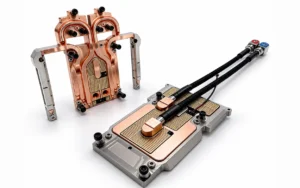
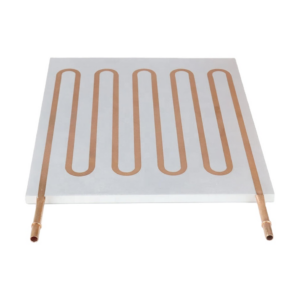
- Cold plate selection — NVIDIA GB200 cold plates and data center cold plates for all platforms
- CDU sizing — Size for peak rack power plus 20% headroom
- Leak detection — Deploy sensors at every cold plate connection point
ToneCooling Data Center Solutions
- NVIDIA GB200/GB300 cold plates — Up to 1200W per module
- AI server liquid cooling — Complete cold plate sets for GPU and CPU
- 1U AIO liquid coolers — Self-contained CPU cooling
Contact Our Engineering Experts Now — ToneCooling offers prototypes in 6–8 weeks with MOQ as low as 5 pieces. Request RFQ or contact us at info@tonecooling.com.
Frequently Asked Questions
What is the ROI payback period for liquid cooling?
For new high-density deployments (>40 kW/rack), payback is less than 1 year through energy savings and reduced floor space. Retrofit: 1.5-3 years.
What PUE can liquid-cooled data centers achieve?
Best-in-class: PUE 1.03-1.08. Typical: 1.08-1.15. Compared to 1.3-1.6 for air-cooled facilities.
Is liquid cooling reliable for production data centers?
Yes. Direct-to-chip liquid cooling has been in production at hyperscale data centers since 2018 with MTBF exceeding 100,000 hours.
Industry References & Standards
Why Choose ToneCooling for Liquid Cooling Vs Air Cooling Data Center
Engineering review and prototype planning are based on the project requirements. Custom prototype lead time is normally 6–8 weeks after drawing approval and order confirmation; confirm the production schedule in the quotation.
Why Choose ToneCooling for Liquid Cooling Air Cooling Data?
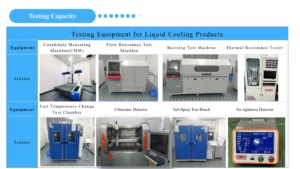
ToneCooling is a liquid cold plate and AIO cooler manufacturer serving AI server, EV battery, and power electronics applications. Our liquid cooling air cooling data solutions use copper T2 construction, transient liquid phase diffusion welding, and CFD-validated thermal design. Every unit passes 100% helium leak inspection and 6-hour nitrogen pressure hold testing before shipment.
Contact our thermal engineering team at info@tonecooling.com with your system layout and TDP requirements. → Request a quote
Last Updated: 2026-04-08