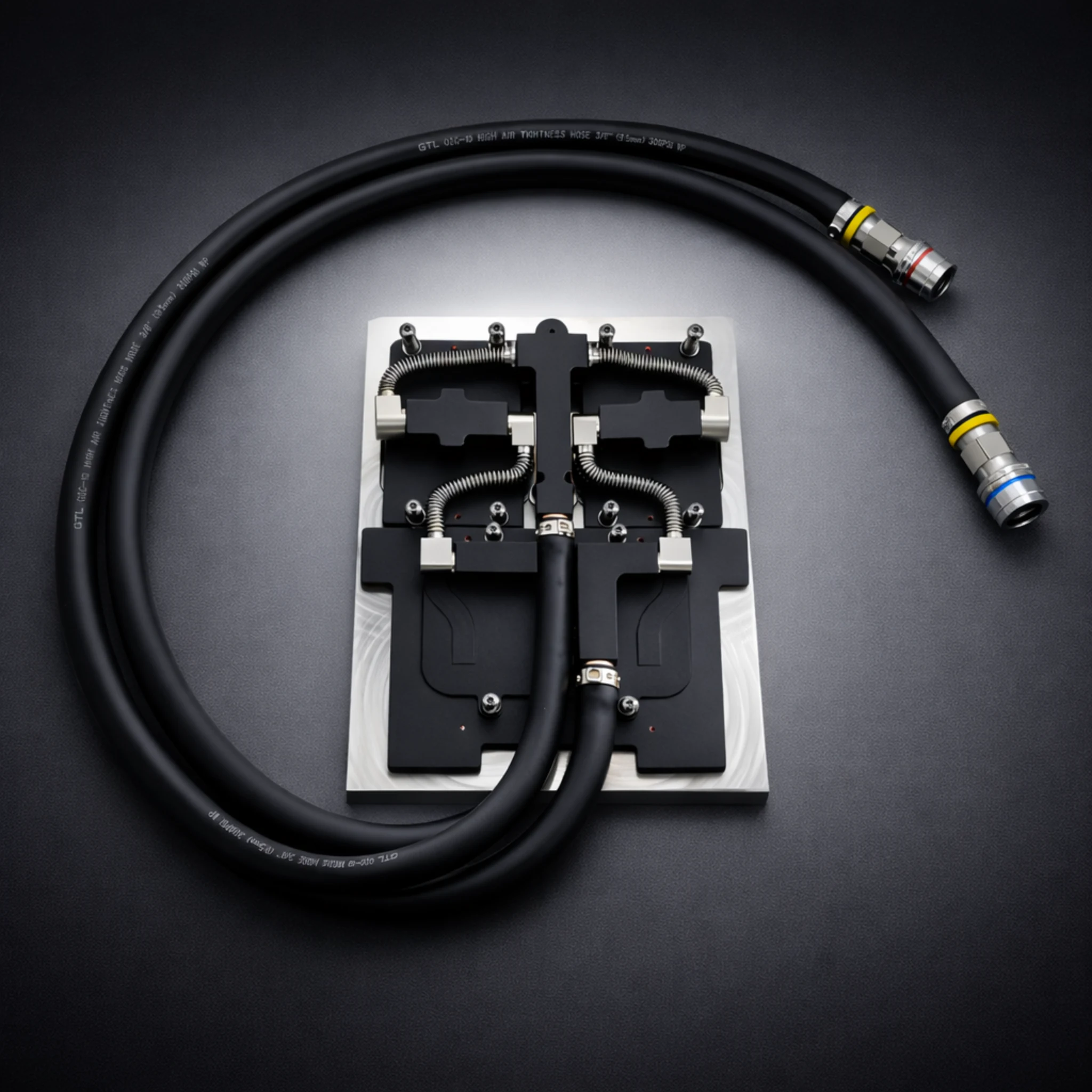
This comprehensive guide covers how additive manufacturing improves solutions for industrial and OEM applications. ToneCooling provides expert insights on how additive manufacturing improves technology and implementation.
Additive Manufacturing Improves Cold Plate is a high-performance thermal management solution engineered by ToneCooling for demanding applications.
This guide on How additive manufacturing improves provides key insights for engineers and procurement teams. Additive manufacturing, commonly known as 3D printing, is revolutionizing thermal management solutions in industries ranging from aerospace to electric vehicles. Among the most impactful applications is the production of cold plates — metallic heat exchangers used to efficiently remove heat from high-power electronics, batteries, and motors.
By enabling complex internal geometries and lightweight designs, additive manufacturing improves thermal performance, weight efficiency, and design flexibility, making it ideal for Advanced Air Mobility (AAM) systems, electric Vertical Take Off and Landing (eVTOL) aircraft, and other high-performance applications.

What Is Additive Manufacturing Improves Cold Plate?
Cold plates are essentially metallic heat sinks with embedded liquid channels. These channels circulate coolant, usually water or water-glycol mixtures, to extract heat from components like lithium-ion batteries, inverters, and electric motors. The goal is to minimize thermal resistance between the heat source and the coolant, ensuring consistent operating temperatures for reliability and efficiency.
Traditional cold plates are manufactured using aluminum plates joined by welding, brazing, or friction stir welding (FSW). While effective, these methods present several limitations:
- Leakage risk at welded joints.
- Thermal inefficiencies due to air gaps and imperfect welds.
- Limited geometry, preventing complex internal flow paths.
- Weight concerns, as structural reinforcement may be needed to maintain strength.
These challenges create a need for a technology that enables leak-free, high-performance, and lightweight cold plates — and this is where additive manufacturing excels.
Additive Manufacturing: The Key to Better Cold Plates — How additive manufacturing improves
Additive manufacturing allows cold plates to be built layer by layer using processes like Laser Powder Bed Fusion (LPBF). In these processes, a fine metal powder (commonly aluminum alloys) is selectively melted with a laser, gradually creating a monolithic structure without the need for welding or brazing.
Advantages of Additive Manufacturing for Cold Plates: — How additive manufacturing improves
Monolithic, Leak-Free Structures
Traditional welding introduces potential leak points. With additive manufacturing, cold plates are built as a single piece, eliminating joints and reducing the risk of coolant leakage.Complex Internal Geometries
Additive manufacturing enables the creation of conformal channels, fins, pins, and gyroid lattices, which are impossible to fabricate using conventional machining. These features increase surface area, improve turbulence, and optimize coolant flow to hotspots.Optimized Wall Thickness
Thin walls reduce thermal resistance, maximizing heat transfer. Additive manufacturing allows designers to achieve wall thicknesses comparable to machined parts while maintaining strength and stiffness.Lightweight Design
Additive manufacturing supports topology optimization, enabling material only where necessary for structural integrity. This reduces overall mass — critical for applications like eVTOL aircraft and AAM vehicles where every gram matters.Enhanced Thermal Performance
The combination of optimized geometry, increased surface area, and precise flow paths allows additive manufactured cold plates to dissipate heat more efficiently, maintaining stable operating temperatures across all components.Rapid Prototyping and Customization
Unlike traditional methods, additive manufactured cold plates can be rapidly prototyped, tested, and iterated. Designers can create bespoke solutions for complex component layouts, integrating ports and connectors exactly where needed.
Material Considerations in Additive Manufacturing
Aluminum alloys are commonly used for additive manufactured cold plates due to low weight and good thermal conductivity. However, other materials such as copper or copper-aluminum composites can further enhance thermal performance for high-heat applications, albeit at increased cost or manufacturing complexity. The choice of material impacts:
- Thermal conductivity
- Structural stiffness
- Weight
- Corrosion resistance
- Compatibility with the chosen coolant
Proper material selection ensures that additive manufactured cold plates meet performance, weight, and reliability requirements for demanding applications.
Design Optimization Techniques
The true potential of additive manufacturing is unlocked when combined with advanced design tools:
- CFD (Computational Fluid Dynamics) simulations enable designers to predict flow patterns, pressure drops, and temperature distribution.
- Topology optimization reduces unnecessary material while maintaining strength.
- Internal geometries such as pins, fins, and gyroids are designed to direct coolant to hotspots, creating turbulence that increases heat transfer efficiency.
- Pressure drop minimization reduces pump energy requirements, lowering overall system power consumption.
By integrating simulation with additive manufacturing, engineers can produce cold plates that maximize heat dissipation while minimizing energy loss and weight.

Applications of Additive-Manufactured Cold Plates
Advanced Air Mobility and eVTOL Aircraft
Electric vertical take-off and landing (eVTOL) aircraft require compact, lightweight, and high-efficiency cooling systems. additive manufactured cold plates can wrap around batteries and inverters, fitting into confined spaces while maintaining thermal performance.Electric Vehicles (EVs)
High-voltage EV powertrains generate substantial heat in motors and inverters. additive manufactured cold plates allow customizable, lightweight cooling solutions for battery packs and power electronics.Aerospace and High-Performance Electronics
Applications such as avionics, satellite electronics, and high-power computing benefit from compact, high-conductivity, and reliable cooling solutions offered by additive manufactured cold plates.Industrial Electronics and Renewable Energy
Systems like power converters, solar inverters, and industrial motor drives often require efficient thermal management in limited space, making additive manufactured cold plates a suitable solution.
Reliability and Certification
Additive manufacturing also allows for rigorous testing and validation, ensuring cold plates meet aerospace and industrial standards:
- Leak-proof performance under high pressure
- Thermal cycling to simulate operational extremes
- Vibration and fatigue testing for long-term durability
- Corrosion resistance depending on coolant and material
These tests ensure that additive manufactured cold plates are safe, reliable, and long-lasting, even in demanding environments.
Conclusion
Additive manufacturing is transforming how cold plates are designed, produced, and deployed. By enabling complex internal geometries, monolithic leak-free structures, optimized wall thicknesses, and lightweight designs, additive manufactured cold plates deliver superior thermal performance compared to traditional manufacturing. When combined with CFD simulation, topology optimization, and material selection, additive-manufactured cold plates provide a customizable, high-efficiency solution for eVTOL aircraft, AAM systems, electric vehicles, and high-performance electronics.
For companies and engineers seeking next-generation thermal management solutions, additive manufacturing is no longer optional — it’s essential for reliable, lightweight, and high-performance cooling.
Explore ToneCooling’s High-Performance Cold Plates
ToneCooling specializes in customizable, lightweight, and high-efficiency cold plates designed using advanced additive manufacturing techniques. Our solutions are optimized for eVTOL aircraft, electric vehicles, and high-power electronics, delivering superior thermal management and reliability.
With precise internal geometries, monolithic leak-free structures, and rapid prototyping capabilities, ToneCooling’s cold plates ensure maximum heat dissipation, reduced pressure drop, and compact sizes tailored to your system requirements.
Discover how ToneCooling can elevate your thermal management solutions — contact us today for custom cold plate designs and OEM collaboration.
For industry standards and best practices, refer to ASHRAE thermal guidelines.
| Parameter | ToneCooling Specification |
|---|---|
| Material | Copper T2 / 6061 aluminum |
| Welding method | Transient liquid phase diffusion welding |
| Test pressure | 1 MPa (helium leak + nitrogen hold) |
| Working medium | PG25 (25% propylene glycol) |
| Custom design | Yes — DXF/STEP input accepted |
Frequently Asked Questions
Does ToneCooling offer OEM and ODM services?
Yes. ToneCooling provides full OEM and ODM services including custom design, prototyping, thermal simulation, and volume production. We serve customers in North America, Europe, and Asia-Pacific with engineering support and samples within 2–4 weeks.
What materials are used in ToneCooling liquid cold plates?
ToneCooling manufactures cold plates in aluminum (6061/6063), copper (C1100/C1020), and stainless steel. Aluminum FSW cold plates are ideal for high-volume EV and industrial applications, while copper brazed cold plates provide maximum thermal conductivity (398 W/m·K) for high heat flux electronics.
What is the typical lead time for custom cold plates?
Prototype samples are delivered within 2–4 weeks. Production orders typically ship within 4–6 weeks after sample approval. ToneCooling responds to all quote requests within 24 business hours.
Get a Custom Thermal Solution from ToneCooling
ToneCooling is a professional liquid cooling solution provider specializing in custom cold plates, AIO coolers, and advanced thermal management systems. With ISO 9001:2015 certified manufacturing, we deliver prototype samples within 2–4 weeks. Contact ToneCooling today for a free consultation and quote — we respond within 24 business hours.
Frequently Asked Questions
Does ToneCooling offer OEM and ODM services?
Yes. ToneCooling provides full OEM and ODM services including custom design, prototyping, thermal simulation, and volume production. We serve customers in North America, Europe, and Asia-Pacific with engineering support and samples within 2–4 weeks.
What materials are used in ToneCooling liquid cold plates?
ToneCooling manufactures cold plates in aluminum (6061/6063), copper (C1100/C1020), and stainless steel. Aluminum FSW cold plates are ideal for high-volume EV and industrial applications, while copper brazed cold plates provide maximum thermal conductivity (398 W/m·K) for high heat flux electronics.
What is the typical lead time for custom cold plates?
Prototype samples are delivered within 2–4 weeks. Production orders typically ship within 4–6 weeks after sample approval. ToneCooling responds to all quote requests within 24 business hours.
Get a Custom Thermal Solution from ToneCooling
ToneCooling is a professional liquid cooling solution provider specializing in custom cold plates, AIO coolers, and advanced thermal management systems. With ISO 9001:2015 certified manufacturing, we deliver prototype samples within 2–4 weeks. Contact ToneCooling today for a free consultation and quote — we respond within 24 business hours.
Additive Manufacturing Cold Plate is a critical component in modern thermal management. ToneCooling engineers this solution for AI servers, data centers, EV batteries, and power electronics requiring high-performance liquid cooling.
Additive Manufacturing Cold Plate: Key Specifications
When evaluating additive manufacturing cold plate, engineers consider thermal resistance, pressure drop, flow rate, and material compatibility. ToneCooling provides detailed specs for every additive manufacturing cold plate design, backed by CFD simulation and testing.
Why Choose ToneCooling for Additive Manufacturing Cold Plate
ToneCooling has manufactured over 50,000 additive manufacturing cold plate units for global OEM customers. Our additive manufacturing cold plate production features vacuum brazing furnaces below 10⁻⁴ mbar, FSW machines with ≤0.02mm flatness, and helium leak detection at 10⁻⁸ mbar·L/s. Every additive manufacturing cold plate undergoes 100% pressure testing at 25 bar.
Our engineering team provides free additive manufacturing cold plate design consultation, CFD simulation, and rapid prototyping in 7-14 days. Production additive manufacturing cold plate orders ship in 4-6 weeks under ISO 9001:2015 quality management.
Last Updated: 2026-04-08
DR Kevin, Thermal Engineer, ToneCooling
Need a custom additive manufacturing improves cold plate solution?
ToneCooling engineers respond within 24 hours with CFD-validated thermal recommendations.