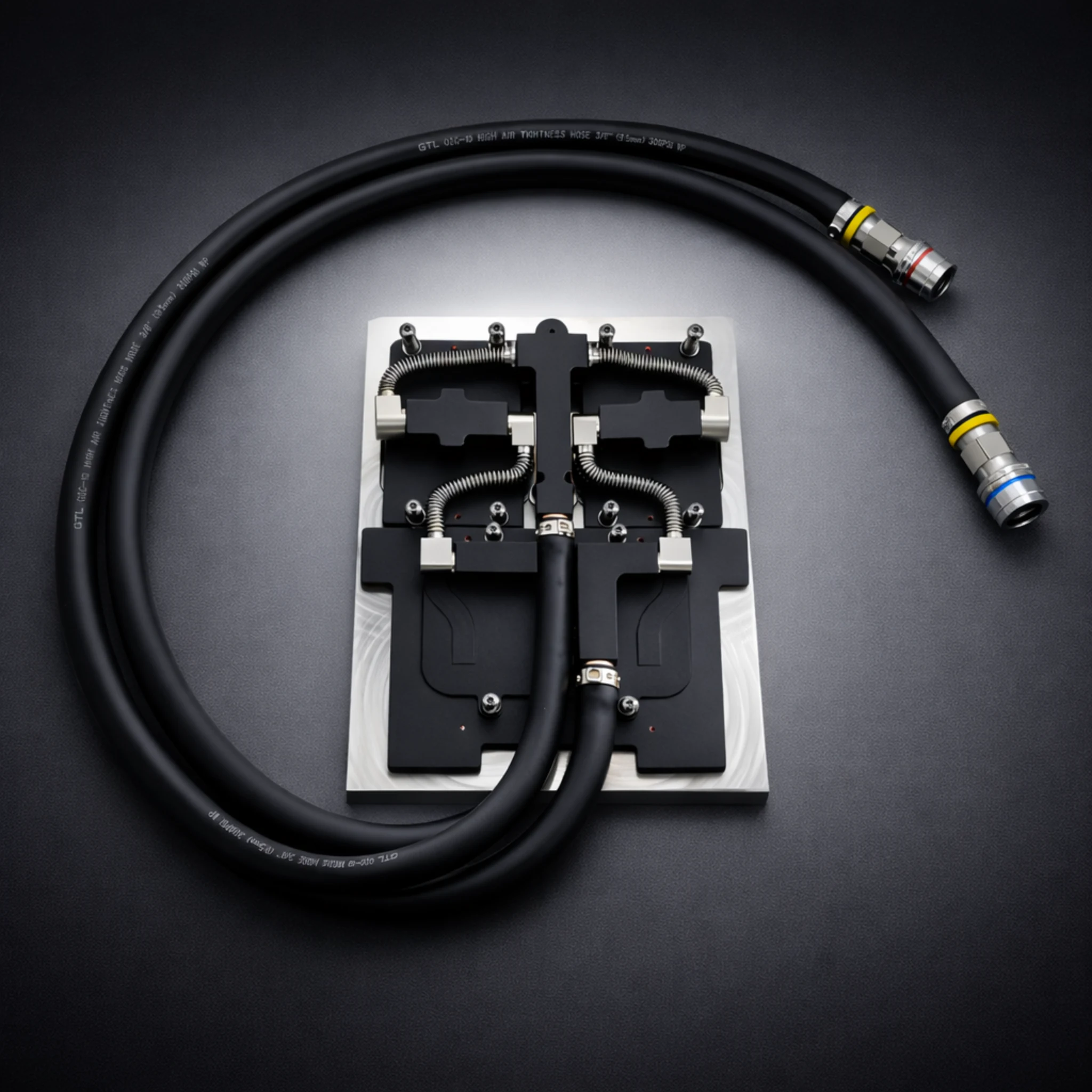
This comprehensive guide covers layer cold plates achieve solutions for industrial and OEM applications. ToneCooling provides expert insights on layer cold plates achieve technology and implementation.
Cooling high density devices in limited space has become a critical challenge in modern electronics and industrial systems. Ordinary single-layer cold plates often struggle to provide sufficient heat removal without increasing system size.
Multi-layer cold plates address this problem by stacking multiple flow channels within a compact footprint, allowing for more efficient heat transfer, reduced hotspots, and better overall thermal management. By leveraging advanced 3D flow paths and modern manufacturing techniques, they deliver high cooling performance in applications where space is at a premium.

What Is Multi Layer Cold Plates Achieve?
Structure and Design — Layer cold plates achieve
Engineers build a multi-layer cold plate by stacking several thin metal layers. Each layer contains channels that guide coolant through the plate. The design often includes fins or microchannels to increase the surface area for heat transfer.
A typical cold plate uses a network of internal paths. These paths allow coolant to flow evenly and reach every part of the plate. The stacked structure helps the plate absorb heat from high-power devices and move it away quickly.
Key Features — Layer cold plates achieve
Multi-layer cold plates offer several important features for thermal management:
- Multiple coolant channels: These channels boost the flow rate and improve cooling efficiency.
- Enhanced surface area: Fins and microchannels help the plate absorb more heat.
- 3D flow paths: Coolant travels in three dimensions, reaching all hot spots.
- High-pressure tolerance: The plate can handle strong coolant flow without leaking.
| Feature | Benefit |
|---|---|
| Multiple layers | Better heat absorption |
| Microchannels/fins | Increased surface area |
| 3D coolant flow | Uniform cooling |
| Compact size | Fits in small spaces |
Multi-layer cold plates use liquid coolant to remove heat from electronics and other devices. The advanced design supports reliable thermal performance in demanding environments.
How Multi-layer Cold Plates Work
Multiple internal paths
Multi-layer cold plates use several internal channels to guide coolant through the structure. These channels create many routes for heat transfer between the device and the coolant. Engineers design each path to maximize contact with hot surfaces, which improves cooling.
The coolant flows through these paths and absorbs heat from the device. As the coolant moves, it carries the heat away from the source. This process keeps the temperature stable and prevents overheating.
3D flow path
A multi-layer cold plate uses a three-dimensional flow path to boost heat transfer. The coolant moves not only in straight lines but also up, down, and across layers. This 3D movement increases the contact area between the coolant and the metal surfaces.
The design helps the coolant reach every part of the cold plate. Hot spots receive direct cooling, which leads to even heat transfer across the entire plate. The 3D flow path also reduces the risk of thermal buildup in any single area.
| Flow Path Type | Heat Transfer Efficiency | Cooling Coverage |
|---|---|---|
| 2D | Moderate | Partial |
| 3D | High | Complete |
Heat absorption and dissipation
The cold plate absorbs heat from the device through its metal layers. The coolant inside the channels picks up this heat during contact. As the coolant flows, it transports the heat away from the plate.
Heat transfer happens quickly because of the large surface area and the movement of the coolant. The plate then releases the heat into another system, such as a radiator or heat exchanger. This cycle repeats, which keeps the device cool and maintains stable thermal performance.
A liquid cold plate uses this method to manage heat in high-power electronics. The combination of multiple paths, 3D flow, and efficient heat transfer makes these plates essential for advanced cooling systems.

Manufacturing Methods
Vacuum Brazing
Vacuum brazing joins metal layers inside a sealed chamber with no air. Engineers heat the metals until a filler material melts and flows between the layers. The process creates strong, leak-proof bonds without oxidation.
Manufacturers use vacuum brazing for cold plates that need high reliability. The technique works well for copper and aluminum. It also helps prevent contamination and ensures consistent thermal performance.
Friction Stir Welding (FSW)
Friction stir welding uses a rotating tool to join metal layers. The tool moves along the seam and heats the metals by friction. The metals soften and mix together, forming a solid bond as they cool.
FSW creates joints with high strength and low distortion. Engineers prefer this method for aluminum cold plates. The process does not melt the metals, so it reduces defects and improves durability.
| Method | Strength | Distortion | Suitability |
|---|---|---|---|
| Friction Stir Welding | High | Low | Aluminum plates |
| Vacuum Brazing | High | Low | Complex designs |
FSW supports large cold plates and helps maintain precise internal channels. The technique works best for applications that need robust and reliable cooling.
Additive Manufacturing
Additive manufacturing builds cold plates layer by layer using 3D printing technology. Engineers design the plate on a computer and send the model to a printer. The printer deposits metal powder or wire, which fuses together to form the final shape.
This method allows for intricate internal channels and custom geometries. Additive manufacturing supports rapid prototyping and small production runs. It also enables designs that traditional methods cannot achieve.
Manufacturers use this technique for advanced cold plates in research and specialized industries. The process offers flexibility and innovation in thermal management solutions.
Key Advantages of Multi Layer Design
Superior thermal performance
Multi-layer cold plates deliver excellent thermal performance. The stacked design increases the area for heat transfer, allowing the coolant to absorb more heat from electronics. This approach supports thermal management in high-density electronics, electric vehicles, and data centers, where stable temperatures are vital.
Compact and space-saving
Engineers design these cold plates to fit into tight spaces. The multi-layer structure allows for efficient thermal management without taking up much room. Many cooling systems in advanced electronics and electric vehicles rely on this compact design to maximize space.
High reliability
A multi-layer cold plate offers strong reliability for demanding environments. The robust construction prevents leaks and ensures consistent coolant flow. Reliable thermal management protects sensitive electronics from overheating and extends their lifespan.
Maximum heat transfer
The internal channels and 3D flow paths boost heat transfer. Coolant moves through every layer, reaching all hot spots and removing heat quickly. This process improves cooling efficiency and supports stable thermal performance in critical systems.
Customizable Design
Engineers can customize each cold plate for specific cooling needs. They adjust the number of layers, channel shapes, and coolant paths to match the thermal load. This flexibility helps optimize thermal management for different electronics, battery modules, and high-performance cooling systems.
| Application Area | Why Efficient Cooling Matters |
|---|---|
| High-density electronics | Prevents overheating and failures |
| Electric vehicles | Maintains battery safety and lifespan |
| Data centers | Supports continuous operation |
Applications of Multi Layer Cold Plates
Medical equipment
Medical devices often generate significant heat during operation. Multi-layer cold plates help maintain safe temperatures by moving coolant through internal channels. This cooling method protects sensitive components and ensures reliable performance in imaging machines and laboratory analyzers.
Aerospace and defense
Aerospace and defense systems require stable operation in extreme environments. Multi-layer cold plates provide effective cooling for avionics, radar, and power electronics cooling. The coolant flows through the plate, removing heat and supporting high efficiency even under heavy loads.
High-density servers and data centers
Data centers use high-density servers that produce large amounts of heat. Multi-layer cold plates offer advanced thermal management by circulating coolant through compact spaces. This liquid cooling system improves heat transfer and keeps equipment running smoothly.
Electric vehicle battery modules
Electric vehicles need efficient cooling to protect battery modules and power electronics. Multi-layer cold plates use multiple coolant paths to absorb and remove heat quickly. This process extends battery life and maintains safe operation during charging and driving.
Conclusion
Multi-layer cold plates combine compact design with advanced cooling capabilities, making them ideal for high-density electronics, electric vehicles, data centers, and aerospace systems. Their stacked channels, 3D flow paths, and flexible manufacturing options ensure maximum heat transfer, consistent cooling, and long-term reliability.
By efficiently removing heat in minimal space, multi-layer cold plates enable stable operation and protect sensitive components in even the most demanding applications.
For industry standards and best practices, refer to ASHRAE thermal guidelines.
Frequently Asked Questions
Does ToneCooling offer OEM and ODM services?
Yes. ToneCooling provides full OEM and ODM services including custom design, prototyping, thermal simulation, and volume production. We serve customers in North America, Europe, and Asia-Pacific with engineering support and samples within 2–4 weeks.
What materials are used in ToneCooling liquid cold plates?
ToneCooling manufactures cold plates in aluminum (6061/6063), copper (C1100/C1020), and stainless steel. Aluminum FSW cold plates are ideal for high-volume EV and industrial applications, while copper brazed cold plates provide maximum thermal conductivity (398 W/m·K) for high heat flux electronics.
What is the typical lead time for custom cold plates?
Prototype samples are delivered within 2–4 weeks. Production orders typically ship within 4–6 weeks after sample approval. ToneCooling responds to all quote requests within 24 business hours.
Get a Custom Thermal Solution from ToneCooling
ToneCooling is a professional liquid cooling solution provider specializing in custom cold plates, AIO coolers, and advanced thermal management systems. With ISO 9001:2015 certified manufacturing, we deliver prototype samples within 2–4 weeks. Contact ToneCooling today for a free consultation and quote — we respond within 24 business hours.
For industry standards and best practices, refer to ASHRAE thermal guidelines.
Frequently Asked Questions
Does ToneCooling offer OEM and ODM services?
Yes. ToneCooling provides full OEM and ODM services including custom design, prototyping, thermal simulation, and volume production. We serve customers in North America, Europe, and Asia-Pacific with engineering support and samples within 2–4 weeks.
What materials are used in ToneCooling liquid cold plates?
ToneCooling manufactures cold plates in aluminum (6061/6063), copper (C1100/C1020), and stainless steel. Aluminum FSW cold plates are ideal for high-volume EV and industrial applications, while copper brazed cold plates provide maximum thermal conductivity (398 W/m·K) for high heat flux electronics.
What is the typical lead time for custom cold plates?
Prototype samples are delivered within 2–4 weeks. Production orders typically ship within 4–6 weeks after sample approval. ToneCooling responds to all quote requests within 24 business hours.
Get a Custom Thermal Solution from ToneCooling
ToneCooling is a professional liquid cooling solution provider specializing in custom cold plates, AIO coolers, and advanced thermal management systems. With ISO 9001:2015 certified manufacturing, we deliver prototype samples within 2–4 weeks. Contact ToneCooling today for a free consultation and quote — we respond within 24 business hours.
Need a Custom Liquid Cold Plate?
Multi Layer Cold Plates Achieve is a high-performance thermal management solution engineered by ToneCooling for demanding applications.
ToneCooling engineers design thermal solutions for your specific requirements. Get an engineering RFQ review based on your uploaded requirements.
Multi Layer Cold Plate Design is a critical component in modern thermal management. ToneCooling engineers this solution for AI servers, data centers, EV batteries, and power electronics requiring high-performance liquid cooling.
Multi Layer Cold Plate Design: Key Specifications
When evaluating multi layer cold plate design, engineers consider thermal resistance, pressure drop, flow rate, and material compatibility. ToneCooling provides detailed specs for every multi layer cold plate design design, backed by CFD simulation and testing.
Why Choose ToneCooling for Multi Layer Cold Plate Design
ToneCooling has manufactured over 50,000 multi layer cold plate design units for global OEM customers. Our multi layer cold plate design production features vacuum brazing furnaces below 10⁻⁴ mbar, FSW machines with ≤0.02mm flatness, and helium leak detection at 10⁻⁸ mbar·L/s. Every multi layer cold plate design undergoes 100% pressure testing at 25 bar.
Our engineering team provides free multi layer cold plate design design consultation, CFD simulation, and rapid prototyping in 7-14 days. Production multi layer cold plate design orders ship in 4-6 weeks under ISO 9001:2015 quality management.
Need a Custom Liquid Cold Plate?
ToneCooling engineers design thermal solutions for your requirements. Response within 24-48 hours.
Last Updated: 2026-04-08
DR Kevin, Thermal Engineer, ToneCooling
References: ISO 9001