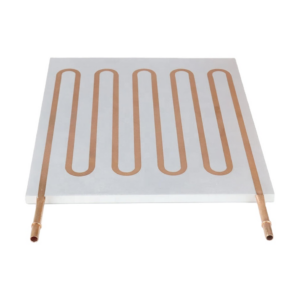
Liquid cold plates are sealed by brazing, friction stir welding, laser welding or diffusion bonding; the right technique depends on material, channel complexity and production volume. ToneCooling selects the joining process during DFM review.
For an overview of designs and standard kits, see our liquid cold plates page.
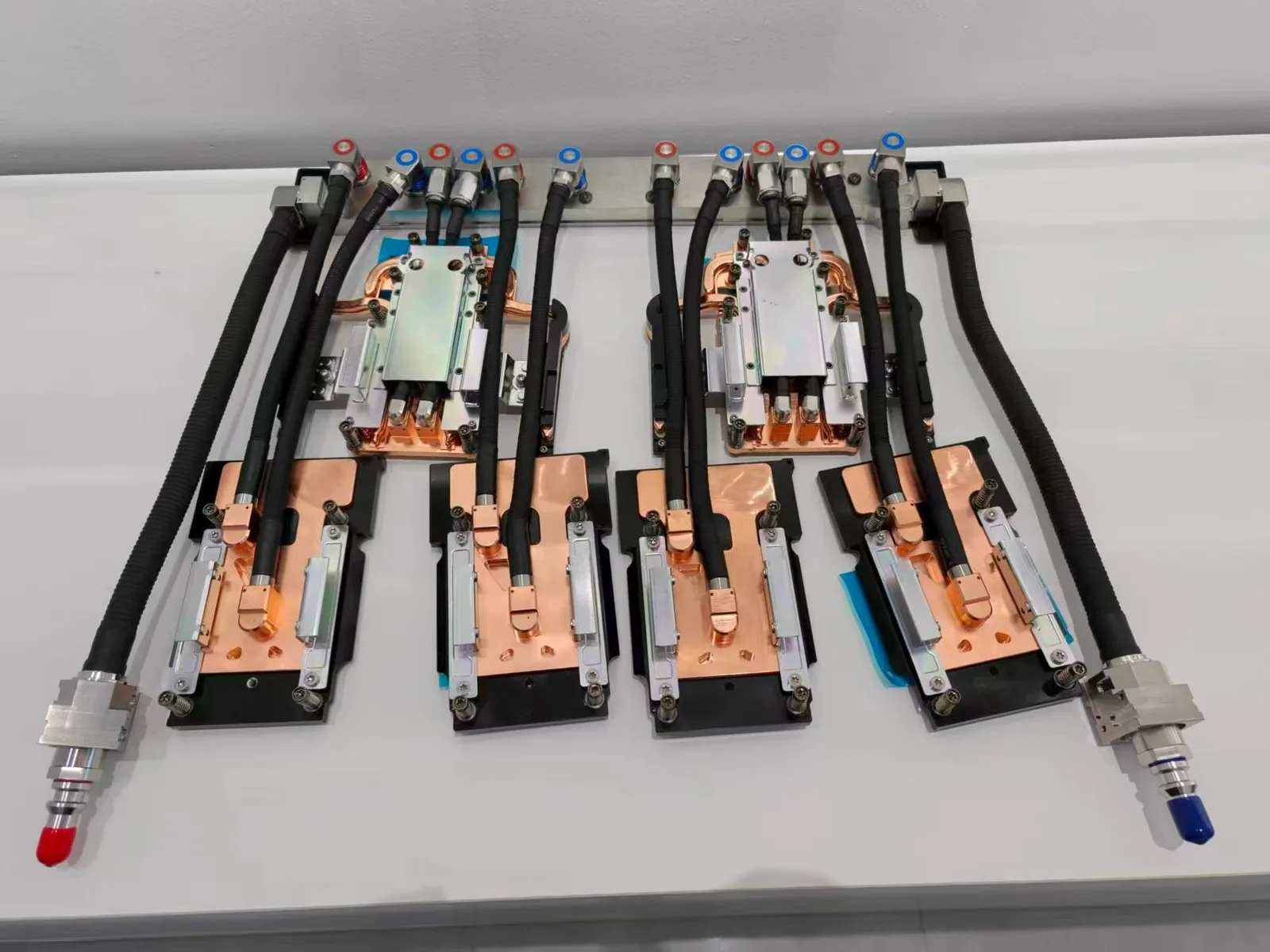
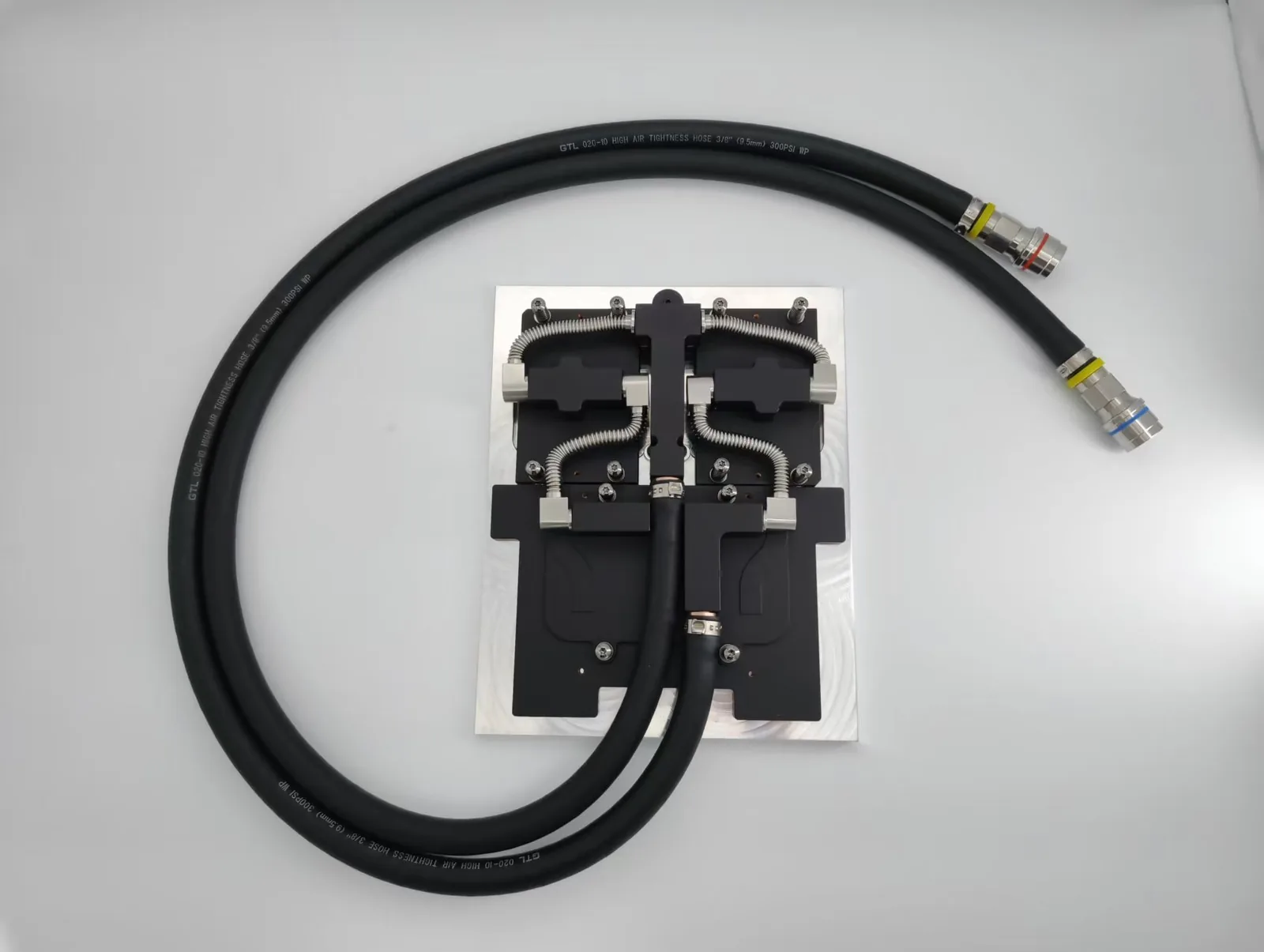
Liquid cold plates are premium components of advanced thermal management systems, designed to dissipate heat from high-performance electronics and systems efficiently and quickly. They consist of machined channels through which a coolant is pumped, thereby enabling the effective dissipation of heat from devices such as electric vehicle (EV) batteries, data center servers, and aerospace control units.
Welding is also very important in the manufacture of liquid cold plates since it seals the base plate with channels in a planar cover sheet. The welding process directly determines the cost, dependability, thermal performance, and mechanical reliability of the cold plate.
Of the top techniques—Friction Stir Welding (FSW), Vacuum Brazing, and Laser Welding—FSW has been the most dependable since it causes minimal distortion and excellent leak-tightness. This article is extremely comprehensive on these welding methods, focusing on how to perform them, the benefits, and how to improve the design.

Friction Stir Welding is a process of joining without melting. There is an investigation and a shoulder on a rotating tool that has been specifically engineered for this, which is placed in the gap between two plates. The tool is passed along the joint line, and heat caused by friction melts the material, but it does not melt it. When cooled, the material is blended under pressure to form a very strong, uniform joint.
Preventing melting avoids problems that are common in using fusion welding, including cracking upon solidification, gas porosity, and shrinkage. FSW is very well suited for aluminum alloys, especially the 1xxx and 6xxx series, widely used to fabricate cold plates for liquid.
Why is FSW Appropriate for Cold Plate Welding?
There are no fewer than several benefits of Friction Stir Welding on cold plates. The welds produced are drip, which is leak-free with an internal pressure capacity of 300 bar, which is high for liquid cooling applications. The heat input is low and concentrated, causing small warping and better dimension control.
FSW joints also have improved thermal conductivity because the parent metal grain structure is preserved, unlike the fusion processes that may degrade heat transfer properties. Furthermore, the process is clean and does not need any filler metals or shielding gases, thus environmentally safer and lowers production costs.
Welding Process in Steps
Preparation of the Parts and Clamping
Before welding begins, precise CNC machining forms the cooling channels in the base plate. The cover sheet is made to order and is typically 1–2 mm thick.
Correct clamping is very important in welding to avoid misalignment or shifting. Special fixturing systems maintain firm holding of the pieces throughout the welding operation. To ensure weld depth and thermal performance, alignment and flatness tolerances must be extremely tight.
Tool Setting and Application
The tool geometry and process settings are very critical for establishing weld quality. Significant considerations are:
- Rotational Speed: Typically between 1000 and 2000 RPM, which impacts the level of heat that enters.
- Traverse Speed: The velocity at which the tool is moved; it balances the level of heat and mechanical mixing.
- Plunge Depth: Makes sure that the whole thing touches without thinning the material.
- Tilt Angle: Generally between 2° and 4°, this allows for material flow and pushes pressure behind the tool.
CNC-programmed trajectories are used in higher-end FSW equipment to keep everything consistent. The process must precisely avoid creating defects like “kissing bonds,” which form when there is not enough stirring and look perfect on the surface but are mechanically weak altogether.
Quality Control Steps
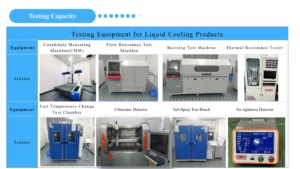
Comprehensive quality checks are required after welding. They involve:
- Visual inspection: Verifies weld bead appearance and surface continuity.
- Pressure Testing: Leverage the use of burst and leak tests to confirm seals for integrity.
- Non-Destructive Testing (NDT): Includes ultrasonic inspection to find defects hidden below the surface.
- Metallographic Analysis: Study of microstructure in cross-section to validate that the grain refinement is accurate and that no voids are present.
Adherence to international standards like ISO 25239 provides production to industry standards, weld quality, and mechanical performance.

Comparative Analysis of Welding Methods
FSW compared to Vacuum Brazing
Vacuum brazing is an older process that depends on filler metals and atmosphere-controlled ovens. It is efficient, but it is extremely costly to run, and it cycles slowly.
| Parameter | FSW | Vacuum Brazing |
| Cycle Time | Fast | Slow |
| Maintenance | Low | High |
| Defect Risk | Low (no porosity) | High (porosity, leakage) |
Porosity can be hard to find in brazed joints, but it is essential for reliability, especially when pressure is altered.
FSW vs. Laser/Wire Braided Tubes
People use laser welding and wire brazing to create cold plates out of tubes. These are melting, filler material addition, and complicating things. They have a few problems, although they are accurate:
- Need very tightly controlled environments.
- More susceptible to inclusions and porosity.
- Not as strong mechanically as FSW.
Tube-based designs create dead flow zones, too, reducing thermal efficiency. FSW offers greater flexibility of choice in how you structure the channel geometry and eliminates these thermal problems.
FSW vs. Fusion Processes (TIG/MIG)
Tungsten Inert Gas (TIG) and Metal Inert Gas (MIG) are two fusion welding processes that produce enormous heat-affected zones (HAZ). This can lead to:
- Heat distortion.
- Degradation of microstructure.
- Residual stresses.
FSW achieves this by preserving the base material properties and forming a joint that is always perfect and free of any lack or defect.
Design Optimization Tips
Designing FSW cold plate production requires some considerations:
- Material selection: 6xxx aluminum (like 6061) for sufficient strength and conductivity; 1xxx aluminum (like 1050) for higher thermal conductivity.
- Channel geometry: Reduce dead volume and streamline flow with micro-channels, fins, or serpentine channels.
- Tool Path Programming: Avoid overlaps, and make sure you have an exit so welds do not crack in high-stress areas.
- Clamping and holding: Solid supports for elements up to 1500 mm long, 1000 mm wide, and 20 mm thick.
Post-weld machining should also be considered if assembly flatness tolerance is very important.
Applications and Benefits: A quick look
FSW-welded cold plates are extensively used in applications where they need to be highly reliable under heat and mechanical stress:
- Aerospace: Avionics, radar systems, and satellite modules are all components of aerospace.
- Automotive (EVs): Electric vehicles (EVs) have battery cooling and inverter modules.
- Data Centers: Chilled server blades.
- Defense: Electronic warfare systems.
Some advantages are:
- A leak-free assembly.
- Very minimal distortion and excellent mechanical uniformity.
- Good for the environment (no flux, no noxious fumes).
- Much work is accomplished with good quality each time

Conclusion
Friction Stir welding is the best way of manufacturing liquid cold plates because of all the benefits it has. It guarantees high thermal performance, dimensional stability, and structural integrity, but eases manufacturing and lowers costs.
FSW is the best way of managing heat in those industries where it can dictate how well a product performs and how safe it is. Manufacturers and designers who want to make sure their designs will be durable must put this technology on their development list.
BUY FSW LIQUID COLD PLATES HERE
For industry standards and best practices, refer to American Welding Society.
Frequently Asked Questions
Does ToneCooling offer OEM and ODM services?
Yes. ToneCooling provides full OEM and ODM services including custom design, prototyping, thermal simulation, and volume production. We serve customers in North America, Europe, and Asia-Pacific with engineering support and samples within 4–6 weeks.
What materials are used in ToneCooling liquid cold plates?
ToneCooling manufactures cold plates in aluminum (6061/6063), copper (C1100/C1020), and stainless steel. Aluminum FSW cold plates are ideal for high-volume EV and industrial applications, while copper cold plates provide the highest thermal conductivity for high heat flux electronics.
What is the typical lead time for custom cold plates?
Prototype samples are delivered within 4–6 weeks. Production orders typically ship within 6–8 weeks after sample approval. An engineer reviews every RFQ and replies by email with next steps.
Get a Custom Thermal Solution from ToneCooling
ToneCooling is a professional liquid cooling solution provider specializing in custom cold plates, AIO coolers, and advanced thermal management systems. With ISO 9001 quality management and our own manufacturing facility in Huizhou, China, we deliver prototype samples typically within 4–6 weeks. Contact ToneCooling today for a free consultation and quote. An engineer reviews every RFQ and replies by email with next steps.
Why Choose ToneCooling for Cold Plate Welding Methods
Engineering review and prototype planning are based on the project requirements. Custom prototype lead time is normally 4–6 weeks after drawing approval and order confirmation; confirm the production schedule in the quotation.
Need a Custom Liquid Cold Plate?
ToneCooling engineers review your drawings and requirements and reply by email with next steps.
Last updated: 2026-10-02