A heat sink releases heat into air through fins, while a cold plate transfers heat into a liquid coolant that carries it away; cold plates handle much higher heat density. ToneCooling supplies both custom heat sinks and liquid cold plates.
For an overview of designs and standard kits, see our liquid cold plates page.
Thermal management plays a critical role in ensuring that advanced electronics, power conversion systems, and high-performance computing perform properly, are stable, and are safe. Both cold plates and heatsinks are among the most popular thermal solutions. Both have their method of operation, strengths, and effects on design.
Additionally, both technologies serve to carry heat away from critical components, but do so very differently. Engineers, thermal designers, and system architects who must select the optimal cooling approaches must be aware of these differences.
This article compares heatsinks and cold plates in a structured way, looking at how they work, how well they work, how much they cost, how much space they need, and how much maintenance they need.

A heatsink is an air-cooled passive unit that draws heat away from a warm surface, such as a microprocessor or power module, and dissipates it into the surrounding air. It operates by conduction and convection: it initially receives heat from the device and then distributes it over a large surface area through air flow.
Features of Design and Material
Aluminum or copper, both effective heat conductors, are employed to manufacture most heatsinks. Copper is heavier and costlier than aluminum, but it is more effective at retaining heat.
TIMs (thermal interface materials), such as thermal grease or phase-change pads. It is usually applied to join the component to the heatsink. TIMs reduce contact resistance and enhance heat transfer.
The fin design is a critical aspect of the design since it increases the surface area and aids airflow. Depending on their application, these fins can be pin-shaped, flared, or straight. Systems that do not have fans use natural convection, while systems with fans that are mounted when performance is highly critical use forced convection.
What is a cold plate?
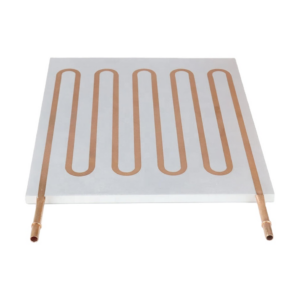
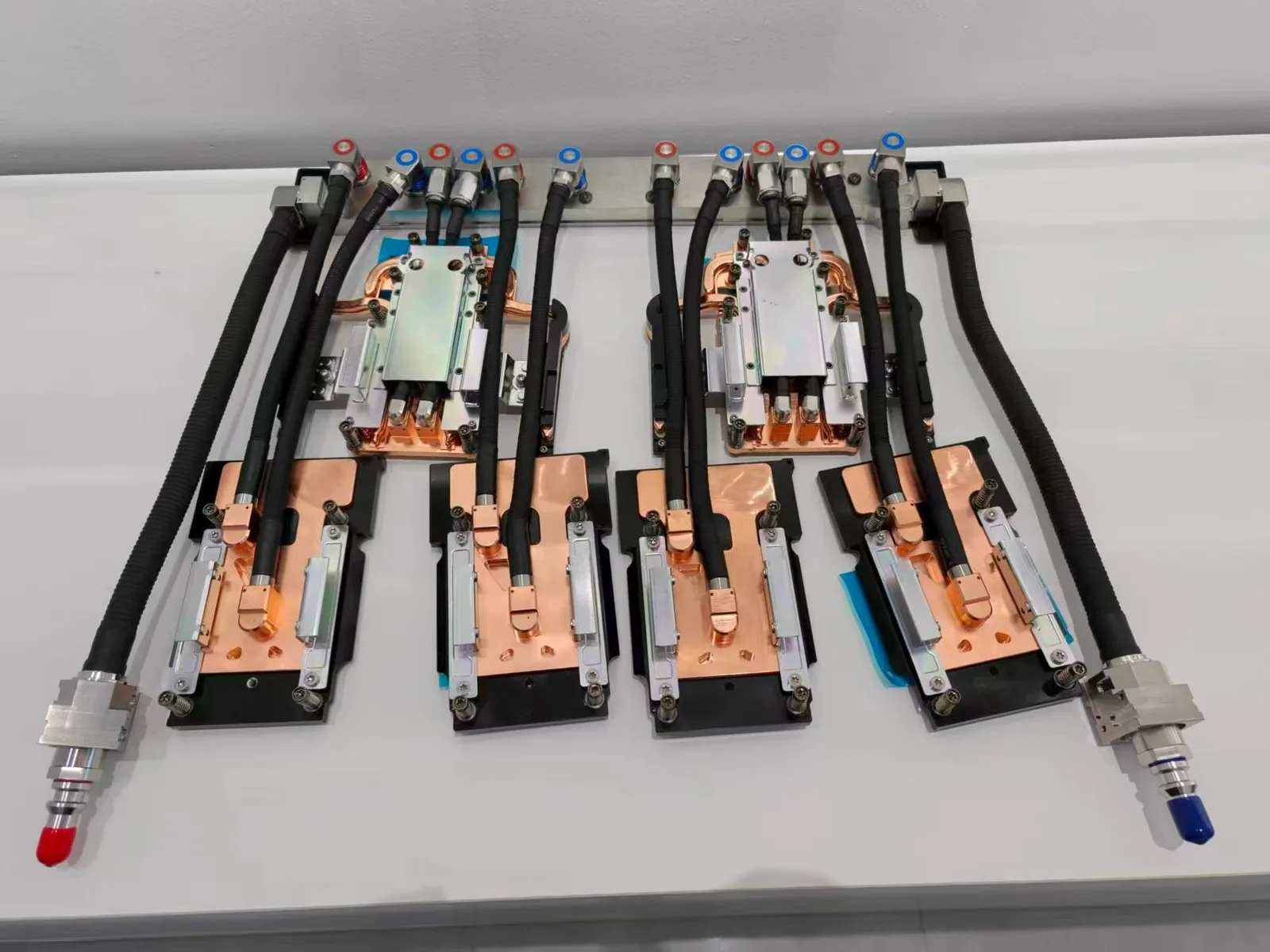
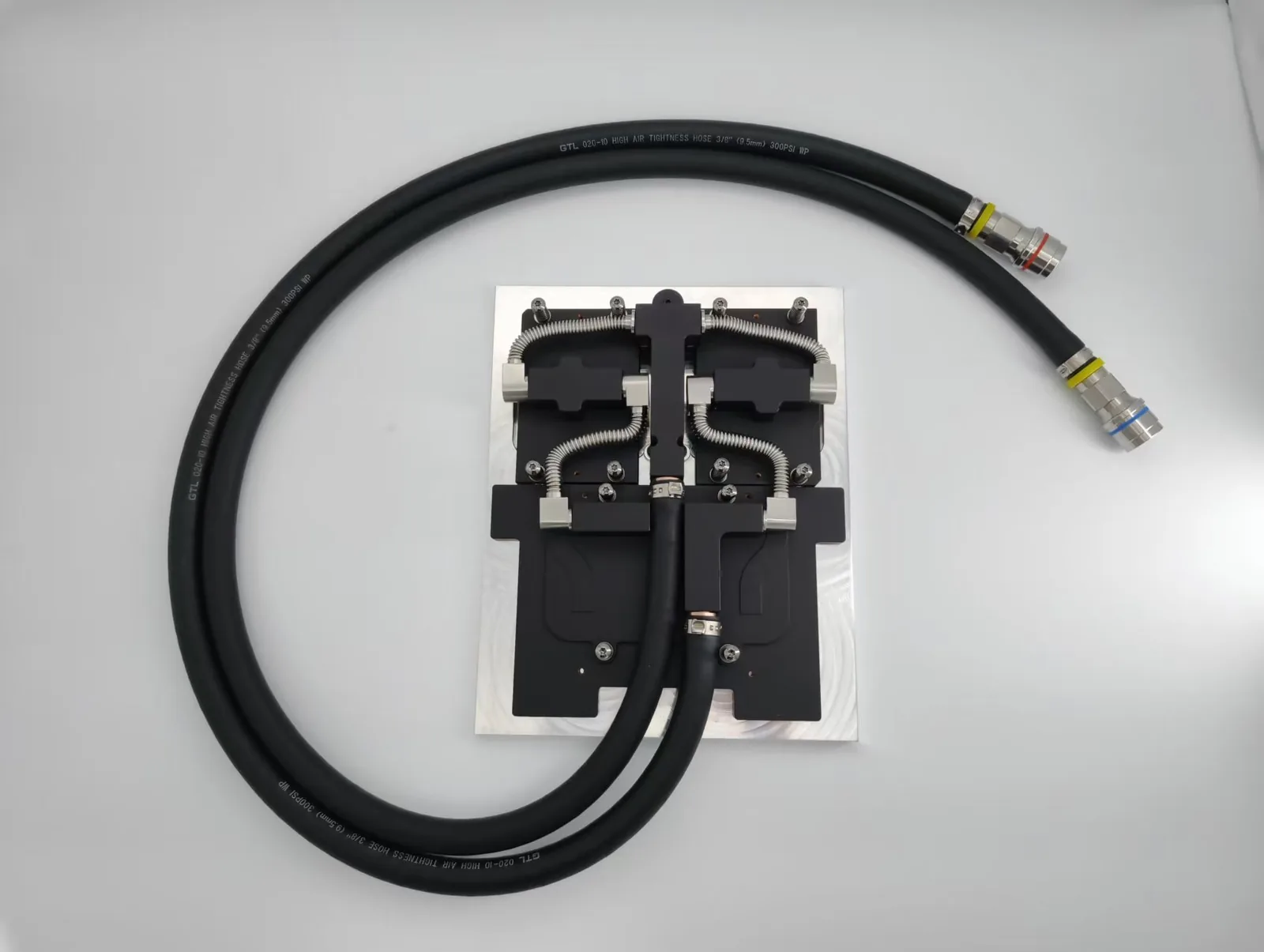
Meanwhile, a cold plate is an active liquid-cooled technique that employs a metal plate with integrated fluid channels. The channels allow a coolant to pass directly beneath the hot component, where it picks up and dissipates heat quite effectively.
How It Works
The initial step in the cooling process is conduction from the device to the cold plate surface, and convection in the liquid coolant is the second step. The coolant absorbs heat and then transfers it away via a radiator, chiller, or heat exchanger that is not in proximity to the source.
Copper or aluminum is typically employed in making cold plates, and coolant paths are precision-machined or embedded with brazed or bonded configurations. The internal channel configuration, either serpentine, parallel, or manifold, is designed to guarantee that the cooling is uniform and that the pressure drop is minimal.
Types of Coolants
- Water: Good specific heat capacity and readily available.
- Glycol-water blends: Employed in plants to prevent things from freezing.
- Dielectric liquids: It is excellent for electronics that must be insulated from electricity.
Cooling Systems and Thermal Efficiency
Heatsinks: Passive Air Cooling
Since heatsinks rely on air to transfer heat, they can’t eliminate as much heat as they would be able to if they relied on something else. The direction of air flow, the configuration of the fins, and the air temperature around them all play a significant role in how well they function. Stagnant airflow can cause systems filled with a lot of material or closed systems to function much less effectively.
Thermal resistance may be reduced in forced air-cooled systems, such as CPU coolers with fan devices, but even top-of-the-line heatsinks tend to maintain higher temperature differentials than liquid-cooled designs.
Cold Plates: Liquid Cooling in Action
Cold plates utilize liquid to transfer things from point to point, so they are much more effective at transferring heat. This reduces the material’s resistance to heat and allows heat to transfer more freely from the source.
A typical heatsink may have a thermal resistance of 0.5–2.0 °C/W, but a cold plate can work at 0.01–0.2 °C/W, depending on how it is made and how fast the coolant flows. Cold plates also have a faster thermal time constant, which is the speed at which they respond to changes in temperature. This is because the fluid can quickly carry away heat.

Applications & Performance Limits
When to Use Heatsinks
Heatsinks function optimally when the thermal load is medium, and where simplicity, reliability, and ease of maintenance are paramount. Some typical uses are:
- CPUs and GPUs.
- LED lights.
- Telecom devices.
- Power modules for industry.
Heatsinks function optimally in areas that are open and well-ventilated, or areas where liquid cooling is not feasible due to cost or space constraints.
When to Use Cold Plates
Cold plates are the go-to solution in high-power density applications where air cooling is not sufficient. They are ideal for:
- Electric vehicle (EV) power modules can employ them since they are compact and perform better than alternatives.
- Aerospace and avionics.
- Clusters of high-performance computers (HPC).
- Industrial power supplies and inverters
These applications typically require less airflow, smaller enclosures, and elevated temperatures that only cold plates can manage satisfactorily.
Design Considerations
Weight and Size
- Heatsinks tend to be large and heavy because they must have high surface areas. They tend to be light, however, since they are passive.
- Cold plates are smaller but will potentially be heavier since there is more fluid and more densely packed structures.
Price
- Heatsinks aren’t expensive. No plumbing, no moving components, and very little system integration are required.
- Cold plates are more expensive to purchase and operate initially. The cost of ownership needs to factor in the pumps, reservoirs, tubing, fittings, and control systems.
Maintenance
- For heatsinks, you just need to monitor the airflow and dust on the heatsinks from time to time.
- In cold plates, you have to monitor the coolant periodically, monitor for leaks, and manage the flow. Any type of blockage or contamination can damage how effectively the system performs.
Decision Matrix: Summary of the Comparison Criteria
| Criteria | Heatsink | Cold Plate |
|---|---|---|
| Cooling Type | Passive (Air-based) | Active (Liquid-based) |
| Thermal Efficiency | Moderate | High |
| System Cost | Low | High (includes coolant system costs) |
| Size | Large footprint, low weight | Compact footprint, higher weight |
| Maintenance | Minimal (dust cleaning) | Moderate to High (coolant upkeep, monitoring) |
| Application Fit | Low-to-medium power, simple systems | High-density, thermally constrained systems |
The appropriate selection depends on how much heat it can withstand, its design, and how easy it is to maintain in the long run. Heatsinks are appropriate for areas where cost is a concern and maintenance is minimal, while cold plates are ideal for systems that require high performance and precision.

Conclusion
Heatsinks and cold plates are two contrasting means of dealing with heat. Heatsinks are simple to employ and economical for moderate heat requirements, yet cold plates perform higher in high-demand applications.
To make an intelligent decision, design engineers must consider the thermal budget of the system, available area, and cooling infrastructure. Cold plates are the most suitable option when efficiency and heat density are top priorities. Heatsinks remain a good option for straightforward, robust solutions.
For industry standards and best practices, refer to ASHRAE thermal guidelines.
Frequently Asked Questions
Is a cold plate better than a heat sink?
For high heat density, yes: a cold plate moves heat into liquid and removes much more heat in less space. For moderate loads with enough airflow, a heat sink is simpler and cheaper.
Can a heat sink and a cold plate be used together?
Yes. Many systems liquid-cool the hottest components with cold plates and air-cool the rest with heat sinks.
When should I switch from a heat sink to a cold plate?
When the device cannot stay below its temperature limit with the available airflow, space or noise budget, or when rack or enclosure density keeps rising.
Does ToneCooling make both heat sinks and cold plates?
Yes, both as custom designs built in our own facility in Huizhou, China. An engineer reviews every RFQ and replies by email with next steps.
Get a Custom Thermal Solution from ToneCooling
ToneCooling is a professional liquid cooling solution provider specializing in custom cold plates, AIO coolers, and advanced thermal management systems. With ISO 9001 quality management and our own manufacturing facility in Huizhou, China, we deliver prototype samples typically within 4–6 weeks. Contact ToneCooling today for a free consultation and quote. An engineer reviews every RFQ and replies by email with next steps.
Industry References & Standards
Why Choose ToneCooling for Semiconductor Test Fixture Cold Plate
Engineering review and prototype planning are based on the project requirements. Custom prototype lead time is normally 4–6 weeks after drawing approval and order confirmation; confirm the production schedule in the quotation.
Need a Custom Liquid Cold Plate?
ToneCooling engineers review your drawings and requirements and reply by email with next steps.
Last updated: 2026-10-02
Related guides
- What is a cold plate — definition, how it works, main types
- Types of cooling plates — tubed, machined, brazed, FSW, microchannel
- Cold plate heat exchanger — solid-to-liquid vs plate heat exchangers
- How a cold plate works in PC water cooling — heat path, channels and flow
- Custom liquid cold plates — processes, kits and datasheets