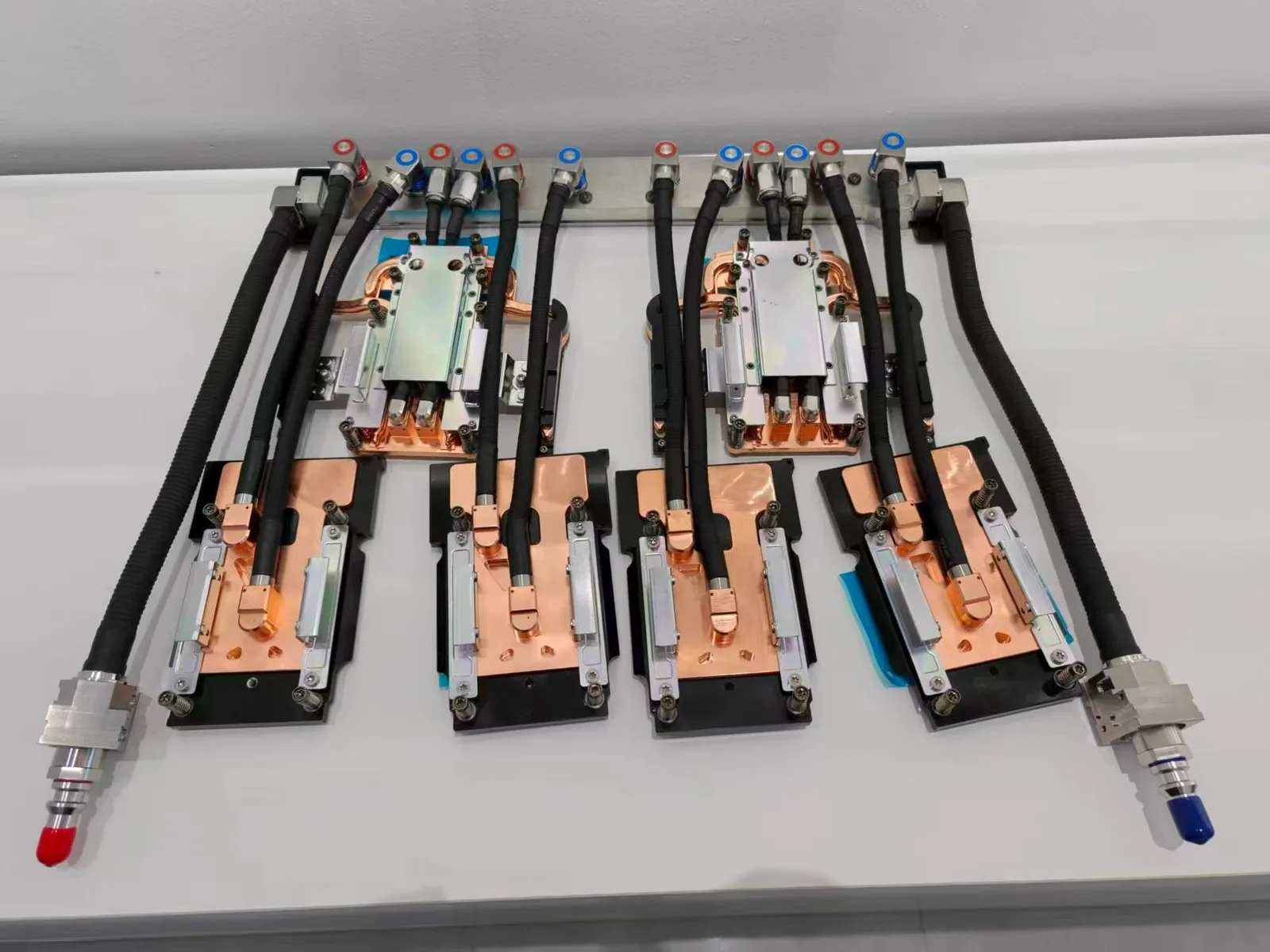
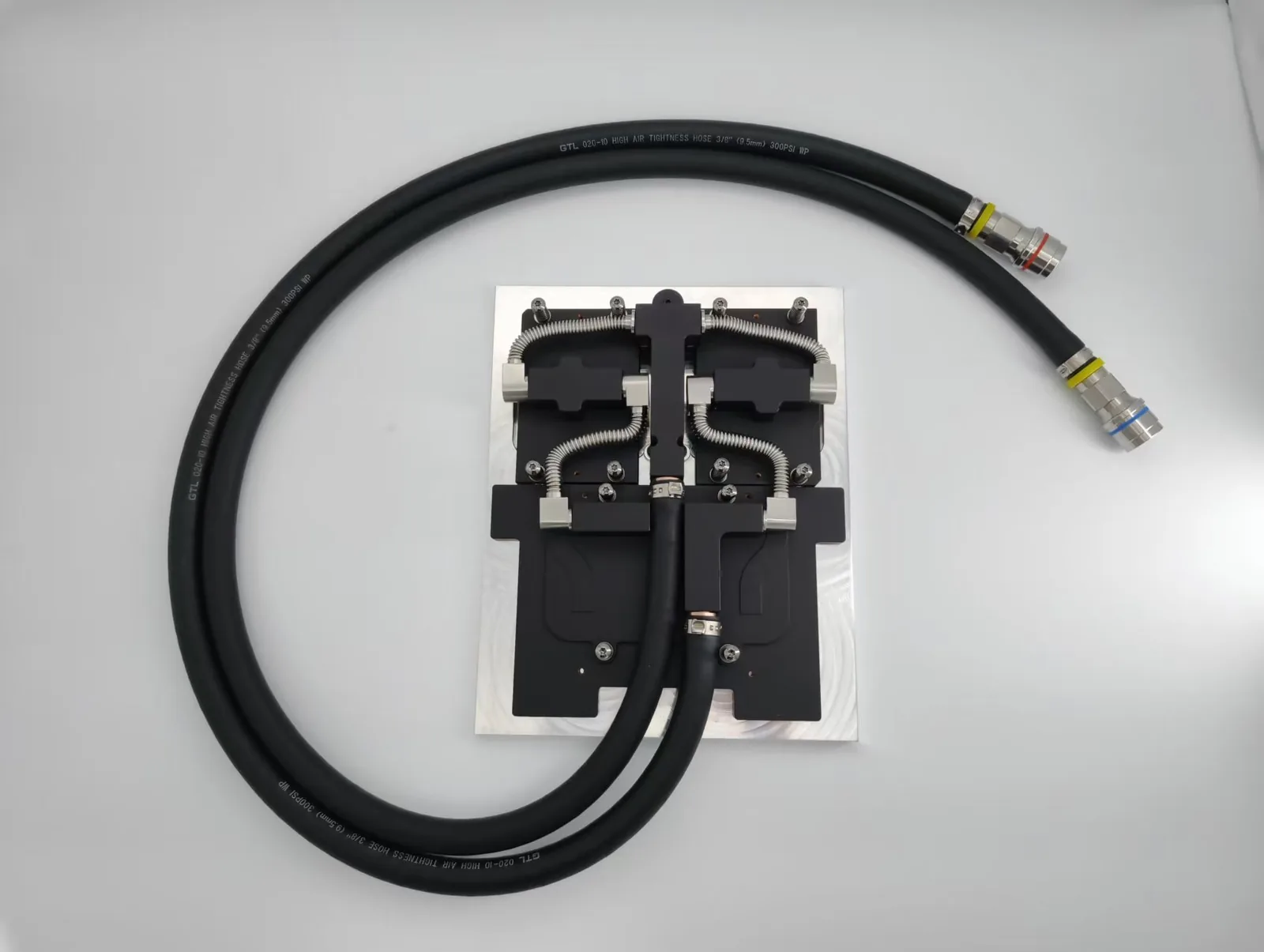
Vapor chambers are made mainly from copper for the shell and wick, with water as the usual working fluid; material purity and wick structure decide performance and reliability. ToneCooling selects materials for each custom vapor chamber.
Vapor chambers are high-tech heat spreaders commonly used in thermal management systems for high-performance electronics, such as CPUs, GPUs, LEDs, and telecommunications equipment. They work on the principles of phase-change cooling, moving heat from concentrated sources to larger surface areas where it can be effectively dissipated.
The key materials used to make vapor chambers have a big effect on how well they work and how long they last. To make sure that each part, from the outer body to the internal wick and working fluids, works as well as possible, it is important to choose them carefully.
This article gives a full overview of the key materials used to make vapor chambers, focusing on their properties, uses, and new trends.

Overview
The body of a vapor chamber acts as both a structural casing and a way for heat to move. The material must have good thermal conductivity while also being strong and resistant to corrosion.
Copper
Copper is the most common base material used to make vapor chambers because it has the best thermal conductivity (about 400 W/m·K). It makes sure that heat moves quickly and evenly throughout the vapor chamber, which makes it perfect for cooling CPUs and GPUs that need to work at high speeds.
But bare copper can rust easily, especially when it is in a humid or corrosive environment. Nickel plating is often used to make things more resistant to corrosion and ensure that solder works with them. You can make copper vapor chambers by stamping or CNC machining them and then using diffusion bonding or brazing.
Pros:
- Has the highest thermal conductivity of all common metals.
- Great for making things and works well with capillaries
- Proven dependability in business electronics
Cons:
- More weighty than aluminum.
- Needs to be treated on the surface to stop rusting.
Aluminum
Aluminum is a lightweight option that is better for places where weight is important, like aerospace, drones, and ultrathin laptops. Aluminum has a lower thermal conductivity (about 200–235 W/m·K) than copper, but it has a good balance between performance and weight.
Aluminum vapor chambers usually have copper or sintered parts inside them to make up for their lower conductivity. They might also need anodizing or surface coatings to make them less likely to corrode and better at sticking to things.
Pros:
- Not heavy.
- Affordable and easy to find.
- It is easier to work with than copper.
Cons:
- It doesn’t conduct heat as well.
- Could have problems with soldering and fluid compatibility.
Internal Wick Structures
The wick is the heart of the vapor chamber’s capillary loop. It sends condensed liquid back to the heat source through capillary action from the cooler areas.
Sintered Copper Powder
Because it has a lot of holes, is easy to move through, and works well with capillary action, this is the most common wick structure in commercial vapor chambers. It can be made to work with different heat flux densities and fluid flow rates by sintering copper particles into a porous network.
Sintered copper works well with copper bodies, making it easier to bond and make thermal contact. It also performs well in orientation-sensitive environments.
Stainless Steel Mesh
Wicks made of stainless steel mesh are very strong and can resist chemicals. Even though their capillary action isn’t as good as sintered copper’s, they are great for systems that need to be very reliable and are exposed to corrosion or mechanical vibrations.
These wicks are often used in hybrid metal chambers where a stronger material is needed for the wick without adding too much cost.
Graphite Sheets
Graphite wicks are used in small vapor chambers where thinness and conductivity in the plane are very important. It has a very high thermal conductivity, but it is brittle and hard to work with mechanically.
Graphite structures are mostly used in mobile devices or thin-profile thermal modules. They need to be put together very carefully so they don’t crack or get out of alignment.
Designs Without Wicks
Recent research looks into wickless vapor chambers that use micro-textured surfaces or patterned channels to move liquid back. These methods are still being tested, but they promise simpler designs and less internal resistance. They look very good for MEMS, 3D ICs, and micro-cooling modules.

Working Fluid of Vapor Chambers
The working fluid facilitates the phase change cycle within the vapor chamber, absorbing heat during evaporation and releasing it during condensation.
De-Ionized Water
The most common choice, because it has a lot of latent heat, is cheap and works well with copper. It works well at normal operating temperatures (30°C to 250°C) and is not very dangerous if it leaks.
Pros:
- Great at absorbing heat.
- Low viscosity for flow through capillaries.
- Safe for the environment.
Other Fluids
When things are really bad or there isn’t enough space, fluids like methanol, acetone, ammonia, or special dielectric fluids may be used. The choice depends on the boiling point, how stable it is at high temperatures, how well it works with other chemicals, and how toxic it is.
Surface Treatments & Coatings
Vapor chamber parts go through different treatments to make them last longer, be easier to solder, and resist corrosion:
- Nickel Plating: Put on copper surfaces to keep them from rusting and make it easier to connect them to soldered parts. A lot of consumer electronics have them.
- Ceramic or waterproof coatings: Advanced coatings keep electricity from flowing and chemicals from interacting with each other. Some use ceramic-sprayed layers to integrate with non-metallic device housings or rigid environments.
Structural Supports & Seal Integrity
Vapor chambers are sealed with a vacuum and need internal supports to keep them from bending when pressure is applied. For large-area chambers, stamped pillars or brazed posts are common support structures.
High-precision laser welding, hermetic soldering, or diffusion bonding keep the seal’s integrity. To keep the vacuum levels and fluid purity inside the product over time, the manufacturing process must follow low-outgassing standards.

Choosing the Right Vapor Chamber Materials
| Material / Component | Thermal Conductivity | Strength | Weight | Cost | Use Cases |
| Copper Body | Excellent | High | Heavy | Med | HPC, servers |
| Aluminum Body | Moderate | Med | Light | Low | Mobile, aerospace |
| Stainless Steel Body | Poor | High | Heavy | High | Military, chemical |
| Sintered Wick | Excellent capillary | Med | N/A | Med | Standard electronics |
| Graphite Wick | Very high (in-plane) | Low | Light | High | Thin modules |
| DI Water | High heat transfer | N/A | N/A | Low | General |
| Nickel Plating | Improves reliability | High | N/A | Med | Consumer, industrial |
Performance needs, exposure to the environment, space limitations, and budget should all play a role in making a choice.
Conclusion
Choosing the right materials is very important for the efficiency, longevity, and suitability of a vapor chamber for certain uses. Copper is still the best material for performance, but aluminum and stainless steel have advantages in terms of weight and durability. When choosing internal wick structures like sintered copper and graphite, you need to think about the heat load and the direction of the chamber. Choosing the right fluid and making sure the seals are tight are also important for keeping thermal management stable over time.
For industry standards and best practices, refer to ASHRAE technical resources.
Frequently Asked Questions
Does ToneCooling offer OEM and ODM services?
Yes. ToneCooling provides full OEM and ODM services including custom design, prototyping, thermal simulation, and volume production. We serve customers in North America, Europe, and Asia-Pacific with engineering support and samples within 4–6 weeks.
How does a vapor chamber differ from a heat pipe?
A vapor chamber spreads heat in two dimensions across a flat surface, while a heat pipe transfers heat along a single axis. Vapor chambers are ideal for high heat flux applications like GPU cooling where uniform heat spreading is critical.
Get a Custom Thermal Solution from ToneCooling
ToneCooling is a professional liquid cooling solution provider specializing in custom cold plates, AIO coolers, and advanced thermal management systems. With ISO 9001 quality management and our own manufacturing facility in Huizhou, China, we deliver prototype samples typically within 4–6 weeks. Contact ToneCooling today for a free consultation and quote. An engineer reviews every RFQ and replies by email with next steps.
References: ASHRAE thermal standards
Why Choose ToneCooling for Vapor Chamber Materials
Engineering review and prototype planning are based on the project requirements. Custom prototype lead time is normally 4–6 weeks after drawing approval and order confirmation; confirm the production schedule in the quotation.
Need a Custom Liquid Cold Plate?
ToneCooling engineers review your drawings and requirements and reply by email with next steps.
Last updated: 2026-10-02