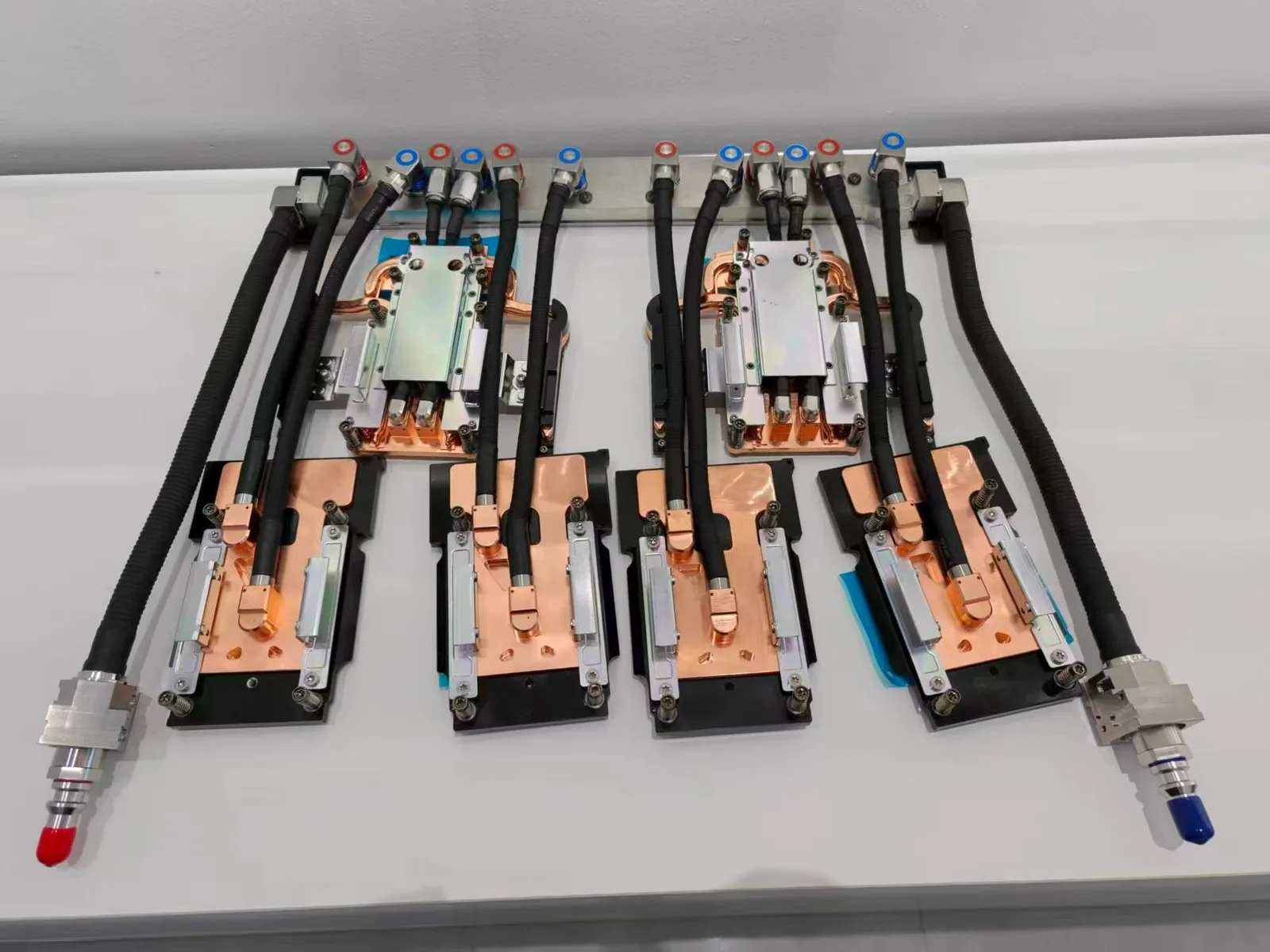
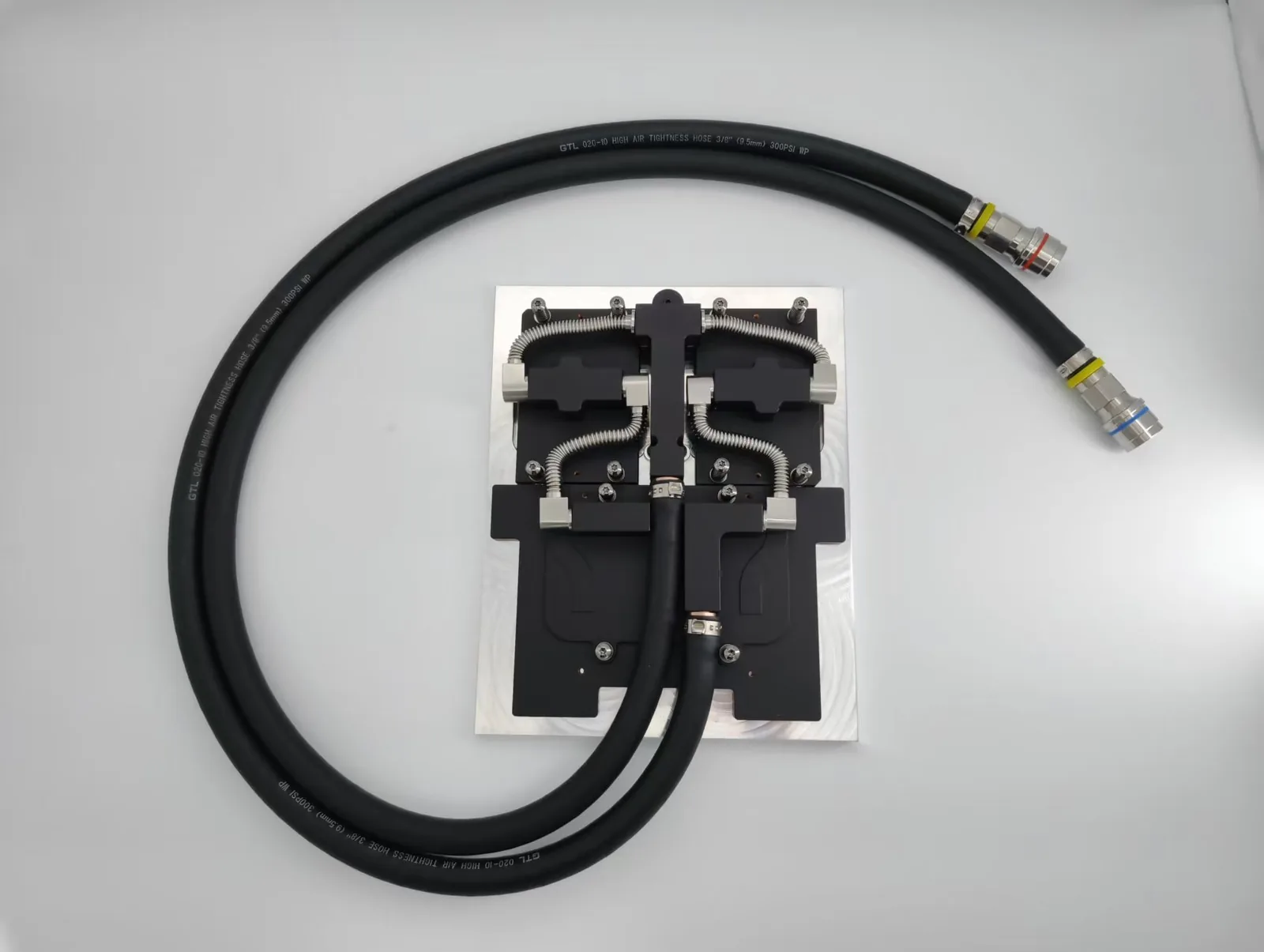
The best GPU cooling depends on heat load and space: air coolers with vapor chambers suit most cards, while liquid cooling is better for the highest-power GPUs and dense systems. ToneCooling designs custom GPU cold plates and vapor chambers.
The latest video games are far more demanding and resource-intensive, thereby making it necessary for GPUs to function at their optimum. The NVIDIA RTX 4090 and AMD Radeon RX 7900 XTX GPUs are classic examples due to their power-sapping capabilities coupled with immense heat output during active use.
If such heat is produced and is unable to be separated efficiently, the GPU reduces performance in an attempt to decrease heat buildup, known as thermal throttling. In simple terms, performance goes down, frame rate drops, and stuttering occurs – something that is highly undesirable in gaming. Sustained high temperatures over long periods can also severely damage the components of the GPU.
For these reasons, advanced cooling solutions, especially for 4K gaming, are now a necessity and not a luxury for gamers who wish to utilize virtual reality or multi-monitor configurations and desire reliable performance.
Overview of GPU Cooling Solutions
Air Cooling Solutions
Every GPU comes with an air-cooling solution, which is a combination of aluminum or copper heatsinks with 1 to 3 fans that intake fresh air while acting as exhaust for warmer air.
Mechanism: A thermal interface material (TIM) transfers heat from the GPU die to the heatsink, which is then blown off by the fans in cooling air.
Pros:
- This method is inexpensive and well supported with many models of GPUs.
- Low maintenance due to simpler design as well as ease of installation.
- Most mid-tower and full-tower PC cases can accommodate this GPU cooler.
Cons:
- Not very effective with high Thermal Design Power (TDP) GPUs.
- High RPM fans result in excessive noise when under load.
- Very limited headroom for overclocking.

All-in-One (AIO) Liquid Cooling Solutions
In comparison to other types of cooling components, AIO liquid coolers provide pre-installed equipment that consists of a water block, pump, tubing, radiator, and fans, effectively working within a closed-loop system.
Mechanism: GPU cooling depends on a copper base plate. The coolant collects heat from the GPU, then circulates it through the radiator, where it dissipates heat via fans.
Pros:
- It is ideal for water-cooled setups.
- It enhances the overall thermal performance of GPUs that are heavily overclocked.
- Cooling performance allows fans to operate at lower rpm, leading to quieter operation.
- Eliminates heat in a more efficient manner that is better than air cooling and reduces case temperatures.
Cons:
- More expensive than air cooling.
- Requires sufficient space inside the case and radiator mounting space.
- It may be complex to install for first-time users.

Vapor Chamber Cooling Solutions
Vapor chamber cooling is commonly used in high-performance GPUs, laptops, and compact systems. It enhances heat dissipation by spreading heat evenly across a large surface area, making it a step up from traditional heat pipe systems.
Mechanism: A vapor chamber is a sealed, flat metal plate containing a small amount of liquid (typically water). When the GPU die generates heat, the liquid vaporizes and spreads across the chamber. It then condenses on cooler surfaces and returns via capillary action, creating a continuous heat transfer cycle.
Pros:
- Delivers uniform heat distribution across the entire base of the heatsink, avoiding hot spots.
- Enables thinner cooler designs, suitable for slim GPUs and laptops.
- Passive vapor phase change provides effective cooling without moving parts.
- Quieter operation compared to high-RPM fan-based cooling systems.
Cons:
- More expensive than basic heat pipe designs.
- Limited thermal transfer compared to full liquid cooling loops in extreme overclocking scenarios.

Custom Loop Liquid Cooling Solutions.
This is designed by hobbyists for dynamic thermal and visual performance. It is often assembled by overclocking enthusiasts for exceptional thermal efficiency and striking appearance.
Mechanism: It’s an assembly of movement, composed of multi-component circuits consisting of several GPU blocks, CPU blocks, radiators, reservoirs, and pumps that contain fluid capable of being exposed to heat from numerous components at once. Thus, multiple parts can be cooled simultaneously.
Pros:
- Provides greater cooling potential with extreme overclocking.
- Makes it possible to cool other parts like VRMs and memory chips.
- Customization potential for aesthetic and layout purposes.
Cons:
- Significantly higher price.
- Requires technical expertise and constant upkeep of fluids.
- If assembled improperly, there is a chance of leaking due to incorrect assembly.
Comparative Analysis of Different Cooling Techniques
| Feature | Air Cooling | AIO Liquid Cooling | Vapor Chamber | Custom Loop Cooling |
| Cooling Performance | Moderate | High | Moderate to High (when combined with heatsink/fans) | Extreme (best thermal handling) |
| Noise Level | Can be loud under load | Quieter (lower fan RPMs) | Quiet (passive spread, depends on fans used) | Very quiet with quality components |
| Installation Complexity | Easy | Moderate (radiator placement required) | None (pre-installed in many GPUs/laptops) | Complex (requires pump, tubing, blocks, reservoir) |
| Maintenance | Very low | Low to moderate | None (sealed) | High (fluid changes, leak checks, etc.) |
| Form Factor Compatibility | Compatible with most cases | Requires case with radiator support | Ideal for compact designs | Needs large case with space for tubing and components |
| Overclocking Support | Limited | Good | Limited to moderate | Excellent |
| Cost | Low | Medium to High | Medium (depends on GPU/laptop integration) | Very High |
| Used In | Most consumer GPUs | High-end GPUs or modded setups | Gaming laptops, high-end reference GPUs | Enthusiast and custom-built systems |
| Cooling Method | Fans + Heatsink | Pump + Radiator + Coolant | Vapor phase change + heatsink |
|
Finding the Best Cooling Solution
1. GPU Thermal Design Power (TDP)
- Higher TDP means more heat. Air coolers struggle above ~300W; liquid or vapor chamber solutions become necessary for stable operation.
2. System Size and Case Compatibility
- Compact cases limit cooler size and airflow.
- AIO and vapor chambers suit tight builds; custom loops need larger cases with radiator space.
3. Noise Tolerance
- Air coolers with high RPM fans get loud under load.
- AIOs and vapor chambers allow quieter operation by keeping fan speeds lower.
4. Overclocking Goals
- Overclocking raises heat output.
- AIO or custom loops offer the headroom needed for sustained performance boosts.
5. Installation Skill Level
- Air and vapor chamber systems are plug-and-play.
- AIOs require moderate effort. Custom loops demand advanced setup and maintenance.
6. Budget
- Air cooling is the most affordable.
- AIOs cost more, but offer better performance. Custom loops are the most expensive, both in parts and time.
7. Maintenance Expectations
- Air and vapor chamber solutions are low maintenance.
- AIOs need occasional checks. Custom loops require regular flushing, refilling, and leak checks.
8. Use Case and Environment
- Laptops or portable systems benefit from vapor chambers.
- Desktop rigs focused on silent, high-performance gaming lean toward AIO or custom liquid cooling.
Conclusion
In the realm of high-performance gaming, efficient GPU cooling is essential. Whether going with a dependable air cooler, a visually appealing custom loop, or a quiet AIO system, the right solution keeps the gameplay smoother, the hardware more dependable, and able to handle upcoming game releases. The cooling solutions are needed to evolve alongside GPU technology and focus on becoming smarter, quieter, and more efficient.
For industry standards and best practices, refer to NVIDIA Data Center.
Frequently Asked Questions
What are the main GPU cooling solutions?
The main GPU cooling solutions are air coolers with heat pipes or a vapor chamber, all-in-one (AIO) liquid coolers, custom-loop water blocks, direct-to-chip cold plates in servers, and immersion cooling. They are listed roughly in order of increasing heat removal capacity and system complexity.
What is the best thermal solution for GPU heat dissipation?
For a gaming PC, a vapor chamber air cooler or an AIO liquid cooler is usually the best balance of performance, noise and cost. For multi-GPU workstations and AI servers running sustained full load, direct-to-chip liquid cold plates give the lowest and most stable GPU temperatures.
Is immersion cooling better than cold plates for GPUs?
Not necessarily: immersion cooling removes heat from the whole board but needs special tanks, fluids and maintenance procedures, while cold plates fit standard servers and racks. For most GPU servers, cold plates are the lower-risk path to liquid cooling.
What thermal interface material is best for GPU cooling?
The best thermal interface material depends on the gap: a thin, high-conductivity paste or phase-change material for the GPU die, and soft thermal pads for memory and power stages with larger gaps. Keep the interface as thin as mechanical tolerances allow, because it is often the largest single thermal resistance in the stack.
Get a Custom Thermal Solution from ToneCooling
ToneCooling is a professional liquid cooling solution provider specializing in custom cold plates, AIO coolers, and advanced thermal management systems. With ISO 9001 quality management and our own manufacturing facility in Huizhou, China, we deliver prototype samples typically within 4–6 weeks. Contact ToneCooling today for a free consultation and quote. An engineer reviews every RFQ and replies by email with next steps.
References: ASHRAE thermal standards
Why Choose ToneCooling for Explore GPU Cooling Solution
Engineering review and prototype planning are based on the project requirements. Custom prototype lead time is normally 4–6 weeks after drawing approval and order confirmation; confirm the production schedule in the quotation.
Building AI servers? See our standard GB300 4G+2C cold plate kit and GB200 cold plate kit, both supplied to published datasheets.
Need a Custom Liquid Cold Plate?
ToneCooling engineers review your drawings and requirements and reply by email with next steps.
Last updated: 2026-10-02