Liquid cooling lowers PC and workstation temperatures more than a vapor chamber because it moves heat out to a radiator, while a vapor chamber only spreads heat to the heat sink. ToneCooling builds both for industrial and server systems.
Efficient heat dissipation is increasingly crucial in high-performance computing devices like gaming PCs, 3D rendering stations, and data science workstations, as they enhance performance and overclocking capabilities. The most modern CPUs and GPUs have started to remove the safety limits. For powerful systems, traditional air cooling methods cannot work.
In this context, vapor chamber and liquid cooling are emerging as top contenders in maintaining optimal thermal conditions. This article delves into an in-depth analysis of both technologies to determine the most effective approach for reducing PC temperatures.
Overview
Vapor Chamber Cooling
Vaper chambers as an example of the most modern heat spreaders using phase-change techniques to control thermal energy. Usually, a vapor chamber is composed of a heat sink in the form of a chamber that is sealed or vacuum-tight and contains a small volume of liquid.
The vapor chamber cooling‘s base can be in contact with heat, which equates to a heat source. The liquid in a chamber absorbs heat, evaporating and forming vapor, while when the base of the chamber comes into contact with a heat source, it evaporates.
The vapor travels to a chamber that is cooler, where it condenses and releases heat. The vapor then condenses into liquid and is condensed, which means it returns to the hot region as liquid due to capillary action that is provided by a wick structure. Heat cycling is a process that facilitates the efficient and uniform distribution of heat across a surface through a closed-loop cycle.

Key Features:
- No moving parts, hence passive functioning.
- Can be used in multi-layer applications as they are thin and lightweight.
- Often used for mobile devices, GPUs, and CPUs.
Liquid Cooling
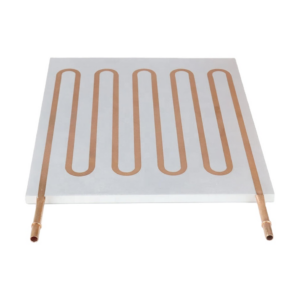
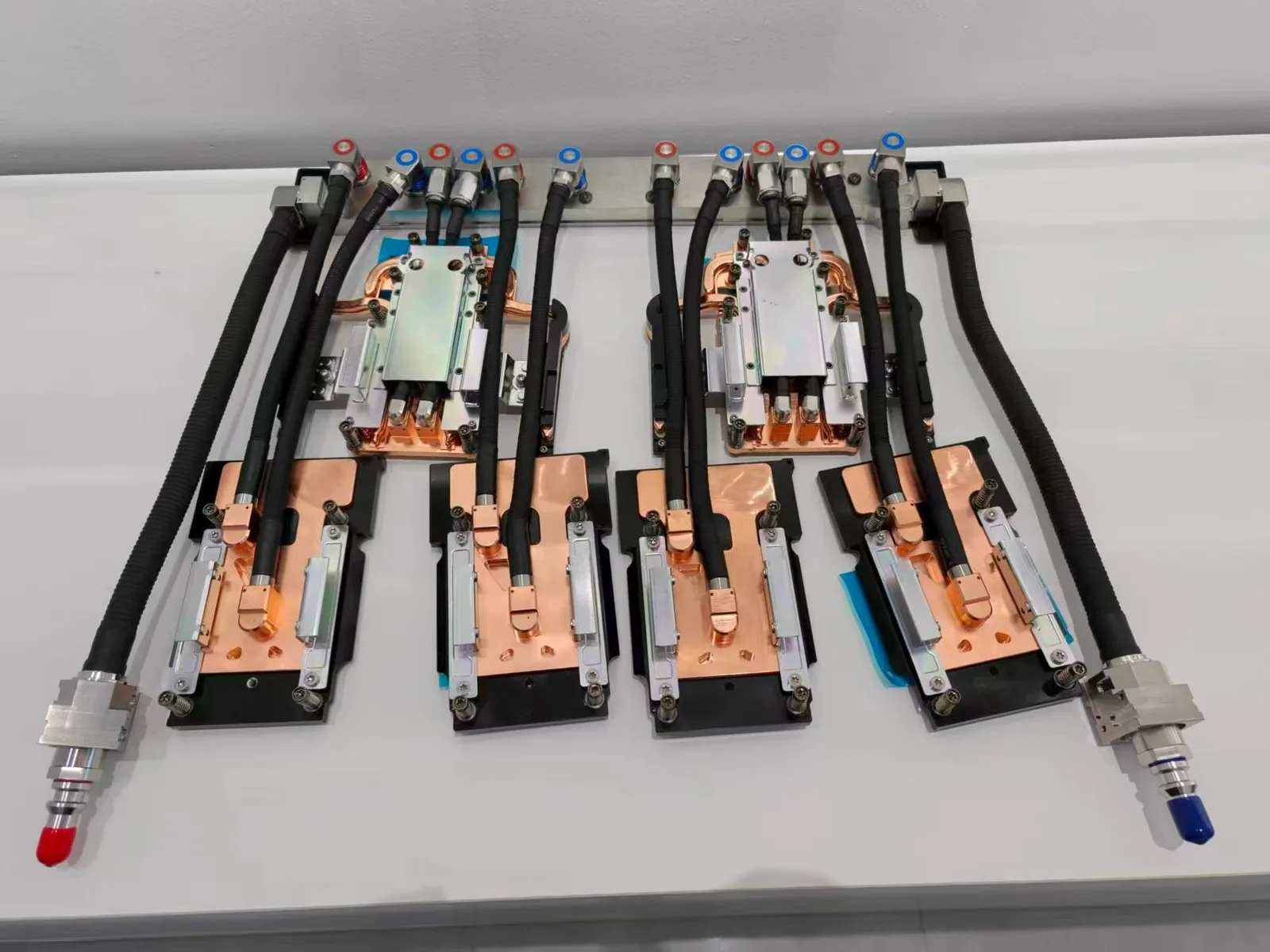
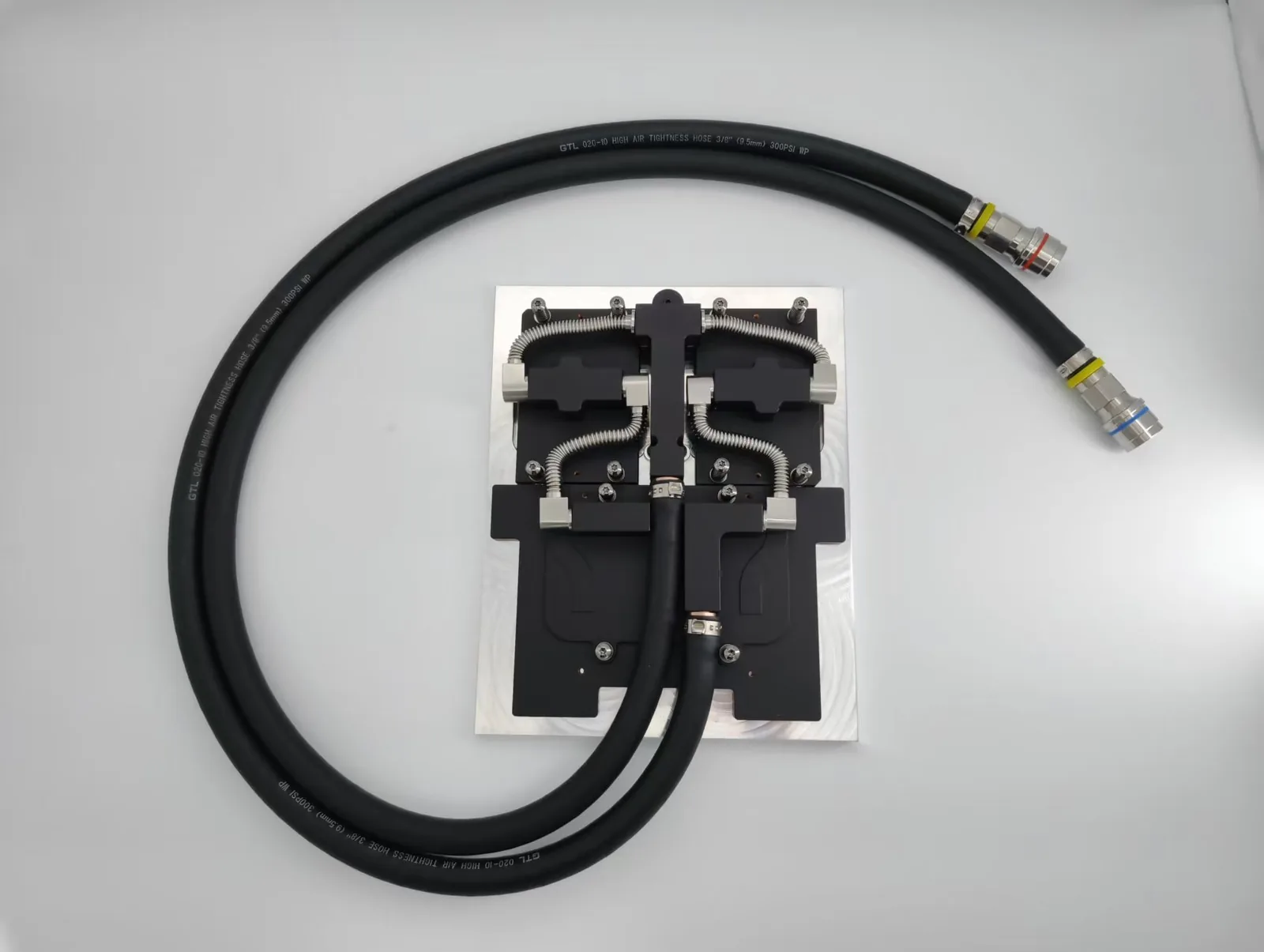
Liquid cooling involves the active transfer of heat from components using a liquid coolant. In an enclosed system, the coolant will flow to a water block that is located above active and heat-producing components.
The coolant that has been heated is then pumped and placed in a radiator that has fans to remove the heat. The liquid that has cooled is cycled back. There are two variants of liquid cooling systems: All-in-One (AIO) cooler and custom loops.
Key Features:
- Enhanced Thermal Transfer.
- Additional Support in Large Installations.


A Comparision of Vapor Chamber and Liquid Cooling
Cooling Effectiveness
Vapor Chamber: Vapor chambers are effective in distributing heat evenly across a surface. It effectively reduces surface-level thermal hotspots. Their vapor chambers are best suited for ultrabooks or compact desktops due to their space-constrained, thermally dense environments, however, they do have some limitations with passive dissipation, which does not scale well with high wattage loads.
Liquid Cooling: Liquid cooling provides a greater degree of thermal conductivity because of active heat transfer using liquid motion. It is suitable for processors with high TDP and overclocked components because of their ability to sustain lower temperatures under constant loads.
Sound Levels
Vapor Chamber: This system does not produce sound and lacks moving parts like pumps or fans. It is ideal for users who value quieter systems and acoustic performance.
Liquid Cooling: Pumps and fans on the radiator add audible sounds to AIO and custom liquid cooling setups. These pumps do make noise, but many systems include PWM controllers that reduce sound emissions under low to moderate loads.
Maintenance
Vapor Chamber: These devices can be considered completely maintenance-free due to a sealed and passive design that works reliably without user intervention after installation.
Liquid Cooling: Regular monitoring and maintenance are necessary for checking coolant levels, pump functionality, and potential leaks. Although AIOs have less maintenance than custom loops, they still have an operational limit of about 3 to 7 years.
Installation Complexity
Vapor Chamber: It is usually integrated with the cooling sinks or cooling plates. It makes the installation way simpler, especially for end-users using compact systems or those who are upgrading their laptops.
Liquid Cooling: Ranges from moderate to complex. AIOs are straightforward, while custom loops are complex. Custom setups require an understanding of tubing, fitting, reservoir positioning, and coolant filling.
Cost Considerations
Vapor Chamber: The product is cost-efficient due to its fewer components. Integrated solutions are a method that helps to reduce the total cost of ownership.
Liquid Cooling: Custom systems with separate reservoirs, pumps, tubing, and sophisticated radiators can result in increased costs, especially when incorporating high-end radiators. Value is usually seen with power users.
Suitability for Different Use Cases
Vapor Chamber Cooling:
Appropriate for:
- Ultrabooks are thin and light.
- Gaming-oriented mobile devices.
- Compact pre-built desktop computers.
- Best for environments with a focus on low noise, low maintenance, and low space usage.
Liquid Cooling:
Appropriate for:
- Custom-built gaming PCs.
- Video editing, 3D modeling workstations.
- Enthusiast builds with overclocked CPUs/GPUs.
- Best recommended if the system undergoes continuous heavy workloads requiring maximum thermal dissipation.
Real-World Scenarios:
- A developer utilizing an ultraportable thin laptop for mobile productivity would require vapor chamber cooling.
- A competitive gamer with multiple GPU configurations running overclocked components would probably be better off with a liquid cooling system with a 360mm radiator.
Conclusion:
Advanced computing hardware requires corresponding advances in cooling technology. For casual and mobile users, vapor chambers deliver quiet, compact, low-maintenance solutions while liquid cooling offers robust, but complex, cost-heavy solutions for thermally demanding workloads.
Vapor chamber cooling is ideal for high reliability, low noise, and space efficiency, while liquid cooling is ideal for performance and heat handling, depending on the system’s thermal design power.
For industry standards and best practices, refer to ASHRAE technical resources.
Frequently Asked Questions
Does ToneCooling offer OEM and ODM services?
Yes. ToneCooling provides full OEM and ODM services including custom design, prototyping, thermal simulation, and volume production. We serve customers in North America, Europe, and Asia-Pacific with engineering support and samples within 4–6 weeks.
What materials are used in ToneCooling liquid cold plates?
ToneCooling manufactures cold plates in aluminum (6061/6063), copper (C1100/C1020), and stainless steel. Aluminum FSW cold plates are ideal for high-volume EV and industrial applications, while copper cold plates provide the highest thermal conductivity for high heat flux electronics.
What is the typical lead time for custom cold plates?
Prototype samples are delivered within 4–6 weeks. Production orders typically ship within 6–8 weeks after sample approval. An engineer reviews every RFQ and replies by email with next steps.
Get a Custom Thermal Solution from ToneCooling
ToneCooling is a professional liquid cooling solution provider specializing in custom cold plates, AIO coolers, and advanced thermal management systems. With ISO 9001 quality management and our own manufacturing facility in Huizhou, China, we deliver prototype samples typically within 4–6 weeks. Contact ToneCooling today for a free consultation and quote. An engineer reviews every RFQ and replies by email with next steps.
References: ASHRAE thermal standards
Why Choose ToneCooling for Custom Vapor Chamber Manufacturer
Engineering review and prototype planning are based on the project requirements. Custom prototype lead time is normally 4–6 weeks after drawing approval and order confirmation; confirm the production schedule in the quotation.
Need a Custom Liquid Cold Plate?
ToneCooling engineers review your drawings and requirements and reply by email with next steps.
Last updated: 2026-10-02