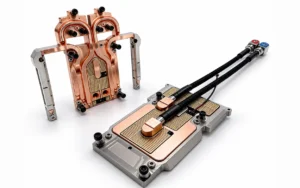
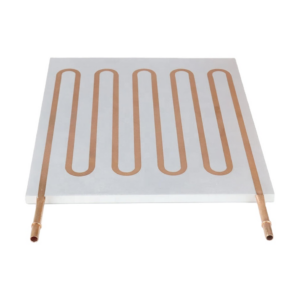
Liquid cold plate is a critical component in modern thermal management systems. ToneCooling specializes in custom liquid cold plate solutions for OEM and industrial applications. This article covers key aspects of liquid cold plate technology, design considerations, and manufacturing processes.
What Is Phase Change Indirect Liquid Cooling?
As a leading manufacturer of liquid cold plate products, ToneCooling offers comprehensive engineering support for liquid cold plate projects. Our liquid cold plate solutions are designed for maximum thermal performance, reliability, and cost-effectiveness in demanding applications.
Phase Change Indirect Liquid Cooling is a high-performance thermal management solution engineered by ToneCooling for demanding applications.
This guide on Phase-change cold plate provides key insights for engineers and procurement teams. This article reveals how phase-change indirect liquid cooling cold plates leverage latent heat to dramatically increase heat removal, compares them with traditional single-phase water cold plates, explains system architecture and materials, and outlines practical benefits and future trends for data center and AI server cooling.
1. Introduction — A Paradigm Shift in Thermal Management: From Sensible Heat to Latent Heat — Phase-change cold plate
As chip power and heat flux continue to rise — driven by AI accelerators, high-density GPUs and next-generation data-center compute nodes — traditional single-phase liquid cold plates (which rely on sensible heating of water or glycol-based liquids) are increasingly challenged. Modern chips can present local heat fluxes that quickly approach or exceed the thermal capacity of conventional cold-plate designs. When the thermal path is saturated, the entire system pays the price in reduced performance, higher energy consumption for facility cooling, and shortened component lifetime.
Phase-change indirect liquid cooling offers a fundamentally different physical mechanism. Instead of relying primarily on sensible heat (raising the fluid temperature), it uses the large energy absorbed during a liquid-to-vapor transition — the latent heat — inside a sealed cold plate cavity. The result is an almost isothermal heat transfer surface, greatly increased heat flux capability and a new route to address leakage, corrosion and water-quality problems that plague some conventional systems.

In this article we will:
- Define phase-change indirect liquid cooling and explain how it works.
- Compare its performance to traditional single-phase water cold plates.
- Describe system architecture, materials and manufacturing approaches.
- Explain how this technology addresses common pain points like leakage and corrosion.
- Present practical considerations, risks and the future outlook for data centers and AI workloads.
2. Technology Revealed — What Is a Phase-Change Indirect Liquid Cold Plate? — Phase-change cold plate
2.1 Core Concepts — Phase-change cold plate
Phase change is the process by which a substance changes state — for cooling purposes, typically liquid to vapor (evaporation) and vapor to liquid (condensation). During phase change the working fluid absorbs or releases large amounts of energy (latent heat) at nearly constant temperature. This is the principle behind heat pipes and vapor chambers.
Indirect liquid cooling means the processor or heat-spreading surface is never directly exposed to the facility coolant. Instead, heat flows through a sealed cold plate into an internal working fluid, and a secondary facility water loop then removes heat at the cold plate’s condenser section.
Combining these two ideas yields the phase-change indirect cold plate: a hermetically sealed cavity inside a cold plate that contains a low-boiling working fluid and a capillary return wick. Heat from the chip evaporates the fluid locally; vapor spreads quickly within the cavity; vapor condenses in a cooler region connected to an external water loop; condensed liquid is returned by capillary action to the evaporation zone, completing the cycle.
2.2 How It Works — Detailed Thermodynamic Cycle
- Evaporation (heat absorption): the cold plate base contacting the chip provides the heat source. The working fluid at that location boils and absorbs large latent heat without significant temperature rise.
- Vapor transport: vapor distributes rapidly across the internal cavity due to pressure differences and low flow resistance, carrying heat away from the local hot spot.
- Condensation (heat rejection): vapor reaches the condenser region where the secondary water loop (or other facility coolant) removes heat; vapor condenses and releases latent heat to the secondary loop.
- Liquid return: condensed liquid is wicked back to the evaporator by capillary forces established by a porous wick or grooved structure.
In effect, the cold plate contains thousands of microscopic ‘heat pipes’ working in parallel, but the condensed liquid circulation is contained inside the plate and the facility liquid never contacts the chip directly.
3. Re-Defining the Standard — Why Phase-Change Indirect Cooling Can Disrupt Data-Center Heat Management
3.1 Extreme Heat-Flux Handling
While conventional single-phase cold plates often manage practical thermal loads on the order of ~100 W/cm² under typical designs, phase-change plates are reported in research and early commercial systems to manage heat fluxes of several hundred W/cm² — in many demonstrations exceeding 500 W/cm² and in some cases approaching 1000 W/cm². This headroom is critical for anticipated future chip designs with extremely high localized heat generation.
3.2 Near-Isothermal Surface and Hot-Spot Elimination
Because evaporation occurs at nearly constant temperature, the surface temperature of a phase-change cold plate is extremely uniform. Chip-level hotspots are therefore spread quickly into the whole cold plate area, reducing peak junction temperatures and improving performance stability and reliability. Temperature non-uniformity commonly reduces to <1–2°C across a plate — a significant improvement over single-phase plates that can see 5–10°C differentials.
3.3 Facility-Level Efficiency Improvements (PUE)
Higher heat transfer effectiveness means the secondary facility loop can operate at higher supply temperatures while still achieving the same chip junction cooling. This enables more frequent use of free-cooling strategies (air-side economization, higher dry-bulb free-cooling windows) and reduces chiller power. Practically, some operators expect material PUE improvements and easier paths to PUE ~1.1 or below in certain climates and designs.

4. System Architecture — How a Phase-Change Indirect Cooling Solution Is Deployed
Phase-change indirect cooling should be viewed as a system, not merely a component change. A reliable deployment integrates:
4.1 The Phase-Change Cold Plate
The core module contains the sealed cavity, wick structure, evaporator area (bottom) and condenser area (top). It must be manufactured to high vacuum and sealing standards to ensure long-term stability of the working fluid.
4.2 The Secondary Cooling Loop
Standard data-center water loops (CDU) supply the cold plate condenser with water (or glycol blend). Because the cold plate condenses vapor very effectively, the secondary loop can operate at relatively higher temperatures than single-phase systems.
4.3 Mechanical and Fluid Interconnects
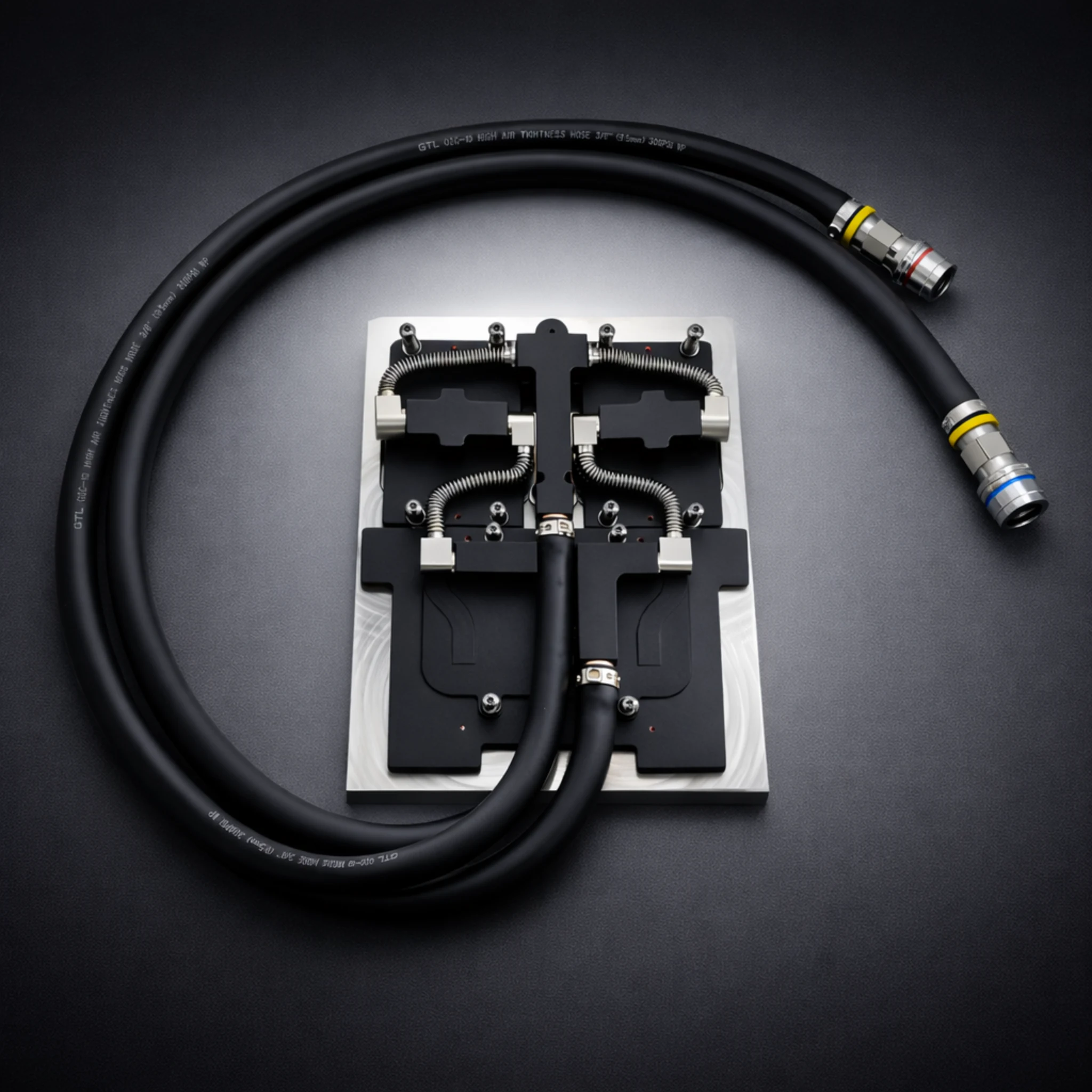
Robust quick-disconnect fittings, standardized manifolds and containment architecture enable serviceability. The design should also consider leak detection (for secondary loop) and isolation capabilities at the rack level.
4.4 Instrumentation and Controls
Real-time pressure and temperature sensors inside the cold plate (or at least at inlet/outlet and condenser locations) provide operational telemetry. Advanced systems detect ‘dry-out’ or two-phase instabilities and adjust secondary flow or redistribute load to maintain stable operation.

5. Overwhelming Advantages — Why Phase-Change is Viewed as Next-Generation
- Very high heat removal per unit area: the latent heat of vaporization permits vastly higher thermal transport than single-phase sensible heating.
- Exceptional temperature uniformity: near-isothermal operation minimizes hotspots and supports consistent chip performance.
- Separation of facility water from chip cavity: the facility loop cannot contaminate or corrode internal surfaces as in direct water-in-contact solutions.
- Passive, robust operation: the cold plate passive internal cycle has no moving parts, reducing maintenance while delivering high performance.
- Compatibility with higher secondary water temperatures: enabling better use of free cooling and reducing chiller load.
6. Final Face-Off: Phase-Change Indirect Cold Plate vs. Traditional Single-Phase Water Cold Plate
| Comparison Metric | Phase-Change Indirect Cold Plate | Traditional Single-Phase Water Cold Plate |
|---|---|---|
| Heat transfer mechanism | Latent heat (liquid↔vapor) — phase change | Sensible heating of fluid; ΔT * mass flow |
| Cooling efficiency | Extremely high (orders of magnitude in some regimes) | High but constrained by fluid cp and ΔT |
| Temperature uniformity | Excellent & near-isothermal (<1–2°C) | Moderate (5–10°C typical) |
| Heat flux capability | >500 W/cm² in advanced designs | ~100 W/cm² practical range |
| System complexity | Moderate (sealed plates, monitoring) | Moderate (pumps, piping, water chemistry) |
| Failure modes & operational risk | Dry-out or internal stability issues; mitigated by design and sensors | Leakage, corrosion, scaling, microbial growth |
| Ongoing maintenance | Lower (no open water chemistry to manage) | Higher (water treatment, filtration, corrosion control) |
| Cost (current) | Higher (advanced manufacturing, vacuum bonding) | Lower (mature, commodity manufacturing) |
7. Technical Deep Dive — Core Breakthroughs Enabling Phase-Change Cold Plates
7.1 Advanced Capillary Wick Designs
Robust capillary return is the heart of any phase-change plate. Recent advances include:
- Sintered copper powder wicks: graded porosity layers balance liquid hold-up and permeability.
- Micro-grooved and hybrid wick architectures: combine grooves for bulk transport and porous layers for local rewetting.
- Composite wicks: metal-ceramic or metal-polymer composites to tune capillary pressure and long-term mechanical integrity.
7.2 Working Fluid Selection and Compatibility
Choosing the correct working fluid requires balancing several properties:
- Boiling point vs. target evaporator temperature
- Latent heat capacity
- Vapor pressure at operating conditions
- Chemical compatibility (no corrosion, low degradation)
- Safety and environmental characteristics
Common families include water for higher-temperature operations, low-boiling organic solvents for lower-temperature ranges, and engineered fluorinated liquids for corrosive or sensitive electronics environments.
7.3 Vacuum Cavity Fabrication and Hermetic Sealing
Long-lived phase-change cold plates require high vacuum and robust sealing. Manufacturing techniques that enable consistent quality include:
- Vacuum brazing with controlled filler materials
- Electron-beam welding for minimal contamination
- Transient liquid phase diffusion bonding for metallurgical integrity
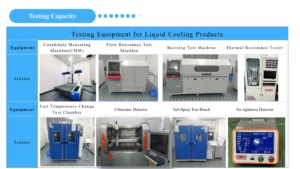
ToneCooling and other advanced manufacturers combine precision forming, vacuum processing and post-fabrication testing (e.g., leak checks, thermal cycling) to ensure lifetime reliability.
8. Pain-Point Resolution — How Phase-Change Cold Plates Solve Longstanding Issues
8.1 Water Quality and Corrosion
Traditional data-center water loops require ongoing chemistry control to avoid scaling and corrosion (oxygen scavengers, biocides, pH control). Phase-change plates physically isolate the internal working fluid from the facility loop—eliminating direct exposure of electronics to untreated water and removing an entire class of operational risk.
8.2 Leakage Consequences
Leakage in conventional single-phase systems introduces conductive fluids into racks—an immediate hazard to electronics—necessitating drip pans, isolation valves and sensor networks. Phase-change plates contain a small, sealed volume of working fluid, typically electrically non-conductive and in very controlled quantities; combined with the physical separation from facility water, the damage potential from an external leak is substantially reduced.
8.3 Simplified Operations
Beyond risk-reduction, phase-change designs simplify routine operations: no biocide dosing, little or no filter replacement associated with plate internals, and reduced need for aggressive water-quality monitoring at the rack level. This can lower operational overhead for large deployments.

9. Future Outlook, Risks and Frequently Asked Questions (FAQ)
9.1 Future Trends
- Chip-to-cold-plate co-design: Packaging interfaces may evolve to better match the isothermal surface provided by phase-change plates.
- Mass manufacturing: as the process matures, costs will decline and designs will be optimized for volume production.
- Nano-structured wicks: carbon nanotube and graphene-enhanced wicks could push capillary pressure and heat flux handling further.
- Hybrid architectures: combining small phase-change cold plates for hotspots with single-phase secondary cooling for lower-power regions.
9.2 FAQ
Q1: Do phase-change cold plates have a finite lifetime?
Yes. Lifetime depends on the stability of the working fluid, the long-term integrity of hermetic seals and the resistance of wick materials to thermal and chemical degradation. Well-engineered plates can be expected to last a decade or more under normal conditions, and manufacturers typically perform accelerated lifetime testing to validate designs.
Q2: Are phase-change cold plates more expensive?
Currently they cost more than commodity water cold plates due to advanced manufacturing (vacuum processing, precision wick fabrication). However, when total cost of ownership (TCO) is considered — including improved energy efficiency, reduced facility cooling needs, lower maintenance, and higher achievable rack density — the economics can be compelling, especially for hyperscale or AI-focused deployments.
Q3: How does gravity affect performance?
Because liquid return relies on capillary action, orientation can affect performance. High-performance designs mitigate gravitational effects with optimized wick geometry, multiple flow paths, and distributed evaporator/condenser layouts. For rack-mount and server orientations typical in data centers, designs can be tuned to be orientation-agnostic.
Q4: Are the internal working fluids safe?
Designers select fluids with appropriate flammability, toxicity and material compatibility profiles. In many designs the internal fluid volume is small and contained; some fluids are electrically non-conductive. Regulatory and safety testing governs selection for commercial deployments.
10. Practical Considerations for Deployment
- Qualification testing: thermal cycling, vibration, shock and long-term hermeticity tests are essential before deployment.
- Monitoring strategy: integrate cold-plate level temperature and pressure telemetry into rack management systems to detect anomalies (e.g., dry-out conditions) early.
- Integration: ensure secondary loop pressure and water supply temperatures are compatible with the plate condensation characteristics.
- Service & replacement: plan for modular replacement strategies to minimize data-center downtime in the event a plate needs service.
11. Conclusion — Where Phase-Change Indirect Cooling Fits in the Thermal Roadmap
Phase-change indirect liquid cold plates represent a meaningful technological step forward for thermal management in data centers and high-power computing environments. By leveraging latent heat and internal two-phase flow, these plates deliver substantially higher heat flux capacity, tighter temperature uniformity and a route to reduce facility cooling energy. They also address several long-standing operational headaches associated with direct water contact and water chemistry control.
While initial costs and manufacturing complexity are higher than mature single-phase cold-plate technologies, the performance advantages and potential operational savings — particularly for AI-dense clusters and hyperscale environments — make phase-change cold plates a compelling option for forward-looking operators. As materials, wick designs and production techniques mature, this technology is poised to move from early adoption into broader deployment.
Contact ToneCooling for Custom Data Center Liquid Cooling Solutions
ToneCooling Technology Co., Ltd specializes in custom high-performance liquid cold plates, precision vacuum brazing, advanced wick fabrication, and turnkey thermal solutions for data centers, AI servers and power electronics. With decades of R&D experience and patented manufacturing capabilities (including vacuum brazing, friction stir welding and transient liquid phase diffusion bonding), ToneCooling can help you evaluate phase-change and hybrid cooling approaches, provide CFD validation, develop prototype cold plates, and scale to mass production.
Contact us today to design a custom phase-change or liquid cold plate solution for your next-generation compute or power electronics project.
For industry standards and best practices, refer to ASHRAE thermal guidelines.
Get a Custom Thermal Solution from ToneCooling
ToneCooling is a professional liquid cooling solution provider specializing in custom cold plates, AIO coolers, and advanced thermal management systems. With ISO 9001:2015 certified manufacturing, we deliver prototype samples within 6–8 weeks. Contact ToneCooling today for a free consultation and quote — we respond within 24 business hours.
Why Choose ToneCooling for Liquid cold plate
ToneCooling provides professional liquid cold plate solutions with custom designs, fast prototyping, and competitive OEM pricing. Our liquid cold plate products serve data center, EV, industrial, and semiconductor applications worldwide.
Contact ToneCooling for custom liquid cold plate solutions. Visit tonecooling.com or email info@tonecooling.com. US: +1 (832) 720-7542. Response within 24 business hours.
Industry References & Standards
Why Choose ToneCooling for Semiconductor Test Fixture Cold Plate
Engineering review and prototype planning are based on the project requirements. Custom prototype lead time is normally 6–8 weeks after drawing approval and order confirmation; confirm the production schedule in the quotation.
Last Updated: 2026-04-08
Need a custom phase change indirect liquid cooling solution?
ToneCooling engineers respond within 24 hours with CFD-validated thermal recommendations.