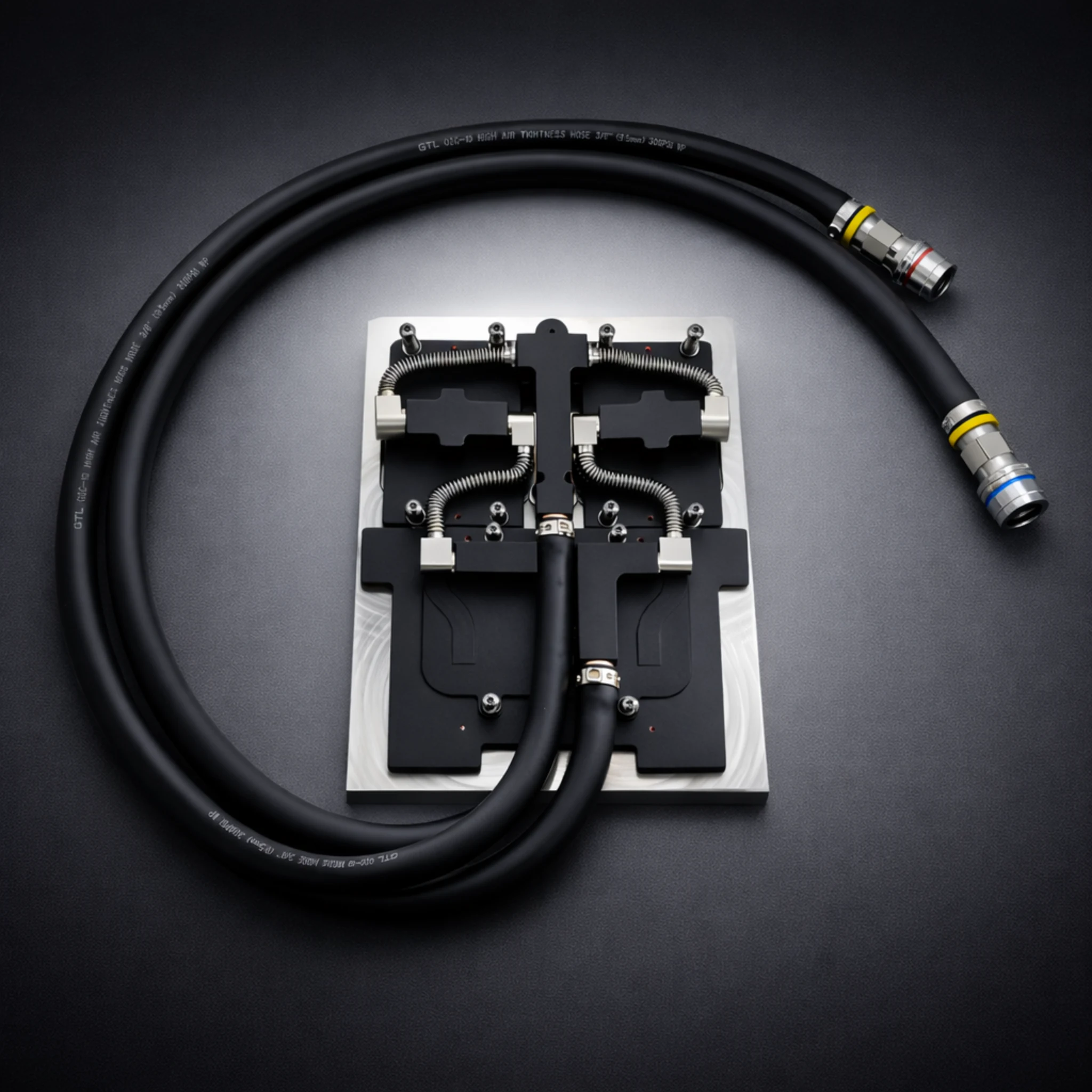
Heat Sink Fan Works Together is a high-performance thermal management solution engineered by ToneCooling for demanding applications.
This comprehensive guide covers how heat sink and solutions for industrial and OEM applications. ToneCooling provides expert insights on how heat sink and technology and implementation.
Effective heat dissipation is significant for the optimal functioning, reliability, and durability of electronic devices. With the increasing speed of processors and other integrated circuits, the amount of heat generated is considerable. If the heat is not properly managed, it can cause thermal throttling, resulting in diminished performance and, in extreme cases, permanent damage to the hardware, thereby restricting its functionality.
To counter these issues, other engineers often use a combination of passive and active cooling approaches on the same system using a combination of heat sink and fan. In this article, we elaborate on the detailed workings of these two parts and how they integrate efficiently while maintaining the desired thermal conditions for the electronic systems to ensure they function properly even under extreme conditions.

What Is Heat Sink Fan Works Together?
The heat sink is a thermal device that is a passive component that integrates with electronic systems to transfer heat to the air through radiation and conduction. The device is used to protect agile electronics like CPU, GPU, voltage regulators, power transistors, and other systems that generate heat.
The working principle of a heat sink is that it raises the surface area to volume ratio of the component and increases its effectiveness by utilizing natural processes of conduction and convection to lower the temperature of components below their specified maximum value.
Materials and Design
The efficiency and speed of heat sink cooling systems depend on the type of material used, Aluminum or Copper. All materials used in heat sinks are capable of high thermal energy conduction. The materials that are most commonly used include:
- Aluminum: Easy to fabricate, inexpensive, and has a lower weight.
- Copper: Weaker and more costly, but provides superior performance when it comes to thermal conductivity (~400 W/m·K).
Key Design Elements Include:
- Fins: Metallic blades that help increase the exposed surface area, increasing the rate of heat transfer.
- Baseplate: This portion makes contact with the part that heats it up and subsequently transfers that heat to the fins.
- Pin-fin arrays or folded fins: These further alter the surface features to improve air stirring and cooling.
Role of Fans in Cooling Systems
Active Cooling Mechanism
In contrast to devices such as heat sinks, fans are active elements in terms of cooling. Fans improve the performance of heat sinks by providing forced convection for the air to flow over the fins of the heat sink, thus improving heat transfer.
In high-performance electronics, the use of natural convection is not usually adequate. The use of fans over or under the heatsink will enable air to be drawn over or pushed through the heatsink and which will shred the thermal boundary layers near the sink and help decrease the temperature rise in this region.
Types of Fans
Choosing a fan revolves around the system’s needs, airflow limitations, and acceptable noise levels. There are two main types of fans:
- Axial Fans: These propel air in the same direction as the rotation of the blades. General-purpose cooling, such as in desktop PCs and server cooling, is a key factor in their level of suitability.
- Centrifugal (or Blower) Fans: These take in air parallel to the blades’ rotation and then expel the air outward. They are known for creating higher pressure. These are mostly used in laptops, enclosed electronics, or devices with some airflow obstruction.
CPU Fan and Heatsink Function: Working Together for Effective Cooling
The CPU fan and heatsink function as a combined cooling system designed to protect your processor from overheating. The heatsink is a passive component that sits directly on the CPU surface, absorbing heat generated during processing tasks. It uses conductive metal—usually aluminum or copper—with multiple fins to maximize surface area and transfer heat away from the chip.
The CPU fan is the active part of this system. It pushes air across the heatsink’s fins, accelerating heat dissipation and preventing heat from building up around the CPU. This airflow maintains lower operating temperatures, which is critical for preventing thermal throttling, maintaining consistent performance, and extending the life of your components.
Together, the fan and heatsink create an efficient thermal management system. Without proper cooling, a CPU may slow down under load or suffer long-term damage. Understanding this cooling mechanism is essential for PC builders, gamers, and anyone looking to maintain a stable, high-performance system.

Applications in Modern Electronics
Computing devices
Thermal management in the form of heat sink and fan combinations is common in modern computing devices, especially when it comes to the CPU and GPU. These high-performance chips produce an enormous amount of heat while in use, and without proper cooling, they are subjected to thermal throttling, when the processor reduces its clock speed to mitigate overheating.
Desktop and laptop computers are often equipped with heat sink and fan into compact designs.
Industrial Equipment
In industrial applications such as power electronics, inverters, rectifiers, and motor drives, the integration of cooling fans with heatsinks is a necessity. These systems operate at elevated voltages and currents, generating a vast amount of thermal energy consistently. The incorporation of active-passive cooling technologies is fundamental for long-term dependability and safety regulation compliance.
Moreover, telecom base stations, data centers, and even LED lighting systems follow the same cooling architectures in the systems that require 24/7 operation without degradation.
Benefits of the Combination of Heat Sink and Fan
Improved Heat Regulation
By utilizing the passive surface area of the heat sink and supplementing it with a fan to provide airflow, a system’s thermal dissipation is enhanced, resulting in:
- Decreased operating temperatures.
- Improved reliability of the system.
- Longer lifespan of the hardware.
- Maintenance of consistent performance amid fluctuating loads.
Space and Cost Efficiency
In contrast with liquid or thermoelectric cooling, a system with a heat sink and fan is:
- Compact: Suitable for placement in small enclosures or consumer-grade electronics
- Economic: Low installation and upkeep costs.
- Power efficient: Minimal power usage from fans in exchange for effective cooling
These advantages make such a setup the standard in commercial electronics where high performance is necessary, but design constraints limit the use of more advanced solutions.

Conclusion
Optimal management of operating temperatures is vital in the operation of modern electronics. The combination of heat sink and fan provides a reliable and affordable approach to temperature management in complex systems.
Engineers can design systems that stay within thermal limits during intensive use by understanding the fan as an active heat mover and the heat sink as a passive heat dissipator. Moreover, combined with proper thermal interface materials, these systems offer exceptional reliability, maintaining optimal performance and durability for modern electronic applications.
FAQs
1. What is the difference between a heatsink and a fan?
A heatsink is a metal component that absorbs and spreads heat from the CPU, while the fan actively blows air over the heatsink to remove the heat from the system. Together, they form a complete cooling solution.xxxrf65aFTD900008
2. Can a heatsink work without a fan?
Yes, a heatsink can passively dissipate heat without a fan, but this method is less effective and usually only suitable for low-power CPUs or silent builds.
3. Is the CPU cooler the same as the heatsink and fan combined?
Typically, yes. A CPU cooler generally refers to the combination of a heatsink and a fan working together to keep the CPU temperature down.
4. Do I need both a heatsink and a fan to cool my CPU effectively?
For most CPUs, especially those under load or overclocked, both are necessary. The heatsink draws heat from the CPU, and the fan ensures the heat is quickly moved away to prevent overheating.
5. Can I replace just the fan or just the heatsink if one breaks?
Usually, they are sold together as a CPU cooler, but some aftermarket solutions allow you to replace the fan separately. Replacing the heatsink alone is less common and may require a compatible cooling solution.
| Parameter | ToneCooling Specification |
|---|---|
| Material | Copper T2 / 6061 aluminum |
| Welding | TLP diffusion welding |
| Test pressure | 1 MPa (He leak + N₂ hold) |
| Coolant | PG25 (25% propylene glycol) |
| Custom design | Yes — DXF/STEP accepted |
Frequently Asked Questions
Does ToneCooling offer OEM and ODM services?
Yes. ToneCooling provides full OEM and ODM services including custom design, prototyping, thermal simulation, and volume production. We serve customers in North America, Europe, and Asia-Pacific with engineering support and samples within 2–4 weeks.
What types of heat sinks does ToneCooling manufacture?
ToneCooling manufactures extruded, machined, bonded-fin, and skived heat sinks in aluminum and copper. We also produce liquid cold plates and vapor chambers for applications exceeding air cooling capacity.
How do I select the right heat sink for my application?
Selection depends on thermal design power (TDP), available airflow, space constraints, and cost targets. Contact ToneCooling with your thermal requirements for application-specific recommendations.
Get a Custom Thermal Solution from ToneCooling
ToneCooling is a professional liquid cooling solution provider specializing in custom cold plates, AIO coolers, and advanced thermal management systems. With ISO 9001:2015 certified manufacturing, we deliver prototype samples within 2–4 weeks. Contact ToneCooling today for a free consultation and quote — we respond within 24 business hours.
References: ASHRAE thermal standards, Wikipedia: Heat Sink Technology
Need a Custom Liquid Cold Plate?
ToneCooling engineers design thermal solutions for your specific requirements. Get an engineering RFQ review based on your uploaded requirements.
Heat Sink And Fan Cooling System is a critical component in modern thermal management. ToneCooling engineers this solution for AI servers, data centers, EV batteries, and power electronics requiring high-performance liquid cooling.
Heat Sink And Fan Cooling System: Key Specifications
When evaluating heat sink and fan cooling system, engineers consider thermal resistance, pressure drop, flow rate, and material compatibility. ToneCooling provides detailed specs for every heat sink and fan cooling system design, backed by CFD simulation and testing.
Why Choose ToneCooling for Heat Sink And Fan Cooling System
ToneCooling has manufactured over 50,000 heat sink and fan cooling system units for global OEM customers. Our heat sink and fan cooling system production features vacuum brazing furnaces below 10⁻⁴ mbar, FSW machines with ≤0.02mm flatness, and helium leak detection at 10⁻⁸ mbar·L/s. Every heat sink and fan cooling system undergoes 100% pressure testing at 25 bar.
Our engineering team provides free heat sink and fan cooling system design consultation, CFD simulation, and rapid prototyping in 7-14 days. Production heat sink and fan cooling system orders ship in 4-6 weeks under ISO 9001:2015 quality management.
Need a Custom Liquid Cold Plate?
ToneCooling engineers design thermal solutions for your requirements. Response within 24-48 hours.
Last Updated: 2026-04-08
DR Kevin, Thermal Engineer, ToneCooling