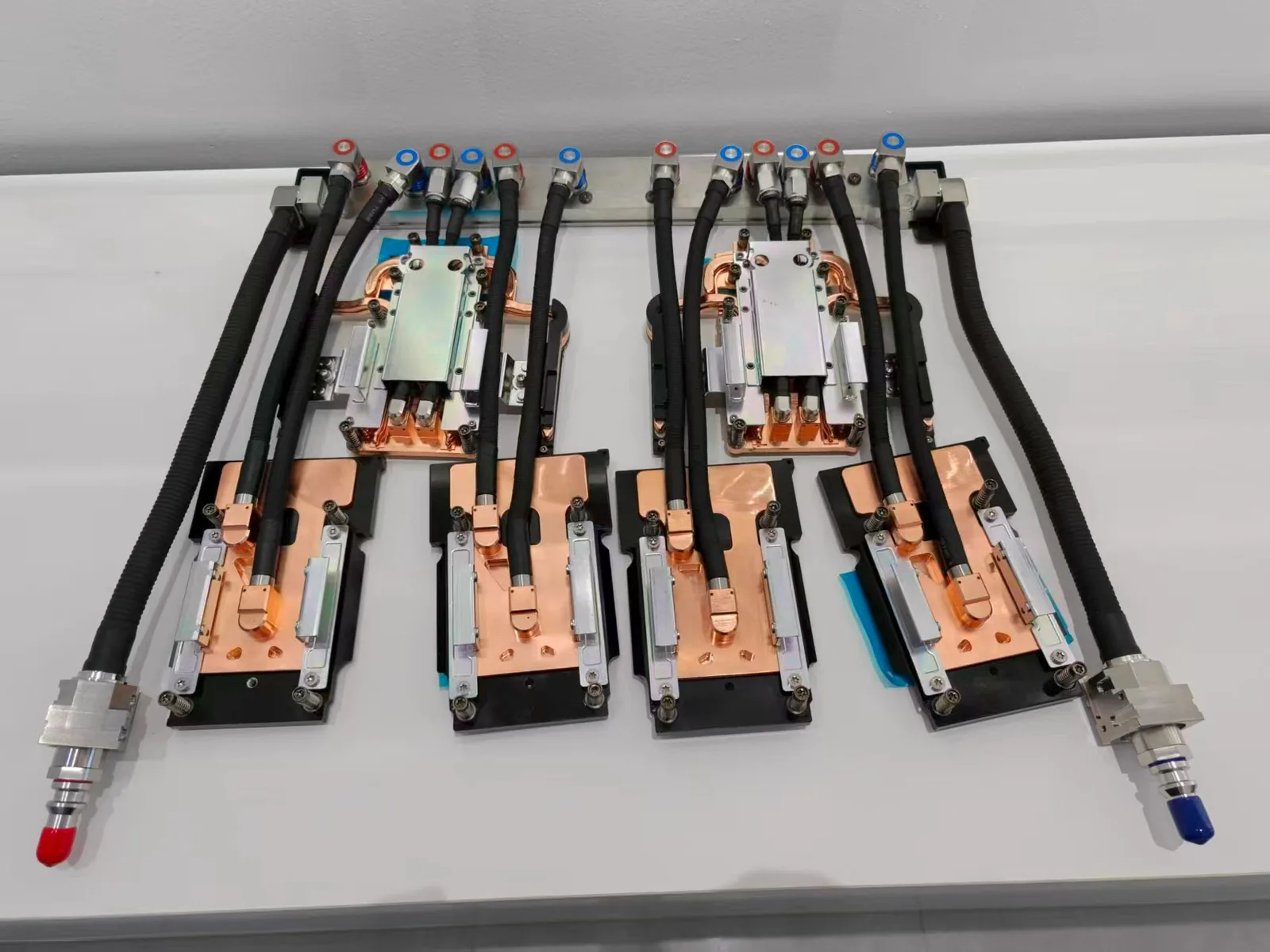
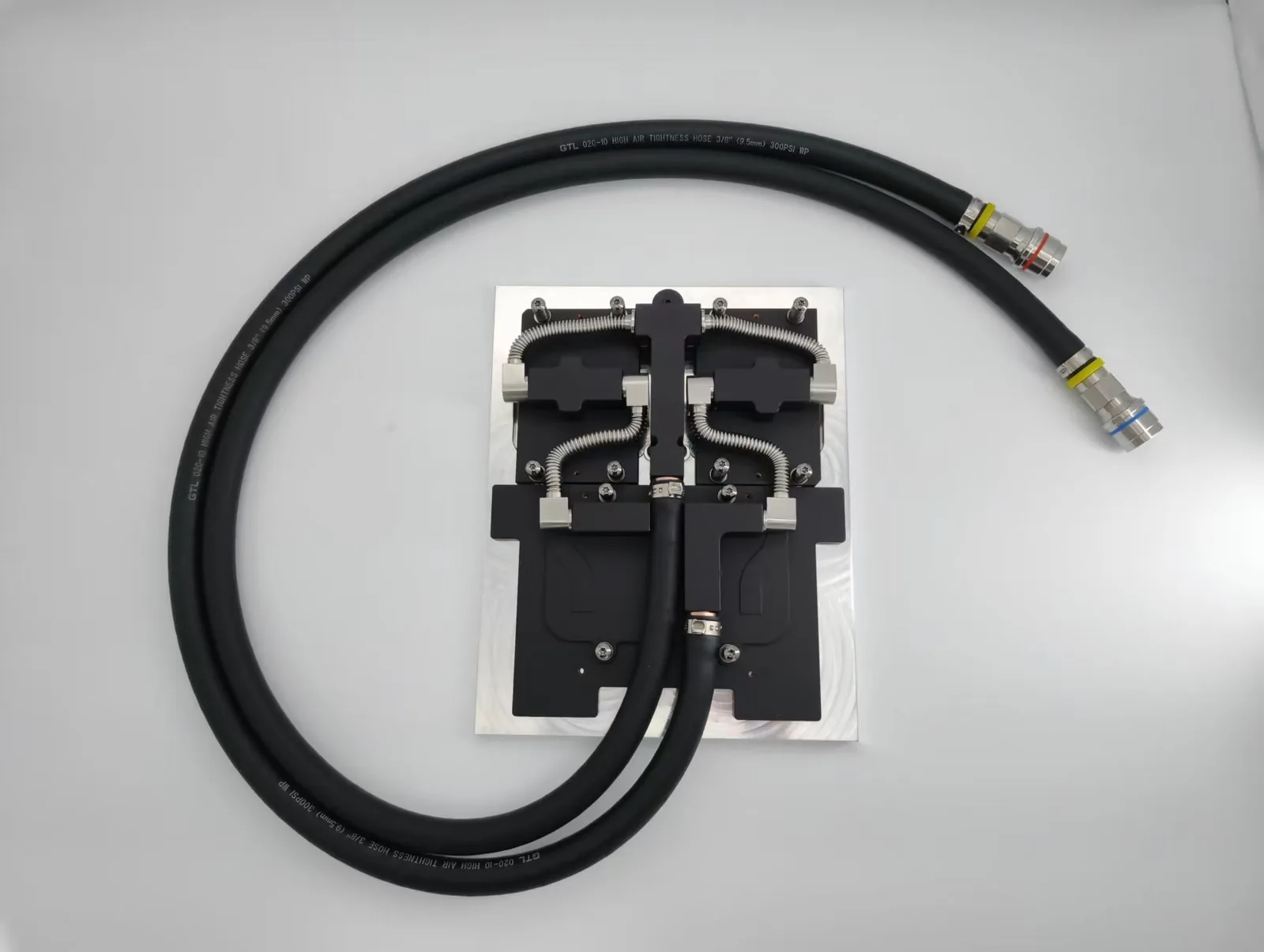
A vapor chamber in a GPU is a flat, sealed heat spreader between the GPU die and the heat sink fins: its working fluid evaporates at the hot die and condenses across the whole base, so heat reaches every fin instead of concentrating above the chip. ToneCooling builds custom vapor chambers and liquid cold plates for workstation, server and industrial GPU modules.
What is a vapor chamber in a GPU?
A vapor chamber is a flat, sealed component that uses advanced thermal management principles. Inside the chamber, a small amount of liquid (often water) evaporates when exposed to heat from the GPU. The vapor spreads evenly across the chamber, transferring heat away from the source. Once the vapor cools, it condenses back into liquid form and returns to the heat source through a wick structure. This cycle repeats continuously, ensuring efficient heat dissipation.
The design of vapor chamber cooling allows for uniform heat distribution. Unlike traditional methods, it avoids creating hot spots on the GPU. The flat structure of the chamber also makes it ideal for compact GPU designs. This feature benefits users who prefer smaller PC builds without sacrificing performance.

Comparison to Heat Pipes
Heat pipes are another common cooling solution in GPUs. They use a similar liquid-vapor cycle to transfer heat. However, heat pipes are cylindrical and less effective at spreading heat evenly across a surface. Vapor chambers, on the other hand, provide a larger contact area, which improves thermal performance.
Another key difference lies in their application. Heat pipes are often used in combination with other cooling methods, such as fans or heatsinks. Vapor chamber cooling, due to its efficiency, can reduce the need for additional components. This results in quieter operation and a more compact design. While heat pipes remain a reliable option, vapor chambers offer superior performance for high-end GPUs.
Enhanced Thermal Performance
Vapor chamber cooling delivers exceptional heat dissipation by evenly distributing thermal energy across its surface. This uniform heat spread prevents hot spots, ensuring optimal performance for high-performance graphics cards. The flat design of vapor chamber heatsinks maximizes contact with the GPU, enhancing cooling efficiency. Gamers and creators benefit from this technology as it maintains maximum performance during demanding workloads.
Quiet Operation
Vapor chamber cooling reduces the need for multiple fans or bulky heatsinks. Its efficient design minimizes noise levels, creating a quieter environment for users. This feature is particularly valuable for creators working on audio or video projects, where a silent workspace is essential. Vapor chamber technology ensures effective cooling without compromising on acoustics.
Overclocking Benefits
Overclocking pushes GPUs beyond their factory settings to achieve higher speeds. Vapor chamber cooling supports this process by managing the increased heat generated during overclocking. Its advanced heat dissipation capabilities allow users to unlock the full potential of their graphics cards without risking thermal throttling. This makes vapor chamber cooling ideal for enthusiasts seeking maximum performance.
Compact Build Compatibility
Modern PCs often prioritize compact designs without sacrificing power. Vapor chamber heatsinks fit seamlessly into smaller builds due to their slim profile. Unlike traditional cooling solutions, vapor chamber cooling provides efficient heat management in tight spaces. This compatibility makes it a preferred choice for users building compact yet powerful systems.
Applications in Gaming and Creative Workloads
Gaming Performance Improvements
Vapor chamber technology significantly enhances gaming performance by maintaining optimal GPU temperatures. High-performance graphics cards generate substantial heat during intense gaming sessions. Vapor chambers ensure efficient heat dissipation, preventing thermal throttling and maintaining consistent frame rates. This results in smoother gameplay, even in graphically demanding titles.
The uniform heat distribution of vapor chambers also supports overclocking. Gamers seeking higher performance can push their GPUs without worrying about overheating. This technology allows graphics cards to operate at peak efficiency, delivering an immersive gaming experience. Additionally, the compact design of vapor chambers makes them ideal for smaller gaming rigs, ensuring powerful performance in limited spaces.
Support for Creative Tasks
Creative professionals rely on GPUs for tasks like video editing, 3D rendering, and graphic design. Vapor chambers play a crucial role in supporting these workloads by providing superior cooling. Consistent heat dissipation ensures that GPUs can handle prolonged rendering sessions without performance drops. This reliability is essential for meeting tight deadlines and producing high-quality work.
The quiet operation of vapor chambers benefits creators working in noise-sensitive environments. Audio engineers and video editors can focus on their projects without distractions. Furthermore, the compact nature of vapor chamber cooling allows creators to build powerful yet space-efficient workstations. This flexibility makes vapor chambers a valuable asset for creative professionals.

Considerations and Limitations of Vapor Chambers
Cost Factors
Vapor chambers often come with a higher price tag compared to traditional cooling solutions. Their advanced design and manufacturing process contribute to this increased cost. For budget-conscious users, heat pipes may offer a more affordable alternative while still providing reliable cooling power. However, for those seeking next-level cooling, the investment in vapor chambers can be worthwhile. High-powered GPUs, in particular, benefit from their superior thermal performance.
Compatibility Challenges
Not all GPUs or PC builds are compatible with vapor chamber cooling. Their flat design works best with specific GPU architectures, limiting their use in some systems. Additionally, compact builds may face challenges if the vapor chamber’s dimensions do not align with the available space. Users should carefully check compatibility before opting for this technology. In some cases, heatpipes or hybrid solutions may be a better fit for unique setups.
Use Case Suitability
Vapor chambers excel in high-performance scenarios but may not be necessary for all users. Gamers and creators handling demanding workloads will appreciate their efficiency. However, casual users or those with mid-range GPUs might not fully utilize their benefits. For these users, heat pipes provide a cost-effective and sufficient cooling solution. Evaluating the specific needs of a system helps determine whether vapor chambers are the right choice.
Future Trends in Vapor Chamber Cooling
Emerging Technologies
The future of vapor chamber cooling looks promising as researchers explore new materials and designs. Advanced materials, such as graphene and carbon nanotubes, are being tested to improve thermal conductivity. These materials could enhance heat transfer rates, making vapor chambers even more efficient. Manufacturers are also experimenting with thinner and lighter designs to fit into ultra-compact GPUs.
Another emerging trend involves integrating vapor chambers with liquid cooling systems. This hybrid approach combines the strengths of both technologies, offering superior thermal performance. Such systems could become essential for next-generation GPUs, which are expected to generate even more heat. Additionally, automation in manufacturing processes may reduce production costs, making vapor chambers more accessible to a wider audience.
Innovations in GPU Cooling
Innovations in GPU cooling aim to address the growing demand for higher performance and energy efficiency. Multi-layer vapor chambers are one such innovation. These designs stack multiple chambers to handle extreme thermal loads, which could benefit high-end gaming and professional GPUs.
Another exciting development is the use of AI to optimize cooling performance. AI algorithms can monitor GPU temperatures in real time and adjust cooling mechanisms for maximum efficiency. This technology ensures that GPUs operate at peak performance without overheating.
Manufacturers are also focusing on eco-friendly cooling solutions. Vapor chambers with recyclable materials and energy-efficient designs align with the push for sustainable technology. These innovations highlight the industry’s commitment to balancing performance with environmental responsibility.

Conclusion
Vapor chamber cooling offers ultra-efficient heat dissipation for graphics cards, ensuring uniform heat distribution and reliable performance. Its ability to handle cooling high-powered components makes it ideal for demanding tasks. However, the higher cost and compatibility challenges may deter some users. Gamers and creators should evaluate their needs and consider custom vapor chamber heatsinks for optimal results.
For industry standards and best practices, refer to NVIDIA Data Center.
When Should an Air-Cooled GPU Module Move from a Vapor Chamber to a Liquid Cold Plate?
A vapor chamber suits air-cooled GPU cards and modules where heat must be spread onto a large fin stack. Once the heat load or rack density exceeds what airflow can remove, direct-to-chip liquid cold plates take over, as in AI servers. ToneCooling supplies both: custom vapor chambers for air-cooled designs, and standard GB300 4G+2C, GB200, H200 and H100 cold plate kits for liquid-cooled servers.
What to send for a custom vapor chamber quote:
- Heat source size and power for each device
- Allowed footprint, thickness and mounting holes
- Orientation, operating and storage temperature range
- The heat sink or cold plate the chamber attaches to
- Quantity and target sample date
See our custom vapor chambers, the liquid cold plates overview, or send an RFQ.
Frequently Asked Questions
Do all GPUs use vapor chambers?
No. Vapor chambers are mostly used on high-power graphics cards and GPU modules where heat pipes cannot spread the heat evenly enough; lower-power GPUs use heat pipes or solid bases.
When is a liquid cold plate better than a vapor chamber for a GPU?
When the heat load or rack density is too high for airflow to remove, as in AI servers. A direct-to-chip cold plate carries the heat away in coolant instead of spreading it onto fins.
Does ToneCooling make standard GPU cold plates?
Yes, for four AI server platforms: GB300 4G+2C, GB200, H200 and H100 kits supplied to published datasheets. Other GPU cooling designs, including vapor chambers, are custom.
What should I send for a custom GPU vapor chamber quote?
GPU die and package size, power, the heat sink design, allowed thickness and mounting, orientation, and quantity.
Get a Custom Thermal Solution from ToneCooling
ToneCooling is a professional liquid cooling solution provider specializing in custom cold plates, AIO coolers, and advanced thermal management systems. With ISO 9001 quality management and our own manufacturing facility in Huizhou, China, we deliver prototype samples typically within 4–6 weeks. Contact ToneCooling today for a free consultation and quote. An engineer reviews every RFQ and replies by email with next steps.
For industry standards and best practices, refer to NVIDIA Data Center.
Get a Custom Thermal Solution from ToneCooling
ToneCooling is a professional liquid cooling solution provider specializing in custom cold plates, AIO coolers, and advanced thermal management systems. With ISO 9001 quality management and our own manufacturing facility in Huizhou, China, we deliver prototype samples typically within 4–6 weeks. Contact ToneCooling today for a free consultation and quote. An engineer reviews every RFQ and replies by email with next steps.
References: ASHRAE thermal standards
Why Choose ToneCooling for Vapor Chamber GPU Cooling
Engineering review and prototype planning are based on the project requirements. Custom prototype lead time is normally 4–6 weeks after drawing approval and order confirmation; confirm the production schedule in the quotation.
Need a Custom Vapor Chamber?
Send your heat map, envelope and operating conditions. An engineer reviews every RFQ and replies by email with next steps.
Last updated: 2026-10-02
Need a vapor chamber for your own product?
ToneCooling designs and builds custom copper vapor chambers in-house — flat, pedestal and lid-integrated designs, each tested for thermal resistance, flatness and helium leak tightness.