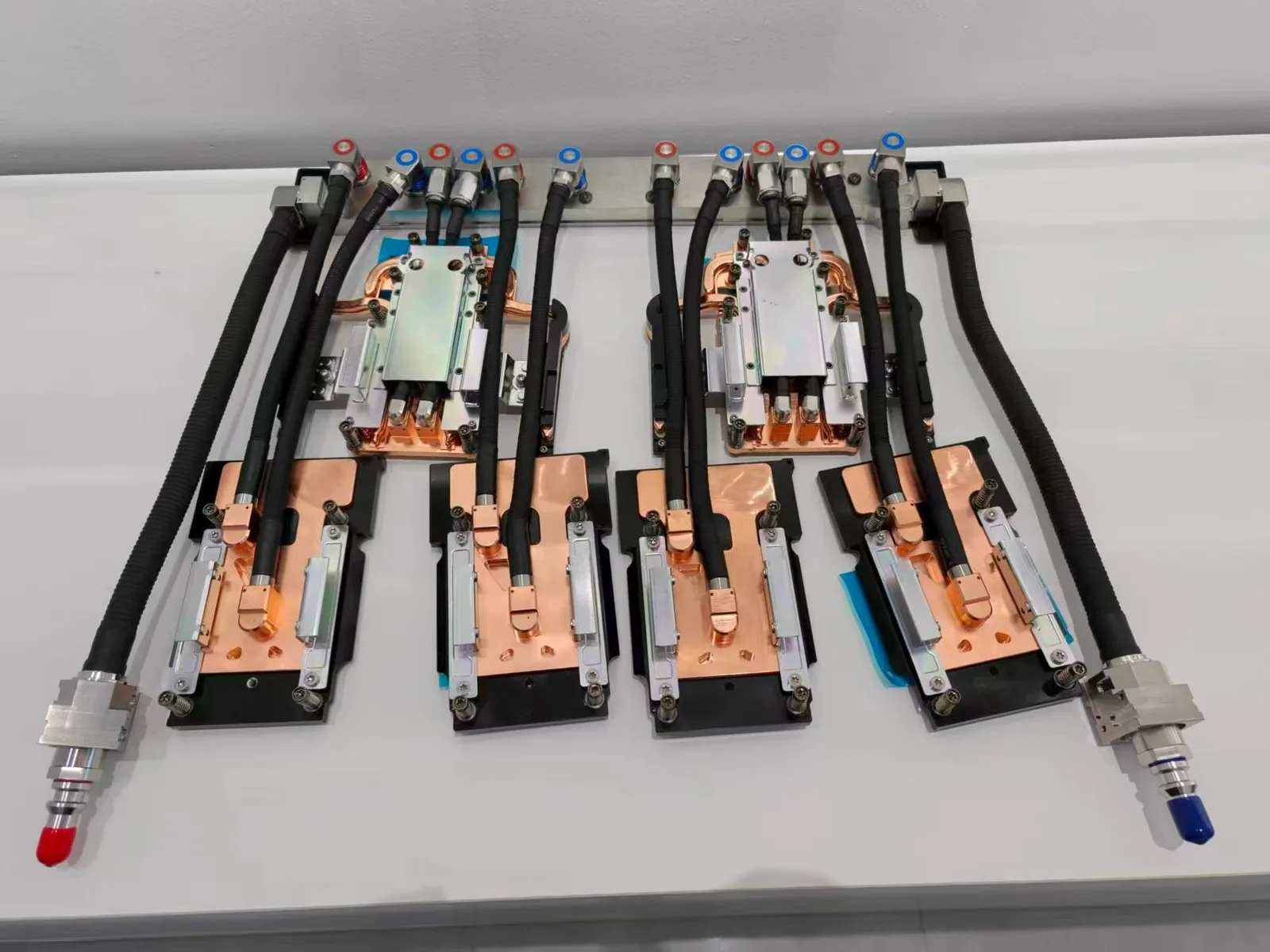
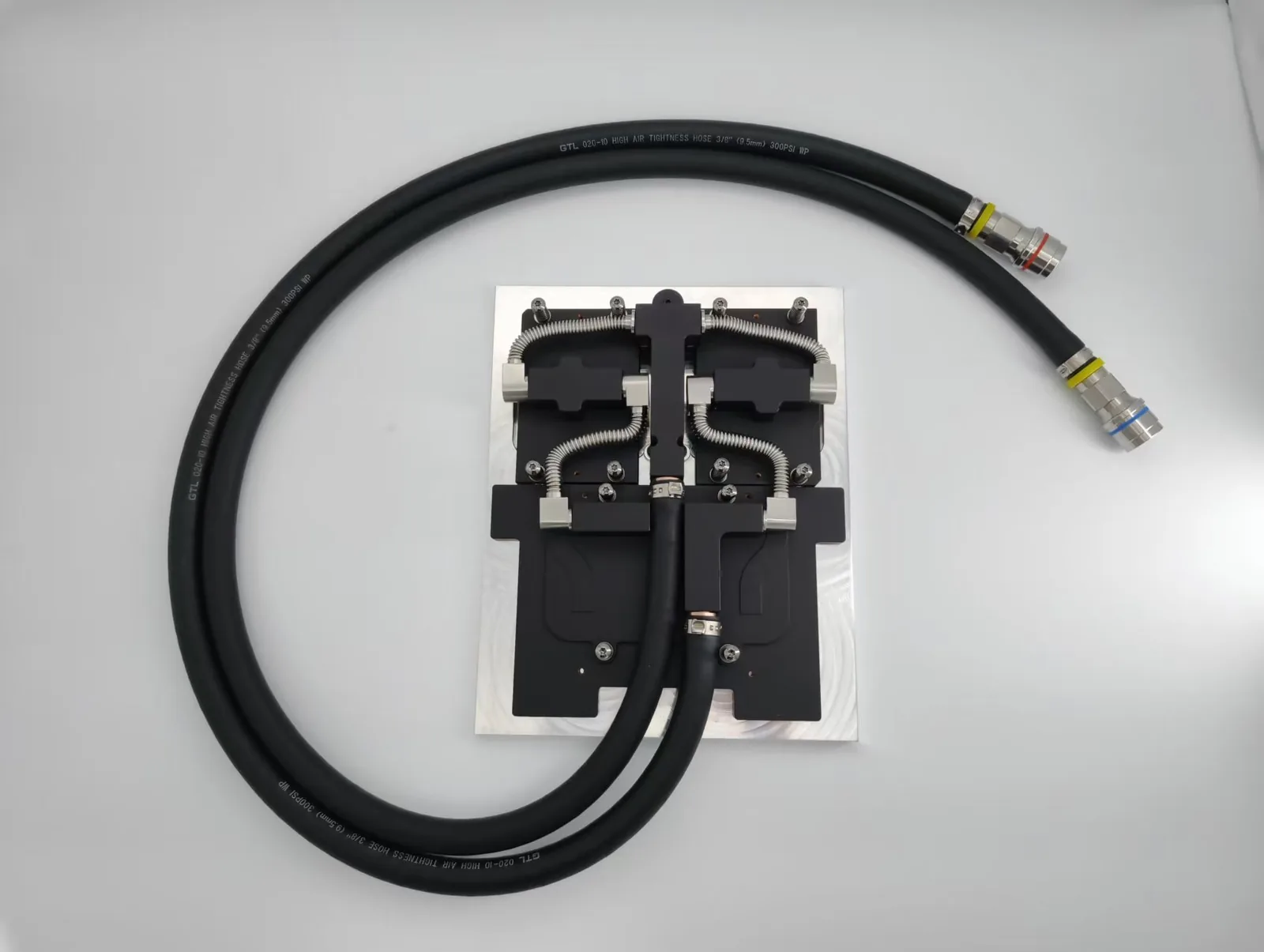
Vapor chamber cooling moves heat by evaporating a small amount of working fluid at the heat source and condensing it across a sealed, flat chamber, which spreads concentrated heat evenly onto a heat sink. It is used where CPUs, GPUs, 5G and industrial electronics outgrow solid metal spreaders and heat pipes. ToneCooling designs custom vapor chambers to each customer’s heat map.
450 W Vapor Chamber Cooling: Technology Behind Thermal Management
Modern electronics demand more power and performance while becoming smaller and thinner. From AI-driven GPUs to smartphones, heat management has become a critical design challenge. Traditional cooling methods such as heat sinks and simple fans can no longer keep up with the rising power densities of today’s devices. This is where vapor chamber cooling steps in.
Vapor chamber cooling provides an efficient way to spread and dissipate heat, making it ideal for CPUs, GPUs, data centers, 5G devices, and industrial electronics. In this article, we will explain what vapor chamber cooling is, how it works, and why it is becoming the preferred thermal management solution in advanced applications.

Vapor chamber cooling uses a sealed, flat chamber to spread heat quickly across its surface. Scientific literature defines vapor chambers as two-phase flow thermal management systems. These systems excel in heat transfer performance, especially in electronics, due to their high effective thermal conductivity and low thermal resistance.
A vapor chamber system contains a working fluid, usually deionized water, that evaporates when heated. The vapor moves to cooler areas, condenses back into liquid, and returns to the heat source through capillary action. This cycle allows vapor chambers to provide uniform heat distribution and efficient thermal management.
Vapor chamber cooling offers flexibility in design, making them suitable for devices that require efficient heat dissipation. Their ability to handle high heat loads sets them apart from traditional cooling solutions.
How Vapor Chamber Cooling Works
Heat Transfer Process
Vapor chamber cooling uses phase-change technology to achieve efficient heat transfer in electronic devices. The process begins when the working fluid absorbs heat at the evaporation surface, causing it to vaporize. The vapor then moves to the condensation surface, driven by pressure differences inside the chamber.
At the condensation surface, the vapor releases its heat and turns back into liquid. A wick structure inside the chamber uses capillary action to return the liquid to the evaporation surface. This cycle repeats continuously, allowing the system to maintain stable temperatures even under heavy loads.
The design allows vapor chamber cooling to conduct heat from a hot spot in all directions without losing efficiency. This results in a more uniform temperature distribution compared to other cooling methods. Devices benefit from this uniformity, as it helps prevent overheating and supports reliable performance.
Vapor Chamber Cooling vs. Heat Pipes
Vapor chamber cooling and heat pipes both use phase-change technology, but they differ in design and performance. Vapor chambers spread heat evenly across a large surface area, making them ideal for applications that require uniform cooling. Heat pipes, on the other hand, transfer heat efficiently along their axis, which works well for moving heat from a small source to a remote location.
The following table highlights the main differences between vapor chamber cooling and heat pipes:
| Feature | Vapor Chamber | Heat Pipe |
|---|---|---|
| Heat Distribution | Superior, spreads heat uniformly | Efficient along the axis |
| Profile | Thin and compact | Typically bulkier |
| Heat Load Capacity | Up to 450 watts | Max around 125 watts |
| Isothermality | Maintains consistent temperature | Varies more across the surface |
| Best Use Case | Larger heat sources | Smaller, localized applications |
Vapor chambers handle heat flux capacities of up to 300-500 W/cm² in optimal setups. Heat pipes typically achieve 50-200 W/cm², making them suitable for linear heat transfer. Vapor chambers usually cost more, but they provide better performance for devices that need uniform and efficient heat transfer.

Design and Types
Key Components
A vapor chamber cooling system relies on several essential components for effective design and operation. The base plate transfers heat from the heat source to the working fluid, ensuring rapid thermal performance. The wick structure inside the chamber facilitates the movement of liquid through capillary action, which supports consistent cooling.
The liquid, commonly water, absorbs heat from the electronic device and enables phase change for improved thermal performance. The heat source generates heat and transfers it to the base plate, while the heat sink spreads the absorbed heat from the working fluid. Each component plays a critical role in the overall design, contributing to the system’s ability to maintain optimal thermal performance.
Flat and 3D Designs
Vapor chamber cooling systems feature two main design types: flat and 3D. Flat vapor chambers spread heat in two dimensions, making them suitable for devices with limited space and simple design requirements. These designs offer moderate delta-T performance and are easier to manufacture.
| Feature | Flat Vapor Chamber | 3D Vapor Chamber |
|---|---|---|
| Dimensionality | Two-dimensional heat spreading | Three-dimensional heat spreading |
| Heat Management Capability | Limited to flat surfaces | More complex management in compact spaces |
| Manufacturing Complexity | Generally simpler | Higher complexity and cost due to welding |
| Delta-T Performance | Moderate | Lower delta-T due to larger vapor space |
3D vapor chamber designs provide three-dimensional heat spreading, which enhances thermal performance in compact devices. These designs manage heat more effectively in smartphones, laptops, and gaming consoles. The increased complexity and cost result from advanced welding and manufacturing processes, but the improved cooling justifies their use in high-performance applications.
Advantages and Disadvantages
Advantages
Vapor chamber cooling offers several important benefits for modern electronics. Devices use vapor chambers to achieve exceptional heat spreading, which distributes heat evenly and minimizes hotspots. This uniform cooling supports efficient heat transfer and helps maintain stable performance.
Manufacturers prefer vapor chamber cooling because it operates passively, with no moving parts. This design eliminates noise and reduces the risk of mechanical failure. Vapor chambers are compact and lightweight, making them ideal for slim devices and small form-factor electronics.
The sealed system provides high reliability and requires little maintenance. Vapor chamber cooling works in any orientation, which suits portable electronics and complex layouts. The table below highlights how vapor chambers contribute to uniform heat transfer in high-performance electronics:
| Metric | Vapor Chamber IHS | Copper IHS | Improvement |
|---|---|---|---|
| Peak Junction Temperature (°C) | 478.7 | 500 | 21.3 °C reduction |
| Surface Temperature Gradient (%) | 8 | 100 | 92 % reduction |
| Maximum Die Warpage | Halved | N/A | Significant reduction |
| Optimal Package Area Ratio | 8 | N/A | Maximizes performance |
Disadvantages
Vapor chamber cooling presents some limitations. The power limit for vapor chambers is 500 watts, and exceeding this can cause dry out, similar to heat pipes. High vapor temperature and pressure may deform surfaces or lead to leakage from welded joints.
Manufacturers report that vapor chamber cooling solutions are more expensive than traditional cooling methods. The higher cost results from specialized materials and complex designs. This premium pricing can limit adoption in cost-sensitive segments, especially for entry-level devices.

Applications of Vapor Chamber Cooling
Vapor chamber cooling is widely used in electronics and high-heat applications because it efficiently spreads and dissipates heat. Here’s a clear breakdown:
High-performance CPUs and GPUs: Vapor chambers help manage hotspots in laptops, gaming PCs, and servers. By spreading heat evenly, they prevent thermal throttling and maintain consistent performance.
LED lighting: High-power LEDs generate concentrated heat. Vapor chambers improve thermal management, extending LED lifespan and maintaining brightness.
Smartphones and tablets: Compact devices have limited space for heat sinks. Vapor chambers distribute heat across the device to prevent overheating.
Electric vehicles (EVs) and batteries: Vapor chambers help cool power electronics and battery packs, ensuring stable operation and safety.
Telecommunications and networking equipment: Servers, base stations, and data centers use vapor chambers to maintain efficient cooling in high-density circuits.
3D printing and laser systems: High-power lasers and printing heads generate localized heat. Vapor chambers prevent overheating and ensure consistent performance.
User Considerations
Performance Factors
Several factors influence the effectiveness of cooling in modern devices. The materials used in vapor chambers, such as deionized water, play a critical role in heat dissipation. The design and thickness of the vapor chamber affect its ability to remove heat, with thinner chambers sometimes facing performance challenges due to fluid dynamics.
The cooling techniques used, including advanced phase-change technology, enhance heat absorption and distribution. Device form factor also impacts the integration of vapor chamber cooling. The table below summarizes how design complexity and size constraints affect implementation:
| Factor | Impact on Vapor Chamber Integration |
|---|---|
| Design Complexity | Requires precise engineering and careful planning for compact systems. |
| Size and Form Factor Constraints | Must fit within spatial limits of the device, especially in slim electronics. |
Users should consider these factors when evaluating cooling solutions for laptops and smartphones. Proper material selection and chamber geometry can significantly improve thermal performance.
Is Vapor Chamber Cooling Worth It
Determining the value of vapor chamber cooling depends on device requirements and user expectations. Enhanced performance through surface modifications can lead to more efficient cooling of electronic components. Devices that require advanced thermal management benefit most from these improvements.
Users should evaluate thermal design efficiency and how well vapor chambers integrate with their devices. Advancements in materials and manufacturing processes can further boost performance. Market trends show a growing demand for efficient cooling solutions in high-performance electronics.
Optimized thermal design, including improved wick structures and chamber geometry, enhances heat dissipation. Selecting the right working fluids improves heat transfer and reduces thermal resistance.

What Is a Vapor Chamber? Working Principle and Key Benefits Explained
Learn what a vapor chamber is, how it works as a two-phase heat spreader, and when to choose vapor chambers over traditional heat pipes or heatsinks.
A vapor chamber is a flat, sealed two-phase heat spreader used to move heat quickly away from hotspot components such as CPUs, GPUs and power modules. Inside the vapor chamber, a small amount of working fluid evaporates on the hot side, flows as vapor to the cooler regions and then condenses, returning through a wick structure. This continuous cycle spreads heat far more evenly than solid copper or aluminum. Compared with traditional heat pipes, vapor chambers offer lower thermal resistance, better performance under high heat flux and more design freedom for thin, compact devices. They are widely used in laptops, gaming GPUs, 5G telecom gear and LED lighting. If your design suffers from local hotspots or tight space, a vapor chamber can be an efficient and cost-effective thermal solution.
Conclusion
Vapor chamber cooling is no longer limited to high-end devices. As electronics continue to demand more performance in smaller spaces, this technology has become a critical part of modern thermal management strategies. From consumer gadgets to large-scale AI servers, vapor chamber cooling ensures that devices run efficiently, reliably, and safely.
The future points toward even thinner, more advanced vapor chambers integrated with other cooling technologies, making them a cornerstone of electronic design.
Need help with vapor chamber design or heat spreading issues?
Email our engineering team at info@tonecooling.com and we’ll be happy to review your project and suggest a practical solution.
For industry standards and best practices, refer to ASHRAE technical resources.
What Should OEM Engineers Specify for a High-Power Vapor Chamber?
Start from the heat source footprint and power, the allowed thickness, and the fin stack or cold plate it mounts to; these set the wick type, internal support pattern and chamber material. For high-power designs, also specify orientation, operating and storage temperature, flatness at the contact area and mounting pressure, because they decide whether the chamber keeps spreading heat as intended over its life.
What to send for a custom vapor chamber quote:
- Heat source size and power for each device
- Allowed footprint, thickness and mounting holes
- Orientation, operating and storage temperature range
- The heat sink or cold plate the chamber attaches to
- Quantity and target sample date
See our custom vapor chambers, compare vapor chambers and liquid cold plates, or send an RFQ.
Frequently Asked Questions
How does a vapor chamber spread heat?
Heat evaporates the working fluid at the hot spot; the vapor moves to cooler areas of the chamber and condenses, and the wick returns the liquid, so heat spreads evenly across the chamber.
What decides how much power a vapor chamber can handle?
The heat source size, wick structure, chamber thickness, working fluid, orientation and the heat sink or cold plate it rejects heat to. The limit must be confirmed by test for each design.
Which vapor chamber wick structure should I choose?
Sintered powder wicks work in any orientation and suit high heat flux; mesh and grooved wicks suit thinner or lower-cost designs. ToneCooling recommends the wick during design review.
When should I use a liquid cold plate instead of a vapor chamber?
When the total heat cannot be removed by air through the attached fin stack. A liquid cold plate carries the heat away in coolant.
Get a Custom Thermal Solution from ToneCooling
ToneCooling is a professional liquid cooling solution provider specializing in custom cold plates, AIO coolers, and advanced thermal management systems. With ISO 9001 quality management and our own manufacturing facility in Huizhou, China, we deliver prototype samples typically within 4–6 weeks. Contact ToneCooling today for a free consultation and quote. An engineer reviews every RFQ and replies by email with next steps.
Why Choose ToneCooling for Custom Vapor Chamber Manufacturer
Engineering review and prototype planning are based on the project requirements. Custom prototype lead time is normally 4–6 weeks after drawing approval and order confirmation; confirm the production schedule in the quotation.
Building AI servers? See our standard GB300 4G+2C cold plate kit and GB200 cold plate kit, both supplied to published datasheets.
Need a Custom Vapor Chamber?
Send your heat map, envelope and operating conditions. An engineer reviews every RFQ and replies by email with next steps.
Last updated: 2026-10-02
Related guides
- What is a vapor chamber — how vapor chamber cooling works
- Vapor chamber manufacturer checklist — what to check before you choose a supplier
- Custom vapor chambers — designs built to your heat source
- Vapor chamber vs heat pipe — differences and when to use each
- Vapor chambers in smartphones — thin vapor chambers in phones